917 books match the query 'Economics' and 22 start with j
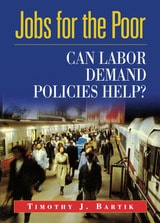
cover of Jobs for the Poor: Can Labor Demand Policies Help?

Jobs for the Poor

Can Labor Demand Policies Help?

Timothy J. Bartik

Russell Sage Foundation, 2001
Even as the United States enjoys a booming economy and historically low levels of unemployment, millions of Americans remain out of work or underemployed, and joblessness continues to plague many urban communities, racial minorities, and people with little education. In Jobs for the Poor, Timothy Bartik calls for a dramatic shift in the way the United States confronts this problem. Today, most efforts to address this problem focus on ways to make workers more employable, such as job training and welfare reform. But Bartik argues that the United States should put more emphasis on ways to increase the interest of employers in creating jobs for the poor—or the labor demand side of the labor market. Bartik's bases his case for labor demand policies on a comprehensive review of the low-wage labor market. He examines the effectiveness of government interventions in the labor market, such as Welfare Reform, the Earned Income Tax Credit, and Welfare-to-Work programs, and asks if having a job makes a person more employable. Bartik finds that public service employment and targeted employer wage subsidies can increase employment among the poor. In turn, job experience significantly increases the poor's long-run earnings by enhancing their skills and reputation with employers. And labor demand policies can avoid causing inflation or displacing other workers by targeting high-unemployment labor markets and persons who would otherwise be unemployed. Bartik concludes by proposing a large-scale labor demand program. One component of the program would give a tax credit to employers in areas of high unemployment. To provide disadvantaged workers with more targeted help, Bartik also recommends offering short-term subsidies to employers—particularly small businesses and nonprofit organizations—that hire people who otherwise would be unlikely to find jobs. With experience from subsidized jobs, the new workers should find it easier to obtain future year-round employment. Although these efforts would not catapult poor families into the middle class overnight, Bartik offers a powerful argument that having a full-time worker in every household would help improve the lives of millions. Jobs for the Poor makes a compelling case that full employment can be achieved if the country has the political will and adopts policies that address both sides of the labor market. Copublished with the W. E. Upjohn Institute for Economic Research
[more]
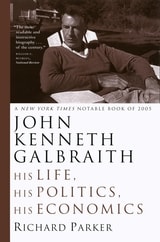
cover of John Kenneth Galbraith: His Life, His Politics, His Economics

John Kenneth Galbraith

His Life, His Politics, His Economics

Richard Parker

University of Chicago Press, 2006

John Kenneth Galbraith (1908-2006) was one of America’s most famous economists for good reason. From his acerbic analysis of America’s “private wealth and public squalor” to his denunciation of the wars in Vietnam and Iraq, Galbraith consistently challenged “conventional wisdom” (a phrase he coined). He did so as a witty commentator on America’s political follies and as a versatile author of bestselling books—such as The Affluent Society and The New Industrial State—that warn of the dangers of deregulated markets, corporate greed, and inattention to the costs of our military power. Here, in the first full-length biography of Galbraith and his times, Richard Parker provides not only a nuanced portrait of this extraordinary man, but also an important reinterpretation of twentieth-century public policy and economic practices.

“Whatever you may think of his ideas, John Kenneth Galbraith has led an extraordinary life. . . . Doing justice to this life story requires an outsize biography, one that not only tells Mr. Galbraith’s tale but sets it on the broader canvas of America’s political and economic evolution. And Richard Parker’s book does just that.”—Economist

“Parker’s book is more than a chronicle of Galbraith’s life; it’s a history of American politics and policy from FDR through George W. Bush. . . . It will make readers more economically and politically aware.”—USA Today

 “The most readable and instructive biography of the century.”—William F. Buckley, National Review


“The story of this man’s life and work is wonderfully rendered in this magnum opus, and offers an antidote to the public ennui, economic cruelty, and government malfeasance that poison life in America today.”—James Carroll, Boston Globe

[more]
cover of John Locke: Economist and Social Scientist

John Locke

Economist and Social Scientist

Karen Iversen Vaughn

University of Chicago Press, 1980

In John Locke: Economist and Social Scientist Karen Iversen Vaughn presents a comprehensive treatment of Locke's important position in the development of eighteenth century economic thought.
[more]
cover of Journal of Human Capital, volume 16 number 3 (Fall 2022)

Journal of Human Capital, volume 16 number 3 (Fall 2022)

The University of Chicago Press

University of Chicago Press Journals, 2022
[more]
cover of Journal of Human Capital, volume 16 number 4 (Winter 2022)

Journal of Human Capital, volume 16 number 4 (Winter 2022)

The University of Chicago Press

University of Chicago Press Journals, 2022
This is volume 16 issue 4 of Journal of Human Capital. The Journal of Human Capital (JHC) is dedicated to human capital and its expanding economic and social roles in the contemporary knowledge economy. It explores the role human capital plays in the production, allocation, and distribution of economic resources and in supporting long-term economic growth and development. JHC is designed to bring together theoretical and empirical work on human capital—broadly defined to include education, skill, health, entrepreneurship, and intellectual and social capital—and related public policy issues.
[more]
cover of Journal of Human Capital, volume 17 number 1 (Spring 2023)

Journal of Human Capital, volume 17 number 1 (Spring 2023)

The University of Chicago Press

University of Chicago Press Journals, 2023
This is volume 17 issue 1 of Journal of Human Capital. The Journal of Human Capital (JHC) is dedicated to human capital and its expanding economic and social roles in the contemporary knowledge economy. It explores the role human capital plays in the production, allocation, and distribution of economic resources and in supporting long-term economic growth and development. JHC is designed to bring together theoretical and empirical work on human capital—broadly defined to include education, skill, health, entrepreneurship, and intellectual and social capital—and related public policy issues.
[more]
cover of Journal of Human Capital, volume 17 number 2 (Summer 2023)

Journal of Human Capital, volume 17 number 2 (Summer 2023)

The University of Chicago Press

University of Chicago Press Journals, 2023
This is volume 17 issue 2 of Journal of Human Capital. The Journal of Human Capital (JHC) is dedicated to human capital and its expanding economic and social roles in the contemporary knowledge economy. It explores the role human capital plays in the production, allocation, and distribution of economic resources and in supporting long-term economic growth and development. JHC is designed to bring together theoretical and empirical work on human capital—broadly defined to include education, skill, health, entrepreneurship, and intellectual and social capital—and related public policy issues.
[more]
cover of Journal of Human Capital, volume 17 number 3 (Fall 2023)

Journal of Human Capital, volume 17 number 3 (Fall 2023)

The University of Chicago Press

University of Chicago Press Journals, 2023
This is volume 17 issue 3 of Journal of Human Capital. The Journal of Human Capital (JHC) is dedicated to human capital and its expanding economic and social roles in the contemporary knowledge economy. It explores the role human capital plays in the production, allocation, and distribution of economic resources and in supporting long-term economic growth and development. JHC is designed to bring together theoretical and empirical work on human capital—broadly defined to include education, skill, health, entrepreneurship, and intellectual and social capital—and related public policy issues.
[more]
cover of Journal of Human Capital, volume 17 number 4 (Winter 2023)

Journal of Human Capital, volume 17 number 4 (Winter 2023)

The University of Chicago Press

University of Chicago Press Journals, 2023
This is volume 17 issue 4 of Journal of Human Capital. The Journal of Human Capital (JHC) is dedicated to human capital and its expanding economic and social roles in the contemporary knowledge economy. It explores the role human capital plays in the production, allocation, and distribution of economic resources and in supporting long-term economic growth and development. JHC is designed to bring together theoretical and empirical work on human capital—broadly defined to include education, skill, health, entrepreneurship, and intellectual and social capital—and related public policy issues.
[more]
cover of Journal of Human Capital, volume 18 number 1 (Spring 2024)

Journal of Human Capital, volume 18 number 1 (Spring 2024)

The University of Chicago Press

University of Chicago Press Journals, 2024
This is volume 18 issue 1 of Journal of Human Capital. The Journal of Human Capital (JHC) is dedicated to human capital and its expanding economic and social roles in the contemporary knowledge economy. It explores the role human capital plays in the production, allocation, and distribution of economic resources and in supporting long-term economic growth and development. JHC is designed to bring together theoretical and empirical work on human capital—broadly defined to include education, skill, health, entrepreneurship, and intellectual and social capital—and related public policy issues.
[more]
cover of Journal of Human Capital, volume 18 number 2 (Summer 2024)

Journal of Human Capital, volume 18 number 2 (Summer 2024)

The University of Chicago Press

University of Chicago Press Journals, 2024
This is volume 18 issue 2 of Journal of Human Capital. The Journal of Human Capital (JHC) is dedicated to human capital and its expanding economic and social roles in the contemporary knowledge economy. It explores the role human capital plays in the production, allocation, and distribution of economic resources and in supporting long-term economic growth and development. JHC is designed to bring together theoretical and empirical work on human capital—broadly defined to include education, skill, health, entrepreneurship, and intellectual and social capital—and related public policy issues.
[more]
cover of Journal of Human Capital, volume 18 number 3 (Fall 2024)

Journal of Human Capital, volume 18 number 3 (Fall 2024)

The University of Chicago Press

University of Chicago Press Journals, 2024
This is volume 18 issue 3 of Journal of Human Capital. The Journal of Human Capital (JHC) is dedicated to human capital and its expanding economic and social roles in the contemporary knowledge economy. It explores the role human capital plays in the production, allocation, and distribution of economic resources and in supporting long-term economic growth and development. JHC is designed to bring together theoretical and empirical work on human capital—broadly defined to include education, skill, health, entrepreneurship, and intellectual and social capital—and related public policy issues.
[more]
cover of Journal of Human Capital, volume 18 number 4 (Winter 2024)

Journal of Human Capital, volume 18 number 4 (Winter 2024)

The University of Chicago Press

University of Chicago Press Journals, 2024
This is volume 18 issue 4 of Journal of Human Capital. The Journal of Human Capital (JHC) is dedicated to human capital and its expanding economic and social roles in the contemporary knowledge economy. It explores the role human capital plays in the production, allocation, and distribution of economic resources and in supporting long-term economic growth and development. JHC is designed to bring together theoretical and empirical work on human capital—broadly defined to include education, skill, health, entrepreneurship, and intellectual and social capital—and related public policy issues.
[more]
cover of Journal of Human Capital, volume 19 number 1 (Spring 2025)

Journal of Human Capital, volume 19 number 1 (Spring 2025)

The University of Chicago Press

University of Chicago Press Journals, 2025
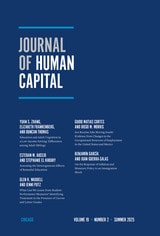
This is volume 19 issue 1 of Journal of Human Capital. The Journal of Human Capital (JHC) is dedicated to human capital and its expanding economic and social roles in the contemporary knowledge economy. It explores the role human capital plays in the production, allocation, and distribution of economic resources and in supporting long-term economic growth and development. JHC is designed to bring together theoretical and empirical work on human capital—broadly defined to include education, skill, health, entrepreneurship, and intellectual and social capital—and related public policy issues.
[more]
cover of Journal of Human Capital, volume 19 number 2 (Summer 2025)

Journal of Human Capital, volume 19 number 2 (Summer 2025)

The University of Chicago Press

University of Chicago Press Journals, 2025
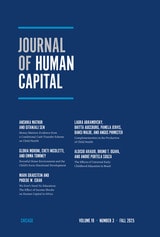
This is volume 19 issue 2 of Journal of Human Capital. The Journal of Human Capital (JHC) is dedicated to human capital and its expanding economic and social roles in the contemporary knowledge economy. It explores the role human capital plays in the production, allocation, and distribution of economic resources and in supporting long-term economic growth and development. JHC is designed to bring together theoretical and empirical work on human capital—broadly defined to include education, skill, health, entrepreneurship, and intellectual and social capital—and related public policy issues.
[more]
cover of Journal of Human Capital, volume 19 number 3 (Fall 2025)

Journal of Human Capital, volume 19 number 3 (Fall 2025)

The University of Chicago Press

University of Chicago Press Journals, 2025
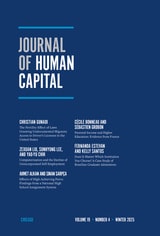
This is volume 19 issue 3 of Journal of Human Capital. The Journal of Human Capital (JHC) is dedicated to human capital and its expanding economic and social roles in the contemporary knowledge economy. It explores the role human capital plays in the production, allocation, and distribution of economic resources and in supporting long-term economic growth and development. JHC is designed to bring together theoretical and empirical work on human capital—broadly defined to include education, skill, health, entrepreneurship, and intellectual and social capital—and related public policy issues.
[more]
cover of Journal of Human Capital, volume 19 number 4 (Winter 2025)

Journal of Human Capital, volume 19 number 4 (Winter 2025)

The University of Chicago Press

University of Chicago Press Journals, 2025
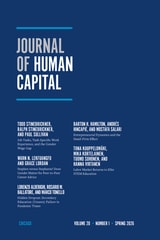
This is volume 19 issue 4 of Journal of Human Capital. The Journal of Human Capital (JHC) is dedicated to human capital and its expanding economic and social roles in the contemporary knowledge economy. It explores the role human capital plays in the production, allocation, and distribution of economic resources and in supporting long-term economic growth and development. JHC is designed to bring together theoretical and empirical work on human capital—broadly defined to include education, skill, health, entrepreneurship, and intellectual and social capital—and related public policy issues.
[more]
cover of Journal of Human Capital, volume 20 number 1 (Spring 2026)

Journal of Human Capital, volume 20 number 1 (Spring 2026)

The University of Chicago Press

University of Chicago Press Journals, 2026
This is volume 20 issue 1 of Journal of Human Capital. The Journal of Human Capital (JHC) is dedicated to human capital and its expanding economic and social roles in the contemporary knowledge economy. It explores the role human capital plays in the production, allocation, and distribution of economic resources and in supporting long-term economic growth and development. JHC is designed to bring together theoretical and empirical work on human capital—broadly defined to include education, skill, health, entrepreneurship, and intellectual and social capital—and related public policy issues.
[more]
cover of Journal of Human Capital, volume 20 number 2 (Summer 2026)

Journal of Human Capital, volume 20 number 2 (Summer 2026)

The University of Chicago Press

University of Chicago Press Journals, 2026
This is volume 20 issue 2 of Journal of Human Capital. The Journal of Human Capital (JHC) is dedicated to human capital and its expanding economic and social roles in the contemporary knowledge economy. It explores the role human capital plays in the production, allocation, and distribution of economic resources and in supporting long-term economic growth and development. JHC is designed to bring together theoretical and empirical work on human capital—broadly defined to include education, skill, health, entrepreneurship, and intellectual and social capital—and related public policy issues.
[more]
cover of Journal of Human Capital, volume 20 number 3 (Fall 2026)

Journal of Human Capital, volume 20 number 3 (Fall 2026)

The University of Chicago Press

University of Chicago Press Journals, 2026

This is volume 20 issue 3 of Journal of Human Capital. The Journal of Human Capital (JHC) is dedicated to human capital and its expanding economic and social roles in the contemporary knowledge economy. It explores the role human capital plays in the production, allocation, and distribution of economic resources and in supporting long-term economic growth and development. JHC is designed to bring together theoretical and empirical work on human capital—broadly defined to include education, skill, health, entrepreneurship, and intellectual and social capital—and related public policy issues.
[more]
cover of Jua Kali Kenya: Change and Development in an Informal Economy, 1970–1995

Jua Kali Kenya

Change and Development in an Informal Economy, 1970–1995

Kenneth King

Ohio University Press, 1996

Kenya was where the term “informal sector” was first used in 1971. During the 1980s the term “jua kali” — in Swahili “hot sun” — came to be used of the informal sector artisans, such as carworkers and metalworkers, who were working under the hot sun because of a lack of premises. Gradually it came to refer to anybody in self-employment. And in 1988 the government set up the Jua Kali Development Programme.

In this remarkable book Kenneth King brings the subject alive through the photographs and life histories of jua kali people. He has also revisited, twenty years later, many of the artisans whom he interviewed exhaustively in the period from 1972 to 1974 and about whom he wrote in The African Artisan, one of the first full-length studies to be published on the informal sector.

For donors, NGOs, and national governments, the book offers many relevant examples, and some cautions, about what has been achieved by ordinary Kenyans, mostly without government support. It will prove equally valuable for students and teachers of development policy, technology policy, and education and training policies not least because of its superb bibliography of over 700 entries related to small enterprise development.
[more]
cover of Justice Is an Option: A Democratic Theory of Finance for the Twenty-First Century

Justice Is an Option

A Democratic Theory of Finance for the Twenty-First Century

Robert Meister

University of Chicago Press, 2021

More than ten years after the worst crisis since the Great Depression, the financial sector is thriving. But something is deeply wrong. Taxpayers bore the burden of bailing out “too big to fail” banks, but got nothing in return. Inequality has soared, and a populist backlash against elites has shaken the foundations of our political order. Meanwhile, financial capitalism seems more entrenched than ever. What is the left to do?

Justice Is an Option uses those problems—and the framework of finance that created them—to reimagine historical justice. Robert Meister returns to the spirit of Marx to diagnose our current age of finance. Instead of closing our eyes to the political and economic realities of our era, we need to grapple with them head-on. Meister does just that, asking whether the very tools of finance that have created our vastly unequal world could instead be made to serve justice and equality. Meister here formulates nothing less than a democratic financial theory for the twenty-first century—one that is equally conversant in political philosophy, Marxism, and contemporary politics. Justice Is an Option is a radical, invigorating first page of a new—and sorely needed—leftist playbook.
[more]