Results by title
2728 books match the query 'Education' and 17 start with j

James Burrill Angell
an American InfluenceShirley W. Smith
University of Michigan Press, 1954
Jane Addams in the Classroom
Edited by David Schaafsma
University of Illinois Press, 2014
Balancing theoretical and practical considerations, the collection examines Addams's emphasis on listening to and learning from those around her and encourages contemporary educators to connect with students through innovative projects and teaching methods. In the first essays, Addams scholars lay out how her narratives drew on experience, history, and story to explicate theories she intended as guides to practice. Six teacher-scholars then establish Addams's ongoing relevance by connecting her principles to exciting events in their own classrooms. An examination of the Jane Addams Children's Book Award and a fictional essay on Addams's work and ideas round out the volume.
Accessible and wide-ranging, Jane Addams in the Classroom offers inspiration for educators while adding to the ongoing reconsideration of Addams's contributions to American thought.
Contributors include Todd DeStigter, Lanette Grate, Susan Griffith, Lisa Junkin, Jennifer Krikava, Lisa Lee, Petra Munro, Bridget O'Rourke, David Schaafsma, Beth Steffen, Darren Tuggle, Erin Vail, and Ruth Vinz.
Jesuit Colleges and Universities in the United States
A HistoryMichael T. Rizzi
Catholic University of America Press, 2022
Jewish Education
Ari Y Kelman
Rutgers University Press, 2024
At the heart of Jewish Education is an innovative alphabetical primer of Jewish educational values, qualities, frameworks, catalysts, and technologies which explore the historical ways in which Jewish communities have produced and transmitted knowledge. The book examines the tension between Jewish education and Jewish Studies to argue that shifting the locus of inquiry from “what people ought to know” to “how do people learn” can provide an understanding of Jewish education that both draws on historical precedent and points to the future of Jewish knowledge.
Jewish Women in Fin de Siècle Vienna
By Alison Rose
University of Texas Press, 2008
Despite much study of Viennese culture and Judaism between 1890 and 1914, little research has been done to examine the role of Jewish women in this milieu. Rescuing a lost legacy, Jewish Women in Fin de Siècle Vienna explores the myriad ways in which Jewish women contributed to the development of Viennese culture and participated widely in politics and cultural spheres.
Areas of exploration include the education and family lives of Viennese Jewish girls and varying degrees of involvement of Jewish women in philanthropy and prayer, university life, Zionism, psychoanalysis and medicine, literature, and culture. Incorporating general studies of Austrian women during this period, Alison Rose also presents significant findings regarding stereotypes of Jewish gender and sexuality and the politics of anti-Semitism, as well as the impact of German culture, feminist dialogues, and bourgeois self-images.
As members of two minority groups, Viennese Jewish women nonetheless used their involvement in various movements to come to terms with their dual identity during this period of profound social turmoil. Breaking new ground in the study of perceptions and realities within a pivotal segment of the Viennese population, Jewish Women in Fin de Siècle Vienna applies the lens of gender in important new ways.
Jobs and the Labor Force of Tomorrow
Migration, Training, EducationMichael Pagano
University of Illinois Press, 2017
Contributors: Xochitl Bada, John Bragelman, Laura Dresser, Rudy Faust, Beth Gutelius, Brad Harrington, Gregory V. Larnell, Twyla T. Blackmond Larnell, and Nik Theodore.
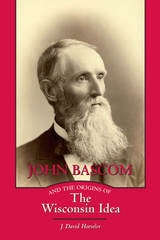
John Bascom and the Origins of the Wisconsin Idea
J. David Hoeveler Jr.
University of Wisconsin Press, 2017
During his term as governor (1901–1906), Robert La Follette routinely consulted with University of Wisconsin researchers to devise groundbreaking programs and legislation. Although the Wisconsin Idea is often attributed to a 1904 speech by Charles Van Hise, then president of the University of Wisconsin, David Hoeveler argues that it originated decades earlier, in the creative and fertile mind of John Bascom.
A philosopher, theologian, and sociologist, Bascom (1827–1922) deeply influenced a generation of students at the University of Wisconsin, including La Follette and Van Hise. Hoeveler documents how Bascom drew concepts from German idealism, liberal Protestantism, and evolutionary theory, transforming them into advocacy for social and political reform. He was a champion of temperance, women's rights, and labor, all of which brought him controversy as president of the university from 1874 to 1887. In a way unmatched by any of his peers at other institutions, Bascom outlined a social gospel that called for an expanded role for state governments and universities as agencies of moral improvement.
Hoeveler traces the intellectual history of the Wisconsin Idea from the nineteenth century to such influential Progressive Era thinkers as Richard T. Ely and John R. Commons, who believed university researchers should be a vital source of expertise for government and citizens.
John Dewey's Educational Philosophy in International Perspective
A New Democracy for the Twenty-First CenturyEdited by Larry A. Hickman and Giuseppe Spadafora
Southern Illinois University Press, 2009
John Dewey’s Educational Philosophy in International Perspective brings together eleven experts from around the globe to examine the international legacy of the famous philosopher. Placing special emphasis on Dewey’s theories of education, Larry A. Hickman and Giuseppe Spadafora have gathered some of the world’s most noted scholars of educational philosophy to present a thorough exploration of Dewey’s enduring relevance and potential as a tool for change in twenty-first-century political and social institutions.
This collection offers close examinations of the global impact of Dewey’s philosophies, both in his time and our own. Included are discussions of his reception as a much-respected yet criticized philosopher among European Catholics both before and after World War I; the utilization of his pragmatic theories in Italian education and the continuing quest to reinterpret them; his emergence as a source of inspiration to new democracies in Central and Eastern Europe; and his recently renewed popularity in the Hispanic world, particularly in South America and Spain. In addition, authors delve into Dewey’s notion of democracy as a personal way of life and his views on the important ties between education and the democratic state.
Also discussed are Dewey’s philosophies regarding school and society, including the understanding of educational trends as reflections of their social context; the contrast between his methods of applying intelligence to ethical problems and the theory of orthodox utilitarianism; responses to criticisms of Dewey’s controversial belief that the sciences can be applied directly to educational practices; and incisive queries into how he would have responded to the crucial role the Internet now plays in primary and secondary education.
This well-rounded volume provides international insight into Dewey’s philosophies and contains a wealth of information never before published in English, resulting in an indispensable resource for anyone interested in John Dewey and his lasting role in education around the world.
Contributors
Viviana Burza
Franco Cambi
Giorgio Chiosso
Jim Garrison
Jaime Nubiola
Hilary Putnam
Ruth Anna Putnam
Giuseppe Spadafora
Emil Višnovský
Leonard J. Waks
Krystyna Wilkoszewska

John Henry Livingston and the Dutch Reformed Tradition in the Early American Nation
John W. Coakley
Rutgers University Press, 2027
John Henry Livingston (1746-1825) was from a prominent New York family of merchants, lawyers and statesmen but chose to become a minister in the Dutch Reformed Church. In his twenties he studied in the Netherlands, absorbing ideas that upheld simultaneously the authority of the individual conscience and the traditional Reformed beliefs rooted in the authority of a state-supported church. Returning to New York City he served as a pastor, as his denomination’s professor charged with educating students for ministry, and eventually, president of the American Dutch church’s college, then called Queens (but later called Rutgers). Throughout his career he articulated, and defended what he saw as the harmony between the traditional body of Reformed belief and the ideals of the American state.

Joseph Carter Corbin
Educator Extraordinaire and Founder of the University of Arkansas at Pine BluffGladys Turner Finney
Butler Center for Arkansas Studies, 2017
Having operated now for more than 140 years, the University of Arkansas at Pine Bluff (UAPB) was founded in 1875 as Branch Normal College by Joseph Carter Corbin, a native of Ohio and the son of former slaves. Corbin, who had a classical education, was the first African American superintendent of public education in Arkansas and literally built the school from the ground up. There was a desperate need for teachers in Arkansas, as there was a great desire for education by former slaves who had been prohibited from learning to read and write.
Corbin himself cleared the land that would soon house the college and then set about to create a school that would produce the first African American teachers following the Reconstruction years. For almost three decades, he worked tirelessly on behalf of Arkansas’s black community to meet the need for educators.
In the early days, Corbin worked both as the president and the janitor so that he could control costs and keep the school going. He often waived matriculation fees and other expenses to allow impoverished students the opportunity to graduate and become qualified to teach throughout Arkansas.
Although he might not have realized it at the time, Corbin was a member of the so-called aristocrats of color, the African American elite of national prominence and a group that included such luminaries as Booker T. Washington. Corbin was a true giant in the history of education in Arkansas. His story, told by a former UAPB student, is monumental for the scope of what one man was able to accomplish.
Journal Writing in Second Language Education
Christine Pearson Casanave
University of Michigan Press, 2011
Journal writing is not new--journals have been around for centuries. More recently, journals have been viewed as a means of scaffolding reflective teaching and encouraging reflectivity in research processes. As a result, some educators may ask, “What more do we need to know?” Those likely to raise this question are probably not thinking of the explosive growth of reflective writing enabled by social networking on the Web, the blogs and other interactive e-vehicles for reflection on experiences in our literate, “real,” and virtual lives This revisiting of journal writing from a 21st century perspective, informed by relevant earlier literature, is what Christine Pearson Casanave guides readers through in this first book-length treatment of the use of journal writing in the contexts of language learning, pre and in-service teaching, and research.
Casanave has put together existing ideas that haven't been put together before and has done it not as an edited collection, but as a single-authored book. She has done it in a way that will be especially accessible to teachers in language teacher education programs and to practicing teachers and researchers of writing in both second and foreign language settings, and in a way that will inspire all of us to think about, not just do, journal writing.
Those who have never attempted to use journals in their classes and own lives, as well as others who have used it with mixed results, will probably be tempted to try it in at least some of the venues Casanave provides guidance for. Those already committed to journal writing will very likely find in this book new reasons for expanding and enhancing their use of journals.
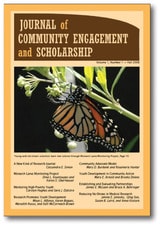
Journal of Community Engagement and Scholarship, Vol 1 No 1
Fall 2008Cassandra E. Simon
University of Alabama Press, 2008
The Journal of Community Engagement and Scholarship (JCES) is a peer-reviewed international journal through which faculty, staff, students, and community partners disseminate scholarly works. JCES integrates teaching, research, and community engagement in all disciplines, addressing critical problems identified through a community-participatory process.
Journal of Community Engagement and Scholarship, Vol 3, No 1
Spring 2010Cassandra E. Simon
University of Alabama Press, 2010
Journal of Community Engagement and Scholarship, Vol. 2 No. 1
Summer 2009Cassandra E. Simon
University of Alabama Press, 2010
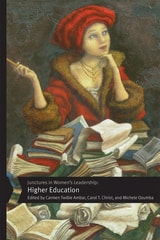
Junctures in Women's Leadership
Higher EducationCarmen Twillie Ambar
Rutgers University Press, 2020
Just Schools
Pursuing Equality in Societies of DifferenceMartha Minow
Russell Sage Foundation, 2008
Juárez Girls Rising
Transformative Education in Times of DystopiaClaudia G. Cervantes-Soon
University of Minnesota Press, 2017
Working-class girls in Ciudad Juárez grow up in a context marked by violence against women, the devastating effects of drug cartel wars, unresponsive and abusive authorities, and predatory U.S. capitalism: under constantly precarious conditions, these girls are often struggling to shape their lives and realize their aspirations. Juárez native Claudia G. Cervantes-Soon explores the vital role that transformative secondary education can play in promoting self-empowerment and a spirit of resistance to the violence and social injustice these girls encounter.
Bringing together the voices of ten female students at Preparatoria Altavista, an innovative urban high school founded in 1968 on social justice principles, Cervantes-Soon offers a nuanced analysis of how students and their teachers together enact a transformative educational philosophy that promotes learning, self-authorship, and hope. Altavista’s curriculum is guided by the concept of autogestión, a holistic and dialectical approach to individual and collective identity formation rooted in the students’ experiences and a critical understanding of their social realities. Through its sensitive ethnography, this book shows how female students actively construct their own meaning of autogestión by making choices that they consider liberating and empowering.
Juárez Girls Rising provides an alternative narrative to popular and often simplistic, sensationalizing, and stigmatizing discourses about those living in this urban borderland. By merging the story of Preparatoria Altavista with the voices of its students, this singular book provides a window into the possibilities and complexities of coming of age during a dystopic era in which youth hold on to their critical hope and cultivate their wisdom even as the options for the future appear to crumble before their eyes.