Results by title
715 books match the query 'Ethnic relations' and 25 start with j
Jamón and Halal
Lessons in Tolerance from Rural AndalucíaChristina Civantos
Amherst College Press, 2022
“This is a book that is both a personal account and a rigorous academic study. It is a model for the kind of engaged humanistic work we are now beginning to see as a hallmark of the post-theory moment, and one that remembers the hard lessons of ethnographic fieldwork as well as the challenging foundational work from philosophically-tinged theory.” —Debra A. Castillo, Cornell University
“Filled with rich descriptions and interwoven personal anecdotes of both Civantos and her interlocuters that complement scholarly analysis.” —Jessica R. Boll, Carroll University
Jewish Budapest
Monuments, Rites, HistoryGéza Komoróczy
Central European University Press, 1999
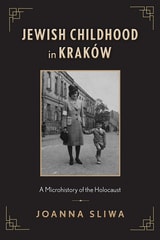
Jewish Childhood in Kraków
A Microhistory of the HolocaustJoanna Sliwa
Rutgers University Press, 2021
Jewish Childhood in Kraków is the first book to tell the history of Kraków in the second World War through the lens of Jewish children’s experiences. Here, children assume center stage as historical actors whose recollections and experiences deserve to be told, analyzed, and treated seriously.
Sliwa scours archives to tell their story, gleaning evidence from the records of the German authorities, Polish neighbors, Jewish community and family, and the children themselves to explore the Holocaust in German-occupied Poland and in Kraków in particular. A microhistory of a place, a people, and daily life, this book plumbs the decisions and behaviors of ordinary people in extraordinary times.
Offering a window onto human relations and ethnic tensions in times of rampant violence, Jewish Childhood in Kraków is an effort both to understand the past and to reflect on the position of young people during humanitarian crises.
Jewish Life in Austria and Germany Since 1945
Identity and Communal ReconstructionSusanne Cohen-Weisz
Central European University Press, 2016
Jewish Life in Belarus
The Final Decade of the Stalin Regime, 1944-1953Leonid Smilovitsky
Central European University Press, 2014
Jewish Life in Muslim Libya
Rivals and RelativesHarvey E. Goldberg
University of Chicago Press, 1990
Harvey E. Goldberg shows that the cultural and religious worlds of the Jewish and Muslim communities in Libya were deeply intertwined in daily life and largely remained so despite political and social changes under successive Ottoman and Italian rule. He documents the intricate symbolic linkages of Jews and Muslims in different periods and in a variety of settings. His accounts of traditional Jewish weddings, of mock fights between Jewish teams that took place in early nineteenth-century Tripoli, and of the profession of street peddling demonstrate that, despite age-old images of Jews as outsiders or infidels, Jews were also an essential and familiar part of the local Islamic society.
Goldberg's narrative continues through the British Military Administration in Libya, a period which saw growing Libyan nationalism and, in 1945, three days of riots in which more than 130 Jews were killed. Goldberg reflects on how these events both expressed and exacerbated a rupture in the social fabric linking Muslims and Jews, setting the scene for the mass emigration of Libyan Jews from their homeland.
Jewish Lives under Communism
New PerspectivesKaterina Capková
Rutgers University Press, 2022
Jewish Mad Men
Advertising and the Design of the American Jewish ExperienceSteinberg, Kerri P
Rutgers University Press, 2015
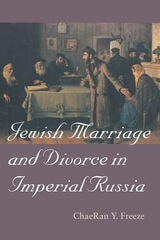
Jewish Marriage and Divorce in Imperial Russia
ChaeRan Y. Freeze
Brandeis University Press, 2001
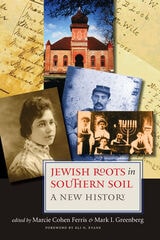
Jewish Roots in Southern Soil
A New HistoryEdited by Marcie Ferris and Mark I. Greenberg
Brandeis University Press, 2006
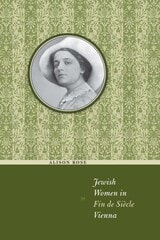
Jewish Women in Fin de Siècle Vienna
By Alison Rose
University of Texas Press, 2008
Despite much study of Viennese culture and Judaism between 1890 and 1914, little research has been done to examine the role of Jewish women in this milieu. Rescuing a lost legacy, Jewish Women in Fin de Siècle Vienna explores the myriad ways in which Jewish women contributed to the development of Viennese culture and participated widely in politics and cultural spheres.
Areas of exploration include the education and family lives of Viennese Jewish girls and varying degrees of involvement of Jewish women in philanthropy and prayer, university life, Zionism, psychoanalysis and medicine, literature, and culture. Incorporating general studies of Austrian women during this period, Alison Rose also presents significant findings regarding stereotypes of Jewish gender and sexuality and the politics of anti-Semitism, as well as the impact of German culture, feminist dialogues, and bourgeois self-images.
As members of two minority groups, Viennese Jewish women nonetheless used their involvement in various movements to come to terms with their dual identity during this period of profound social turmoil. Breaking new ground in the study of perceptions and realities within a pivotal segment of the Viennese population, Jewish Women in Fin de Siècle Vienna applies the lens of gender in important new ways.
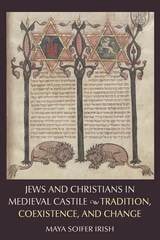
Jews and Christians in Medieval Castile
Maya Soifer Irish
Catholic University of America Press, 2016
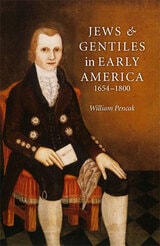
Jews and Gentiles in Early America
1654-1800William Pencak
University of Michigan Press, 2005
Jews and Other Differences
The New Jewish Cultural StudiesJonathan Boyarin
University of Minnesota Press, 1997
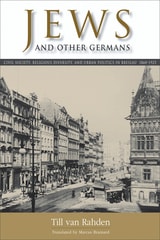
Jews and Other Germans
Civil Society, Religious Diversity, and Urban Politics in Breslau, 1860–1925Till van Rahden
University of Wisconsin Press, 2008
Closely analyzing the political, social, and cultural life in a major German city, van Rahden shows that Jews were a part of a broad urban community that encompassed diversity within unity, at once offering them a large measure of equality while permitting them to remain meaningfully Jewish. Jews and Other Germans also substantially revises the chronology of anti-Semitism in Germany, showing that Jews only began to experience exclusion from Breslau’s social world during World War I.
Yet van Rahden not only illuminates Breslau’s multicultural fabric; he also tells the story of this remarkable city as one of cultural and religious conflict and coexistence. Recounting the experiences of Jews, Protestants, and Catholics within a single narrative, he offers a critical intervention into scholarship on liberalism and civil society in nineteenth- and early twentieth-century Europe.
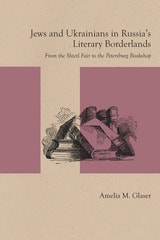
Jews and Ukrainians in Russia's Literary Borderlands
From the Shtetl Fair to the Petersburg BookshopAmelia M. Glaser
Northwestern University Press, 2011
Studies of Eastern European literature have largely confined themselves to a single language, culture, or nationality. In this highly original book, Glaser shows how writers working in Russian, Ukrainian, and Yiddish during much of the nineteenth century and the early part of the twentieth century were in intense conversation with one another. The marketplace was both the literal locale at which members of these different societies and cultures interacted with one another and a rich subject for representation in their art. It is commonplace to note the influence of Gogol on Russian literature, but Glaser shows him to have been a profound influence on Ukrainian and Yiddish literature as well. And she shows how Gogol must be understood not only within the context of his adopted city of St. Petersburg but also that of his native Ukraine. As Ukrainian and Yiddish literatures developed over this period, they were shaped by their geographical and cultural position on the margins of the Russian Empire. As distinctive as these writers may seem from one another, they are further illuminated by an appreciation of their common relationship to Russia. Glaser’s book paints a far more complicated portrait than scholars have traditionally allowed of Jewish (particularly Yiddish) literature in the context of Eastern European and Russian culture.
Jews at the Crossroads
Tradition and Accomodation during the Golden Age of the Hungarian NobilityHoward N. Lupovitch
Central European University Press, 2007
Jews in Michigan
Judith Levin Cantor
Michigan State University Press, 2001
Since the earliest days of the British fur trade, Jewish pioneers have made Michigan their home. Judith Levin Cantor's Jews in Michigan captures the struggles and triumphs of Michigan's Jews as they worked to establish farms, businesses and synagogues, sparking commercial and residential development throughout the state, and even into the far reaches of the Upper Peninsula. Cantor celebrates both urban and rural immigrants, who supplied essential goods and services to those in lumbering, mining, and automobile manufacturing. She also deals honestly with questions of anti-Semitism and prejudice. Cantor's book shows how, in the quest to build strong communities, Jewish residents also helped create the foundations of the Michigan we know today.
Jews in Nazi Berlin
From Kristallnacht to LiberationEdited by Beate Meyer, Hermann Simon, and Chana Schütz
University of Chicago Press, 2009
Though many of the details of Jewish life under Hitler are familiar, historical accounts rarely afford us a real sense of what it was like for Jews and their families to live in the shadow of Nazi Germany’s oppressive racial laws and growing violence. With Jews in Nazi Berlin, those individual lives—and the constant struggle they required—come fully into focus, and the result is an unprecedented and deeply moving portrait of a people.
Drawing on a remarkably rich archive that includes photographs, objects, official documents, and personal papers, the editors of Jews in Nazi Berlin have assembled a multifaceted picture of Jewish daily life in the Nazi capital during the height of the regime’s power. The book’s essays and images are divided into thematic sections, each representing a different aspect of the experience of Jews in Berlin, covering such topics as emigration, the yellow star, Zionism, deportation, betrayal, survival, and more. To supplement—and, importantly, to humanize—the comprehensive documentary evidence, the editors draw on an extensive series of interviews with survivors of the Nazi persecution, who present gripping first-person accounts of the innovation, subterfuge, resilience, and luck required to negotiate the increasing brutality of the regime.
A stunning reconstruction of a storied community as it faced destruction, Jews in Nazi Berlin renders that loss with a startling immediacy that will make it an essential part of our continuing attempts to understand World War II and the Holocaust.
Jews in an Arab Land
Libya, 1835–1970By Renzo De Felice; translated by Judith Roumani; foreword by Rafello Fellah
University of Texas Press, 1985
Internationally renowned scholar Renzo De Felice’s pioneering study of the Jews of Libya is, in many ways, a microcosm of the major sources of conflict in the modern Middle East. This is the first English translation of Ebrei in un paese arabo, originally published by Il Mulino, Bologna, in 1978.
The author’s broad-ranging and meticulous research has enabled him to reconstruct the contemporary history of the Jews in Libya with an incredible richness of detail, bringing into vivid relief the social, religious, cultural, and political lives of a people caught between centuries of tradition and a series of governments bent on plunging them headfirst into the modern world. This story—fraught with the passion, drama, tragicomedy, and conflict of a society in transition—will be an invaluable resource for scholars in Middle Eastern studies, Jewish studies, and contemporary European history. The wealth of documentation, much of it previously unknown or unpublished, makes this a particularly useful book.
Jews, Christian Society, and Royal Power in Medieval Barcelona
Elka Klein
University of Michigan Press, 2006
Jews, Christian Society, and Royal Power in Medieval Barcelona traces the development of the Jewish community of Barcelona from 1050 to 1300. Elka Klein challenges the common perception that medieval Jews lived in relative isolation from the surrounding society, argues for the existence of significant cultural common ground between Jews and Christians, and proposes a new model for understanding Jewish communal autonomy and the relationship between Jews and their rulers.
Klein traces the development of the Jewish community of Barcelona in two contexts: the parallel development of the city of Barcelona and the changing relationship of the king to urban communities, Jewish and Christian. Until the later twelfth century, the Jewish community, like the Christian city of Barcelona, was left mostly to its own devices by the counts of Barcelona, who had neither the interest nor the power to interfere in internal affairs. Klein draws on both Hebrew and Latin sources to offer a picture of a communal elite whose power, mostly informal, derived from their influence within the community. This system changed in the later twelfth century as a result of the expansion of comitial-royal administration. Four Jewish families used their positions as bailiffs, accountants, and secretaries to consolidate power within their community. The rule of this courtier elite was short lived; two episodes of communal conflict in the early thirteenth century and increased royal activism led to the institution of a new regime of elected officials in 1241. The book concludes with an examination of the new elite and the implications of increased royal interference in internal affairs.
A central argument of Jews, Christian Society, and Royal Power in Medieval Barcelona is that it is necessary to distinguish between autonomy by default, resulting from the indifference of the ruler, who leaves a community to govern itself; and autonomy by design, guaranteed by selective royal interference. Against the view that royal interference undercut Jewish autonomy, Klein argues that autonomy by default left the community with insufficient power to enforce its decisions; because Catalan kings generally interfered in support of existing structures, autonomy by design in fact strengthened the community.
This book contributes to ongoing debates about the relationship between the cultures of the three religions in the Iberian peninsula. It joins a body of recent scholarship arguing that medieval European Jews and Christians shared considerable cultural common ground.
Jews, Christians, and the Abode of Islam
Modern Scholarship, Medieval RealitiesJacob Lassner
University of Chicago Press, 2012
Jews, Germans, Memory
Reconstructions of Jewish Life in GermanyY. Michal Bodemann, Editor
University of Michigan Press, 1996
Jews, Turks, and Other Strangers
Roots of Prejudice in Modern GermanyJerome S. Legge, Jr.
University of Wisconsin Press, 2003
Scholarly, objective, insightful, and analytical, Jews, Turks, and Other Strangers studies the causes of prejudice against Jews, foreign workers, refugees, and emigrant Germans in contemporary Germany. Using survey material and quantitative analyses, Legge convincingly challenges the notion that German xenophobia is rooted in economic causes. Instead, he sees a more complex foundation for German prejudice, particularly in a reunified Germany where perceptions of the "other" sometimes vary widely between east and west, a product of a traditional racism rooted in the German past. By clarifying the foundations of xenophobia in a new German state, Legge offers a clear and disturbing picture of a conflicted country and a prejudice that not only affects Jews but also fuels a larger, anti-foreign sentiment.

Just Neighbors?
Research on African American and Latino Relations in the United StatesEdward Telles
Russell Sage Foundation, 2012