Results by title
883 books match the query 'Historical' and 23 start with j
JOURNAL OF A VOYAGE AROUND THE WORLD
A YEAR ON THE SHIP HELENA (1841-1842)THOMAS WORTHINGTON KING
The Ohio State University Press, 2002
In 1841 Thomas Worthington King accepted a position as supercargo on the Helena, a ship some have called “the first American clipper,” as it was about to make its maiden voyage to China. Journal of a Voyage around the World recounts the travel of Thomas Worthington King on the Helena from 1841 to 1842.
In full and well-written entries, King recounts the routines and surprises of life at sea, where storms and calms could be equally threatening, and the next day might bring a stop at St. Helena to see Napoleon’s tomb or an encounter with pirates. King provides details often missing from histories that give a real sense of the period. In his description of Chile and Peru we learn about activities as diverse as cockfighting and courtship. We learn about produce and prisons, mints and monasteries, fruits and fashions. In his account of China, King vividly describes rivers so full of boats that one could “see no water—nothing but the large mat sales” and calm groves of “green lychee, or broad leaved & rustling plantain.”
Perhaps the most important subject of the diary is the diarist himself, whose talent and confidence develop on the pages of his record. Thomas Worthington King was born and raised in Chillicothe, Ohio, and was the grandson of two Ohio Senators: Rufus King and Thomas Worthington.
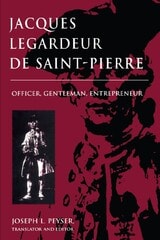
Jacques Legardeur De Saint-Pierre
Officer, Gentleman, EntrepeneurJoseph L. Peyser
Michigan State University Press, 1996
The documentary biography of Jacques Legardeur de Saint-Pierre, an officer in the Troupes de la Marine, who served throughout New France, sheds new light on the business activity of French colonial officers stationed in the West. Many of the eighty previously untranslated documents in Jacques Legardeur de Saint-Pierre demonstrate the extent and profitability of Saint-Pierre's pursuit of business activities while performing official duties in eighteenth-century French North America. The quest for profit permeated Saint- Pierre's career, particularly his command of the Western Sea Post after he succeeded the fabled Pierre Gaultier de Varennes et de la Vérendrye. Saint-Pierre and his secret partner General Jacques-Pierre de Taffanel de La Jonquière, Intendant François Bigot, and Meret, secretary to La Jonquière, used their positions to engage in extensive trade, especially brandy, with the Cree and Assiniboine northwest of Lake Superior. Saint-Pierre's activities provide fresh insights into the North American fur trade.
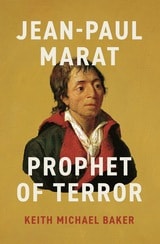
Jean-Paul Marat
Prophet of TerrorKeith Michael Baker
University of Chicago Press, 2025
Who better to pen an authoritative biography of Jean-Paul Marat (1743–93) than preeminent historian of France Keith Michael Baker? Decades in the making, this monumental work takes readers on a journey through the intriguing, sometimes shocking life of this writer and thinker.
Starting with Marat’s Swiss family and upbringing, Baker then sheds light on his early years in England, his career as an aspiring scientist in Paris, his gradual transformation from impassioned pamphleteer to revolutionary newspaperman, and, finally, his murder and martyrdom. Throughout, Baker offers readers the unique opportunity to reconsider the outbreak and development of the French Revolution through Marat’s eyes and in his own words. To help make sense of Marat’s trajectory, he shows how his violent and incendiary public calls to render unseen forces visible, to inject immediacy into an increasingly abstract modern world, would transform classical republicanism into the language of Terror.
Far beyond a standard rendering of Marat’s life and its milestones, this biography offers readers an opportunity to see the French Revolution as never before, through the perspective of one of its major figures. Baker’s book reveals how someone like Marat could go from translating Newton and engaging with Franklin to calling for an ever-growing number of heads to roll—a transformation as chilling as ever.

Jefferson Davis, Unconquerable Heart
Felicity Allen
University of Missouri Press, 2000
Preeminent Civil War historian Frank Vandiver always longed to see an interpretive biography of Jefferson Davis. Finally, more than twenty years after Vandiver expressed that wish, publication of Jefferson Davis, Unconquerable Heart makes such an interpretive biography available.
Felicity Allen begins this monumental work with Davis's political imprisonment at the end of the Civil War and masterfully flashes back to his earlier life, interweaving Davis's private life as a schoolboy, a Mississippi planter, a husband, a father, and a political leader. She follows him from West Point through army service on the frontier, his election to the U.S. House of Representatives, his regimental command in the Mexican War, his service as U.S. secretary of war and senator, and his term as president of the Confederate States of America.
Although Davis's family is the nexus of this biography, friends and enemies also play major roles. Among his friends intimately met in this book are such stellar figures as Andrew Jackson, John C. Calhoun, Zachary Taylor, Franklin Pierce, Albert Sidney Johnston, and Robert E. Lee.
With the use of contemporary accounts and Davis's own correspondence, Jefferson Davis, Unconquerable Heart casts new light upon this remarkable man, thawing the icy image of Davis in many previous accounts. Felicity Allen shows a strong, yet gentle man; a stern soldier who loved horses, guns, poetry, and children; a master of the English language, with a dry wit; a man of powerful feelings who held them in such tight control that he was considered cold; and a home-loving Mississippian who was drawn into a vortex of national events and eventual catastrophe. At all times, "duty, honor, country" ruled his mind. Davis's Christian view of life runs like a thread throughout the book, binding together his devotion to God, his family, and the land.
Jefferson Davis, Unconquerable Heart brings Davis to life in a way that has never been done before. The variety of his experience, the breadth of his learning, and the consistency of his beliefs make this historical figure eminently worth knowing.
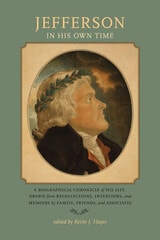
Jefferson in His Own Time
A Biographical Chronicle of His Life, Drawn from Recollections, Interviews, and Memoirs by Family, Friends, and AssociatesKevin J. Hayes
University of Iowa Press, 2012
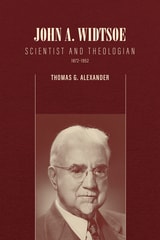
John A. Widtsoe
Scientist and Theologian, 1872-1952Alexander, Thomas G.
Signature Books, 2023
Born in Norway, John A. Widtsoe (1872–1952), was renowned for his expertise in irrigation and dry farming. His pioneering work pushed the boundaries of and contributed significantly to advancements in agricultural practices. Moreover, his forays into the field of biochemistry exemplified his relentless pursuit of scientific understanding.
Widtsoe’s journey came with challenges especially after he was called as an apostle in the Church of Jesus Christ of Latter-day Saints. As president of both Utah State Agricultural College (1907–16) and the University of Utah (1916–21), he faced controversies and obstacles head-on. Additionally, he played a significant role in overseeing the expansion of the LDS gospel in both Europe and the United States. He was highly esteemed within his church due to his ability to provide thorough and insightful explanations of various aspects of church doctrine and reconcile them with scientific truths. Throughout the early-to-mid-twentieth century, he symbolized to many members the successful integration of religious faith with secular knowledge, inspiring countless individuals to embrace both realms in harmony.
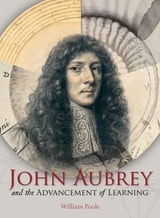
John Aubrey and the Advancement of Learning
William Poole
Bodleian Library Publishing, 2010
John Aubrey (1626–97) was one of the best-connected scholars and antiquaries in the great decades of the British scientific revolution. He is remembered as a pioneer historian and the father of English life-writing, whose Brief Lives remains a lasting portrait of a generation of eminent thinkers and nobles. But Aubrey’s intellectual interests were much broader. He was one of the first Fellows of the Royal Society, and he was acquainted with leading scientists of the generation of Robert Hooke and Isaac Newton. Aubrey championed Hooke’s geological theories, radical for the time, that proposed the organic origin of fossils. In addition, Aubrey was a keen mathematician and an early donor to the Ashmolean Museum of Art and Archaeology and the Bodleian Library. Extensively illustrated, John Aubrey and the Advancement of Learning presents all of Aubrey’s varied interests and pursuits in their intellectual milieu. Published to celebrate the 350th anniversary of the Royal Society, this is the first accessible and illustrated guide to Aubrey’s many diverse achievements as a biographer, natural philosopher and scientist, and antiquary.
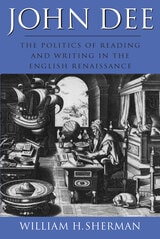
John Dee
The Politics of Reading and Writing in the English RenaissanceWilliam H. Sherman
University of Massachusetts Press, 1995
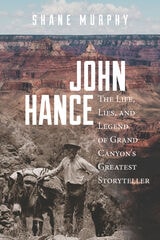
John Hance
The Life, Lies, and Legend of Grand Canyon's Greatest StorytellerShane Murphy
University of Utah Press, 2020
A legend in his own lifetime, John Hance (1837–1919) was synonymous with early Grand Canyon tourism. Between the late 1880s and early 1900s, to say “John Hance” was to say “Grand Canyon.” Hance was well known to travelers and visiting dignitaries alike, men such as William “Buffalo Bill” Cody and Theodore Roosevelt, the president who affectionately referred to him as “the greatest liar on earth.” It was said that Hance tried to jump the canyon on his horse Darby only to turn back when he was halfway over and realized he would never make it across.
The truth behind Hance’s life is remarkable even without embellishment. In this book, Shane Murphy chronicles Hance’s childhood in Tennessee and Missouri, his service in the Confederacy during the Civil War, his time in Union prisons as a POW, and his later adventures with the Hickok brothers crossing the plains. Settling in Arizona’s fruitful Verde Valley, Hance farmed and filled military contracts before taking up residence as Grand Canyon’s first permanent Euro-American settler, trail builder, guide, and renowned storyteller.
Hance left no correspondence, personal memoirs, or other writings. Only informal portraits from magazines and newspaper accounts remain. Murphy investigated assessors’ rolls, rare mercantile ledgers, and mining claims to create a full and compelling narrative of a man who was once an icon of the American West and should be remembered as the founding father of Grand Canyon tourism.
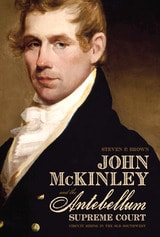
John McKinley and the Antebellum Supreme Court
Circuit Riding in the Old SouthwestSteven P. Brown
University of Alabama Press, 2012
A Southern voice on a national bench—McKinley’s legacy in antebellum law.
John McKinley and the Antebellum Supreme Court offers the first comprehensive biography of Justice John McKinley (1780–1852), a largely forgotten figure in American legal history who played a pivotal role during a formative period of the U.S. Supreme Court. Steven P. Brown rescues McKinley from historical obscurity, presenting a compelling portrait of a man deeply embedded in the political, legal, and financial life of the early 19th-century South.
Born in Kentucky and later settling in northern Alabama, McKinley served in both the U.S. Senate and House of Representatives before being appointed to the Supreme Court by President Martin Van Buren in 1837. His tenure on the bench coincided with the creation of the Ninth Circuit, a vast and challenging judicial territory encompassing Alabama, Arkansas, Louisiana, and Mississippi. Brown details McKinley’s arduous circuit-riding duties, which required extensive travel and exposed him to the legal complexities of a rapidly expanding frontier.
More than a biography, the book provides a penetrating analysis of antebellum legal culture, Alabama state politics, and the internal workings of the Supreme Court during a time of national transformation. Brown challenges the prevailing view of McKinley as a mediocre jurist, arguing instead that his contributions—particularly his dissents defending states’ rights—deserve renewed scholarly attention. With rich historical context and meticulous research, John McKinley and the Antebellum Supreme Court sheds light on the burdens of justice in a divided nation and the legacy of a justice whose career mirrored the tensions of his time.
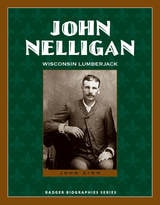
John Nelligan
Wisconsin LumberjackJohn Zimm
Wisconsin Historical Society Press, 2015
Born in 1852, Nelligan rose through the lumberjack ranks, starting out as a humble laborer and working his way up to foreman. He worked and lived in Maine, Pennsylvania, and even Canada before coming to Wisconsin in 1871. Learn what surviving and sawing wood for a living was like many years ago—from the story of one Wisconsin man who lived it!
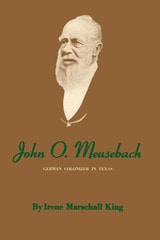
John O. Meusebach
German Colonizer in TexasBy Irene Marschall King
University of Texas Press, 1967
Otfried Hans Freiherr von Meusebach chose a life of hardship and freedom in Texas rather than a life of comfort and influence in his native Germany, where he had lived his formative years within a framework of unconstitutional government.
In 1845 the young liberal relinquished his hereditary German title, left behind his close family ties and his various intellectual and political associations, and arrived in Texas as John O. Meusebach, commissioner-general for the Society for the Protection of German Immigrants. His background enabled him to assume an enlightened leadership of fellow immigrants who were pouring in from Germany. Lacking adequate financial backing, he nevertheless led the settling of some five thousand people in a land that was largely occupied by Indians.
Irene Marschall King presents the full sweep of Meusebach's vigorous life: Meusebach as the young liberal in Germany, as the colonizer in the 1840s, as a Texas senator and, later, an observer of the Civil War, and as a Texan who devoted his later years to bringing the Texas soil to fruition—all set against a background of the immigration movement and frontier life.
"Freedom is not free; it is costly," Meusebach believed. In Texas he found for himself and others freedom worth the price he paid.
Rich in historic detail, King's story recounts the founding of Fredericksburg, the crippling effect of the Mexican War upon the mass of immigrants huddled in illness on the coast, the signing of the Indian Treaty, which opened to settlement over three million acres of land, and the final collapse of the Society for the Protection of German Immigrants. Also depicted is the colonists' influence on the land—the gardens and orchards of south central Texas, the "Easter Fires" that blaze on the hills surrounding Fredericksburg, the mixture of German custom with American necessity that created a unique culture. Throughout the narrative Mrs. King presents a fascinating cast of characters: the noble Prince Solms, who tries to establish a German military outpost in Texas; Henry Fisher, who attempts by devious methods to control the colonists and their land and finally incites a mob which tries to hang Meusebach; Philip Cappes, a special commissioner and Meusebach's assistant, who plots through intriguing correspondence with Count Castell, the executive secretary in Germany, to overthrow Meusebach; and the colorful and courageous Indian fighter and Texas Ranger, Colonel Jack Hays.
Primarily, however, this is the story of a man who found strength in his family's motto, "Perseverance in Purpose," and gave of his energies to build Texas.
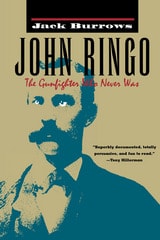
John Ringo
The Gunfighter Who Never WasJack Burrows
University of Arizona Press, 1987
John Spring's Arizona
A. M. Gustafson
University of Arizona Press, 1966
John Spring first saw Arizona from an encampment on the west side of the Colorado River at "a small town called Yuma . . . then called Arizona City . . . it did a thriving fandango and saloon business during the period of continual going and coming of troops and teamsters." Southern Arizona, as Spring first saw and described it, was "a country where every highway, every path, every hamlet, and nearly every rancho could tell (had they the gift of speech) of devilish deeds, of crafty ambuscade, murdered settlers and travellers."
Supported by knowledge of several languages and wide reading, John Spring was able to extend his reporting to geographical and botanical description, to detailed reports of agriculture in the Santa Cruz Valley, and mercantile activity in Tucson. But he returned always to people--an irresistible center of interest for John Spring.
The lively and authentic serial reports of John Spring to the National Tribune in Washington, D.C., have been assembled and edited in this volume by A. M. Gustafson.

John Wesley North and the Reform Frontier
Merlin Stonehouse
University of Minnesota Press, 1965
John Wesley North and the Reform Frontier was first published in 1965. Minnesota Archive Editions uses digital technology to make long-unavailable books once again accessible, and are published unaltered from the original University of Minnesota Press editions.
This biography is the absorbing and significant story of a frontier life in America in the nineteenth century. John Wesley North was a carpetbagger in the best sense of the word, and professor Stonehouse points out that no fallacy is more persistent in American history than the generalization that carpetbaggers were evil opportunists peculiar to the southward movement after the Civil War. North's aims, ambitions, and ideas were typical of many carpetbaggers whose common aspiration was the evangelical humanism that flourished in all of the English-speaking world at that time except in the slave-holding South.
Born in upstate New York in 1815, North migrated westward. For the rest of his life he pursued business and political interests with equal zest and championed many social causes. He went to Minnesota, Nevada, and California without enough money to live on, yet contributed significantly to their early history. He was a founder of Minneapolis, proprietor of Fairbault and Northfield, a founder of the University of Minnesota and of the Republican party in Minnesota, and a leader in the state's constitutional convention. In Nevada he helped shape land policy and mining law and found its cities and was president of the 1863 constitutional convention. He helped develop Southern California, where he established Oleander and Riverside. These three states welcomed him as a penniless dreamer, and he added much to the development of each. But in Tennessee, where he arrived with a fortune, eager to help rebuild the war-torn state, his best efforts resulted only in recrimination and his financial ruin. Thus North's life illustrates the sorry truth of General Sherman's comment that the carpetbaggers built the West but were not permitted to build the South.
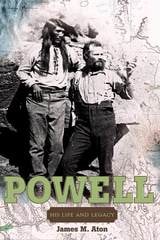
John Wesley Powell
His Life and LegacyJames M Aton
University of Utah Press, 2010
“John Wesley Powell: explorer, writer, geologist, anthropologist, land planner, bureaucrat. Which one do we focus on?” This is the question author James M. Aton poses at the beginning of his biography of Powell, though he soon decides that it is impossible to ignore any facet of Powell’s life. Powell was a polymath, one whose “divergent interests resemble one of those braided streambeds in his beloved canyon country, branching out in many directions, but ultimately beginning and ending in the same stream."
Aton beautifully tells the multidimensional stories of Powell’s childhood, his military and teaching careers, his famous and exciting explorations of the Colorado River, and the battles he waged from his influential positions within the Smithsonian’s Bureau of Ethnology and the United States Geological Survey. This new edition of John Wesley Powell: His Life and Legacy, first printed as an issue of the Boise State University Western Writers Series, includes the original biography, but also features Aton’s new interpretations of Powell’s writings on exploration, land-planning, anthropology, and irrigation, and incorporates the author’s distinguished faculty lecture on Powell and cash-register dams in the Colorado River Basin.
Jonathan Swift
Irish Blow-InEugene Hammond
University of Delaware Press, 2016
Jonathan Swift: Irish Blow-in covers the arc of the first half of Jonathan Swift’s life, offering fresh details of the contentment and exuberance of his childhood, of the support he received from his grandmother, of his striking affection for Esther Johnson from the time she was ten years old (his pet name for her in her twenties was “saucebox”), of his precocious entry into English politics with his Contests and Dissensions pamphlet, of his brilliant and much misunderstood Tale of a Tub, and of his naive determination to do well both as a vicar of the small parish of Laracor in Ireland and as a writer for the Tory administration trying to pull England out of debt by ending the war England was engaged in with France.
I do not share with past biographers the sense that Swift had a deprived childhood. I do not share the suspicion that most of Swift’s enmities were politically motivated. I do not feel critical of him because he was often fastidious with his money. I do not think he was insincere about his religious faith. His pride, his sexual interests, his often shocking or uninhibited language, his instinct for revenge – emphasized by many previous biographers – were all fundamental elements of his being, but elements that he either used for rhetorical effect, or that he tried to keep in check, and that he felt that religion helped him to keep in check. Swift had as firm a conviction as did Freud that we are born with wayward tendencies; unlike Freud, though, he saw both religion and civil society as necessary and helpful checks on those wayward tendencies, and he (frequently, but certainly not always) acknowledged that he shared those tendencies with the rest of us.
This biography, in two books, Jonathan Swift: Irish Blow-in and Jonathan Swift: Our Dean, will differ from most literary biographies in that it does not aim to show how Swift’s life illuminates his writings, but rather how and why Swift wrote in order to live the life he wanted to live. I have liberally quoted Swift’s own words in this biography because his inventive expression of ideas, both in his public works and in his private letters, was what has made him a unique and compelling figure in the history of literature. I hope in these two books to come closer than past biographies to capturing how it felt to Swift himself to live his life.
Published by University of Delaware Press. Distributed worldwide by Rutgers University Press.
Jonathan Swift
Our DeanEugene Hammond
University of Delaware Press, 2016
Jonathan Swift: Our Dean details the political climax of his remarkable career—his writing and publication of The Drapier’s Letters (1724), Gulliver’s Travels (1726), and A Modest Proposal (1729)—stressing the relentless political opposition he faced and the numerous ways, including through his sermons, that he worked from his political base as Dean of St. Patrick’s Cathedral, psychologically as well as physically just outside the Dublin city walls, to attempt to rouse the Irish people to awareness of the ways that England was abusing them.
This book faces squarely the likelihood that Swift had a physical affair with Esther Vanhomrigh between 1719 and 1723, and reassesses in the light of that likelihood his conflicting relations with Esther Vanhomrigh and Esther Johnson. It traces the many loving friendships with both men and women in Ireland that sustained Swift during the years when his health gradually failed him, enabling him to continue indefatiguably, both through his writings and his authority as Dean of St. Patrick’s, to contribute to the public welfare in the face of relentless British attempts to squeeze greater and greater profits out of their Irish colony. Finally, it traces how Swift’s political indignation led to his treating many people, friends and enemies, cruelly during the 1730s, even while his humor and his ability to make and attract new friends sustained themselves until his memory finally failed him in 1742.
This biography, in two books, Jonathan Swift: Irish Blow-in and Jonathan Swift:Our Dean, comes closer than past biographies to capturing how it felt to Swift himself to live his life.
Published by University of Delaware Press. Distributed worldwide by Rutgers University Press.
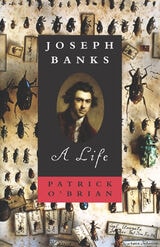
Joseph Banks
A LifePatrick O'Brian
University of Chicago Press, 1997
"It is in his description of that arduous three-year voyage [on the ship Endeavor] that Mr. O'Brian is at his most brilliant. . . . He makes us understand what life within this wooden world was like, with its 94 male souls, two dogs, a cat and a goat."—Linda Colley, New York Times
"An absorbing, finely written overview, meant for the general reader, of a major figure in the history of natural science."—Frank Stewart, Los Angeles Times
"[This book is] the definitive biography of an extraordinary subject."—Robert Taylor, Boston Globe
"His skill at narrative and his extensive knowledge of the maritime history . . . give him a definite leg up in telling this . . . story."—Tom Clark, San Francisco Chronicle
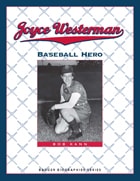
Joyce Westerman
Baseball HeroBob Kann
Wisconsin Historical Society Press, 2012
Joyce Westerman grew up on a farm in Pleasant Prairie, Wisconsin. As a kid, she cleaned the barn, picked vegetables, and helped her father cut down trees. But what she really loved to do was play baseball. Joyce played ball at recess and with friends whenever she could. She even joined her aunt’s adult softball team when she was only twelve.
As Joyce got older, she went to work at a factory in Kenosha. But when World War II broke out, she got a chance to try out for the All American Girls Professional Baseball League. Women from all over the country signed up to show off their skills. Only a few were good enough, and Joyce was one of them. For eight years, Joyce travelled around the United Stated playing ball, winning the league championship in her last season.
This addition to the Badger Biographies series for young readers tells the story of a woman who lived her dream of becoming a professional athlete. In a time when women had few opportunities for careers, and next to none in professional sports, Joyce and her teammates showed that women have what it takes.
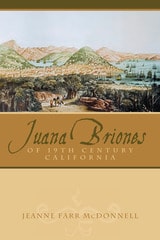
Juana Briones of Nineteenth-Century California
Jeanne Farr McDonnell
University of Arizona Press, 2008
Juana Briones was born in 1802 and spent her early youth in Santa Cruz, a community of retired soldiers who had helped found Spanish California, Native Americans, and settlers from Mexico. In 1820, she married a cavalryman at the San Francisco Presidio, Apolinario Miranda. She raised her seven surviving sons and daughters and adopted an orphaned Native American girl. Drawing on knowledge she gained about herbal medicine and other cures from her family and Native Americans, she became a highly respected curandera, or healer.
Juana set up a second home and dairy at the base of then Loma Alta, now Telegraph Hill, the first house in that area. After gaining a church-sanctioned separation from her abusive husband, she expanded her farming and cattle business in 1844 by purchasing a 4,400-acre ranch, where she built her house, located in the present city of Palo Alto. She successfully managed her extensive business interests until her death in 1889. Juana Briones witnessed extraordinary changes during her lifetime. In this fascinating book, readers will see California’s history in a new and revelatory light.
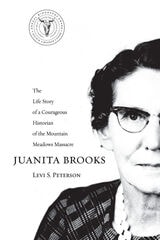
Juanita Brooks
The Life Story of a Courageous Historian of the Mountain Meadows MassacreLevi S Peterson
University of Utah Press, 2011
Born in 1898 in Bunkerville, Nevada, Juanita Brooks led an early life similar to that of many who grew up in isolated, tightly knit, rural Mormon communities. An early marriage suggested her future would follow a predictable course, but the death of her husband, the need to raise a young son, and a passion for knowledge led her along a different path, when at mid-life she became a well-known author after publishing The Mountain Meadows Massacre. In this book she exposed the killing of some 100 California-bound emigrants traveling through southern Utah in 1856 as an atrocity carried out by a Mormon militia with Indian allies and not solely as an Indian massacre, as it had been for so long portrayed.
Juanita Brooks was a faithful and active member of the Mormon Church, and her courage to tell the truth about this dark moment in Mormon history established her reputation as a respected historian. While there was no official church condemnation of the book, there was unofficial disapproval and Brooks was shunned by many in her community. She nevertheless doggedly pursued church authorities to revise their stand on the incidents at Mountain Meadows. The desire to tell the truth as she saw it became her hallmark, and Brooks’s life as wife, mother, teacher, community member, and undaunted historian became an uncommon story of personal stamina and intellectual courage.
Winner of the Evans Biography Award and the Mormon History Association Best Book Award.
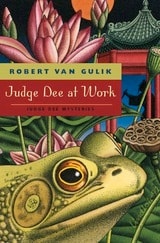
Judge Dee at Work
Eight Chinese Detective StoriesRobert van Gulik
University of Chicago Press, 1992
The eight short stories in Judge Dee at Work cover a decade during which the judge served in four different provinces of the T’ang Empire. From the suspected treason of a general in the Chinese army to the murder of a lonely poet in his garden pavilion, the cases here are among the most memorable in the Judge Dee series.