Results by title
220 books match the query 'Individual Artists' and 4 start with j
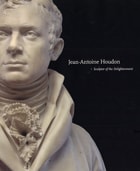
Jean-Antoine Houdon
Sculptor of the EnlightenmentAnne L. Poulet
University of Chicago Press, 2003
This lavish exhibition catalogue will immediately take its rightful place as the definitive work on Houdon. With more than one hundred color plates and two hundred black and white halftones, Jean-Antoine Houdon: Sculptor of the Enlightenment illustrates every stage of the sculptor's fascinating career, from his early portrayals of Louis XVI and Marie Antoinette to his stunning portraits of American patriots such as George Washington, the Marquis de Lafayette, John Paul Jones, Benjamin Franklin, and Thomas Jefferson. Indeed the images we hold dear of legendary Enlightenment figures like Diderot, Rousseau, d'Alembert, and Voltaire are based on works by Houdon. More than mere representations, these sculptures provide us fascinating, intimate glimpses into the very core of who these figures were. Houdon's genius animated even his less illustrious subjects, like his portraits of his family and friends, and filled his sculptures of children with delicacy and freshness. Accompanying the images of Houdon's masterworks are four insightful essays that discuss Houdon's views on art (based in part on a newly discovered manuscript written by the artist) as well as his prominence in the highly varied cultures of eighteenth-century France, Germany, and Russia.
From aristocrats to revolutionaries, actors to philosophers, Houdon's amazingly vivid portraits constitute the visual record of the Enlightenment and capture the true spirit of a remarkable age. Jean-Antoine Houdon finally gives these gorgeous works their due.
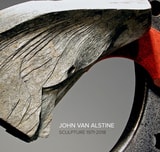
John Van Alstine
Sculpture, 1971–2018John Van Alstine
The Artist Book Foundation, 2019
For nearly fifty years, John Van Alstine has created abstract sculptures forged from steel and stone. In John Van Alstine: Sculpture, 1971–2018, three notable essayists explore the sculptor's abstract landscapes that reveal the complex synergy between natural foces and man-made elements; by grappling with the challenges of balancing stone and steel, Van Alstine's indoor, outdoor, and site-specific sculptures are measured and calculated, yet simultaneously poetic; their swooping angular lines create expansive spaces beyond the limits of their stone-and-steel frames to unveil our collective history and imagination, illuminating a deft interplay of natural energies and the human experience.
The artist weaves into his works elements of mythology, celestial navigation, implements, human figures, movement, urban forms, and found objects, while using motion, balance, and intertia to incorporate the eternal forces of gravity, tension, and erosion. In an essay on his drawings, Van Alstine details the critical role they play in the initiation and planning of his projects, offering the reader a firsthand perspective on the artist's creative process. The Artist Book Foundation is gratified to publish this lavishly illustrated monograph on an esteemed and prolific contemporary artist.
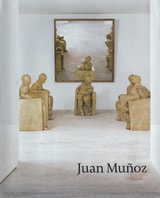
Juan Munoz
Neal Benezra and Olga M. Viso
University of Chicago Press, 2001
Muñoz's early work focused on architectural objects that implied a transitory human presence. Then, defying the trend among progressive artists, he began to introduce figures into his work. Casting his figures in papier-mâché, resin, and eventually bronze, Muñoz limited their size and descriptive details to heighten their psychological impact. In the 1990s, Muñoz created his signature "conversation pieces," large ensembles of figures installed in indoor or outdoor settings. Calling upon a wide range of sources in literature, music, film, as well as painting and sculpture, Muñoz's work explores the nature of psychological interaction and engages the viewer on a variety of perceptual levels.
Juan Muñoz includes essays by Neal Benezra, art critic Michael Brenson, and Olga Viso, as well as an interview with the artist by Paul Shimmel. Also featuring highlights from a 2001 installation commissioned by London's Tate Modern, Juan Muñoz is the most comprehensive overview of this challenging and exciting artist's work.
Junctures in Women's Leadership
The ArtsBrodsky, Judith K
Rutgers University Press, 2018
Amongst the women discussed are Bertha Honoré Palmer, Louise Noun, Samella Lewis, Julia Miles, Miriam Colón, Jaune Quick-To-See Smith, Bernice Steinbaum, Anne d’Harnoncourt, Martha Wilson, Jawole Willa Jo Zollar, Kim Berman, Gilane Tawadros, Joanna Smith, and Veomanee Douangdala.