Results by title
185 books match the query 'Jazz' and 24 start with j
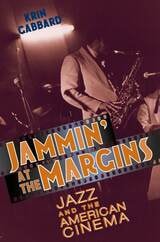
Jammin' at the Margins
Jazz and the American CinemaKrin Gabbard
University of Chicago Press, 1996
Gabbard's close look at jazz film biographies, from The Jazz Singer to Bird, reveals Hollywood's reluctance to acknowledge black subjectivity. Black and even white jazz artists have become vehicles for familiar Hollywood conceptions of race, gender, and sexuality. Even Scorsese's New York, New York and Spike Lee's Mo' Better Blues have failed to disentangle themselves from entrenched stereotypes and conventions.
Gabbard also examines Hollywood's confrontation with jazz as an elite art form, and the role of the jazz trumpet as a crucial signifier of masculinity. Finally, he considers the acting careers of Louis Armstrong, Nat King Cole, and Hoagy Carmichael; Duke Ellington's extraordinary work in films from 1929 until the late 1960s; and the forgotten career of Kay Kyser, star of nine Hollywood films and leader of a popular swing band.
This insightful look at the marriage of jazz and film is a major contribution to film, jazz, and cultural studies.
Jazz Among the Discourses
Krin Gabbard
Duke University Press, 1995
Challenging "official jazz histories," the contributors to this volume view jazz through the lenses of comparative literature; African American studies; music, film, and communication theory; English literature; American studies; history; and philosophy. With uncommon rigor and imagination, their essays probe the influence of various discourses—journalism, scholarship, politics, oral history, and entertainment—on writing about jazz. Employing modes of criticism and theory that have transformed study in the humanities, they address questions seldom if ever raised in jazz writing: What are the implications of building jazz history around the medium of the phonograph record? Why did jazz writers first make the claim that jazz is an art? How is an African American aesthetic articulated through the music? What are the consequences of the interaction between the critic and the jazz artist? How does the improvising artist navigate between chaos and discipline?
Along with its companion volume, Representing Jazz, this versatile anthology marks the arrival of jazz studies as a mature, intellectually independent discipline. Its rethinking of conventional jazz discourse will further strengthen the position of jazz studies within the academy.
Contributors. John Corbett, Steven B. Elworth, Krin Gabbard, Bernard Gendron, William Howland Kenney, Eric Lott, Nathaniel Mackey, Burton Peretti, Ronald M. Radano, Jed Rasula, Lorenzo Thomas, Robert Walser
Jazz Composition and Orchestration
William Russo
University of Chicago Press, 1968

Jazz Composition and Orchestration
William Russo
University of Chicago Press, 1968
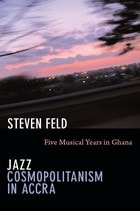
Jazz Cosmopolitanism in Accra
Five Musical Years in GhanaSteven Feld
Duke University Press, 2012
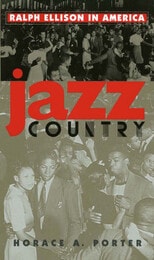
Jazz Country
Ralph Ellison in AmericaHorace A. Porter
University of Iowa Press, 2001
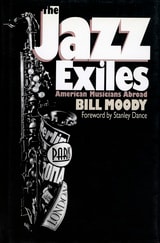
Jazz Exiles
Bill Moody
University of Nevada Press, 2000
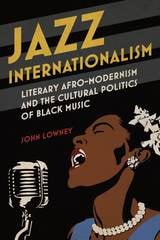
Jazz Internationalism
Literary Afro-Modernism and the Cultural Politics of Black MusicJohn Lowney
University of Illinois Press, 2017
Jazz Internationalism offers a bold reconsideration of jazz's influence in Afro-modernist literature. Ranging from the New Negro Renaissance through the social movements of the 1960s, John Lowney articulates nothing less than a new history of Afro-modernist jazz writing. Jazz added immeasurably to the vocabulary for discussing radical internationalism and black modernism in leftist African American literature. Lowney examines how Claude McKay, Ann Petry, Langston Hughes, and many other writers employed jazz as both a critical social discourse and mode of artistic expression to explore the possibilities—and challenges—of black internationalism. The result is an expansive understanding of jazz writing sure to spur new debates.
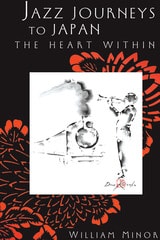
Jazz Journeys to Japan
The Heart WithinWilliam Minor
University of Michigan Press, 2004
Part music history, part cultural meditation, part travel narrative, Jazz Journeys to Japan is the first book to address the experiences of individual players -- Japanese jazz greats such as Toshiko Akiyoshi, Masahiko Satoh, Makoto Ozone, and Yosuke Yamashita.
William Minor navigates the converging streams of Western music and Eastern tradition, revealing through interviews with musicians, critics, and producers the unique synthesis that results from this convergence. And, turning conventional wisdom on its ear, he disproves the widely held notion that Japanese jazz artists don't "swing." Along the way, we experience Minor's growing appreciation of Japanese culture, which mirrors his subjects' discovery of American jazz.
William Minor's previous books include Unzipped Souls: A Jazz Journey through the Soviet Union, and Monterey Jazz Festival: Forty Legendary Years. He has written for Downbeat, Jazz Times, Jazz Notes, Coda, and Swing Journal.
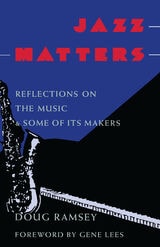
Jazz Matters
Reflections on the Music & Some of Its MakersDoug Ramsey
University of Arkansas Press, 1989
Rich in anecdote and insight, Jazz Matters is a collection of essays, profiles, and reviews by Doug Ramsey, and observer and chronicler of jazz and its musicians for more than thirty years. It stirs the reader to discover or rediscover the music and performers Ramsey describes. His accounts of recording sessions and live performances enhance this excellent review of the history, variety, and artistic depth that make jazz so profound an element in modern culture.
Jazz Matters gives the reader a basis for understanding jazz improvisation Ramsey’s sensitive, straightforward, and entertaining pieces promote appreciation of the accomplishment of artists from Louis Armstrong to John Coltrane and Ornette Coleman.
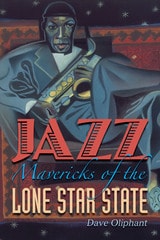
Jazz Mavericks of the Lone Star State
By Dave Oliphant
University of Texas Press, 2007
Jazz is one of America's greatest gifts to the arts, and native Texas musicians have played a major role in the development of jazz from its birth in ragtime, blues, and boogie-woogie to its most contemporary manifestation in free jazz. Dave Oliphant began the fascinating story of Texans and jazz in his acclaimed book Texan Jazz, published in 1996. Continuing his riff on this intriguing musical theme, Oliphant uncovers in this new volume more of the prolific connections between Texas musicians and jazz.
Jazz Mavericks of the Lone Star State presents sixteen published and previously unpublished essays on Texans and jazz. Oliphant celebrates the contributions of such vital figures as Eddie Durham, Kenny Dorham, Leo Wright, and Ornette Coleman. He also takes a fuller look at Western Swing through Milton Brown and his Musical Brownies and a review of Duncan McLean's Lone Star Swing. In addition, he traces the relationship between British jazz criticism and Texas jazz and defends the reputation of Texas folklorist Alan Lomax as the first biographer of legendary jazz pianist-composer Jelly Roll Morton. In other essays, Oliphant examines the links between jazz and literature, including fiction and poetry by Texas writers, and reveals the seemingly unlikely connection between Texas and Wisconsin in jazz annals. All the essays in this book underscore the important parts played by Texas musicians in jazz history and the significance of Texas to jazz, as also demonstrated by Oliphant's reviews of the Ken Burns PBS series on jazz and Alfred Appel Jr.'s Jazz Modernism.
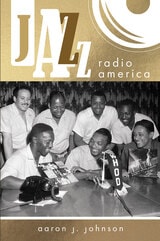
Jazz Radio America
Aaron J. Johnson
University of Illinois Press, 2024
An interwoven story of a music and a medium, Jazz Radio America answers perennial questions about why certain kinds of jazz get played and why even that music is played in so few places.
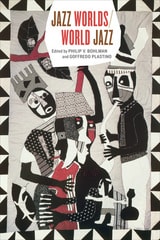
Jazz Worlds/World Jazz
Edited by Philip V. Bohlman and Goffredo Plastino
University of Chicago Press, 2016
Monumental in scope, this book explores the relationship between jazz and culture and how they influence each other across a range of themes and settings. Contributors offer an analysis of the social meaning of jazz in Iran, a look at the genesis of Ethiopian jazz and at Indian fusion, and chapters on jazz diplomacy, Balkan swing, and that French export par excellence: Django Reinhardt. Altogether the contributors approach jazz—in these global iterations—through the themes that have always characterized it at home: place, history, mobility, media, and race. The result is a first-of-its-kind map of jazz around the globe that pays tribute to the players who have given the form its seemingly infinite possibilities.
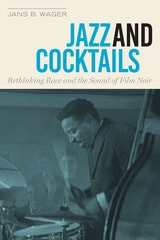
Jazz and Cocktails
Rethinking Race and the Sound of Film NoirBy Jans B. Wager
University of Texas Press, 2017
Film noir showcased hard-boiled men and dangerous femmes fatales, rain-slicked city streets, pools of inky darkness cut by shards of light, and, occasionally, jazz. Jazz served as a shorthand for the seduction and risks of the mean streets in early film noir. As working jazz musicians began to compose the scores for and appear in noir films of the 1950s, black musicians found a unique way of asserting their right to participate fully in American life.
Jazz and Cocktails explores the use of jazz in film noir, from its early function as a signifier of danger, sexuality, and otherness to the complex role it plays in film scores in which jazz invites the spectator into the narrative while simultaneously transcending the film and reminding viewers of the world outside the movie theater. Jans B. Wager looks at the work of jazz composers such as Miles Davis, Duke Ellington and Billy Strayhorn, Chico Hamilton, and John Lewis as she analyzes films including Sweet Smell of Success, Elevator to the Gallows, Anatomy of a Murder, Odds Against Tomorrow, and considers the neonoir American Hustle. Wager demonstrates how the evolving role of jazz in film noir reflected cultural changes instigated by black social activism during and after World War II and altered Hollywood representations of race and music.

Jazz and Machine-Age Imperialism
Music, "Race," and Intellectuals in France, 1918-1945Jeremy F. Lane
University of Michigan Press, 2014
Jeremy F. Lane’s Jazz and Machine-Age Imperialism is a bold challenge to the existing homogenous picture of the reception of American jazz in world-war era France. Lane’s book closely examines the reception of jazz among French-speaking intellectuals between 1918 and 1945 and is the first study to consider the relationships, sometimes symbiotic, sometimes antagonistic, between early white French jazz critics and those French-speaking intellectuals of color whose first encounters with the music in those years played a catalytic role in their emerging black or Creole consciousness. Jazz’s first arrival in France in 1918 coincided with a series of profound shocks to received notions of French national identity and cultural and moral superiority. These shocks, characteristic of the era of machine-age imperialism, had been provoked by the first total mechanized war, the accelerated introduction of Taylorist and Fordist production techniques into European factories, and the more frequent encounters with primitive “Others” in the imperial metropolis engendered by interwar imperialism. Through close readings of the work of early white French jazz critics, alongside the essays and poems of intellectuals of color such as the Nardal sisters, Léon-Gontran Damas, Léopold Sédar Senghor, and René Ménil, Jazz and Machine-Age Imperialism highlights the ways in which the French reception of jazz was bound up with a series of urgent contemporary debates about primitivism, imperialism, anti-imperialism, black and Creole consciousness, and the effects of American machine-age technologies on the minds and bodies of French citizens.

Jazz as a Cultural Archive, Volume 22
Jim Merod, ed.
Duke University Press, 0
While jazz as an art form has moved from an essentially live club experience to a controlled mass market enterprise, jazz as a cultural form is becoming more recognized and more defined. Reminiscent of yesterday’s more personal jazz encounter, Jazz as a Cultural Archive is an intellectual and controversial jam session. This issue views the evolution of jazz culture through the eyes of the artists themselves. Conversations with saxophonist/composer Benny Golson, singer Mary Stallings, pianists John Hicks and Frank Strazzeri, and trumpeter Art Farmer, among others, highlight this collection of commentary on the changing jazz scene. Also included are an essay by one of the foremost chroniclers of the jazz world, novelist and critic Albert Murray; a look at jazz and the politics of race by trombonist/composer Tom McIntosh; and a stunning collection of photographs by renowned jazz photographer Michael Oletta.
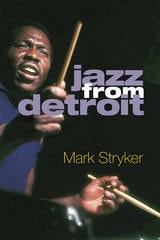
Jazz from Detroit
Mark Stryker
University of Michigan Press, 2019
Stryker’s story starts in the 1940s and ’50s, when the auto industry created a thriving black working and middle class in Detroit that supported a vibrant nightlife, and exceptional public school music programs and mentors in the community like pianist Barry Harris transformed the city into a jazz juggernaut. This golden age nurtured many legendary musicians—Hank, Thad, and Elvin Jones, Gerald Wilson, Milt Jackson, Yusef Lateef, Donald Byrd, Tommy Flanagan, Kenny Burrell, Ron Carter, Joe Henderson, and others. As the city’s fortunes change, Stryker turns his spotlight toward often overlooked but prescient musician-run cooperatives and self-determination groups of the 1960s and ’70s, such as the Strata Corporation and Tribe. In more recent decades, the city’s culture of mentorship, embodied by trumpeter and teacher Marcus Belgrave, ensured that Detroit continued to incubate world-class talent; Belgrave protégés like Geri Allen, Kenny Garrett, Robert Hurst, Regina Carter, Gerald Cleaver, and Karriem Riggins helped define contemporary jazz. The resilience of Detroit’s jazz tradition provides a powerful symbol of the city’s lasting cultural influence.
Stryker’s 21 years as an arts reporter and critic at the Detroit Free Press are evident in his vivid storytelling and insightful criticism. Stryker has fully updated the paperback since the publication of the hardcover. This award-winning book will appeal to jazz aficionados, casual fans, and anyone interested in the vibrant and complex history of cultural life in Detroit.
Jazz from the Beginning
Garvin Bushell
University of Michigan Press, 1990
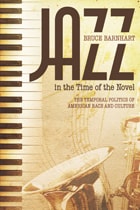
Jazz in the Time of the Novel
The Temporal Politics of American Race and CultureBruce Evan Barnhart
University of Alabama Press, 2013
WINNER OF THE ELIZABETH AGEE PRIZE IN AMERICAN LITERATURE
Jazz in the Time of the Novel argues that a culture’s understanding of the concept of time plays a central role in its economic, social, and aesthetic affairs and that a culture arrives at its conception of time through its artistic practices.
Bruce Barnhart, in Jazz in the Time of the Novel, shows that American culture of the first three decades of the twentieth century was shaped by the kindred rhythms and movements of two particular art forms: jazz and fiction. At the beginning of the twentieth century, widespread changes in America’s social, demographic, and economic norms threatened longstanding faith in a unified and inevitable movement towards a better future. As Barnhart shows both jazz and novels of the period address these temporal uncertainties, inserting themselves into arguments about the proper unfolding of an affirmative American future. Barnhart proposes that these two aesthetic forms can be viewed as co-participants in an ongoing discussion about the way in which the future should be imagined and experienced—a discussion symptomatic of the broader exchanges taking place within the many trajectories comprising early twentieth-century American culture.
This book includes in-depth approaches to numerous examples of jazz and the novel, including performances by James P. Johnson, Louis Armstrong, Bessie Smith, Duke Ellington, and Ethel Waters, and novels by James Weldon Johnson, F. Scott Fitzgerald, Ernest Hemingway, Gertrude Stein, and Nella Larsen, among others. In addition to the details of specific musical and literary works, Jazz in the Time of the Novel offers careful consideration as to how these works impact their social context.

Jazz in the sixties
the expansion of musical resources and techniquesMichael J. Budds
University of Iowa Press, 1990
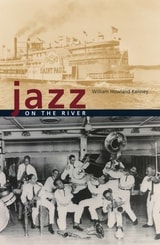
Jazz on the River
William Howland Kenney
University of Chicago Press, 2005
Simply put, when jazz went upstream, it went mainstream, and in Jazz on the River, William Howland Kenney brings to life the vibrant history of this music and its seduction of the men and women along America's inland waterways. Here for the first time readers can learn about the lives and music of the levee roustabouts promoting riverboat jazz and their relationships with such great early jazz adventurers as Louis Armstrong, Fate Marable, Warren "Baby" Dodds, and Jess Stacy. Kenney follows the boats from Memphis to St. Louis, where new styles of jazz were soon produced, all the way up the Ohio River, where the music captivated audiences in Cincinnati and Pittsburgh alike.
Jazz on the River concludes with the story of the decline of the old paddle wheelers-and thus riverboat jazz-on the inland waterways after World War II. The enduring silence of our rivers, Kenney argues, reminds us of the loss of such a distinctive musical tradition. But riverboat jazz still lives on in myriad permutations, each one in tune with our own times.
Jazzing
New York City's Unseen SceneThomas H. Greenland
University of Illinois Press, 2016
John Lewis and the Challenge of "Real" Black Music
Christopher Coady
University of Michigan Press, 2016
For critics and listeners, the reception of the 1950s jazz-classical hybrid Third Stream music has long been fraught. In John Lewis and the Challenge of “Real” Black Music, Christopher Coady explores the work of one of the form’s most vital practitioners, following Lewis from his role as an arranger for Miles Davis’s Birth of the Cool sessions to his leadership of the Modern Jazz Quartet, his tours of Europe, and his stewardship of the Lenox School of Jazz.
Along the way Coady shows how Lewis’s fusion works helped shore up a failing jazz industry in the wake of the 1940s big band decline, forging a new sound grounded in middle-class African American musical traditions. By taking into account the sociocultural milieu of the 1950s, Coady provides a wider context for understanding the music Lewis wrote for the Modern Jazz Quartet and sets up new ways of thinking about Cool Jazz and Third Stream music more broadly.
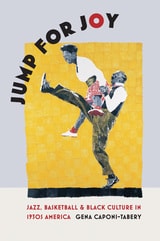
Jump for Joy
Jazz, Basketball, and Black Culture in 1930s AmericaGena Caponi-Tabery
University of Massachusetts Press, 2008
If the 1930s was the Swing Era, then the years from 1937 on might well be called the Jump Era. That summer Count Basie recorded “Jumping at the Woodside,” and suddenly jump tunes seemed to be everywhere. Along with the bouncy beat came a new dance step—the high-flying aerials of the jitterbuggers—and the basketball games that took place in the dance halls of African America became faster, higher, and flashier. Duke Ellington and a cast of hundreds put the buoyant spirit of the era on stage with their 1941 musical revue, Jump for Joy, a title that captured the momentum and direction of the new culture of exuberance.
Several high-profile public victories accompanied this increasing optimism: the spectacular successes of African American athletes at the 1936 Olympics, the 1937 union victory of the Brotherhood of Sleeping Car Porters, and Joe Louis's 1937 and 1938 heavyweight championship fights. For the first time in history, Black Americans emerged as cultural heroes and ambassadors, and many felt a new pride in citizenship.
In this book, Gena Caponi-Tabery chronicles these triumphs and shows how they shaped American music, sports, and dance of the 1930s and beyond. But she also shows how they emboldened ordinary African Americans to push for greater recognition and civil liberties—how cultural change preceded and catalyzed political action.
Tracing the path of one symbolic gesture—the jump—across cultural and disciplinary boundaries, Caponi-Tabery provides a unique political, intellectual, and artistic analysis of the years immediately preceding World War II.