Results by title
4030 books match the query 'Language Arts & Disciplines' and 45 start with j
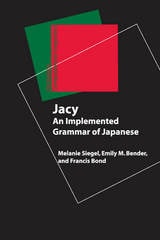
Jacy
An Implemented Grammar of JapaneseMelanie Siegel, Emily M. Bender, and Francis Bond
CSLI, 2017
Japanese/Korean Linguistics, Volume 1
Edited by Hajime Hoji
CSLI, 1990
Japanese/Korean Linguistics, Volume 13
M. Endo Hudson, Peter Sells, and Sun-Ah Jun
CSLI, 2008
Japanese and Korean are typologically quite similar languages, and the linguistic phenomena of the former often hve counterparts in the latter. These collections from the annual Japanese/Korean linguistics conference include essays on the phonology, morphology, syntax, semantics, historical linguistics, discourse analysis, prosody, and psycholinguistics of both languages. Such comparative studies deepen our understanding of both languages and will be a useful reference to students and scholars in either field.
Japanese/Korean Linguistics, Volume 14
Edited by Timothy J. Vance and Kimberly Jones
CSLI, 2006
Japanese and Korean are typologically quite similar languages, and the linguistic phenomena of the former often hve counterparts in the latter. These collections from the annual Japanese/Korean linguistics conference include essays on the phonology, morphology, syntax, semantics, historical linguistics, discourse analysis, prosody, and psycholinguistics of both languages. Such comparative studies deepen our understanding of both languages and will be a useful reference to students and scholars in either field.
Japanese/Korean Linguistics, Volume 15
Edited by Naomi McGloin and Junki Mori
CSLI, 2007
Japanese and Korean are typologically quite similar languages, and the linguistic phenomena of the former often hve counterparts in the latter. These collections from the annual Japanese/Korean linguistics conference include essays on the phonology, morphology, syntax, semantics, historical linguistics, discourse analysis, prosody, and psycholinguistics of both languages. Such comparative studies deepen our understanding of both languages and will be a useful reference to students and scholars in either field.
Japanese/Korean Linguistics, Volume 16
Edited by Yukinori Takubo, Tomohide Kinuhata, Szymon Grzelak, and Kayo Nagai
CSLI, 2009
The annual Japanese/Korean Linguistics Conference provides a forum for presenting research that will broaden the understanding of these two languages, especially through comparative study. The sixteenth Japanese/Korean Linguistics Conference, held in October of 2006 at Kyoto University, was the first in the history of the conference to be held outside of the United States. The thirty-six papers in this volume encompass a variety of areas, such as phonetics; phonology; morphology; syntax; semantics; pragmatics; discourse analysis; and the geographical and historical factors that influence the development of languages, sociolinguistics, and psycholinguistics.
Japanese/Korean Linguistics, Volume 17
Edited by Shoishi Iwasaki, Haejime Hoji, Patricia M. Clancy, and Sung-Ock Sohn
CSLI, 2009
The papers in this volume are from the seventeenth Japanese/Korean Linguistics Conference, which was held at the University of California, Los Angeles in November of 2007. The articles cover a broad range of topics in Japanese and Korean linguistics, including phonology, morphology, syntax, semantics, historical linguistics, discourse analysis, prosody, psycholinguistics, sociolinguistics, acquisition, and grammaticalization.
Japanese/Korean Linguistics, Volume 18
Edited by William McClure and Marcel den Dikken
CSLI, 2011
Because Japanese and Korean are typologically quite similar, a linguistic phenomenon in one language often has a counterpart in the other. The annual Japanese/Korean Linguistics Conference provides a forum for presenting research that will deepen our understanding of these two languages, especially through comparative study. The papers in this volume are from the eighteenth Japanese/Korean Linguistics Conference, which was held at the Graduate Center of the City University of New York in 2008. The papers cover a broad range of topics in Japanese/Korean linguistics, including phonology, morphology, syntax, semantics, historical linguistics, discourse analysis, prosody, and psycholinguistics.
Japanese/Korean Linguistics, Volume 19
Edited by Ho-Min Sohn, Haruko Minegishi Cook, William O'Grady, Leon A. Serafim, and Sang Yee Cheon
CSLI, 2011
Japanese/Korean Linguistics, Volume 2
Edited by Patricia Clancy
CSLI, 1993
Japanese/Korean Linguistics, Volume 20
Peter Sells
CSLI, 2013
Japanese/Korean Linguistics, Volume 21
Seungho Nam, Heejeong Ko, and Jongho Jun
CSLI, 2015
Japanese/Korean Linguistics, Volume 22
Edited by Mikio Griko, Naonori Nagaya, Akiko Takemura, and Timothy J. Vance
CSLI, 2014
Japanese/Korean Linguistics, Volume 23
Edited by Theodore Levin, Ryo Masuda, and Michael Kenstowicz
CSLI, 2014
Japanese/Korean Linguistics, Volume 24
Edited by Kenshi Funakoshi, et al.
CSLI, 2017
Japanese/Korean Linguistics, Volume 25
Edited by Shinichiro Fukuda et al.
CSLI, 2018
Japanese and Korean are typologically similar, with linguistic phenomena in one often having counterparts in the other. The Japanese/Korean Linguistics Conference provides a forum for research, particularly through comparative study, on both languages. The papers in this volume are from the twenty-fifth conference, which was held at the University of Hawai’i at Mānoa. They include essays on the phonology, morphology, syntax, semantics, historical linguistics, discourse analysis, prosody, and psycholinguistics of both languages. Such comparative studies deepen our understanding of both languages and will be a useful reference for students and scholars in either field.
Japanese/Korean Linguistics, Volume 26
Edited by Shoichi Iwasaki, Susan Strauss, Shin Fukuda, and Sun-Ah Jun
CSLI, 2020
Japanese/Korean Linguistics, Volume 27
Edited by Michael Barrie
CSLI, 2020
Japanese/Korean Linguistics, Volume 28
Edited by Hae-Sung Jeon, Peter Sells, Zixi You, Sotaro Kita, and Jaehoon Yeon
CSLI, 2021
Japanese/Korean Linguistics, Volume 4
Edited by Noriko Akatsuka
CSLI, 1995
Japanese/Korean Linguistics, Volume 5
Edited by Noriko Akatsuka, Shoichi Iwasaki, and Susan Strauss
CSLI, 1996
Japanese/Korean Linguistics, Volume 6
Edited by Ho-min Sohn and John Haig
CSLI, 1997
Japanese/Korean Linguistics, Volume 7
Edited by Noriko Akatsuka, et al
CSLI, 1998
Jean Baudrillard
The Rhetoric of Symbolic ExchangeBrian Gogan
Southern Illinois University Press, 2018
Gogan examines both the theorist and his rhetoric, combining these two lines of inquiry in ways that allow for provocative insights. Part one of the book explains Baudrillard’s theory as compatible with the histories and traditions of rhetoric, outlining his novel understanding of rhetorical invention as involving thought, discourse, and perception. Part two evaluates Baudrillard’s work in terms of a perception of him—as an aphorist, an illusionist, an ignoramus, and an ironist. A biographical sketch and a critical review of the literature on Baudrillard and rhetoric round out the study.
This book makes the French theorist’s complex concepts understandable and relates them to the work of important thinkers, providing a thorough and accessible introduction to Baudrillard’s ideas.
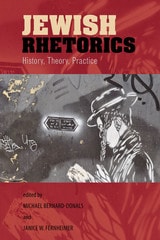
Jewish Rhetorics
History, Theory, PracticeEdited by Michael Bernard-Donals and Janice W. Fernheimer
Brandeis University Press, 2014
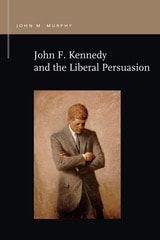
John F. Kennedy and the Liberal Persuasion
John M. Murphy
Michigan State University Press, 2019
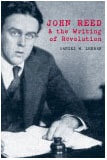
John Reed and the Writing of Revolution
Daniel W. Lehman
Ohio University Press, 2002
John Reed (1887-1920) is best known as the author of Ten Days That Shook the World and as champion of the communist movement in the United States. Still, Reed remains a writer almost systematically ignored by the literary critical establishment, even if alternately vilified and lionized by historians and by films like Warren Beatty’s Reds.
John Reed and the Writing of Revolution examines Reed’s writing from a different critical perspective—one informed by a theoretical and practical understanding of literary nonfiction. In both politics and writing, John Reed defied fashion. In his short career, Reed transcended the traditional creative arts of fiction, poetry, and drama in favor of deeply researched histories composed with the cadence of fiction and the power of fact. Reed thereby alienated literary critics who had idealized timeless artistry against the rough-and-tumble world of historical details and political implications.
Working from a close investigation of rare articles, manuscripts, and the Reed papers at Harvard as well as from Reed’s published work, Daniel W. Lehman offers the first detailed literary study of the man who followed Pancho Villa into battle; wrote literary profiles of such characters as Henry Ford, William Jennings Bryan, and Billy Sunday; explicated the Byzantine factionalism of Eastern Europe; and witnessed the storming of the Winter Palace and the birth of Soviet Russia.

Joint Libraries
Claire B. Gunnels
American Library Association, 2012
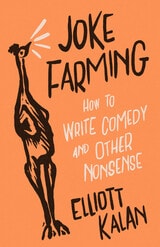
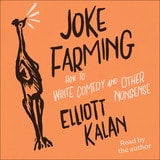
Joke Farming
How to Write Comedy and Other NonsenseElliott Kalan
University of Chicago Press, 2025
Philosophers may debate the meaning of comedy (thankfully keeping them too busy to fall into a life of crime), but the rest of us are more likely to wonder how we can make an audience laugh—or at least, how to entertain our friends and followers. According to award-winning comedy writer Elliott Kalan, we need to stop staring out the window, waiting for hilarious bits to stroll into view, fully formed. What we need is a process to plant their premises, tend to their structure and wording, and ultimately harvest them as funny material. In short, a farm. But for jokes.
In Joke Farming, Kalan explains that it’s easier to write jokes when you have a dependable method for doing so. All jokes, he argues, are built from the same elements: structure, premise, voice, tone, wording, and audience—and these elements can be applied to any comedic genre, from stand-up to sitcoms to satire. Kalan analyzes examples from his own career—including jokes that he wrote (and rewrote and rewrote and rewrote . . . ) as head writer for The Daily Show with Jon Stewart—as well as material from a diverse array of comedians, writers, and filmmakers, highlighting the phrasing, rhythm, and precise details that make their work so dang funny.
Drawing on his experiences in professional writers’ rooms as well as episodes from everyday life, Kalan’s guide to jokes will appeal to aspiring writers, their mentors, comedy fans, and anyone who has to speak at a wedding. Joke Farming points the way toward a writing process that lessens stress and agony and yields more reliable rewards: a surprising tagline, a hilarious word choice, and—most importantly—a bigger laugh from the audience, whoever they may be.
Joke Farming
How to Write Comedy and Other NonsenseElliott Kalan
University of Chicago Press, 2025
Philosophers may debate the meaning of comedy (thankfully keeping them too busy to fall into a life of crime), but the rest of us are more likely to wonder how we can make an audience laugh—or at least, how to entertain our friends and followers. According to award-winning comedy writer Elliott Kalan, we need to stop staring out the window, waiting for hilarious bits to stroll into view, fully formed. What we need is a process to plant their premises, tend to their structure and wording, and ultimately harvest them as funny material. In short, a farm. But for jokes.
In Joke Farming, Kalan explains that it’s easier to write jokes when you have a dependable method for doing so. All jokes, he argues, are built from the same elements: structure, premise, voice, tone, wording, and audience—and these elements can be applied to any comedic genre, from stand-up to sitcoms to satire. Kalan analyzes examples from his own career—including jokes that he wrote (and rewrote and rewrote and rewrote . . . ) as head writer for The Daily Show with Jon Stewart—as well as material from a diverse array of comedians, writers, and filmmakers, highlighting the phrasing, rhythm, and precise details that make their work so dang funny.
Drawing on his experiences in professional writers’ rooms as well as episodes from everyday life, Kalan’s guide to jokes will appeal to aspiring writers, their mentors, comedy fans, and anyone who has to speak at a wedding. Joke Farming points the way toward a writing process that lessens stress and agony and yields more reliable rewards: a surprising tagline, a hilarious word choice, and—most importantly—a bigger laugh from the audience, whoever they may be.
Journal Writing in Second Language Education
Christine Pearson Casanave
University of Michigan Press, 2011
Journal writing is not new--journals have been around for centuries. More recently, journals have been viewed as a means of scaffolding reflective teaching and encouraging reflectivity in research processes. As a result, some educators may ask, “What more do we need to know?” Those likely to raise this question are probably not thinking of the explosive growth of reflective writing enabled by social networking on the Web, the blogs and other interactive e-vehicles for reflection on experiences in our literate, “real,” and virtual lives This revisiting of journal writing from a 21st century perspective, informed by relevant earlier literature, is what Christine Pearson Casanave guides readers through in this first book-length treatment of the use of journal writing in the contexts of language learning, pre and in-service teaching, and research.
Casanave has put together existing ideas that haven't been put together before and has done it not as an edited collection, but as a single-authored book. She has done it in a way that will be especially accessible to teachers in language teacher education programs and to practicing teachers and researchers of writing in both second and foreign language settings, and in a way that will inspire all of us to think about, not just do, journal writing.
Those who have never attempted to use journals in their classes and own lives, as well as others who have used it with mixed results, will probably be tempted to try it in at least some of the venues Casanave provides guidance for. Those already committed to journal writing will very likely find in this book new reasons for expanding and enhancing their use of journals.
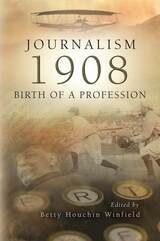
Journalism 1908
Birth of a ProfessionEdited by Betty Houchin Winfield
University of Missouri Press, 2008
Journalism—1908 opens a window on mass communication a century ago. It tells how the news media in the United States were fundamentally changed by the creation of academic departments and schools of journalism, by the founding of the National Press Club, and by exciting advances that included early newsreels, the introduction of halftones to print, and even changes in newspaper design.
Journalism educator Betty Houchin Winfield has gathered a team of well-known media scholars, all specialists in particular areas of journalism history, to examine the status of their profession in 1908: news organizations, business practices, media law, advertising, forms of coverage from sports to arts, and more. Various facets of journalism are explored and situated within the country’s history and the movement toward reform and professionalism—not only formalized standards and ethics but also labor issues concerning pay, hours, and job differentiation that came with the emergence of new technologies.
This overview of a watershed year is national in scope, examining early journalism education programs not only at Missouri but also at such schools as Colgate, Washington and Lee, Wisconsin, and Columbia. It also reviews the status of women in the profession and looks beyond big-city papers to Progressive Era magazines, the immigrant press, and African American publications.
Journalism—1908 commemorates a century of progress in the media and, given the place of Missouri’s School of Journalism in that history, is an appropriate celebration of that school’s centennial. It is a lode of information about journalism education history that will surprise even many of those in the field and marks a seminal year with lasting significance for the profession.
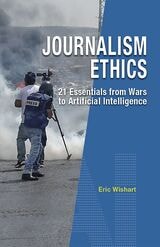
Journalism Ethics
21 Essentials from Wars to Artificial IntelligenceEric Wishart
Hong Kong University Press, 2024
This concise and authoritative work offers the latest guidance on journalism ethics for students and media professionals and will help empower news consumers to make informed decisions about the trustworthiness of their sources of information. It offers advice on all aspects of journalism ethics including accuracy and seeking the truth, representation of women, LGBTQ coverage, climate change, mental health, use of images, conflict reporting, elections, and how to use artificial intelligence. The author brings a unique perspective and depth of knowledge to the complex challenges facing journalists and news consumers in this era of fake news, disinformation, and artificial intelligence.
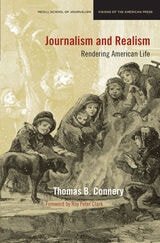
Journalism and Realism
Rendering American LifeThomas B Connery
Northwestern University Press, 2011

Journalism, Society and Politics in the Digital Media Era
Edited by Nael Jebril, Stephen Jukes, Sofia Iordanidou, and Emmanouil Takas
Intellect Books, 2020
Journalistic Autonomy
The Genealogy of a ConceptHenrik Örnebring
University of Missouri Press, 2022
The idea that journalism should be independent is foundational to its contemporary understandings and its role in democracy. But from what, exactly, should journalism be independent? This book traces the genealogy of the idea of journalistic autonomy, from the press freedom debates of the 17th century up to the digital, networked world of the 21st. Using an eclectic and thought-provoking theoretical framework that draws upon Friedrich Nietzsche, feminist philosophy, and theoretical biology, the authors analyze the deeper meanings and uses of the terms independence and autonomy in journalism.
This work tackles, in turn, questions of journalism’s independence from the state, politics, the market, sources, the workplace, the audience, technology, and algorithms. Using broad historical strokes as well as detailed historical case studies, the authors argue that autonomy can only be meaningful if it has a purpose. Unfortunately, for large parts of journalism’s history this purpose has been the maintenance of a societal status quo and the exclusion of large groups of the population from the democratic polity. “Independence,” far from being a shining ideal to which all journalists must aspire, has instead often been used to mask the very dependencies that lie at the heart of journalism. The authors posit, however, that by learning the lessons of history and embracing a purpose fit for the needs of the 21st century world, journalism might reclaim its autonomy and redeem its exclusionary uses of independence.
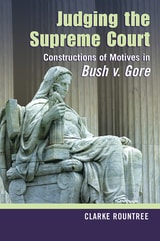
Judging the Supreme Court
Constructions of Motives in Bush v. GoreClarke Rountree
Michigan State University Press, 2007
This volume questions the motives of Supreme Court justices in a landmark case: The Supreme Court's intervention in the presidential election of 2000, and its subsequent decision in favor of George W. Bush, elicited immediate, heated, and widespread debate. Critics argued that the justices used weak legal arguments to overturn the Florida Supreme Court's ruling, ending a ballot recount and awarding the presidency to Bush. More fundamentally, they questioned the motives of conservative judges who arrived at a decision in favor of the candidate who reflected their political leanings.
Judging the Supreme Court examines this controversial case and the extensive attention it has received. To fully understand the case, Clarke Rountree argues, we must understand "judicial motives." These are comprised of more than each judge's personal opinions. Judges' motives, which Rountree calls "rhetorical performances," are as influential and publicly discussed as their decisions themselves. Before they are dissected in the media, judges' motives are carefully crafted by the decision- makers themselves, their critics, and their defenders. Justices consider not only the motives of the government, of military officials, of criminals, of public speakers, and of others, they also consider, construct, construe, spin, and deconstruct the motives of dissenters (whom they want to show are "misguided"), earlier courts, lower courts, and, especially, themselves.
Every judicial opinion is essentially a portrait of motives that says, "Here's what we did and here's why we did it." Well-constructed judicial motives reinforce the idea that we live under "the rule of law," while motives articulated less successfully raise questions about the legitimacy not just of individual judicial decisions but also of our political system and its foundation on an impartial judiciary. In Bush v. Gore, Rountree concludes, the judges of the majority opinion were not motivated by judicial concerns about law and justice, but rather by their own political and personal motives.
Judicial Rhapsodies
Rhetoric and Fundamental Rights in the Supreme CourtDoug Coulson
Amherst College Press, 2023
First examining the classical origins of divisions between law and rhetoric, Coulson tracks what he calls an epideictic register—highly affective forms of expression that utilize hyperbole, amplification, and vocabularies of praise—through a surprising number of landmark Supreme Court opinions. Judicial Rhapsodies recovers and revalues these instances as significant to establishing and maintaining shared perspectives that form the basis for common experience and cooperation.
“Judicial Rhapsodies is both compelling and important. Coulson brings his well-developed knowledge of rhetoric to bear on one of the most central (and most democratically fraught) means of governance in the United States: the Supreme Court opinion. He demonstrates that the epideictic, far from being a dispensable or detestable element of judicial rhetoric, is an essential feature of how the Court operates and seeks to persuade.” —Keith Bybee, Syracuse University
Jump Start Your Career
Jane D. Monson
American Library Association, 2012
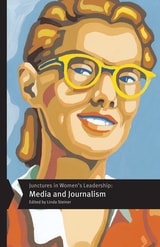
Junctures in Women’s Leadership
Media and JournalismLinda Steiner
Rutgers University Press, 2025
This book offers profiles of inspiring women in prominent media positions from the nineteenth century to today, beginning with trailblazers like abolitionist publisher Mary Ann Shadd and Memphis Free Speech anti-lynching editor Ida B. Wells. The book takes an in-depth look at the leadership styles of well-known media moguls like Oprah Winfrey and Washington Post publisher Katharine Graham. Other chapters highlight women now emerging as media leaders, such as digital media executive S. Mitra Kalita and Iman Zawahry, a Muslim hijabi filmmaker. Bringing together cases from print, broadcast, public relations, film, and digital media, this book offers useful insights into how to be an effective leader in an ever-changing industry.
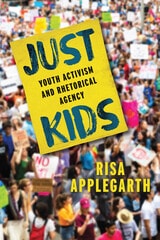
Just Kids
Youth Activism and Rhetorical AgencyRisa Applegarth
The Ohio State University Press, 2024
Just Words, Second Edition
Law, Language, and PowerJohn M. Conley and William M. O'Barr
University of Chicago Press, 2005
Conley and O'Barr show how the microdynamics of the legal process and the largest questions of justice can be fruitfully explored through the field of linguistics. Each chapter covers a language-based approach to a different area of the law, from the cross-examinations of victims and witnesses to the inequities of divorce mediation. Combining analysis of common legal events with a broad range of scholarship on language and law, Just Words seeks the reality of power in the everyday practice and application of the law. As the only study of its type, the book is the definitive treatment of the topic that will be welcomed by students and specialists alike.
Just Words
Law, Language, and PowerJohn M. Conley and William M. O'Barr
University of Chicago Press, 1998
Conley and O'Barr show how the microdynamics of the legal process and the largest questions of justice can be fruitfully explored through the field of linguistics. Each chapter covers a language-based approach to a different area of the law, from the cross-examinations of victims and witnesses to the inequities of divorce mediation. Combining analysis of common legal events with a broad range of scholarship on language and law, Just Words seeks the reality of power in the everyday practice and application of the law. As the only study of its type, the book is the definitive treatment of the topic that will be welcomed by students and specialists alike.
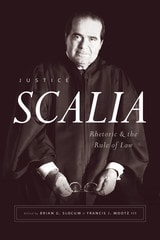
Justice Scalia
Rhetoric and the Rule of LawEdited by Brian G. Slocum and Francis J. Mootz III
University of Chicago Press, 2019
In this edited collection, leading scholars from law, political science, philosophy, rhetoric, and linguistics look at the ways Scalia framed and stated his arguments. Focusing on rhetorical strategies rather than the logic or validity of Scalia’s legal arguments, the contributors collectively reveal that Scalia enacted his rigidly conservative vision of the law through his rhetorical framing.
Justus Lipsius
Principles of Letter-Writing: A Bilingal Text of Justi Lipsi Epistolica InstitutioJustus Lipsius. Edited and translated by R. V. Young and M. Thomas Hester
Southern Illinois University Press, 1996
As part of the sixteenth century’s intellectual "triumvirate," which included Joseph Scaliger and Isaac Casaubon, Justus Lipsius formulated a humanist scholarship aimed ultimately at practical application in both public and personal affairs.
Justus Lipsius distinguished himself as a student of the classics, first at the Jesuit college at Cologne and then at the university in Leuven (Louvain). In 1569, soon after completing his studies, he published a precocious volume of Varia Lectiones, a collection of philological observations on classical texts. This initial work had significant and lasting effects on his career, the most immediate being an appointment as Latin secretary to Cardinal Granvelle, chief minister of Philip II in the Low Countries, who took the young man to Rome, where he was introduced to international power politics as well as to the treasures of Italian libraries, including the Vatican’s. After two years in Rome, Lipsius began his uneasy roaming, traveling from Vienna to Jena to Cologne, serving in a variety of posts. In 1579, he accepted a position at Leiden University in Holland, where he found a haven from his home province for nearly thirteen years. It was there that he delivered the lectures on letter-writing that later became Epistolica Institutio. In 1591, when Leiden University became too stridently Calvinist for Lipsius, he returned to Leuven as professor of Latin and was once again reconciled with the Catholic Church. There he remained for the rest of his life, resisting numerous appeals from foreign courts and especially from Italian churchmen.
As a particularly suitable commentator on the letter, Lipsius, like so many humanist scholars, was a prolific correspondent and published many of his own letters. In the manner typical of his age, he used the published letter as a kind of forerunner to the scholarly article. Yet his chief distinction as an epistolary theorist lies in his view of the letter as a means of personal expression. His purpose was to recover the classical Roman view of the letter as written conversation, a conception lost during the Middle Ages and only imperfectly restored during the earlier Renaissance. Hence, the Epistolica Institutio assumes an important position in the Lipsius canon: as an effort to restore the authentic features of the classical genre, it bespeaks the humanist scholar; in marking out a space for individual self-definition during a period of increasingly powerful and alienating social and religious pressures, it anticipates the ideological preoccupations of the contemporary world.