642 books match the query 'Linguistics' and 24 start with j
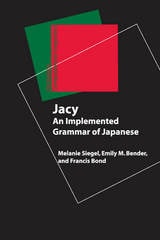
cover of Jacy: An Implemented Grammar of Japanese

Jacy

An Implemented Grammar of Japanese

Melanie Siegel, Emily M. Bender, and Francis Bond

CSLI, 2017
This book describes the fundamentals of Jacy, an implementation of a Japanese head-driven phrase structure grammar with many useful linguistic implications. Jacy presents sound information about the Japanese language (syntax, semantics, and pragmatics) based on implementation and tested on large quantities of data. As the grammar development was done in a multilingual environment, Jacy also showcases both multilingual concepts and differences among the languages and demonstrates the usefulness of semantic analysis in language technology applications.
[more]
cover of Japanese/Korean Linguistics, Volume 1

Japanese/Korean Linguistics, Volume 1

Edited by Hajime Hoji

CSLI, 1990
Japanese and Korean are typographically quite similiar, so a linguistic phenomenon in one language often has a counterpart in the other. The papers in this volume are intended to further collective and collaborative research into both languages. The contributors discuss aspects of language acquisition, sociolinguistics, pragmatics, phonology, syntax, morphologyu, and semantics. Most of the papers were presented at the Southern Californai Japanese/Korean Linguistics Conference in 1989. Hajime Hoji is a professor of linguistics at the University of Southern California. Distributed for the Center for the Study of Language and Inforamtion
[more]
cover of Japanese/Korean Linguistics, Volume 13

Japanese/Korean Linguistics, Volume 13

M. Endo Hudson, Peter Sells, and Sun-Ah Jun

CSLI, 2008

Japanese and Korean are typologically quite similar languages, and the linguistic phenomena of the former often hve counterparts in the latter. These collections from the annual Japanese/Korean linguistics conference include essays on the phonology, morphology, syntax, semantics, historical linguistics, discourse analysis, prosody, and psycholinguistics of both languages. Such comparative studies deepen our understanding of both languages and will be a useful reference to students and scholars in either field.
[more]
cover of Japanese/Korean Linguistics, Volume 14

Japanese/Korean Linguistics, Volume 14

Edited by Timothy J. Vance and Kimberly Jones

CSLI, 2006

Japanese and Korean are typologically quite similar languages, and the linguistic phenomena of the former often hve counterparts in the latter. These collections from the annual Japanese/Korean linguistics conference include essays on the phonology, morphology, syntax, semantics, historical linguistics, discourse analysis, prosody, and psycholinguistics of both languages. Such comparative studies deepen our understanding of both languages and will be a useful reference to students and scholars in either field.
[more]
cover of Japanese/Korean Linguistics, Volume 15

Japanese/Korean Linguistics, Volume 15

Edited by Naomi McGloin and Junki Mori

CSLI, 2007

Japanese and Korean are typologically quite similar languages, and the linguistic phenomena of the former often hve counterparts in the latter. These collections from the annual Japanese/Korean linguistics conference include essays on the phonology, morphology, syntax, semantics, historical linguistics, discourse analysis, prosody, and psycholinguistics of both languages. Such comparative studies deepen our understanding of both languages and will be a useful reference to students and scholars in either field.
[more]
cover of Japanese/Korean Linguistics, Volume 16

Japanese/Korean Linguistics, Volume 16

Edited by Yukinori Takubo, Tomohide Kinuhata, Szymon Grzelak, and Kayo Nagai

CSLI, 2009

The annual Japanese/Korean Linguistics Conference provides a forum for presenting research that will broaden the understanding of these two languages, especially through comparative study. The sixteenth Japanese/Korean Linguistics Conference, held in October of 2006 at Kyoto University, was the first in the history of the conference to be held outside of the United States. The thirty-six papers in this volume encompass a variety of areas, such as phonetics; phonology; morphology; syntax; semantics; pragmatics; discourse analysis; and the geographical and historical factors that influence the development of languages, sociolinguistics, and psycholinguistics.
[more]
cover of Japanese/Korean Linguistics, Volume 17

Japanese/Korean Linguistics, Volume 17

Edited by Shoishi Iwasaki, Haejime Hoji, Patricia M. Clancy, and Sung-Ock Sohn

CSLI, 2009

The papers in this volume are from the seventeenth Japanese/Korean Linguistics Conference, which was held at the University of California, Los Angeles in November of 2007. The articles cover a broad range of topics in Japanese and Korean linguistics, including phonology, morphology, syntax, semantics, historical linguistics, discourse analysis, prosody, psycholinguistics, sociolinguistics, acquisition, and grammaticalization.
[more]
cover of Japanese/Korean Linguistics, Volume 18

Japanese/Korean Linguistics, Volume 18

Edited by William McClure and Marcel den Dikken

CSLI, 2011

Because Japanese and Korean are typologically quite similar, a linguistic phenomenon in one language often has a counterpart in the other. The annual Japanese/Korean Linguistics Conference provides a forum for presenting research that will deepen our understanding of these two languages, especially through comparative study. The papers in this volume are from the eighteenth Japanese/Korean Linguistics Conference, which was held at the Graduate Center of the City University of New York in 2008. The papers cover a broad range of topics in Japanese/Korean linguistics, including phonology, morphology, syntax, semantics, historical linguistics, discourse analysis, prosody, and psycholinguistics.
[more]
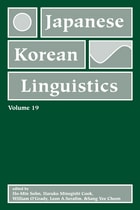
cover of Japanese/Korean Linguistics, Volume 19

Japanese/Korean Linguistics, Volume 19

Edited by Ho-Min Sohn, Haruko Minegishi Cook, William O'Grady, Leon A. Serafim, and Sang Yee Cheon

CSLI, 2011
Japanese and Korean are typologically similar languages, and a linguistic phenomenon in the former often has a counterpart in the latter. The papers in this volume are from the nineteenth Japanese/Korean Linguistics Conference, which was held at the University of Hawai’i at Manoa. The collections in this volume include essays on the phonology, morphology, syntax, semantics, historical linguistics, discourse analysis, prosody, and psycholinguistics of both languages. Such comparative studies deepen our understanding of both languages and will be a useful reference for students and scholars in either field.
[more]
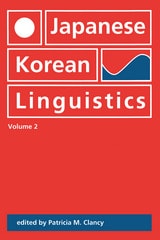
cover of Japanese/Korean Linguistics, Volume 2

Japanese/Korean Linguistics, Volume 2

Edited by Patricia Clancy

CSLI, 1993
Japanese and Korean are typologically quite similar, so a linguitic phenomenon in one language often has a counterpart in the other. The papers in this voulme are intended to further collective and collaborative research in both languages. The contributors discuss aspects of language acquisition, discourse, syntax, semantics, pragmatics, phonology, morphology, typology, sociolinguistics, and psycholinguistics. The papers were presented at the Southern California Japanese/Korean Linguistics Conference in September 1991. Contributors to this volume are Patricia M. Clancy, SeikoYamaguchi Fujii, Shoichi Iwasaki, Kyu-hyun Kim, Yoshiko Matsumoto, Shigeko Okamoto, Sung-Ock S. Sohn, Kyung- Hee Suh, Eunjoo Han, Jongho Jun, Ongmi Kang, David James Silva, Noriko Akasuka, Shoji Azuma, Sooja Choi, Bruce L. Derwing, Yeo Bom Yoon, Sook Whan Cho, Tsuyoshi Ono, Hiroko Yamashita, Laurie Stowe, Mineharu Nakayama, Ruriko Kawashima, Masanori Nakamaura, Shin Watanbe, Dong-In Cho, Stanley Dubinsky, Hiroto Hoshi, Yasua Ishii, Hisatsugu Kitahara, Masatoshi Koizumi, Jae Hong Lee, Sookhee Lee, Young-Suk Lee, and Shigeo Tonoike. Patricia Clancy is associate profressor in the Department of Linguistics at the University of California at Santa Barbara. She is the author of The Acquisition of Japanese.
[more]
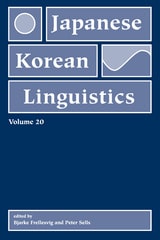
cover of Japanese/Korean Linguistics, Volume 20

Japanese/Korean Linguistics, Volume 20

Peter Sells

CSLI, 2013
Japanese and Korean are typologically similar, with linguistic phenomena in one often having counterparts in the other. The Japanese/Korean Linguistics Conference provides a forum for research, particularly through comparative study, of both languages. This volume includes essays on the phonology, morphology, syntax, semantics, historical linguistics, discourse analysis, prosody, and psycholinguistics of both languages. This volume will be a useful tool for any researcher or student in either field.
[more]
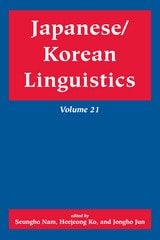
cover of Japanese/Korean Linguistics, Volume 21

Japanese/Korean Linguistics, Volume 21

Seungho Nam, Heejeong Ko, and Jongho Jun

CSLI, 2015
Japanese and Korean are typologically similar languages, and a linguistic phenomenon in the former often has a counterpart in the latter. The papers in this volume are from the twenty-first Japanese/Korean Linguistics Conference, which was held at the Seoul National University in October 2011. The collections in this volume include essays on the phonology, morphology, syntax, semantics, historical linguistics, discourse analysis, prosody, and psycholinguistics of both languages. Such comparative studies deepen our understanding of both languages and will be a useful reference for students and scholars in either field.
[more]
cover of Japanese/Korean Linguistics, Volume 22

Japanese/Korean Linguistics, Volume 22

Edited by Mikio Griko, Naonori Nagaya, Akiko Takemura, and Timothy J. Vance

CSLI, 2014
Japanese and Korean are typologically similar, with linguistic phenomena in one often having counterparts in the other. The Japanese/Korean Linguistics Conference provides a forum for research, particularly through comparative study, of both languages. The papers in this volume are from the twenty-second conference, which was held at the National Institute for Japanese Language and Linguistics. They include essays on the phonology, morphology, syntax, semantics, historical linguistics, discourse analysis, prosody, and psycholinguistics of both languages. Such comparative studies deepen our understanding of both languages and will be a useful reference for students and scholars in either field.
[more]
cover of Japanese/Korean Linguistics, Volume 23

Japanese/Korean Linguistics, Volume 23

Edited by Theodore Levin, Ryo Masuda, and Michael Kenstowicz

CSLI, 2014
Japanese and Korean are typologically similar, with linguistic phenomena in one often having counterparts in the other. The Japanese/Korean Linguistics Conference provides a forum for research, particularly through comparative study, of both languages. The papers in this volume are from the twenty-third conference, which was held at the Massachusetts Institute of Technology. They include essays on the phonology, morphology, syntax, semantics, historical linguistics, discourse analysis, prosody, and psycholinguistics of both languages. Such comparative studies deepen our understanding of both languages and will be a useful reference for students and scholars in either field.
[more]
cover of Japanese/Korean Linguistics, Volume 24

Japanese/Korean Linguistics, Volume 24

Edited by Kenshi Funakoshi, et al.

CSLI, 2017
Japanese and Korean are typologically similar, with linguistic phenomena in one often having counterparts in the other. The Japanese/Korean Linguistics Conference provides a forum for research, particularly through comparative study, on both languages. The papers in this volume are from the twenty-fourth conference, which was held at the National Institute for Japanese Language and Linguistics. They include essays on the phonology, morphology, syntax, semantics, historical linguistics, discourse analysis, prosody, and psycholinguistics of both languages. Such comparative studies deepen our understanding of both languages and will be a useful reference for students and scholars in either field.
[more]
cover of Japanese/Korean Linguistics, Volume 25

Japanese/Korean Linguistics, Volume 25

Edited by Shinichiro Fukuda et al.

CSLI, 2018

Japanese and Korean are typologically similar, with linguistic phenomena in one often having counterparts in the other. The Japanese/Korean Linguistics Conference provides a forum for research, particularly through comparative study, on both languages. The papers in this volume are from the twenty-fifth conference, which was held at the University of Hawai’i at Mānoa. They include essays on the phonology, morphology, syntax, semantics, historical linguistics, discourse analysis, prosody, and psycholinguistics of both languages. Such comparative studies deepen our understanding of both languages and will be a useful reference for students and scholars in either field.

[more]
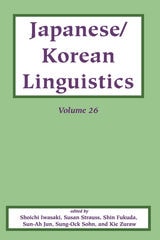
cover of Japanese/Korean Linguistics, Volume 26

Japanese/Korean Linguistics, Volume 26

Edited by Shoichi Iwasaki, Susan Strauss, Shin Fukuda, and Sun-Ah Jun

CSLI, 2020
Japanese and Korean are typologically similar, with linguistic phenomena in one often having counterparts in the other. The Japanese/Korean Linguistics Conference provides a forum for research, particularly through comparative study, of both languages. This volume includes essays on the phonology, morphology, syntax, semantics, historical linguistics, discourse analysis, prosody, and psycholinguistics of both languages. This volume will be a useful tool for any researcher or student in either field.
[more]
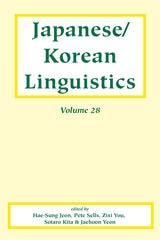
cover of Japanese/Korean Linguistics, Volume 28

Japanese/Korean Linguistics, Volume 28

Edited by Hae-Sung Jeon, Peter Sells, Zixi You, Sotaro Kita, and Jaehoon Yeon

CSLI, 2021
Japanese and Korean are typologically similar, with linguistic phenomena in one often having counterparts in the other. The Japanese/Korean Linguistics Conference provides a forum for research, particularly through comparative study, on both languages. The papers in this volume are from the twenty-eighth conference, which was held virtually at the University of Central Lancashire. They include essays on the phonology, morphology, syntax, semantics, historical linguistics, discourse analysis, prosody, and psycholinguistics of both languages. Such comparative studies enrichen our comprehension of both languages and will be a valuable reference for students and scholars in either field.
 
[more]
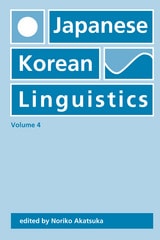
cover of Japanese/Korean Linguistics, Volume 4

Japanese/Korean Linguistics, Volume 4

Edited by Noriko Akatsuka

CSLI, 1995
[more]
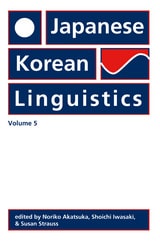
cover of Japanese/Korean Linguistics, Volume 5

Japanese/Korean Linguistics, Volume 5

Edited by Noriko Akatsuka, Shoichi Iwasaki, and Susan Strauss

CSLI, 1996
Japanese and Korean are typologically quite similar, so a linguistic phenomenon in one language often has a counterpart in the other. The papers in this volume are intended to further compare and/or contrast research in both languages. This volume reflects the Fifth Japanese/Korean Linguistics Conference's unique division into four distinct panels: Conversation, Grammaticalization and Semantics, Syntax and Semantics, and Korean Phonology. The Fifth Japanese/Korean Linguistics Conference was held at the University of California, Los Angeles
[more]
cover of Japanese/Korean Linguistics, Volume 6

Japanese/Korean Linguistics, Volume 6

Edited by Ho-min Sohn and John Haig

CSLI, 1997
[more]
cover of Japanese/Korean Linguistics, Volume 7

Japanese/Korean Linguistics, Volume 7

Edited by Noriko Akatsuka, et al

CSLI, 1998
[more]
cover of Just Words, Second Edition: Law, Language, and Power

Just Words, Second Edition

Law, Language, and Power

John M. Conley and William M. O'Barr

University of Chicago Press, 2005

Is it "just words" when a lawyer cross-examines a rape victim in the hopes of getting her to admit an interest in her attacker? Is it "just words" when the Supreme Court hands down a decision or when business people draw up a contract? In tackling the question of how an abstract entity exerts concrete power, Just Words focuses on what has become the central issue in law and language research: what language reveals about the nature of legal power.

Conley and O'Barr show how the microdynamics of the legal process and the largest questions of justice can be fruitfully explored through the field of linguistics. Each chapter covers a language-based approach to a different area of the law, from the cross-examinations of victims and witnesses to the inequities of divorce mediation. Combining analysis of common legal events with a broad range of scholarship on language and law, Just Words seeks the reality of power in the everyday practice and application of the law. As the only study of its type, the book is the definitive treatment of the topic that will be welcomed by students and specialists alike.
[more]
cover of Just Words: Law, Language, and Power

Just Words

Law, Language, and Power

John M. Conley and William M. O'Barr

University of Chicago Press, 1998

Is it "just words" when a lawyer cross-examines a rape victim in the hopes of getting her to admit an interest in her attacker? Is it "just words" when the Supreme Court hands down a decision or when business people draw up a contract? In tackling the question of how an abstract entity exerts concrete power, Just Words focuses on what has become the central issue in law and language research: what language reveals about the nature of legal power.

Conley and O'Barr show how the microdynamics of the legal process and the largest questions of justice can be fruitfully explored through the field of linguistics. Each chapter covers a language-based approach to a different area of the law, from the cross-examinations of victims and witnesses to the inequities of divorce mediation. Combining analysis of common legal events with a broad range of scholarship on language and law, Just Words seeks the reality of power in the everyday practice and application of the law. As the only study of its type, the book is the definitive treatment of the topic that will be welcomed by students and specialists alike.
[more]