Results by title
534 books match the query 'Making' and 8 start with j

J. S. Bach's Clavier-Ubung III
The Making of a Print, with a Companion Study of the Canonic Variations on Von Himmel hoch BWV 769Gregory G. Butler
Duke University Press, 1990
The need to examine early printed copies of music is being recognized as an important tool which can reveal as much as the study of early manuscripts. Composers themselves frequently took a major role in the preparation of the engraving.
Clavier-Ubung III—arguably the most carefully planned, intellectually conceived, and challenging volume of organ music ever published—is a particularly useful example of Bach’s printed works known chiefly from the print itself. The print is richer in information than any of the other original prints of Bach’s music, making it a distinctly suitable repertory for the author’s innovative treatment. Butler reveals fascinating new information on the genesis and history of the collection’s composition, finding, in part, that sections of the work were composed considerably earlier than previously was believed.
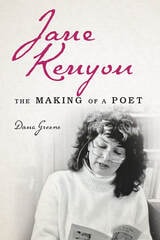
Jane Kenyon
The Making of a PoetDana Greene
University of Illinois Press, 2023
Pleasure-loving, sarcastic, stubborn, determined, erotic, deeply sad--Jane Kenyon’s complexity and contradictions found expression in luminous poems that continue to attract a passionate following. Dana Greene draws on a wealth of personal correspondence and other newly available materials to delve into the origins, achievement, and legacy of Kenyon’s poetry and separate the artist’s life story from that of her husband, the award-winning poet Donald Hall.
Impacted by relatives’ depression during her isolated childhood, Kenyon found poetry at college, where writers like Robert Bly encouraged her development. Her graduate school marriage to the middle-aged Hall and subsequent move to New Hampshire had an enormous impact on her life, moods, and creativity. Immersed in poetry, Kenyon wrote about women’s lives, nature, death, mystical experiences, and melancholy--becoming, in her own words, an “advocate of the inner life.” Her breakthrough in the 1980s brought acclaim as “a born poet” and appearances in the New Yorker and elsewhere. Yet her ongoing success and artistic growth exacerbated strains in her marriage and failed to stave off depressive episodes that sometimes left her non-functional. Refusing to live out the stereotype of the mad woman poet, Kenyon sought treatment and confronted her illness in her work and in public while redoubling her personal dedication to finding pleasure in every fleeting moment. Prestigious fellowships, high-profile events, residencies, and media interviews had propelled her career to new heights when leukemia cut her life short and left her husband the loving but flawed curator of her memory and legacy.
Revelatory and insightful, Jane Kenyon offers the first full-length biography of the elusive poet and the unquiet life that shaped her art.
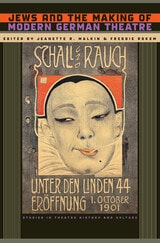
Jews and the Making of Modern German Theatre
Jeanette R. Malkin
University of Iowa Press, 2010
While it is common knowledge that Jews were prominent in literature, music, cinema, and science in pre-1933 Germany, the fascinating story of Jewish co-creation of modern German theatre is less often discussed. Yet for a brief time, during the Second Reich and the Weimar Republic, Jewish artists and intellectuals moved away from a segregated Jewish theatre to work within canonic German theatre and performance venues, claiming the right to be part of the very fabric of German culture. Their involvement, especially in the theatre capital of Berlin, was of a major magnitude both numerically and in terms of power and influence. The essays in this stimulating collection etch onto the conventional view of modern German theatre the history and conflicts of its Jewish participants in the last third of the nineteenth and first third of the twentieth centuries and illuminate the influence of Jewish ethnicity in the creation of the modernist German theatre.
The nontraditional forms and themes known as modernism date roughly from German unification in 1871 to the end of the Weimar Republic in 1933. This is also the period when Jews acquired full legal and trade equality, which enabled their ownership and directorship of theatre and performance venues. The extraordinary artistic innovations that Germans and Jews co-created during the relatively short period of this era of creativity reached across the old assumptions, traditions, and prejudices that had separated people as the modern arts sought to reformulate human relations from the foundations to the pinnacles of society.
The essayists, writing from a variety of perspectives, carve out historical overviews of the role of theatre in the constitution of Jewish identity in Germany, the position of Jewish theatre artists in the cultural vortex of imperial Berlin, the role played by theatre in German Jewish cultural education, and the impact of Yiddish theatre on German and Austrian Jews and on German theatre. They view German Jewish theatre activity through Jewish philosophical and critical perspectives and examine two important genres within which Jewish artists were particularly prominent: the Cabaret and Expressionist theatre. Finally, they provide close-ups of the Jewish artists Alexander Granach, Shimon Finkel, Max Reinhardt, and Leopold Jessner. By probing the interplay between “Jewish” and “German” cultural and cognitive identities based in the field of theatre and performance and querying the effect of theatre on Jewish self-understanding, they add to the richness of intercultural understanding as well as to the complex history of theatre and performance in Germany.
Joseph Smith
The Making of a ProphetDan Vogel
Signature Books, 2004
Vogel weaves together strands of evidence into a complete fabric including, among other aspects of Smith’s environment, the content of his daily dictation of scriputre and revelation—all contributing to a nearly complete view of what occurred on any given day in Smith’s lfie. The result is as much intellectual history as traditional biography. Readers will feel engaged in the dramatic, formative events in the prophet’s life against a backdrop of theology, local and national politics, Smith family dynamics, organizational issues, and interpersonal relations. One can form a mental picture, and many will find themselves carrying on an internal dialogue about the issues raised.
Vogel addresses the following broad themes:
1. The home that Joseph Smith was raised in was religiously divided. His mother’s family was orthodox and partly mystical; his father’s family tended toward rationalism and skepticism. Joseph’s maternal grandfather published an account of seeing a heavenly light and hearing Jesus’ voice. Joseph’s paternal grandfather promoted Thomas Paine’s skeptical critique of the Bible, The Age of Reason.
2. When Andrew Jackson was elected U.S. president in 1828, it was a key transitional period in American history. Jackson was a Mason and an advocate of secularism, which alarmed evangelical Protestants.
3. The Smith family experienced a series of financial setbacks and lost their farm in 1825. Joseph felt disinherited and saw no way of escape—no chance for his family to regain its former standing in the community.
4. Joseph found solace in religion. In the early 1820s, he had a powerful conversion experience and felt that Jesus had forgiven him of his sins. This inspired him to share the gospel message with others, particularly with his own family. About the same time, Smith found a talent for preaching and delivered “passable” Methodist sermons at a nearby revival.
5. Over time, Joseph became aware that people trusted him and that he could be an influence for good or ill, that even through nefarious means, God worked through him when his heart was right. He realized this when he led groups in search of Spanish treasure in New York and Pennsylvania. Although no treasure was found, the men sincerely believed that Smith had a spiritual gift and could see where casks of gold were hidden in the earth. This training ground in spiritual leadership was invaluable because the prophet learned how to create an environment for belief—one in which people could exercise faith and be converted to Christ through the sensible influence of the Spirit, all prior to the overarching work of restoring primitive Christianity.
Julian Steward and the Great Basin
The Making of an AnthropologistRichard O Clemmer
University of Utah Press, 1999
Julian Steward and the Great Basin is a critical assessment of Steward’s work, the factors that influenced him, and his deep effect on American anthropology. Steward (1902–1972) was one of the foremost American exponents of cultural ecology, the idea that societies evolve in adaptation to their human and natural environments. He was also central in shaping basic anthropological constructs such as "hunter-gatherer" and "adaptation." But his fieldwork took place almost entirely in the Great Basin.
In one sense, the phases of Steward’s career epitomize the successive schools of anthropological theory and practice. Each chapter explores a different aspect of his work ranging from early efforts at documenting trait distributions to his later role in the development of social transformation theory, area studies, and applied anthropology.
Julian Steward and the Great Basin also corrects long-standing misperceptions that originated with Steward about lifeways of the Indians living between the Great Plains and California. It charts new directions for research, demanding a more exacting study of environmental conditions, material adaptations, and organizational responses, as well as an appreciation of the ideological and humanistic dimensions of Basin Life.
Jung in Context
Modernity and the Making of a PsychologyPeter Homans
University of Chicago Press, 1995
"Jung in Context is an intellectual triumph. . . . Utilizes the resources of biography, psychology, sociology, and theology to probe the genesis of a psychological system which is currently enjoying a wide following. . . . A splendid job."—Lewis R. Rambo, Psychiatry
"Anyone seeking an introduction to Jung's thought will find a masterful précis here."—Jan Goldstein, Journal of Sociology
"An unusually perceptive and clearly written book. . . . An important advance in the understanding of Jung, and Homans's methodology sets the stage for all future efforts to understand psychological innovators."—Herbert H. Stroup, Christian Century
Jungle Laboratories
Mexican Peasants, National Projects, and the Making of the PillGabriela Soto Laveaga
Duke University Press, 2009
Soto Laveaga traces the political, economic, and scientific development of the global barbasco industry from its emergence in the 1940s, through its appropriation by a populist Mexican state in 1970, to its obsolescence in the mid-1990s. She focuses primarily on the rural southern region of Tuxtepec, Oaxaca, where the yam grew most freely and where scientists relied on local, indigenous knowledge to cultivate and harvest the plant. Rural Mexicans, at first unaware of the pharmaceutical and financial value of barbasco, later acquired and deployed scientific knowledge to negotiate with pharmaceutical companies, lobby the Mexican government, and ultimately transform how urban Mexicans perceived them. By illuminating how the yam made its way from the jungles of Mexico, to domestic and foreign scientific laboratories where it was transformed into pills, to the medicine cabinets of millions of women across the globe, Jungle Laboratories urges us to recognize the ways that Mexican peasants attained social and political legitimacy in the twentieth century, and positions Latin America as a major producer of scientific knowledge.

Just Enough to Put Him Away Decent
Death Care, Life Extension, and the Making of a Healthier South, 1900-1955Kristine M. McCusker
University of Illinois Press, 2023
Kristine McCusker charts the dramatic transformation that took place when southerners in particular and Americans in general changed their thinking about when one should die, how that death could occur, and what decent burial really means. As she shows, death care evolved from being a community act to a commercial one where purchasing a purple coffin and hearse ride to the cemetery became a political statement and the norm. That evolution also required interactions between perfect strangers, especially during the world wars as families searched for their missing soldiers. In either case, being put away decent, as southerners called burial, came to mean something fundamentally different in 1955 than it had just fifty years earlier.