Results by title
968 books match the query 'Movements' and 12 start with j

Jacques Derrida
Geoffrey Bennington and Jacques Derrida
University of Chicago Press, 1993
"Bennington is a shrewd and well-informed commentator whose book should do something to convince the skeptics . . . that Jacques Derrida's work merits serious attention."—Christopher Norris, New Statesman & Society
"Geoffrey Bennington and Jacques Derrida have presented a fascinating example of what might be called post-structuralist autobiography."—Laurie Volpe, French Review
"Bennington's account of what Derrida is up to is better in almost all respects—more intelligent, more plausible, more readable, and less pretentious—than any other I have read."—Richard Rorty, Contemporary Literature
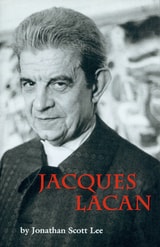
Jacques Lacan
Jonathan Scott Lee
University of Massachusetts Press, 1991
Originally published as part of Twayne's World Authors Series, Jacques Lacan offers a comprehensive and rigorous introduction to the life and work of the French psychoanalyst Jacques Lacan, one of the most influential and challenging thinkers of the twentieth century. Written by a philosopher with a deep engagement in both continental philosophy and psychoanalytic theory, Jonathan Scott Lee traces the development of Lacan's theoretical project from his early psychiatric writings through the landmark Écrits and the renowned seminars that Lacan delivered over more than two decades.
Lee's approach is distinctive in its philosophical clarity, making complex Lacanian ideas available to readers in the humanities and social sciences. His careful analysis of the mirror stage, the role of the Other, and Lacan's three fundamental registers—the Imaginary, the Symbolic, and the Real— provides new insight into the ways they structure human subjectivity, language, and desire. This book situates Lacan within the broader intellectual currents of twentieth-century French thought, drawing connections to structuralism, post-structuralism, and the philosophical traditions that shaped and were shaped by Lacan's radical "return to Freud."
Widely cited in scholarly literature across disciplines, including literary criticism, philosophy, theology, film studies, and cultural theory, Jacques Lacan remains a valued introduction for students, scholars, and general readers seeking a careful and comprehensive guide to one of the most formidable intellectual figures of the modern era.
Jacques Lacan and the Other Side of Psychoanalysis
Reflections on Seminar XVII, sic viJustin Clemens and Russell Grigg, eds.
Duke University Press, 2006
The contributors examine Lacan’s theory of the four discourses, his critique of the Oedipus complex and the superego, the role of primal affects in political life, and his prophetic grasp of twenty-first-century developments. They take up these issues in detail, illuminating the Lacanian concepts with in-depth discussions of shame and guilt, literature and intimacy, femininity, perversion, authority and revolt, and the discourse of marketing and political rhetoric. Topics of more specific psychoanalytic interest include the role of objet a, philosophy and psychoanalysis, the status of knowledge, and the relation between psychoanalytic practices and the modern university.
Contributors. Geoff Boucher, Marie-Hélène Brousse, Justin Clemens, Mladen Dolar, Oliver Feltham, Russell Grigg, Pierre-Gilles Guéguen, Dominique Hecq, Dominiek Hoens, Éric Laurent, Juliet Flower MacCannell, Jacques-Alain Miller, Ellie Ragland, Matthew Sharpe, Paul Verhaeghe, Slavoj Žižek, Alenka Zupancic
Jacques Lacan and the Philosophy of Psychoanalysis
Ellie Ragland-Sullivan
University of Illinois Press, 1986
Jacques Lacan
A Critical IntroductionMartin Murray
Pluto Press, 2016
French psychoanalyst Jacques Lacan has been a major influence on a wide range of twentieth-century thought, even as the breadth, complexity, and obscurity of his work has intimidated students and deterred casual readers. That situation hasn’t been helped by uneven translations into English that have led to a popular conception of his intellectual enterprise that can at times be profoundly mistaken.
In this brief, clearly written introduction to Lacan and his work, Martin Murray presents an up-to-date survey of his key concepts, their development, and their influence on fields such as anthropology, linguistics, and philosophy. Arguing strongly that we should move beyond the traditional focus on Lacan’s early work, which favored a linguistic approach, Murray offers instead a more comprehensive overview of the whole arc of Lacan’s thought. The result is a rigorous, yet accessible, account of one of the key intellectual figures of the twentieth century.

Jacques Louis David, la traite négrière et l’esclavage
Son séjour à Nantes, mars-avril 1790Philippe Bordes
Diaphanes, 2023

Japan and American Children's Books
A JourneySybille Jagusch
Rutgers University Press, 2021
For generations, children’s books provided American readers with their first impressions of Japan. Seemingly authoritative, and full of fascinating details about daily life in a distant land, these publications often presented a mixture of facts, stereotypes, and complete fabrications.
This volume takes readers on a journey through nearly 200 years of American children’s books depicting Japanese culture, starting with the illustrated journal of a boy who accompanied Commodore Matthew Perry on his historic voyage in the 1850s. Along the way, it traces the important role that representations of Japan played in the evolution of children’s literature, including the early works of Edward Stratemeyer, who went on to create such iconic characters as Nancy Drew. It also considers how American children’s books about Japan have gradually become more realistic with more Japanese-American authors entering the field, and with texts grappling with such serious subjects as internment camps and the bombing of Hiroshima and Nagasaki.
Drawing from the Library of Congress’s massive collection, Sybille A. Jagusch presents long passages from many different types of Japanese-themed children’s books and periodicals—including travelogues, histories, rare picture books, folktale collections, and boys’ adventure stories—to give readers a fascinating look at these striking texts.
Published by Rutgers University Press, in association with the Library of Congress.
Jargon of Authenticity
Theodor W. Adorno
Northwestern University Press, 1973
John Dewey and Continental Philosophy
Edited by Paul Fairfield
Southern Illinois University Press, 2010
“These essays build a valuable, if virtual, bridge between the thought of John Dewey and that of a host of modern European philosophers. They invite us to entertain a set of imagined conversations among the mighty dead that no doubt would have intrigued Dewey and each of the interlocutors gathered here.”—Robert Westbrook, author of John Dewey and American Democracy and/or Democratic Hope: Pragmatism and the Politics of Truth.
John Dewey and Continental Philosophy provides a rich sampling of exchanges that could have taken place long ago between the traditions of American pragmatism and continental philosophy had the lines of communication been more open between Dewey and his European contemporaries. Since they were not, Paul Fairfield and thirteen of his colleagues seek to remedy the situation by bringing the philosophy of Dewey into conversation with several currents in continental philosophical thought, from post-Kantian idealism and the work of Friedrich Nietzsche to twentieth-century phenomenology, hermeneutics, and poststructuralism.
John Dewey and Continental Philosophy demonstrates some of the many connections and opportunities for cross-traditional thinking that have long existed between Dewey and continental thought, but have been under-explored. The intersection presented here between Dewey’s pragmatism and the European traditions makes a significant contribution to continental and American philosophy and will spur new and important developments in the American philosophical debate.
John Dewey's Educational Philosophy in International Perspective
A New Democracy for the Twenty-First CenturyEdited by Larry A. Hickman and Giuseppe Spadafora
Southern Illinois University Press, 2009
John Dewey’s Educational Philosophy in International Perspective brings together eleven experts from around the globe to examine the international legacy of the famous philosopher. Placing special emphasis on Dewey’s theories of education, Larry A. Hickman and Giuseppe Spadafora have gathered some of the world’s most noted scholars of educational philosophy to present a thorough exploration of Dewey’s enduring relevance and potential as a tool for change in twenty-first-century political and social institutions.
This collection offers close examinations of the global impact of Dewey’s philosophies, both in his time and our own. Included are discussions of his reception as a much-respected yet criticized philosopher among European Catholics both before and after World War I; the utilization of his pragmatic theories in Italian education and the continuing quest to reinterpret them; his emergence as a source of inspiration to new democracies in Central and Eastern Europe; and his recently renewed popularity in the Hispanic world, particularly in South America and Spain. In addition, authors delve into Dewey’s notion of democracy as a personal way of life and his views on the important ties between education and the democratic state.
Also discussed are Dewey’s philosophies regarding school and society, including the understanding of educational trends as reflections of their social context; the contrast between his methods of applying intelligence to ethical problems and the theory of orthodox utilitarianism; responses to criticisms of Dewey’s controversial belief that the sciences can be applied directly to educational practices; and incisive queries into how he would have responded to the crucial role the Internet now plays in primary and secondary education.
This well-rounded volume provides international insight into Dewey’s philosophies and contains a wealth of information never before published in English, resulting in an indispensable resource for anyone interested in John Dewey and his lasting role in education around the world.
Contributors
Viviana Burza
Franco Cambi
Giorgio Chiosso
Jim Garrison
Jaime Nubiola
Hilary Putnam
Ruth Anna Putnam
Giuseppe Spadafora
Emil Višnovský
Leonard J. Waks
Krystyna Wilkoszewska
John Dewey's Liberalism
Individual, Community, and Self-DevelopmentDaniel Savage
Southern Illinois University Press, 2001
John Dewey's classical pragmatism, Daniel M. Savage asserts, can be used to provide a self-development-based justification of liberal democracy that shows the current debate between liberal individualism and republican communitarianism to be based largely on a set of pseudoproblems.
From Dewey's classical pragmatism, Savage derives a conception of individual autonomy that, while meeting all of the criteria for a conception of autonomy, does not, as the dominant Kantian variant does, require transcendence from any particular language community. The Deweyan conception of autonomy that Savage derived from classical pragmatism, in fact, requires that the individual be situated within a context of cultural beliefs. Savage argues that this particular conception of autonomy is necessary if one wants to conceive of life, as communitarians do, as a quest for the good life within a social context.
Thus, Savage constructs a conception of autonomy that consists of a set of intellectual virtues, each of which can be understood, like Aristotle's moral virtues, as a mean between two extremes (or vices). The virtue of critical reflection is the mean between the vices of dogmatism on the one hand and philosophical skepticism on the other. The virtue of creative individuality is the mean between the opposing vices of conformity and eccentricity. Finally, the virtue of sociability is the mean between the extremes of docility and rebelliousness.
The three virtues together provide a natural method of adapting to change. The method is natural because it is in accord with a continuous cycle of activity—tension/movement/harmony—that is generic to all living things, Dewey's method of adapting to change requires, in both the individual and in the community, the synthesis of integrating and differentiating forces.
Josef Albers, Late Modernism, and Pedagogic Form
Jeffrey Saletnik
University of Chicago Press, 2022
An extraordinary teacher whose influence continues today, Josef Albers helped shape the Bauhaus school in Germany and established the art and design programs at Black Mountain College in North Carolina and Yale University. His books about color theory have informed generations, and his artworks are included in the canon of high-modernist non-representational art. The pedagogy Albers developed was a dynamic approach to teaching that transcended the modernist agendas and cultivated a material way of thinking among his students.
With this book, Jeffrey Saletnik explores the origins of Albers’s teaching practices and their significance in conveying attitudes about form, material, and sensory understanding to artists Eva Hesse and Richard Serra. He demonstrates how pedagogy is a framework that establishes the possibility for artistic discourse and how the methods through which artists learn are manifested in their individual practices. Tracing through lines from Albers’s training in German educational traditions to his influence on American postwar art, Josef Albers, Late Modernism, and Pedagogic Form positions Albers’s pedagogy as central to the life of modernism.