Results by title
8812 books match the query 'Political Science' and 176 start with j
Jacques Rancière
History, Politics, AestheticsGabriel Rockhill and Philip Watts, eds.
Duke University Press, 2009
The contributors to this collection do not simply elucidate Rancière’s project; they also critically respond to it from their own perspectives. They consider the theorist’s engagement with the writing of history, with institutional and narrative constructions of time, and with the ways that individuals and communities can disturb or reconfigure what he has called the “distribution of the sensible.” They examine his unique conception of politics as the disruption of the established distribution of bodies and roles in the social order, and they elucidate his novel account of the relationship between aesthetics and politics by exploring his astute analyses of literature and the visual arts. In the collection’s final essay, Rancière addresses some of the questions raised by the other contributors and returns to his early work to provide a retrospective account of the fundamental stakes of his project.
Contributors. Alain Badiou, Étienne Balibar, Bruno Bosteels, Yves Citton, Tom Conley, Solange Guénoun, Peter Hallward, Todd May, Eric Méchoulan, Giuseppina Mecchia, Jean-Luc Nancy, Andrew Parker, Jacques Rancière, Gabriel Rockhill, Kristin Ross, James Swenson, Rajeshwari Vallury, Philip Watts

Jallad
Death Squads and State Terror in South AsiaTasneem Khalil
Pluto Press, 2015
An unsparing indictment of an international system of terror that is fully countenanced by the West, Jallad presents close-up, detailed accounts of incidents of state terror and targeted violence throughout South Asia. Khalil, a reporter who himself endured torture at the hands of agents in Bangladesh, and whose remarkable story was featured in the New York Times, draws on countless hours of on-the-ground reporting and a broad network of activists and human rights advocates to build an undeniable portrait of the domination and repression that lies at the very core of statecraft in South Asia. Shielded by their protectors in the developed world, the perpetrators of these abuses deploy them strategically to silence dissent and crush opposition.
A brave, essential work of reporting and investigation, Jallad brings these horrific acts to prominence in order to make it impossible for Western governments to continue turning a blind eye to the human rights violations of their erstwhile allies.
Jamaica in 1850
or, The Effects of Sixteen Years of Freedom on a Slave ColonyJohn Bigelow Introduction by Robert J. Scholnick
University of Illinois Press, 2000
A reporter's firsthand portrait of formerly enslaved Jamaicans in the years after emancipation
John Bigelow’s Jamaica in 1850 provided an important document in the antislavery movement in the United States and Great Britain. Jamaica’s economy had collapsed after the 1838 emancipation. American supporters of enslavement used the Jamaican example to argue that abolition at home would unleash economic and social chaos. Bigelow’s vivid eyewitness reporting undermined that widely held view by proving Jamaica’s problems originated in the incompetence of absentee white planters and an obsolete colonial system. As Bigelow showed, many once-enslaved Jamaicans had in fact become successful small-scale landowners in the twelve years after emancipation while the large plantations languished.
James Baldwin, Toni Morrison, and the Rhetorics of Black Male Subjectivity
Aaron Ngozi Oforlea
The Ohio State University Press, 2017
Oforlea’s book offers new analyses of the character dynamics in Baldwin’s Go Tell It on the Mountain, Tell Me How Long the Train’s Been Gone, and If Beale Street Could Talkand Morrison’s Beloved, Song of Solomon, and Tar Baby. The black male characters in these novels encounter the discursive divide, or a cultural dissonance, when they encounter dominant representations of black male identities. They use these opportunities to construct a counter-discourse about black male subjectivity. Ultimately, Oforlea argues, these characters are strategic about when and how they want to appropriate and subvert dominant ideologies. Their awareness that post-racial discourses perpetuate racial inequality serves as a gateway toward participation in collective struggles for racial justice.
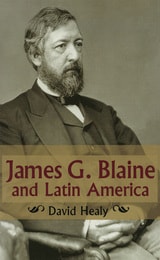
James G. Blaine and Latin America
David Healy
University of Missouri Press, 2001
James G. Blaine was one of the leading national political figures of his day, and probably the most controversial. Intensely partisan, the dominant leader of the Republican Party, and a major shaper of national politics for more than a decade, Blaine is remembered chiefly for his role as architect of the post-Civil War GOP and his two periods as secretary of state. He also was the Republican presidential candidate in the notorious mud-slinging campaign of 1884. His foreign policy was marked by its activism, its focus on Latin America, and its attempt to increase U.S. influence there.
James G. Blaine and Latin America asserts that Latin America lay at the heart of Blaine's foreign policy and his vision for America. David Healy examines seven major issues that collectively defined the secretary of state's methods, goals, and views regarding Latin America and, more broadly, the international role of the United States. Healy places his explorations within the larger context of Blaine's ongoing role as a national party leader, his relations with the presidents under whom he served, and the responses of his predecessors and successors toward the issues at hand in Latin America.
The result is a deeper understanding of Blaine's ambitious vision for his country's international role, his energy and aggressiveness in moving to achieve that vision, and his effective efforts to transmit his worldview to the public. Blaine's emphasis on the importance of Latin America to the United States and his conviction that his country should be a world power influenced a new generation of leaders who, at the end of the century, would go beyond his goals and usher in a new era.
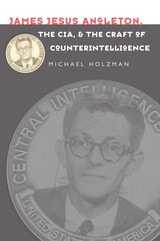
James Jesus Angleton, the CIA, and the Craft of Counterintelligence
Michael Holzman
University of Massachusetts Press, 2008
As chief of counterintelligence for the Central Intelligence Agency from the early 1950s to the early 1970s, James Jesus Angleton built a formidable reputation. Although perhaps best known for leading the agency's notorious “Molehunt”—the search for a Soviet spy believed to have infiltrated the upper levels of the American government—Angleton also played a key role in the U.S. intervention in the Italian election of 1948, in Israel's development of nuclear weapons, and in the management of the CIA's investigation of the assassination of John F. Kennedy. He later led CIA efforts to contain the Vietnam-era antiwar movement, including the campaign to destroy the liberal Catholic magazine Ramparts.
In this deeply researched biography, Michael Holzman uses Angleton's story to illuminate the history of the CIA from its founding in the late 1940s to the mid-1970s. Like many of his colleagues in the CIA, James Angleton learned the craft of espionage during World War II as an officer in the Office of Strategic Services (OSS), where he became a friend and protégé of the British double agent Kim Philby. Yet Angleton's approach to counterintelligence was also influenced by his unusual Mexican American family background and his years at Yale as a student of the New Critics and publisher of modernist poets. His marriage to Cicely d'Autremont and the couple's friendship with E. E. and Marion Cummings became part of a network of cultural connections that linked the U.S. secret intelligence services and American writers and artists during the postwar period.
Drawing on a broad range of sources, including previously unexamined archival documents, personal letters, and interviews, Holzman looks beneath the surface of Angleton's career to reveal the sensibility that governed not only his personal aims and ambitions but those of the organization he served and helped shape.
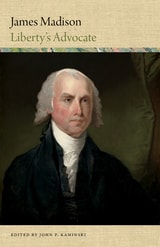
James Madison
Liberty's AdvocateJohn P. Kaminski
Wisconsin Historical Society Press, 2018
America has had few political thinkers who have rivalled James Madison. The son of a wealthy planter, Madison was an unhealthy child and was beset by physical infirmities throughout his long life, and grew into a cerebral man. Madison left Virginia to attend the College of New Jersey, but returned to his native state after completing his studies. Though he aspired to be a college professor, Madison instead went into public service and became one of the most influential, guiding voices of the Founding Era. Madison’s Virginia Plan would be used as a blueprint for the Constitutional Convention, where the Articles of Confederation would be replaced with a new Constitution that bore traces of Madison’s influence throughout.
Editor John Kaminski has gathered a remarkable collection of quotations by and about James Madison for the third installment of his Word Portraits of America’s Founders series. Through these words by and about Madison, we learn more about one of the country’s most influential Founding Fathers, who held a lifelong commitment to liberty and opposed oppression.
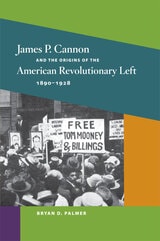
James P. Cannon and the Origins of the American Revolutionary Left, 1890-1928
Bryan D. Palmer
University of Illinois Press, 2010
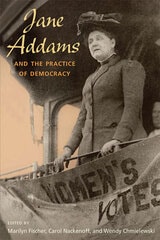
Jane Addams and the Practice of Democracy
Edited by Marilyn Fischer, Carol Nackenoff, and Wendy Chmielewski
University of Illinois Press, 2008
Using a rich array of newly available sources and contemporary methodologies from many disciplines, the ten original essays in this volume give a fresh appraisal of Addams as a theorist and practitioner of democracy. In an increasingly interdependent world, Addams's life work offers resources for activists, scholars, policy makers, and theorists alike. This volume demonstrates how scholars continue to interpret Addams as a model for transcending disciplinary boundaries, generating theory out of concrete experience, and keeping theory and practice in close and fruitful dialogue.
Contributors are Harriet Hyman Alonso, Victoria Bissell Brown, Wendy Chmielewski, Marilyn Fischer, Shannon Jackson, Louise W. Knight, Carol Nackenoff, Karen Pastorello, Wendy Sarvasay, Charlene Haddock Seigfried, and Camilla Stivers.
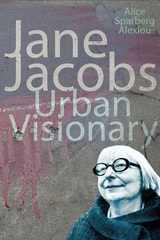
Jane Jacobs
Urban VisionaryAlice Sparberg Alexiou
Rutgers University Press, 2006
Today, we take for granted the wisdom of renovating old factory buildings into malls or condos, of making once decaying waterfronts into vibrant public spaces, of protecting historic buildings under landmark laws, and of building public housing on a human scale rather than as high-rises. In contemporary cities, it is now common for community groups to plant gardens in empty lots and to buy abandoned apartment buildings from the city for a dollar and fix them up.
But these and other urban planning policies and practices have not always been accepted. Before they became widespread, they were the visionary ideas of the writer and urban commentator Jane Jacobs. Best known in the United States for her path-breaking efforts to preserve the character of Greenwich Village, Jacobs is the author of the classic 1961 book, The Death and Life of Great American Cities, one of the most influential works ever published in urban studies. The architectural critic Herbert Muschamp wrote in the New York Times that its publication “was one of twentieth-century architecture’s most traumatic events. Its impact is still felt in cities across the land.”
In this analysis of Jane Jacobs’s ideas and work, Alice Sparberg Alexiou tells the remarkable story of a woman who without any formal training in planning became a prominent spokesperson for sensible urban change. Besides writing the seminal book about contemporary cities, Jacobs organized successful community battles in New York against powerful interests. She resisted urban renewal in the West Village in the 1960s, helped defeat the Lower Manhattan Expressway, advocated the pleasures of street life that she called “sidewalk ballet,” and opposed the original Twin Towers plans. She was also active in the anti–Vietnam War movement, which eventually led her to move to Canada. There she continued her grass-roots activism, including helping to prevent the construction of an expressway that would have cut through several neighborhoods in Toronto.
Based on a rich array of interviews and primary source material, this book brings long-overdue attention to Jacobs’s far-reaching influence as an original thinker and effective activist.
Janus's Gaze
Essays on Carl SchmittCarlo Galli
Duke University Press, 2015
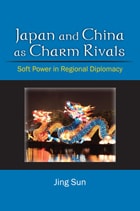
Japan and China as Charm Rivals
Soft Power in Regional DiplomacyJing Sun
University of Michigan Press, 2013
In international relations today, influence is as essential as military and economic might. Consequently, leaders promote favorable images of the state in order to attract allies and win support for their policies. Jing Sun, an expert on international relations and a former journalist, refers to such soft power campaigns as "charm offensives."
Sun focuses on the competition between China and Japan for the allegiance of South Korea, Taiwan, and other states in the region. He finds that, instead of adopting a one-size-fits-all approach, the Chinese and the Japanese deploy customized charm campaigns for each target state, taking into consideration the target's culture, international position, and political values. He then evaluates the effectiveness of individual campaigns from the perspective of the target state, on the basis of public opinion polls, media coverage, and the response from state leaders.
A deep, comparative study, Japan and China as Charm Rivalsenriches our understanding of soft power by revealing deliberate image campaign efforts and offering a method for assessing the effectiveness of such charm offensives.
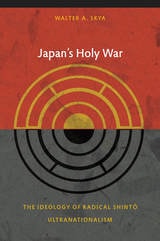
Japan's Holy War
The Ideology of Radical Shinto UltranationalismWalter A. Skya
Duke University Press, 2009
Skya documents a transformation in the ideology of State Shintō in the late nineteenth century and the early twentieth. He shows that within the religion, support for the German-inspired theory of constitutional monarchy that had underpinned the Meiji Constitution gave way to a theory of absolute monarchy advocated by the constitutional scholar Hozumi Yatsuka in the late 1890s. That, in turn, was superseded by a totalitarian ideology centered on the emperor: an ideology advanced by the political theorists Uesugi Shinkichi and Kakehi Katsuhiko in the 1910s and 1920s. Examining the connections between various forms of Shintō nationalism and the state, Skya demonstrates that where the Meiji oligarchs had constructed a quasi-religious, quasi-secular state, Hozumi Yatsuka desired a traditional theocratic state. Uesugi Shinkichi and Kakehi Katsuhiko went further, encouraging radical, militant forms of extreme religious nationalism. Skya suggests that the creeping democracy and secularization of Japan’s political order in the early twentieth century were the principal causes of the terrorism of the 1930s, which ultimately led to a holy war against Western civilization.
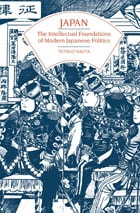
Japan
The Intellectual Foundations of Modern Japanese PoliticsTetsuo Najita
University of Chicago Press, 1980
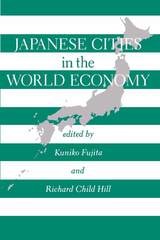
Japanese Cities
edited by Kuniko Fujita and Richard Child Hill
Temple University Press, 1993
Japan is the world's second most powerful economy and one of the most urbanized nations on earth. Yet English-language literature contains remarkable little about cities in Japan. This collection of original essays on Japanese urban and industrial development covers a broad spectrum of city experiences. Leading Japanese and Western urbanists analyze Japan's largest metropolitan areas (Tokyo, Osaka, Nagoya); proto-typical industrial cities (Kamaishi, Kitakyushu, Toyota); high technology urban satellites (Kanagawa); and smaller, more traditionally organized industrial districts (Tsubame). This book demonstrates how Japan's flexible economic growth strategies and changing relationship to the world economy have produced a uniquely Japanese pattern of urban development in this century.
Throughout the essays that describe individual cities, contributors provide commentary on each city's twentieth-century history and functional relations with other cities and focus on the dynamic linkage between global relations and local activities. They examine the role of government—central, prefectural, and local—in the restructuring of Japanese industrial and urban life. One essay is devoted to the urbanization process in pre-World War II Japan; another considers urban planning on the western Pacific Rim. This is the first book that analyzes how the economic transformation of Japan has restructured Japanese cities and how urban and regional development policies have kept pace with (and in some ways effected) changes in the economy.
This comprehensive study of Japanese cities provides interdisciplinary coverage of urban development issues of interest to the fields of economics, business, sociology, political science, history, Asian and Japanese studies, and urban planning.

Japanese Corrections
Managing Convicted Offenders in an Orderly SocietyElmer H. Johnson
Southern Illinois University Press, 1996
In his analysis of the current Japanese corrections system, internationally respected criminologist Elmer H. Johnson focuses on three basic questions: What are the characteristics of the major programmatic elements? How do various personnel carry out their programmatic responsibilities? Why are the various duties and activities carried out in a particular way?
Johnson points out that compared with the United States, where prison populations are huge and often violent, Japan incarcerates relatively few criminals. In 1989, for example, Japan locked up only 34 out of every 100,000 citizens while the United States imprisoned people at a rate of 271 per 100,000. Examining the cultural differences leading to this disparity, Johnson notes that in Japan prosecutors are reluctant to refer defendants for trial and the courts often suspend sentences for convicted felons.
In Japan, two bureaus—the Correction Bureau and the Rehabilitation Bureau—administer all Japanese correctional activities. Placing these bureaus in the organizational scheme of the Ministry of Justice, Johnson traces the history, describes the organizational ideologies, and outlines the special features of each.
A central feature of the Japanese penal system is the industrial prison, a concept that met such fierce opposition in the United States that it lost almost all access to the free market by the 1940s. Johnson traces the history of the industrial prison, noting particularly that the industrial operations in adult institutions explain in part why there is almost no violence and why few try to escape. Juvenile institutions enjoy similar success; even though they produce no industrial products, the juvenile training schools emphasize education, vocational training, and counseling.
Japanese correctional officers rely heavily on the community and on unsalaried volunteer probation officers for supervision of probationers and parolees. Although Japanese courts regard probationary supervision as too punitive for most convicted defendants and return many to the community without supervision, the probation caseload is weighty. Johnson describes the responsibilities and operations of the Regional Parole Boards. He also discusses the aid hostels (halfway houses) that are primarily operated by private organizations and that serve released or paroled prisoners.
Johnson sums up by noting that both the Correction Bureau and the Rehabilitation Bureau depend on the overall operations of police, prosecutors, and judges. More broadly, he asserts, both bureaus are creatures of Japanese society and culture. The assets and disadvantages of the bureaus reflect society’s reluctance to sentence defendants to prison and, to a lesser extent, the reluctance to place them on probationary supervision.
Japanese Foodways, Past and Present
Edited by Eric C. Rath and Stephanie Assmann
University of Illinois Press, 2010
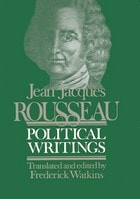
Jean Jacques Rousseau
Political WritingsFrederick Watkins
University of Wisconsin Press, 1986
Frederick Watkins’ 1953 edition of Rousseau’s Political Writings has long been noted for being fully accurate while representing much of Rousseau’s eloquence and elegance. It contains what is widely regarded as the finest English translation of The Social Contract, Rousseau’s greatest political treatise. In addition, this edition offers the best available translation of the late and important Government of Poland and the only published English translation of the fragment Constitutional Project for Corsica, which, says Watkins, provides the clearest possible demonstration of the practical implications of Rousseau’s political thought.
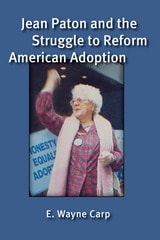
Jean Paton and the Struggle to Reform American Adoption
E. Wayne Carp
University of Michigan Press, 2013
Jean Paton (1908–2002) fought tirelessly to reform American adoption and to overcome prejudice against adult adoptees and women who give birth out of wedlock. Paton wrote widely and passionately about the adoption experience, corresponded with policymakers as well as individual adoptees, promoted the psychological well-being of adoptees, and facilitated reunions between adoptees and their birth parents. E. Wayne Carp's masterful biography brings to light the accomplishments of this neglected civil-rights pioneer, who paved the way for the explosive emergence of the adoption reform movement in the 1970s. Her unflagging efforts over five decades helped reverse harmful policies, practices, and laws concerning adoption and closed records, struggles that continue to this day.
Jean Paul Marat
Tribune of the French RevolutionClifford D. Conner
Pluto Press, 2012
Jean-Paul Marat’s role in the French Revolution has long been a matter of controversy among historians. Often he has been portrayed as a violent, sociopathic demagogue. This biography challenges that interpretation and argues that without Marat’s contributions as an agitator, tactician, and strategist, the pivotal social transformation that the Revolution accomplished might well not have occurred.
Clifford D. Conner argues that what was unique about Marat - which set him apart from all other major figures of the Revolution, including Danton and Robespierre - was his total identification with the struggle of the propertyless classes for social equality.
This is an essential book for anyone interested in the history of the revolutionary period and the personalities that led it.
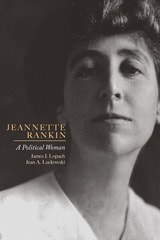
Jeannette Rankin
A Political WomanJames J. Lopach
University Press of Colorado, 2015
—Jeannette Rankin (1880-1973)
Jeannette Rankin, the first woman elected to Congress, stands tall among American icons. The representative from Montana won her seat at a time when women didn't have the right to vote in most states. Her firm stances inspired both admiration and fury across party lines, and she gained nearly canonical status among feminists and pacifists. In Jeannette Rankin: A Political Woman, James Lopach and Jean Luckowski demythologize Rankin, showing her to be a talented, driven, and deeply divided woman.
Until now, no biography has explored Rankin's inconsistencies. The authors extensively consulted the correspondence of her family members and contemporaries, uncovering ties between her politics and her familial and personal relationships. They reveal how she succeeded through her wealthy brother's influence as well as her own extraordinary efforts; how she drew inspiration not from her rural roots but from the radical hotbed of Greenwich Village; and how she championed an independent, woman-centered life while deferring to family.
Revealing her complexities along with her accomplishments, Jeannette Rankin: A Political Woman will be the definitive biography of this path-breaking politician for years to come.
Jefferson, Lincoln, and the Unfinished Work of the Nation
Ronald L. Hatzenbuehler
Southern Illinois University Press, 2016
In this groundbreaking new study—the first extended examination of the ideas of Lincoln and Jefferson—Hatzenbuehler provides readers with a succinct guide to their opinions, comparing and contrasting their reasoned judgments on America’s republican form of government. Each chapter is devoted to one key area of common interest: race and slavery, the pros and cons of political parties, state rights versus federal authority, religion and the presidency, presidential powers under the Constitution, or the proper political economy for a republic. Relying on the pair’s own words in their letters, writings, and speeches, Hatzenbuehler explores similarities and differences between the two men on contentious issues. Both, for instance, wrote that they were antislavery, but Jefferson never acted on this belief, while Lincoln moved toward a constitutional amendment banning slavery. The book’s title, taken from the Gettysburg Address, builds on both presidents’ expectations that Americans should dedicate themselves to the unfinished work of returning the nation to its founding principles.
Jefferson and Lincoln wrestled with many of the same issues and ideas that intrigue and divide Americans today. In his thought-provoking work, Hatzenbuehler details how the two presidents addressed these issues and ideas, which are essential to understanding not only America’s history but also the continuing influence of the past on the present.
Jeremy Bentham on Police
The Unknown Story and What It Means for CriminologyEdited by Scott Jacques and Philip Schofield
University College London, 2021
Jeremy Bentham theorized the panopticon as modern policing emerged across the British Empire, yet while his theoretical writing became canonical in criminology, his perspective on the police remains obscure. Jeremy Bentham on Police recovers the reformer’s writings on policing alongside a series of essays that demonstrate their significance to the past, present, and future of criminology.
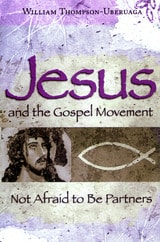
Jesus and the Gospel Movement
Not Afraid to Be PartnersWilliam Thompson-Uberuaga
University of Missouri Press, 2006
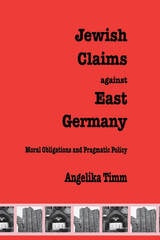
Jewish Claims Against East Germany
Angelika Timm
Central European University Press, 1998
This is the first comprehensive history of Jewish negotiations with East Germany regarding restitution and reparations for Nazi war crimes. Angelika Timm analyzes the politics of old and new anti-Semitism and the context in which they grew under the officially propagated ideology of antifascism.
Investigating the mass of unpublished, newly available archival data from the United States, Israel, and the former German Democratic Republic, and more than forty personal interviews, Timm fills a critical gap in the scholarship on postwar Germany. She analyzes the role of the Holocaust and the image of Jews in the historical consciousness and political culture of East Germany and chronicles the efforts of Jewish organizations, especially the Conference on Jewish Material Claims Against Germany, to negotiate reparations with the East German state. The unique relationship between ideology and Realpolitik defined the manner in which East Germany confronted the crimes of its past and allowed anti-Semitism to reemerge.
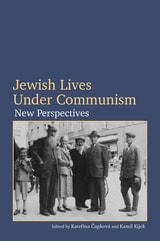
Jewish Lives under Communism
New PerspectivesKaterina Capková
Rutgers University Press, 2022
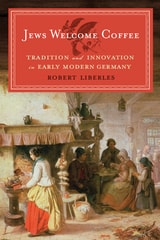
Jews Welcome Coffee
Tradition and Innovation in Early Modern GermanyRobert Liberles
Brandeis University Press, 2012
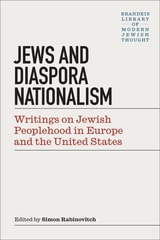
Jews and Diaspora Nationalism
Writings on Jewish Peoplehood in Europe and the United StatesEdited by Simon Rabinovitch
Brandeis University Press, 2012
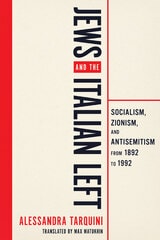
Jews and the Italian Left
Socialism, Zionism, and Antisemitism from 1892 to 1992Alessandra Tarquini, Translated by Max Matukhin
University of Wisconsin Press, 2026
Tarquini’s research fills an important lacuna by analyzing the antisemitism of twentieth-century socialist movements. Crucially, however, Tarquini makes important distinctions between antisemitism on the Italian left and right, and identifies the relationship between leftism and antisemitism as a distinct formation.

Jews, Sports, and the Rites of Citizenship
Edited by Jack Kugelmass
University of Illinois Press, 2006
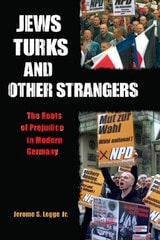
Jews, Turks, and Other Strangers
Roots of Prejudice in Modern GermanyJerome S. Legge, Jr.
University of Wisconsin Press, 2003
Scholarly, objective, insightful, and analytical, Jews, Turks, and Other Strangers studies the causes of prejudice against Jews, foreign workers, refugees, and emigrant Germans in contemporary Germany. Using survey material and quantitative analyses, Legge convincingly challenges the notion that German xenophobia is rooted in economic causes. Instead, he sees a more complex foundation for German prejudice, particularly in a reunified Germany where perceptions of the "other" sometimes vary widely between east and west, a product of a traditional racism rooted in the German past. By clarifying the foundations of xenophobia in a new German state, Legge offers a clear and disturbing picture of a conflicted country and a prejudice that not only affects Jews but also fuels a larger, anti-foreign sentiment.
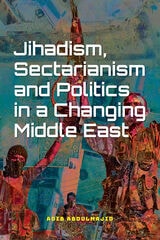
Jihadism, Sectarianism and Politics in a Changing Middle East
Adib Abdulmajid
Eburon Academic Publishers, 2021
The emergence and growth of sectarian Islamist militant organizations, whether Sunni or Shia, is deemed to be the fruit of the emerging radical interpretations of the concept of jihad, and the evolution of Islamism in general. The main objective of this book is to help the reader understand the complex religio-political scene in today’s Middle East and the ideological principles and agendas of influential movements, whose beliefs and actions constitute a serious threat to cultural diversity in the region. It addresses the doctrinal tenets associated with the emergence of influential Islamist organizations and the challenges encountered by the culturally diverse populations that surround them. This book also delves into the historical events that have shaped the Middle East as we know it today. It further examines the key factors behind the rise of the most influential sectarian-guided, jihadi-based extremist groups in the recent years
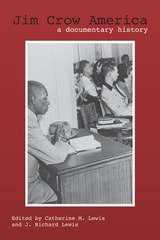
Jim Crow America
A Documentary HistoryCatherine M. Lewis
University of Arkansas Press, 2009
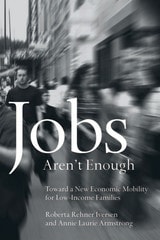
Jobs Aren't Enough
Toward a New Economic Mobility for Low-Income FamiliesRoberta Rehner Iversen and Annie Laurie Armstrong
Temple University Press, 2006
Jobs and Economic Development in Minority Communities
edited by Paul Ong and Anastasia Loukaitou-Sideris
Temple University Press, 2006
Jobs and the Labor Force of Tomorrow
Migration, Training, EducationMichael Pagano
University of Illinois Press, 2017
Contributors: Xochitl Bada, John Bragelman, Laura Dresser, Rudy Faust, Beth Gutelius, Brad Harrington, Gregory V. Larnell, Twyla T. Blackmond Larnell, and Nik Theodore.
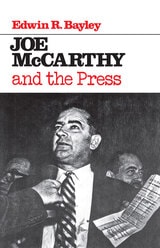
Joe McCarthy and the Press
Edwin R. Bayley
University of Wisconsin Press, 2003
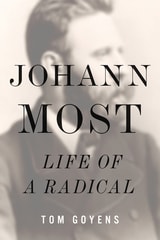
Johann Most
Life of a RadicalTom Goyens
University of Illinois Press, 2025
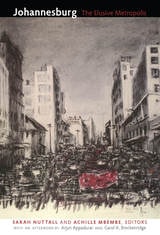
Johannesburg
The Elusive MetropolisSarah Nuttall and Achille Mbembe, eds.
Duke University Press, 2008
The volume’s essays include an investigation of representation and self-stylization in the city, an ethnographic examination of friction zones and practices of social reproduction in inner-city Johannesburg, and a discussion of the economic and literary relationship between Johannesburg and Maputo, Mozambique’s capital. One contributor considers how Johannesburg’s cosmopolitan sociability enabled the anticolonial projects of Mohandas Ghandi and Nelson Mandela. Journalists, artists, architects, writers, and scholars bring contemporary Johannesburg to life in ten short pieces, including reflections on music and megamalls, nightlife, built spaces, and life for foreigners in the city.
Contributors: Arjun Appadurai, Carol A. Breckenridge, Lindsay Bremner, David Bunn, Fred de Vries, Nsizwa Dlamini, Mark Gevisser, Stefan Helgesson, Julia Hornberger, Jonathan Hyslop, Grace Khunou, Frédéric Le Marcis, Xavier Livermon, John Matshikiza, Achille Mbembe, Robert Muponde, Sarah Nuttall, Tom Odhiambo, Achal Prabhala, AbdouMaliq Simone
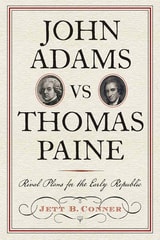
John Adams vs Thomas Paine
Rival Plans for the Early RepublicJett B. Conner
Westholme Publishing, 2018
Initially admiring Thomas Paine’s efforts for independence, John Adams nevertheless was rattled by the political philosophy of Common Sense and responded to it by publishing his Thoughts on Government to counteract Paine’s proposals, which Adams said were far too “democratical.” Although John Adams is given credit for his substantive contributions to American constitutionalism, especially his notions of separation of powers, checks and balances, and representation, in John Adams vs Thomas Paine: Rival Plans for the Early Republic, historian Jett B. Conner makes the case that Thomas Paine was more than just a revolutionary figure who spurred Americans toward declaring independence. Common Sense made important contributions to American constitutional thought, too, particularly its call for more equal representation, popular sovereignty, a constitutional convention, and a federal system of governance with a strong central government. The book explores how the two rivals helped shape America’s first constitutions—the Articles of Confederation and those of several states— and how they continued contributing to American political thought as it developed during the so-called “critical period” between the adoption of the Articles of Confederation and the start of the Constitutional Convention of 1787. It also focuses on the creation of our democratic republic and compares Paine’s and Adams’s approaches to structuring constitutions to ensure free government while guarding against abuses of power and the excesses of democratic majorities. An abridged version of Common Sense and the short but complete Thoughts on Government are included in an appendix for easy reader reference.
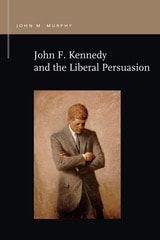
John F. Kennedy and the Liberal Persuasion
John M. Murphy
Michigan State University Press, 2019
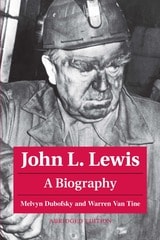
John L. Lewis
A BiographyMelvyn Dubofsky and Warren Van Tine
University of Illinois Press, 1986
John Locke's Liberalism
Ruth W. Grant
University of Chicago Press, 1987
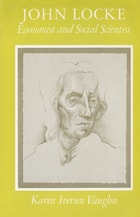
John Locke
Economist and Social ScientistKaren Iversen Vaughn
University of Chicago Press, 1980
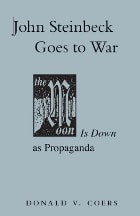
John Steinbeck Goes to War
The Moon is Down as PropagandaDonald V. Coers
University of Alabama Press, 2005
WINNER OF THE ELIZABETH AGEE PRIZE IN AMERICAN LITERATURE
When words became weapons—Steinbeck’s novel and the underground war for freedom.
In March 1942, a desperate period for the allies in World War II, John Steinbeck published his propaganda novel The Moon is Down—the story of ruthless invaders who overrun a militarily helpless country. Throughout the novel, Steinbeck underscored both the fatal weakness of the “invincible” unnamed aggressors and the inherent power of the human values shard by the “conquered” people.
The Moon is Down created an immediate sensation among American literary critics; fierce debate erupted over Steinbeck’s uncommonly sympathetic portrayal of the enemy and the novel’s power as a vehicle for propaganda. Fifty years later, Coers continues the debate, relying heavily on unpublished letters and personal interviews with the lawyers, book dealers, actors, publishers, and housewives associated with the resistance movements in Western Europe. Clandestine translations of The Moon Is Down quickly appeared and were widely circulated under the noses of the Gestapo. Coers documents the fate of Steinbeck’s novel in the hands of World War II resistance fighters and deepens our appreciation of Steinbeck’s unique ability to express the feelings of oppressed peoples.
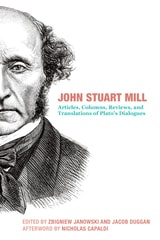
John Stuart Mill
Articles, Columns, Reviews and Translations of Plato's DialoguesJohn Stuart Mill
St. Augustine's Press, 2021
The contribution of Mill’s most authoritative biographer, Nicholas Capaldi, is a singular and unmatched highlight. The tenor of St. Augustine’s Press volumed on Mill is distinct in its intention to place his work in the framework of political philosophy and the conversation of the viability of liberalism as a tradition of thought.
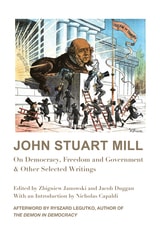
John Stuart Mill
On Democracy, Freedom and Government & Other Selected WritingsJohn Stuart Mill
St. Augustine's Press, 2019
If one can use a somewhat exaggerated language, Mill’s writings are to liberal-democracy what Marx and Engels’ writings were to Communism. Both systems gave expression to 19th century man’s longing for equality and justice, both promised to liberate him from the shackles of oppression, authority and tradition. Instead of liberating man, Communism created the most brutal system in human history, and its spectacular fall in 1989 is one of history’s greatest events. Western world today shows that liberal-democracy is no longer a benign doctrine, which advocates free market, minimum state and individual liberties, but, like Communism, is an all-encompassing ideology which forces an individual to abdicate his freedom and soul in favor of a Communist-like collective.
As many critics of real Socialism could see the seeds of totalitarianism in the writings of Marx and Engels, so one can see the seeds of liberal totalitarianism in Mill’s writings. This new edition is intended to help readers to understand why democratic-liberalism came so close to its 19th century ideological rival.
Journal of Political Economy Macroeconomics, volume 1 number 2 (June 2023)
The University of Chicago Press
University of Chicago Press Journals, 2023
Journal of Political Economy Macroeconomics, volume 1 number 3 (September 2023)
The University of Chicago Press
University of Chicago Press Journals, 2023
Journal of Political Economy Macroeconomics, volume 1 number 4 (December 2023)
The University of Chicago Press
University of Chicago Press Journals, 2023