Results by title
1761 books match the query 'Public Policy' and 18 start with j
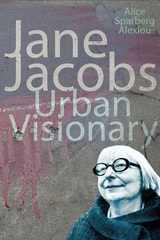
Jane Jacobs
Urban VisionaryAlice Sparberg Alexiou
Rutgers University Press, 2006
Today, we take for granted the wisdom of renovating old factory buildings into malls or condos, of making once decaying waterfronts into vibrant public spaces, of protecting historic buildings under landmark laws, and of building public housing on a human scale rather than as high-rises. In contemporary cities, it is now common for community groups to plant gardens in empty lots and to buy abandoned apartment buildings from the city for a dollar and fix them up.
But these and other urban planning policies and practices have not always been accepted. Before they became widespread, they were the visionary ideas of the writer and urban commentator Jane Jacobs. Best known in the United States for her path-breaking efforts to preserve the character of Greenwich Village, Jacobs is the author of the classic 1961 book, The Death and Life of Great American Cities, one of the most influential works ever published in urban studies. The architectural critic Herbert Muschamp wrote in the New York Times that its publication “was one of twentieth-century architecture’s most traumatic events. Its impact is still felt in cities across the land.”
In this analysis of Jane Jacobs’s ideas and work, Alice Sparberg Alexiou tells the remarkable story of a woman who without any formal training in planning became a prominent spokesperson for sensible urban change. Besides writing the seminal book about contemporary cities, Jacobs organized successful community battles in New York against powerful interests. She resisted urban renewal in the West Village in the 1960s, helped defeat the Lower Manhattan Expressway, advocated the pleasures of street life that she called “sidewalk ballet,” and opposed the original Twin Towers plans. She was also active in the anti–Vietnam War movement, which eventually led her to move to Canada. There she continued her grass-roots activism, including helping to prevent the construction of an expressway that would have cut through several neighborhoods in Toronto.
Based on a rich array of interviews and primary source material, this book brings long-overdue attention to Jacobs’s far-reaching influence as an original thinker and effective activist.
Japanese Cities
edited by Kuniko Fujita and Richard Child Hill
Temple University Press, 1993
Japan is the world's second most powerful economy and one of the most urbanized nations on earth. Yet English-language literature contains remarkable little about cities in Japan. This collection of original essays on Japanese urban and industrial development covers a broad spectrum of city experiences. Leading Japanese and Western urbanists analyze Japan's largest metropolitan areas (Tokyo, Osaka, Nagoya); proto-typical industrial cities (Kamaishi, Kitakyushu, Toyota); high technology urban satellites (Kanagawa); and smaller, more traditionally organized industrial districts (Tsubame). This book demonstrates how Japan's flexible economic growth strategies and changing relationship to the world economy have produced a uniquely Japanese pattern of urban development in this century.
Throughout the essays that describe individual cities, contributors provide commentary on each city's twentieth-century history and functional relations with other cities and focus on the dynamic linkage between global relations and local activities. They examine the role of government—central, prefectural, and local—in the restructuring of Japanese industrial and urban life. One essay is devoted to the urbanization process in pre-World War II Japan; another considers urban planning on the western Pacific Rim. This is the first book that analyzes how the economic transformation of Japan has restructured Japanese cities and how urban and regional development policies have kept pace with (and in some ways effected) changes in the economy.
This comprehensive study of Japanese cities provides interdisciplinary coverage of urban development issues of interest to the fields of economics, business, sociology, political science, history, Asian and Japanese studies, and urban planning.

Japanese Foodways, Past and Present
Edited by Eric C. Rath and Stephanie Assmann
University of Illinois Press, 2010
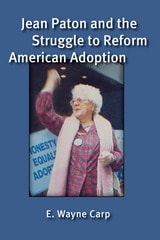
Jean Paton and the Struggle to Reform American Adoption
E. Wayne Carp
University of Michigan Press, 2013
Jean Paton (1908–2002) fought tirelessly to reform American adoption and to overcome prejudice against adult adoptees and women who give birth out of wedlock. Paton wrote widely and passionately about the adoption experience, corresponded with policymakers as well as individual adoptees, promoted the psychological well-being of adoptees, and facilitated reunions between adoptees and their birth parents. E. Wayne Carp's masterful biography brings to light the accomplishments of this neglected civil-rights pioneer, who paved the way for the explosive emergence of the adoption reform movement in the 1970s. Her unflagging efforts over five decades helped reverse harmful policies, practices, and laws concerning adoption and closed records, struggles that continue to this day.

Jews Welcome Coffee
Tradition and Innovation in Early Modern GermanyRobert Liberles
Brandeis University Press, 2012
Jobs Aren't Enough
Toward a New Economic Mobility for Low-Income FamiliesRoberta Rehner Iversen and Annie Laurie Armstrong
Temple University Press, 2006
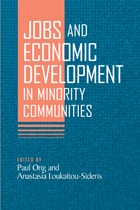
Jobs and Economic Development in Minority Communities
edited by Paul Ong and Anastasia Loukaitou-Sideris
Temple University Press, 2006
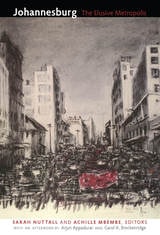
Johannesburg
The Elusive MetropolisSarah Nuttall and Achille Mbembe, eds.
Duke University Press, 2008
The volume’s essays include an investigation of representation and self-stylization in the city, an ethnographic examination of friction zones and practices of social reproduction in inner-city Johannesburg, and a discussion of the economic and literary relationship between Johannesburg and Maputo, Mozambique’s capital. One contributor considers how Johannesburg’s cosmopolitan sociability enabled the anticolonial projects of Mohandas Ghandi and Nelson Mandela. Journalists, artists, architects, writers, and scholars bring contemporary Johannesburg to life in ten short pieces, including reflections on music and megamalls, nightlife, built spaces, and life for foreigners in the city.
Contributors: Arjun Appadurai, Carol A. Breckenridge, Lindsay Bremner, David Bunn, Fred de Vries, Nsizwa Dlamini, Mark Gevisser, Stefan Helgesson, Julia Hornberger, Jonathan Hyslop, Grace Khunou, Frédéric Le Marcis, Xavier Livermon, John Matshikiza, Achille Mbembe, Robert Muponde, Sarah Nuttall, Tom Odhiambo, Achal Prabhala, AbdouMaliq Simone

Judging Children As Children
A Proposal for a Juvenile Justice SystemMichael A. Corriero
Temple University Press, 2007
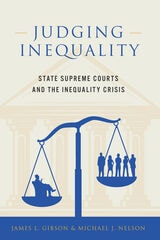
Judging Inequality
State Supreme Courts and the Inequality CrisisJames L. Gibson
Russell Sage Foundation, 2021
Drawing on an analysis of an original database of nearly 6,000 decisions made by over 900 judges on 50 state supreme courts over a quarter century, Judging Inequality documents two ways that state high courts have crafted policies relevant to inequality: through substantive policy decisions that fail to advance equality and by rulings favoring more privileged litigants (typically known as “upperdogs”). The authors discover that whether court-sanctioned policies lead to greater or lesser inequality depends on the ideologies of the justices serving on these high benches, the policy preferences of their constituents (the people of their state), and the institutional structures that determine who becomes a judge as well as who decides whether those individuals remain in office.
Gibson and Nelson decisively reject the conventional theory that state supreme courts tend to protect underdog litigants from the wrath of majorities. Instead, the authors demonstrate that the ideological compositions of state supreme courts most often mirror the dominant political coalition in their state at a given point in time. As a result, state supreme courts are unlikely to stand as an independent force against the rise of inequality in the United States, instead making decisions compatible with the preferences of political elites already in power. At least at the state high court level, the myth of judicial independence truly is a myth.
Judging Inequality offers a comprehensive examination of the powerful role that state supreme courts play in shaping public policies pertinent to inequality. This volume is a landmark contribution to scholarly work on the intersection of American jurisprudence and inequality, one that essentially rewrites the “conventional wisdom” on the role of courts in America’s democracy.
Just Around The Corner
The Paradox Of The Jobless RecoveryStanley Aronowitz
Temple University Press, 2005
Just Don't Get Sick
Access to Health Care in the Aftermath of Welfare ReformSeccombe, Karen
Rutgers University Press, 2007
Drawing upon statistical data and in-depth interviews with over five hundred families in Oregon, Karen Seccombe and Kim Hoffman assess the ways in which welfare reform affects the well-being of adults and children who leave the program for work. We hear of asthmatic children whose uninsured but working mothers cannot obtain the preventive medicines to keep them well, and stories of pregnant women receiving little or no prenatal care who end up in emergency rooms with life-threatening conditions.
Representative of poor communities nationwide, the vivid stories recounted here illuminate the critical relationship between health insurance coverage and the ability to transition from welfare to work.
Just Transitions
Social Justice in the Shift Towards a Low-Carbon WorldEdouard Morena
Pluto Press, 2019
Just Transition emerged as a framework developed within the trade union movement to encompass a range of social interventions needed to secure workers' and frontline communities' jobs and livelihoods as economies shift to sustainable production. Just Transitions draws on a range of perspectives from the global North and South to interrogate the overlaps, synergies and tensions between various understandings of the Just Transition approach. As the concept is entering the mainstream, has it lost its radical edge, and if so, can it be recovered?
Written by academics and activists from around the globe, this unique edited collection is the first book entirely devoted to Just Transition.

Just Transitions
Social Justice in the Shift Towards a Low-Carbon WorldEdouard Morena
Pluto Press, 2022
Just Transition emerged as a framework developed within the trade union movement to encompass a range of social interventions needed to secure workers' and frontline communities' jobs and livelihoods as economies shift to sustainable production. Just Transitions draws on a range of perspectives from the global North and South to interrogate the overlaps, synergies and tensions between various understandings of the Just Transition approach. As the concept is entering the mainstream, has it lost its radical edge, and if so, can it be recovered?
Written by academics and activists from around the globe, this unique edited collection is the first book entirely devoted to Just Transition.

Justice And School Systems
The Role of the Courts in Education Litigationedited by Barbara Flicker
Temple University Press, 1990

Justice and the American Metropolis
Clarissa Rile Hayward
University of Minnesota Press, 2011
Today’s American cities and suburbs are the sites of “thick injustice”—unjust power relations that are deeply and densely concentrated as well as opaque and seemingly intractable. Thick injustice is hard to see, to assign responsibility for, and to change.
Identifying these often invisible and intransigent problems, this volume addresses foundational questions about what justice requires in the contemporary metropolis. Essays focus on inequality within and among cities and suburbs; articulate principles for planning, redevelopment, and urban political leadership; and analyze the connection between metropolitan justice and institutional design. In a world that is progressively more urbanized, and yet no clearer on issues of fairness and equality, this book points the way to a metropolis in which social justice figures prominently in any definition of success.
Contributors: Susan S. Fainstein, Harvard U; Richard Thompson Ford, Stanford U; Gerald Frug, Harvard U; Loren King, Wilfrid Laurier U; Margaret Kohn, U of Toronto; Stephen Macedo, Princeton U; Douglas W. Rae, Yale U; Clarence N. Stone, George Washington U; Margaret Weir, U of California, Berkeley; Thad Williamson, U of Richmond.
Justice at Work
The Rise of Economic and Racial Justice Coalitions in CitiesMarc Doussard
University of Minnesota Press, 2022
A pathbreaking look at how progressive policy change for economic justice has swept U.S. cities
In the 2010s cities and counties across the United States witnessed long-overdue change as they engaged more than ever before with questions of social, economic, and racial justice. After decades of urban economic restructuring that intensified class divides and institutional and systemic racism, dozens of local governments countered the conventional wisdom that cities couldn’t address inequality—enacting progressive labor market policies, from $15 minimum wages to paid sick leave.
Justice at Work examines the mutually reinforcing roles of economic and racial justice organizing and policy entrepreneurship in building power and support for policy changes. Bridging urban social movement and urban politics studies, it demonstrates how economic and racial justice coalitions are collectively the critical institution underpinning progressive change. It also shows that urban policy change is driven by “urban policy entrepreneurs” who use public space and the intangible resources of the city to open “agenda windows” for progressive policy proposals incubated through national networks.
Through case studies of organizing and policy change efforts in cities including Chicago, Seattle, and New Orleans around minimum wages, targeted hiring, paid time off, fair scheduling, and anti-austerity, Marc Doussard and Greg Schrock show that the contemporary wave of successful progressive organizing efforts is likely to endure. Yet they caution that success is dependent on skillful organizing that builds and sustains power at the grassroots—and skillful policy work inside City Hall. By promoting justice at—and increasingly beyond—work, these movements hold the potential to unlock a new model for inclusive economic development in cities.

Justice in Public Life
Claire Foster-Gilbert, Jane Sinclair, and James Hawkey
Haus Publishing, 2021
The three essays in Justice in Public Life, written by Claire Foster-Gilbert, Jane Sinclair, and James Hawkey, examine the meaning of justice in the twenty-first century, asking how justice can be expressed by our public service institutions and in society more widely. They consider whether justice is tied to truth and whether our idea of justice is skewed when we conflate it with fairness. They also explore how justice as a virtue can help us navigate the complexities of life in economics, in wider society, and in righting wrongs. In addition, their essays consider the threats to a just society, including human nature itself, the inheritance of unjust structures, the wide range of views about what constitutes justice, and the difficulty of establishing it globally and between nation-states. Justice in Public Life brings an often abstract concept to life, calling on public servants to nurture justice as a virtue pursued both individually and communally.