Results by title
53 books match the query 'Revolutionaries' and 3 start with j

Jean Paul Marat
Tribune of the French RevolutionClifford D. Conner
Pluto Press, 2012
Jean-Paul Marat’s role in the French Revolution has long been a matter of controversy among historians. Often he has been portrayed as a violent, sociopathic demagogue. This biography challenges that interpretation and argues that without Marat’s contributions as an agitator, tactician, and strategist, the pivotal social transformation that the Revolution accomplished might well not have occurred.
Clifford D. Conner argues that what was unique about Marat - which set him apart from all other major figures of the Revolution, including Danton and Robespierre - was his total identification with the struggle of the propertyless classes for social equality.
This is an essential book for anyone interested in the history of the revolutionary period and the personalities that led it.
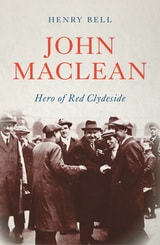
John Maclean
Hero of Red ClydesideHenry Bell
Pluto Press, 2018
Feared by the government, adored by workers, celebrated by Lenin and Trotsky. The head of British Military Intelligence called John Maclean (1879–1923) “the most dangerous man in Britain.”
This new biography explores the events that shaped the life of a momentous man—from the Great War and the Great Unrest to the Rent Strike and the Russian Revolution. It examines his work as an organizer and educator, his imprisonment and hunger strike, and his rise to the position of Britain’s most famous revolutionary. At a moment when radical politics is drawing renewed attention and support, Maclean’s example of activism and commitment is as timely as ever.
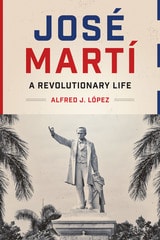
José Martí
A Revolutionary LifeBy Alfred J. López
University of Texas Press, 2014
José Martí (1853–1895) was the founding hero of Cuban independence. In all of modern Latin American history, arguably only the “Great Liberator” Simón Bolívar rivals Martí in stature and legacy. Beyond his accomplishments as a revolutionary and political thinker, Martí was a giant of Latin American letters, whose poetry, essays, and journalism still rank among the most important works of the region. Today he is revered by both the Castro regime and the Cuban exile community, whose shared veneration of the “apostle” of freedom has led to his virtual apotheosis as a national saint.
In José Martí: A Revolutionary Life, Alfred J. López presents the definitive biography of the Cuban patriot and martyr. Writing from a nonpartisan perspective and drawing on years of research using original Cuban and U.S. sources, including materials never before used in a Martí biography, López strips away generations of mythmaking and portrays Martí as Cuba’s greatest founding father and one of Latin America’s literary and political giants, without suppressing his public missteps and personal flaws. In a lively account that engrosses like a novel, López traces the full arc of Martí’s eventful life, from his childhood and adolescence in Cuba, to his first exile and subsequent life in Spain, Mexico City, and Guatemala, through his mature revolutionary period in New York City and much-mythologized death in Cuba on the battlefield at Dos Ríos. The first major biography of Martí in over half a century and the first ever in English, José Martí is the most substantial examination of Martí’s life and work ever published.