67 books match the query 'Segregation' and 3 start with j
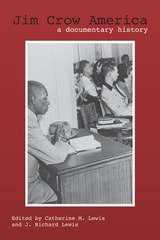
cover of Jim Crow America: A Documentary History

Jim Crow America

A Documentary History

Catherine M. Lewis

University of Arkansas Press, 2009
The term “Jim Crow” has had multiple meanings and a dark and complex past. It was first used in the early nineteenth century. After the Civil War it referred to the legal, customary, and often extralegal system that segregated and isolated African Americans from mainstream American life. In response to the increasing loss of their rights of citizenship and the rising tide of violence, the National Association for the Advancement of Colored People was founded in 1909. The federal government eventually took an active role in dismantling Jim Crow toward the end of the Depression. But it wasn’t until the Lyndon Johnson years and all the work that led up to them that the end of Jim Crow finally came to pass. This unique book provides readers with a wealth of primary source materials from 1828 to 1980 that reveal how the Jim Crow era affects how historians practice their craft. The book is chronologically organized into five sections, each of which focuses on a different historical period in the story of Jim Crow: inventing, building, living, resisting, and dismantling. Many of the fifty-six documents and eighteen images and cartoons, many of which have not been published before, reveal something significant about this subject or offer an unconventional or unexpected perspective on this era. Some of the historical figures whose words are included are Abraham Lincoln, Marcus Garvey, Booker T. Washington, Richard Wright, Paul Robeson, Langston Hughes, Adam Clayton Powell, and Marian Anderson. The book also has an annotated bibliography, a list of key players, a timeline, and key topics for consideration.
[more]
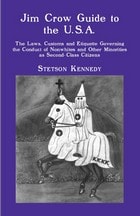
cover of Jim Crow Guide to the U.S.A.: The Laws, Customs and Etiquette Governing the Conduct of Nonwhites and Other Minorities as Second-Class Citizens

Jim Crow Guide to the U.S.A.

The Laws, Customs and Etiquette Governing the Conduct of Nonwhites and Other Minorities as Second-Class Citizens

Stetson Kennedy

University of Alabama Press, 2011

 “A history of the United States that is almost incredible.” —Jean-Paul Sartre, Les Temps Modernes

Jim Crow Guide to the U.S.A. by Stetson Kennedy is a bold exposé of America’s institutionalized racism, originally published in 1959 and hailed as a landmark in civil rights literature. With unflinching clarity, Kennedy documents the laws, customs, and social codes that relegated nonwhite citizens to second-class status under the Jim Crow system. From the mistreatment of Native Americans to the exclusionary immigration policies targeting Asians and Africans, the book maps the presence of race-based politics across every facet of American life—housing, education, employment, and even burial. 

What makes this work especially influential is its international resonance. The famed French existentialist Jean-Paul Sartre championed the book’s publication in Europe, recognizing its power to illuminate the contradictions between American democratic ideals and racial realities. Sartre’s endorsement helped position the book as a global indictment of racial injustice, aligning it with anti-colonial and human rights movements worldwide. Provocative, meticulously researched, and deeply human, Jim Crow Guide to the U.S.A. remains a vital historical document and a call to conscience. It is not merely a guide—it is a mirror held up to a nation, reflecting truths that later generations were called on to address.
[more]
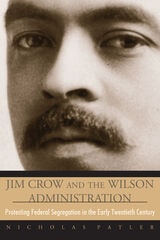
cover of Jim Crow and the Wilson Administration: Protesting Federal Segregation in the Early Twentieth Century

Jim Crow and the Wilson Administration

Protesting Federal Segregation in the Early Twentieth Century

Nicholas Patler

University Press of Colorado, 2007

In Jim Crow and the Wilson Administration, Nicholas Patler presents the first in-depth study of the historic protest movement that challenged federal racial segregation and discrimination during the first two years of Woodrow Wilson's presidency. Before the Wilson years, as southern states and localities enshrined Jim Crow--in law and custom--and systematic racial discrimination infiltrated the North, the executive branch of the federal government moved in the opposite direction by opening federal employment to thousands of African Americans, appointing blacks to federal and diplomatic offices throughout the country and the world. Finding support from the federal government, many African Americans, supported Wilson's democratic campaign, dubbed the "New Freedom," with hopes of continuing advancement. But as president, the southern-born Wilson openly supported and directly implemented a Jim Crow policy in the federal departments unleashing a firestorm of protest.

This protest campaign, carried out on a level not seen since the abolitionist movement, galvanized a vast community of men and women. Blacks and whites, professionals and laymen, signed petitions, wrote protest letters, participated in organized mass meetings, lobbied public officials, directly confronted Wilson, made known their plight through publicity campaigns, and, in at least one case, marched to express their opposition. Patler provides a thorough examination of the two national organizations that led these protests efforts - the National Association for the Advancement of Colored People and William Monroe Trotter's National Equal Rights League - and deftly contextualizes the movement, while emphasizing the tragic, enduring consequences of the Wilson administration's actions.

[more]