Results by title
862 books match the query 'Social History' and 9 start with j
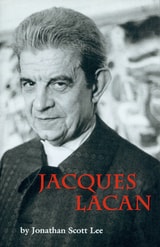
Jacques Lacan
Jonathan Scott Lee
University of Massachusetts Press, 1991
Originally published as part of Twayne's World Authors Series, Jacques Lacan offers a comprehensive and rigorous introduction to the life and work of the French psychoanalyst Jacques Lacan, one of the most influential and challenging thinkers of the twentieth century. Written by a philosopher with a deep engagement in both continental philosophy and psychoanalytic theory, Jonathan Scott Lee traces the development of Lacan's theoretical project from his early psychiatric writings through the landmark Écrits and the renowned seminars that Lacan delivered over more than two decades.
Lee's approach is distinctive in its philosophical clarity, making complex Lacanian ideas available to readers in the humanities and social sciences. His careful analysis of the mirror stage, the role of the Other, and Lacan's three fundamental registers—the Imaginary, the Symbolic, and the Real— provides new insight into the ways they structure human subjectivity, language, and desire. This book situates Lacan within the broader intellectual currents of twentieth-century French thought, drawing connections to structuralism, post-structuralism, and the philosophical traditions that shaped and were shaped by Lacan's radical "return to Freud."
Widely cited in scholarly literature across disciplines, including literary criticism, philosophy, theology, film studies, and cultural theory, Jacques Lacan remains a valued introduction for students, scholars, and general readers seeking a careful and comprehensive guide to one of the most formidable intellectual figures of the modern era.

Japan After Japan
Social and Cultural Life from the Recessionary 1990s to the PresentTomiko Yoda and Harry Harootunian, eds.
Duke University Press, 2006
Several of the essayists reflect on the politics of history, considering changes in the relationship between Japan and the United States, the complex legacy of Japanese colonialism, Japan’s chronic unease with its wartime history, and the postwar consolidation of an ethnocentric and racist nationalism. Others analyze anxieties related to the role of children in society and the weakening of the gendered divide between workplace and home. Turning to popular culture, contributors scrutinize the avid consumption of “real events” in formats including police shows, quiz shows, and live Web camera feeds; the creation, distribution, and reception of Pokémon, the game-based franchise that became a worldwide cultural phenomenon; and the ways that the behavior of zealous fans of anime both reinforces and clashes with corporate interests. Focusing on contemporary social and political movements, one essay relates how a local citizens’ group pressed the Japanese government to turn an international exposition, the Aichi Expo 2005, into a more environmentally conscious project. Another essay offers both a survey of emerging political movements and a manifesto identifying new possibilities for radical politics in Japan. Together the contributors to Japan After Japan present much-needed insight into the wide-ranging transformations of Japanese society that began in the 1990s.
Contributors. Anne Allison, Andrea G. Arai, Eric Cazdyn, Leo Ching, Harry Harootunian, Marilyn Ivy, Sabu Kohso, J. Victor Koschmann, Thomas LaMarre, Masao Miyoshi, Yutaka Nagahara, Naoki Sakai, Tomiko Yoda, Yoshimi Shunya, Mitsuhiro Yoshimoto

Jews at the Crossroads
Tradition and Accomodation during the Golden Age of the Hungarian NobilityHoward N. Lupovitch
Central European University Press, 2007

Josh White
Society BluesElijah Wald
University of Massachusetts Press, 2000
In this compelling biography, Elijah Wald traces White's journey from a childhood leading blind singers on the streets of Greenville, South Carolina, to the heights of Manhattan cafe society. He explores the complexities of White's music, his struggles with discrimination and stereotypes, his political involvements, and his sometimes raucous personal life.
White was always drawn to music and made his first recordings at age fourteen. By the 1930s he had become a recording star, with equally strong careers in blues and gospel. In the 1940s he was discovered by white audiences and regularly appeared in New York cabarets alongside such artists as Billie Holiday. He also became an outspoken proponent of civil rights and frequently appeared at rallies and benefits, as well as at the Roosevelt White House, becoming known as "the Presidential Minstrel." He was one of the few black figures to star on Broadway and appear in Hollywood films, the only black solo performer to have his own national tour, and a daring sex symbol with adoring fans on both sides of the color line.
In the 1950s, White won acclaim in Europe, then saw his achievements collapse in the polarized political ferment of the McCarthy era. Attempting to strike a balance that would keep his career afloat, he instead ended up alienating both political camps. Although still a star in England, he became the forgotten man at home until his resurrection during the folk revival.

Journal of the Warburg and Courtauld Institutes, volume 86 number 1 (2023)
The University of Chicago Press
University of Chicago Press Journals, 2023

Journal of the Warburg and Courtauld Institutes, volume 87 number 1 (2024)
The University of Chicago Press
University of Chicago Press Journals, 2024

Journal of the Warburg and Courtauld Institutes, volume 88 number 1 (2025)
The University of Chicago Press
University of Chicago Press Journals, 2025

Juju
A Social History and Ethnography of an African Popular MusicChristopher Alan Waterman
University of Chicago Press, 1990
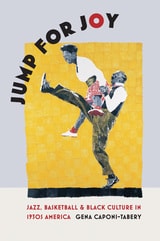
Jump for Joy
Jazz, Basketball, and Black Culture in 1930s AmericaGena Caponi-Tabery
University of Massachusetts Press, 2008
If the 1930s was the Swing Era, then the years from 1937 on might well be called the Jump Era. That summer Count Basie recorded “Jumping at the Woodside,” and suddenly jump tunes seemed to be everywhere. Along with the bouncy beat came a new dance step—the high-flying aerials of the jitterbuggers—and the basketball games that took place in the dance halls of African America became faster, higher, and flashier. Duke Ellington and a cast of hundreds put the buoyant spirit of the era on stage with their 1941 musical revue, Jump for Joy, a title that captured the momentum and direction of the new culture of exuberance.
Several high-profile public victories accompanied this increasing optimism: the spectacular successes of African American athletes at the 1936 Olympics, the 1937 union victory of the Brotherhood of Sleeping Car Porters, and Joe Louis's 1937 and 1938 heavyweight championship fights. For the first time in history, Black Americans emerged as cultural heroes and ambassadors, and many felt a new pride in citizenship.
In this book, Gena Caponi-Tabery chronicles these triumphs and shows how they shaped American music, sports, and dance of the 1930s and beyond. But she also shows how they emboldened ordinary African Americans to push for greater recognition and civil liberties—how cultural change preceded and catalyzed political action.
Tracing the path of one symbolic gesture—the jump—across cultural and disciplinary boundaries, Caponi-Tabery provides a unique political, intellectual, and artistic analysis of the years immediately preceding World War II.