Results by title
22277 books match the query 'Social Science' and 299 start with j

J. K. Rowling and the Anti-Trans Panic
Gina Gwenffrewi
The Ohio State University Press, 2026
In J. K. Rowling and the Anti-Trans Panic, Gina Gwenffrewi weaves her own experience as a trans woman living in Edinburgh, Scotland, with analysis of political and pop cultural discourses and artifacts to deliver a trenchant study of how fellow Edinburgh resident J. K. Rowling’s emergence as a major anti-trans campaigner and the years-long entrenchment of existing anti-trans forces have converged. Analyzing Rowling’s output since 2020, a series of anti-trans events at the University of Edinburgh, the transphobic comedy of Ricky Gervais within the British media landscape, YouTube commentaries, and more, Gwenffrewi creates a potent taxonomy of the rhetorical devices and foundational assumptions of anti-trans discourse. While the 2020s UK has proved fertile ground for “gender-critical” feminism, she argues, it has also provided the foundation for sites of resistance and for bolstering transgender voices worldwide. In celebrating trans activism and trans joy amid adversity, Gwenffrewi beautifully captures the light and dark of being out as trans in the city that—if it can fairly be called ground zero for anti-trans fervor—also embodies liberatory possibilities for trans people worldwide.

J. M. Coetzee and the Idea of the Public Intellectual
Jane Poyner
Ohio University Press, 2006
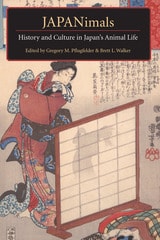
JAPANimals
History and Culture in Japan’s Animal LifeGregory M. Pflugfelder and Brett L. Walker, Editors
University of Michigan Press, 2005

JNES vol 75 num 1
The University of Chicago Press
University of Chicago Press Journals, 2016
JNES vol 75 num 2
The University of Chicago Press
University of Chicago Press Journals, 2016
JNES vol 76 num 1
The University of Chicago Press
University of Chicago Press Journals, 2017
JNES vol 77 num 1
The University of Chicago Press
University of Chicago Press Journals, 2018
JNES vol 77 num 2
The University of Chicago Press
University of Chicago Press Journals, 2018
JNES vol 78 num 1
The University of Chicago Press
University of Chicago Press Journals, 2019
JNES vol 78 num 2
The University of Chicago Press
University of Chicago Press Journals, 2019
JNES vol 79 num 2
The University of Chicago Press
University of Chicago Press Journals, 2020

JOAN
Jake Rose
University of Chicago Press, 2026
Longlisted for the 2026 National Book Award for Poetry. A narrative sequence of lyric poems reimagining Joan of Arc as a framework for queer identity, transformation, and poetic voice.
Collapsing biography and autobiography, the poetry of Jake Rose’s debut explores queer identity, grief, and desire through the historical framework of Joan of Arc’s life. Moving through rural landscapes of the speaker’s youth, contradictions of faith, consequences of desire, and fragmentations of trauma, JOAN is structured as an excavation of the speaker’s most intimate moments, combining poetry with historical quotations, visual collage, and a sequence of film stills. Through vivid lyric moments, the poems construct a speaker and world both intimate and charged—“I have to touch my farthest feeling,” “the sapphire dusk draping its lace arias”—with clarity and vibrant intensity. Refusing resolution, these poems dwell in rupture, reinvention, and fluid forms of gender that come to life outside of inherited boundaries. This collection speaks from the margins, searching for a body the self might inhabit and asking what it means to transform through language, gender, and desire.
JOAN is the winner of the Phoenix Emerging Poet Book Prize.

Jack London's Women
Clarice Stasz
University of Massachusetts Press, 2001
Using newly available letters and diaries from private collections, Stasz brings this diverse constellation of women to life. London was the son of freethinking Flora Wellman, yet found more maternal comfort from freed slave Jennie Prentiss and his stepsister Eliza. His early loves included a British-born consumptive, a Jewish socialist, and an African American. His first wife, Bess Maddern, was a teacher and devoted mother to daughters Bess and Joan, while his second wife, Charmian Kittredge, shared his passion for adventure and served as a model for many characters in his writings. Following his death, the various women who survived him both promoted his legacy and suffered the consequences of being constantly identified with a famous man.
In recasting London's life through the eyes of three generations of women, Stasz manages to untangle his seemingly contradictory attitudes and actions. She also reveals the struggle that ensued, after his death, among family members and scholars over how he should be remembered. What emerges from this well-researched book is a new understanding of London and a compelling portrayal of the women who knew him best.
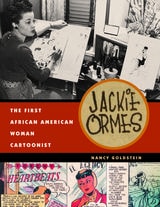
Jackie Ormes
The First African American Woman CartoonistNancy Goldstein
University of Michigan Press, 2008
At a time of few opportunities for women in general and even fewer for African American women, Jackie Ormes (1911–85) blazed a trail as a popular cartoonist with the major black newspapers of the day. Her cartoon characters (including Torchy Brown, Candy, Patty-Jo, and Ginger) delighted readers and spawned other products, including an elegant doll with a stylish wardrobe and “Torchy Togs” paper dolls. Ormes was a member of Chicago’s black elite, with a social circle that included the leading political figures and entertainers of the day. Her cartoons and comic strips provide an invaluable glimpse into American culture and history, with topics that include racial segregation, U.S. foreign policy, educational equality, the atom bomb, and environmental pollution, among other pressing issues of the times—and of today’s world as well. This celebrated biography features a large sampling of Ormes’s cartoons and comic strips, and a new preface.

Jacob H. Schiff
A Study in American Jewish LeadershipNaomi W. Cohen
Brandeis University Press, 1999
Jacques Lacan
A Critical IntroductionMartin Murray
Pluto Press, 2016
French psychoanalyst Jacques Lacan has been a major influence on a wide range of twentieth-century thought, even as the breadth, complexity, and obscurity of his work has intimidated students and deterred casual readers. That situation hasn’t been helped by uneven translations into English that have led to a popular conception of his intellectual enterprise that can at times be profoundly mistaken.
In this brief, clearly written introduction to Lacan and his work, Martin Murray presents an up-to-date survey of his key concepts, their development, and their influence on fields such as anthropology, linguistics, and philosophy. Arguing strongly that we should move beyond the traditional focus on Lacan’s early work, which favored a linguistic approach, Murray offers instead a more comprehensive overview of the whole arc of Lacan’s thought. The result is a rigorous, yet accessible, account of one of the key intellectual figures of the twentieth century.

Jaguar
A Story of Africans in AmericaPaul Stoller
University of Chicago Press, 1999
Faced with economic hardship in Africa, Issa has left his home in Niger and his new wife, Khadija, to seek his fortune in America. Devout Muslims, the couple has entered into a "modern" marriage: Khadija is permitted to run her own business, and Issa has agreed not to take additional wives. Issa quickly adapts to his new surroundings, however, and soon attracts several girlfriends. Aided by a network of immigrants, he easily slips through gaps in the "system" and extends his stay in America indefinitely. Following a circuit of African-American cultural festivals across America, he marvels at African-Americans' attitudes toward Africa, and wonders if he'll ever return to Niger. Meanwhile, Khadija also struggles to make it—to become a "Jaguar"—as she combats loneliness, hostile in-laws, and a traditional, male-dominated society. The eventual success of her dry goods shop and her growing affection for a helpful Arab merchant make her wonder if she'll ever join Issa in America.
Drawing on his own decades of experience among Africans both in Niger and in New York, Paul Stoller offers enormous insight into the complexities of contemporary Africa. Alive with detail, Jaguar is a story of triumph and disappointment, of dislocation and longing, and of life lived in a world that no longer recognizes boundaries.
Jail Speak
Ben Langston
Ohio University Press, 2020
“Call me what you want—corrections officer, C.O., guard, jailcop, turnkey—I helped keep people there against their will. For this, the jail rewarded me with food.”
When Ben Langston took a job at the State Correctional Institute at Rockview, it was because there were few other options. At his previous job—putting labels on water bottles—he did not have cups of human waste thrown in his face. He did not have to finger sweaty armpits in search of weapons. There were no threats against his life. But the jail paid better.
Jail Speak is a memoir written from a guard’s perspective. It’s about the grind, about dehumanization, drama, punishment, and the cycles of harm perpetrated by the prison industry. It’s about masculinity and conformity and emotional detachment. It’s a look at the inside that you didn’t want to know about, and it’s for mature audiences only. Know your limits.
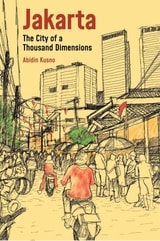
Jakarta
City of a Thousand DimensionsAbidin Kusno
National University of Singapore Press, 2023
Indonesian writer Seno Gumira Ajidarma has called Jakarta a city of a thousand dimensions. A megacity of 30 million under threat from rising sea levels and temperatures, Jakarta and its resilient residents improvise and thrive. This book teases out some of the dimensions that have given shape to contemporary Jakarta, including the city’s expanded flexibility in accommodating capital and labor, and the consistent lack of planning that can be understood as a result of both politics and the poetics of governing in the region. Jakarta is essential reading for those seeking to understand one of Asia's most dynamic cities.
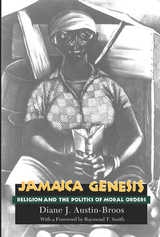
Jamaica Genesis
Religion and the Politics of Moral OrdersDiane J. Austin-Broos
University of Chicago Press, 1997
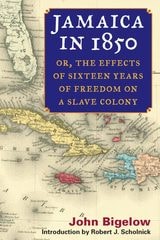
Jamaica in 1850
or, The Effects of Sixteen Years of Freedom on a Slave ColonyJohn Bigelow Introduction by Robert J. Scholnick
University of Illinois Press, 2000
A reporter's firsthand portrait of formerly enslaved Jamaicans in the years after emancipation
John Bigelow’s Jamaica in 1850 provided an important document in the antislavery movement in the United States and Great Britain. Jamaica’s economy had collapsed after the 1838 emancipation. American supporters of enslavement used the Jamaican example to argue that abolition at home would unleash economic and social chaos. Bigelow’s vivid eyewitness reporting undermined that widely held view by proving Jamaica’s problems originated in the incompetence of absentee white planters and an obsolete colonial system. As Bigelow showed, many once-enslaved Jamaicans had in fact become successful small-scale landowners in the twelve years after emancipation while the large plantations languished.
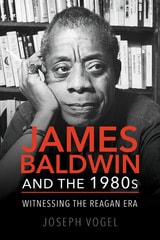
James Baldwin and the 1980s
Witnessing the Reagan EraJoseph Vogel
University of Illinois Press, 2018
Joseph Vogel offers the first in-depth look at Baldwin's dynamic final decade of work. Delving into the writer's creative endeavors, crucial essays and articles, and the impassioned polemic The Evidence of Things Not Seen, Vogel finds Baldwin as prescient and fearless as ever. Baldwin's sustained grappling with "the great transforming energy" of mass culture revealed his gifts for media and cultural criticism. It also brought him into the fray on issues ranging from the Reagan-era culture wars to the New South, from the deterioration of inner cities to the disproportionate incarceration of black youth, and from pop culture gender-bending to the evolving women's and gay rights movements.
Astute and compelling, James Baldwin and the 1980s revives and redeems the final act of a great American writer.

James Baldwin's Turkish Decade
Erotics of ExileMagdalena J. Zaborowska
Duke University Press, 2008
Following Baldwin’s footsteps through Istanbul, Ankara, and Bodrum, Zaborowska presents many never published photographs, new information from Turkish archives, and original interviews with Turkish artists and intellectuals who knew Baldwin and collaborated with him on a play that he directed in 1969. She analyzes the effect of his experiences on his novel Another Country (1962) and on two volumes of his essays, The Fire Next Time (1963) and No Name in the Street (1972), and she explains how Baldwin’s time in Turkey informed his ambivalent relationship to New York, his responses to the American South, and his decision to settle in southern France. James Baldwin’s Turkish Decade expands the knowledge of Baldwin’s role as a transnational African American intellectual, casts new light on his later works, and suggests ways of reassessing his earlier writing in relation to ideas of exile and migration.
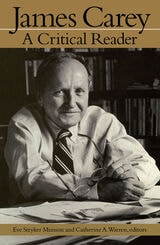
James Carey
A Critical ReaderEve Stryker Munson
University of Minnesota Press, 1997
An essential guide to the thought of a central figure in media studies .
James Carey-scholar, media critic, and teacher of journalists-almost single-handedly established the importance of defining a cultural perspective when analyzing communications. Interspersing Carey’s major essays with articles exploring his central themes and their importance, this collection provides a critical introduction to the work of this significant figure.
Long before the “interpretive turn” became the fashion in the humanities and sociology, Carey was busily studying and combining the ideas of an impressive array of philosophers, sociologists, historians, and anthropologists, including John Dewey, Clifford Geertz, Raymond Williams, Thomas Kuhn, Max Weber, C. Wright Mills, Richard Rorty, Jürgen Habermas, Harold Innis, and Lewis Mumford. In James Carey: A Critical Reader, seven scholars who have been influenced by him consider his work and how it has affected the development of media studies. Carey has demonstrated that mass communications serve a complex function in society, with one central question reflecting his concerns: How does one make democracy work in a vast country that spans a continent? In his view, symbols, language, and those who create them are reality-creating, rather than reality-reflecting. Carey has examined the roles the media and the academy have played in creating and maintaining a public sphere, as well as the ways technology helps or hinders that project. Carey’s themes range from the strains on democracy and drawbacks of technology to the critique of journalism and the politics of academe. Contributors: G. Stuart Adam, Carleton U, Canada; James Carey, Columbia U; Carolyn Marvin, U of Pennsylvania; John Pauly, St. Louis U; Jay Rosen, New York U; Michael Schudson, U of California, San Diego.
Jameson on Jameson
Conversations on Cultural MarxismFredric Jameson
Duke University Press, 2007
Jameson on Jameson displays Jameson’s extraordinary grasp of contemporary culture—architecture, art, cinema, literature, philosophy, politics, psychoanalysis, and urban geography—as well as the challenge that the geographic reach of his thinking poses to the Eurocentricity of the West. Conducted by accomplished scholars from United States, Egypt, Korea, China, Sweden, and England, the interviews elicit Jameson’s reflections on the broad international significance of his ideas and their applicability and implications in different cultural and political contexts, including the present phase of globalization.
The volume includes an introduction by Jameson and a comprehensive bibliography of his publications in all languages.
Interviewers: Mona Abousenna, Abbas Al-Tonsi, Srinivas Aravamudan, Jonathan Culler, Sara Danius, Leonard Green, Sabry Hafez, Stuart Hall, Stefan Jonsson, Ranjana Khanna, Richard Klein, Horacio Machin, Paik Nak-chung, Michael Speaks, Anders Stephanson, Xudong Zhang
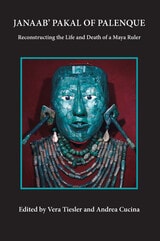
Janaab' Pakal of Palenque
Reconstructing the Life and Death of a Maya RulerEdited by Vera Tiesler and Andrea Cucina
University of Arizona Press, 2006
This volume communicates the broad scope of applied interdisciplinary research conducted on the Pakal remains to provide answers to old disputes over the accuracy of both skeletal and epigraphic studies, along with new questions in the field of Maya dynastic research. Contributions by scholars in epigraphy, anthropology, and bioarchaeology bring to light new evidence regarding the ruler’s age, clarify his medical history and the identification of the remains found with him, reevaluate his role in life, and offer modern insights into ritual and sacrificial practices associated with Pakal.
The book leads readers through the history of Pakal’s discovery, skeletal analysis, and interpretation of Maya biographies, and also devotes considerable attention to the tomb of the “Red Queen” discovered at the site. Findings from the new Transition Analysis aging method, histomorphometric analysis, and taphonomic imagery are presented to shed new light on the perplexing question of Pakal’s age at death. Royal Maya life and death histories from the written record are also analyzed from a regional perspective to provide a broad panorama of the twisted power politics of rulers’ families and the entangled genealogies of the Maya Classic period.
A benchmark in biological anthropology, this volume reconsiders assumptions concerning the practices and lives of Maya rulers, posing the prospect that researchers too often find what they expect to find. In presenting an updated study of a well-known personage, it also offers innovative approaches to the biocultural and interdisciplinary re-creation of Maya dynastic history.
Contributors
Jesper K. Boldseh
Jane E. Buikstra
James H. Burton
Andrea Cucina
Nikolai Grube
Patricia Hernández
Lourdes Márquez
Simon Martin
George R. Milner
T. Douglas Price
Arturo Romano
Carlos Serrano
Sam D. Stout
Margaret Streeter
Vera Tiesler
John W. Verano
Jandavlattepa, Vol. I
The excavation report for seasons 2002-2006Edited by Ladislav Stanco and Kazim Abdullaev
Karolinum Press, 2012
Central Asia became a forefront of international archaeological research early in the 1990s. Several respected archaeological teams gradually established their projects throughout post-Soviet republics of Central Asia, including Uzbekistan. In 2002 this effort was joined by a small Czech-Uzbekistani team aiming to begin an archaeological investigation of the northwestern part of ancient Bactria, particularly in the area of Sherabad oasis, with its major site Jandavlattepa.
The focus of this publication is to present some newly discovered data in the field of Bactrian archaeology of Pre-Islamic periods and to shed additional light on different aspects of an understanding of its material culture, primarily in the transitional period between the Kushan and early medieval times. The present title represents a pilot volume, which will be followed up with two additional volumes.
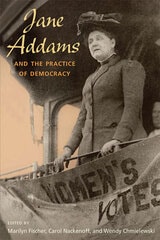
Jane Addams and the Practice of Democracy
Edited by Marilyn Fischer, Carol Nackenoff, and Wendy Chmielewski
University of Illinois Press, 2008
Using a rich array of newly available sources and contemporary methodologies from many disciplines, the ten original essays in this volume give a fresh appraisal of Addams as a theorist and practitioner of democracy. In an increasingly interdependent world, Addams's life work offers resources for activists, scholars, policy makers, and theorists alike. This volume demonstrates how scholars continue to interpret Addams as a model for transcending disciplinary boundaries, generating theory out of concrete experience, and keeping theory and practice in close and fruitful dialogue.
Contributors are Harriet Hyman Alonso, Victoria Bissell Brown, Wendy Chmielewski, Marilyn Fischer, Shannon Jackson, Louise W. Knight, Carol Nackenoff, Karen Pastorello, Wendy Sarvasay, Charlene Haddock Seigfried, and Camilla Stivers.

Jane Addams, a Writer's Life
Katherine Joslin
University of Illinois Press, 2003
Jane Addams, a Writer's Life is an expansive, revealing, and refreshing reexamination of the renowned reformer as an imaginative writer. Jane Addams is best known for her groundbreaking social work at Hull-House, the force of her efforts toward Progressive political and social reform, and the bravery of her commitment to pacifism, for which she received the Nobel Peace Prize. Katherine Joslin moves beyond this history to present Addams as a literary figure, one whose writing employed a synthesis of fictional and analytical prose that appealed to a wide audience.
Joslin traces Addams's style from her early works, Philanthropy and Social Progress and her contributions to Hull House Maps and Papers, influenced by Florence Kelley, to her modernist and experimental last books, The Second Twenty Years at Hull-House and My Friend, Julia Lathrop, placing Addams in the context of other Chicago writers including Theodore Dreiser, Upton Sinclair, Harriet Monroe, Frank Norris and James T. Farrell. Joslin's close readings showcase Addams's distinguishing literary devices, such as using stories about people rather than sociological argument to make moral points. As Joslin pursues the argument that Addams's power as a public figure stemmed from the success of her books and essays, Addams herself emerges as a literary woman.

Jane Austen's Cults and Cultures
Claudia L. Johnson
University of Chicago Press, 2012
Jane Austen completed only six novels, but enduring passion for the author and her works has driven fans to read these books repeatedly, in book clubs or solo, while also inspiring countless film adaptations, sequels, and even spoofs involving zombies and sea monsters. Austen’s lasting appeal to both popular and elite audiences has lifted her to legendary status. In Jane Austen’s Cults and Cultures, Claudia L. Johnson shows how Jane Austen became “Jane Austen,” a figure intensely—sometimes even wildly—venerated, and often for markedly different reasons.
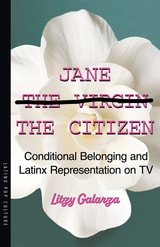
Jane the Citizen
Conditional Belonging and Latinx Representation on TVLitzy Galarza
University of Arizona Press, 2027
What does it mean to belong in the United States—and what does it cost? Jane the Citizen confronts one of the most urgent questions in contemporary cultural life by turning to an unlikely archive: the CW’s celebrated telenovela-inspired series Jane the Virgin (2014–2019).
Litzy Galarza argues that beneath the show’s warmth and wit lies a sustained interrogation of citizenship’s limits. Building on Hector Amaya’s framework of citizenship excess and extending it to theorize reproductive citizenship excess and deficit, the book exposes the widening gap between citizenship as formal legal status and citizenship as livable, protected belonging—a gap that Jane the Virgin maps with extraordinary precision.
Across five seasons and two presidential administrations, Galarza demonstrates how the series tracks the lived costs of immigration policy, racial hierarchy, and gendered control over reproduction. She shows how Latinx characters experience belonging differently as political conditions shift in real time.

Janelle Monáe's Queer Afrofuturism
Defying Every LabelDan Hassler-Forest
Rutgers University Press, 2022
Janelle Monáe is all these things and more, making her one of the most fascinating artists to emerge in the twenty-first century. This provocative new study explores how Monáe’s work has connected different media platforms to strengthen and enhance new movements in art, theory, and politics. It considers not only Monáe’s groundbreaking albums The ArchAndroid, The Electric Lady, and Dirty Computer, but also Monáe’s work as an actress in such films as Hidden Figures and Antebellum, as well as her soundtrack appearances in socially-engaged projects ranging from I May Destroy You to Us. Examining Monáe as a cultural icon whose work is profoundly intersectional, this book maps how she is actively reshaping discourses around race, gender, sexuality, and capitalism. Tracing Monáe’s performances of joy, desire, pain, and hope across a wide range of media forms, it shows how she imagines Afrofuturist, posthumanist, and postcapitalist utopias, while remaining grounded in the realities of being a Black woman in a white-dominated industry. This is an exciting introduction to an audacious innovator whose work offers us fresh ways to talk about identity, desire, and power.
Japan After Japan
Social and Cultural Life from the Recessionary 1990s to the PresentTomiko Yoda and Harry Harootunian, eds.
Duke University Press, 2006
Several of the essayists reflect on the politics of history, considering changes in the relationship between Japan and the United States, the complex legacy of Japanese colonialism, Japan’s chronic unease with its wartime history, and the postwar consolidation of an ethnocentric and racist nationalism. Others analyze anxieties related to the role of children in society and the weakening of the gendered divide between workplace and home. Turning to popular culture, contributors scrutinize the avid consumption of “real events” in formats including police shows, quiz shows, and live Web camera feeds; the creation, distribution, and reception of Pokémon, the game-based franchise that became a worldwide cultural phenomenon; and the ways that the behavior of zealous fans of anime both reinforces and clashes with corporate interests. Focusing on contemporary social and political movements, one essay relates how a local citizens’ group pressed the Japanese government to turn an international exposition, the Aichi Expo 2005, into a more environmentally conscious project. Another essay offers both a survey of emerging political movements and a manifesto identifying new possibilities for radical politics in Japan. Together the contributors to Japan After Japan present much-needed insight into the wide-ranging transformations of Japanese society that began in the 1990s.
Contributors. Anne Allison, Andrea G. Arai, Eric Cazdyn, Leo Ching, Harry Harootunian, Marilyn Ivy, Sabu Kohso, J. Victor Koschmann, Thomas LaMarre, Masao Miyoshi, Yutaka Nagahara, Naoki Sakai, Tomiko Yoda, Yoshimi Shunya, Mitsuhiro Yoshimoto
Japan in the World, the World in Japan
Fifty Years of Japanese Studies at MichiganEdited by the Center for Japanese Studies, University of Michigan
University of Michigan Press, 2001
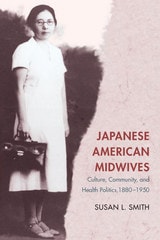
Japanese American Midwives
Culture, Community, and Health Politics, 1880-1950Susan L. Smith
University of Illinois Press, 2005
In the late nineteenth century, Japan's modernizing quest for empire transformed midwifery into a new woman's profession. With the rise of Japanese immigration to the United States, Japanese midwives (sanba) served as cultural brokers as well as birth attendants for Issei women. They actively participated in the creation of Japanese American community and culture as preservers of Japanese birthing customs and agents of cultural change.
Japanese American Midwives reveals the dynamic relationship between this welfare state and the history of women and health. Susan L. Smith blends midwives' individual stories with astute analysis to demonstrate the impossibility of clearly separating domestic policy from foreign policy, public health from racial politics, medical care from women's caregiving, and the history of women and health from national and international politics. By setting the history of Japanese American midwives in this larger context, Smith reveals little-known ethnic, racial, and regional aspects of women's history and the history of medicine.
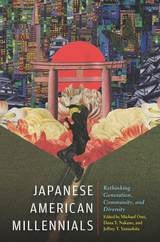
Japanese American Millennials
Rethinking Generation, Community, and DiversityMichael Omi
Temple University Press, 2019
Whereas most scholarship on Japanese Americans looks at historical case studies or the 1.5 generation assimilating, this pioneering anthology, Japanese American Millennials, captures theexperiences, perspectives, and aspirations of Asian Americans born between 1980 and 2000. The editors and contributors present multiple perspectives on who Japanese Americans are, how they think about notions of community and culture, and how they engage and negotiate multiple social identities.
The essays by scholars both in the United States and Japan draw upon the Japanese American millennial experience to examine how they find self-expression in Youth Basketball Leagues or Christian youth camps as well as how they grapple with being mixed-race, bicultural, or queer. Featuring compelling interviews and observations, Japanese American Millennials dislodges the dominant generational framework toaddress absences in the current literature and suggests how we might alternatively study Japanese Americans as a whole.
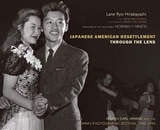
Japanese American Resettlement through the Lens
Hikaru Iwasaki and the WRA's Photographic Section, 1943-1945Lane Ryo Hirabayashi
University Press of Colorado, 2009
In Japanese American Resettlement through the Lens, Lane Ryo Hirabayashi gathers a unique collection of photographs by War Relocation Authority photographer Hikaru Iwasaki, the only full-time WRA photographer from the period still living.
With substantive focus on resettlement - and in particular Iwasaki's photos of Japanese Americans following their release from WRA camps from 1943 to 1945 - Hirabayashi explores the WRA's use of photography in its mission not only to encourage "loyal" Japanese Americans to return to society at large as quickly as possible but also to convince Euro-Americans this was safe and advantageous. Hirabayashi also assesses the relative success of the WRA project, as well as the multiple uses of the photographs over time, first by the WRA and then by students, scholars, and community members in the present day.
Although the photos have been used to illustrate a number of publications, this book is the first sustained treatment addressing questions directly related to official WRA photographs. How and under what conditions were they taken? Where were they developed, selected, and stored? How were they used during the 1940s? What impact did they have during and following the war?
By focusing on the WRA's Photographic Section, Japanese American Resettlement through the Lens makes a unique contribution to the body of literature on Japanese Americans during World War II.

Japanese Americans
The Formation and Transformations of an Ethnic GroupSpickard, Paul
Rutgers University Press, 2008
In this concise history, Paul Spickard traces the struggles and achievements of Japanese Americans in claiming their place in American society. He outlines three forces shaping ethnic groups in general: shared interests, shared institutions, and shared culture, and chronicles the Japanese American experience within this framework, showing how these factors created and nurtured solidarity.
Japanese Brazilian Saudades
Diasporic Identities and Cultural ProductionIgnacio López-Calvo
University Press of Colorado, 2019
López-Calvo addresses the complex creation of Japanese Brazilian identities and the history of immigration, showing how the community has used writing as a form of reconciliation and affirmation of their competing identities as Japanese, Brazilian, and Japanese Brazilian. Japanese in Brazil have employed a twofold strategic, rhetorical engineering: the affirmation of ethno-cultural difference on the one hand, and the collective assertion of citizenship and belonging to the Brazilian nation on the other. López-Calvo also grapples with the community’s inclusion and exclusion in Brazilian history and literature, using the concept of “epistemicide” to refer to the government’s attempt to impose a Western value system, Brazilian culture, and Portuguese language on the Nikkeijin, while at the same time trying to destroy Japanese language and culture in Brazil by prohibiting Japanese language instruction in schools, Japanese-language publications, and even speaking Japanese in public.
Japanese Brazilian Saudades contributes to the literature criticizing the “cognitive injustice” that fails to acknowledge the value of the global South and non-Western ways of knowing and being in the world. With important implications for both Latin American studies and Nikkei studies, it expands discourses of race, ethnicity, nationality, and communal belonging through art and narrative.

Japanese Cities
edited by Kuniko Fujita and Richard Child Hill
Temple University Press, 1993
Japan is the world's second most powerful economy and one of the most urbanized nations on earth. Yet English-language literature contains remarkable little about cities in Japan. This collection of original essays on Japanese urban and industrial development covers a broad spectrum of city experiences. Leading Japanese and Western urbanists analyze Japan's largest metropolitan areas (Tokyo, Osaka, Nagoya); proto-typical industrial cities (Kamaishi, Kitakyushu, Toyota); high technology urban satellites (Kanagawa); and smaller, more traditionally organized industrial districts (Tsubame). This book demonstrates how Japan's flexible economic growth strategies and changing relationship to the world economy have produced a uniquely Japanese pattern of urban development in this century.
Throughout the essays that describe individual cities, contributors provide commentary on each city's twentieth-century history and functional relations with other cities and focus on the dynamic linkage between global relations and local activities. They examine the role of government—central, prefectural, and local—in the restructuring of Japanese industrial and urban life. One essay is devoted to the urbanization process in pre-World War II Japan; another considers urban planning on the western Pacific Rim. This is the first book that analyzes how the economic transformation of Japan has restructured Japanese cities and how urban and regional development policies have kept pace with (and in some ways effected) changes in the economy.
This comprehensive study of Japanese cities provides interdisciplinary coverage of urban development issues of interest to the fields of economics, business, sociology, political science, history, Asian and Japanese studies, and urban planning.
Japanese Civilization
A Comparative ViewS. N. Eisenstadt
University of Chicago Press, 1996

Japanese Corrections
Managing Convicted Offenders in an Orderly SocietyElmer H. Johnson
Southern Illinois University Press, 1996
In his analysis of the current Japanese corrections system, internationally respected criminologist Elmer H. Johnson focuses on three basic questions: What are the characteristics of the major programmatic elements? How do various personnel carry out their programmatic responsibilities? Why are the various duties and activities carried out in a particular way?
Johnson points out that compared with the United States, where prison populations are huge and often violent, Japan incarcerates relatively few criminals. In 1989, for example, Japan locked up only 34 out of every 100,000 citizens while the United States imprisoned people at a rate of 271 per 100,000. Examining the cultural differences leading to this disparity, Johnson notes that in Japan prosecutors are reluctant to refer defendants for trial and the courts often suspend sentences for convicted felons.
In Japan, two bureaus—the Correction Bureau and the Rehabilitation Bureau—administer all Japanese correctional activities. Placing these bureaus in the organizational scheme of the Ministry of Justice, Johnson traces the history, describes the organizational ideologies, and outlines the special features of each.
A central feature of the Japanese penal system is the industrial prison, a concept that met such fierce opposition in the United States that it lost almost all access to the free market by the 1940s. Johnson traces the history of the industrial prison, noting particularly that the industrial operations in adult institutions explain in part why there is almost no violence and why few try to escape. Juvenile institutions enjoy similar success; even though they produce no industrial products, the juvenile training schools emphasize education, vocational training, and counseling.
Japanese correctional officers rely heavily on the community and on unsalaried volunteer probation officers for supervision of probationers and parolees. Although Japanese courts regard probationary supervision as too punitive for most convicted defendants and return many to the community without supervision, the probation caseload is weighty. Johnson describes the responsibilities and operations of the Regional Parole Boards. He also discusses the aid hostels (halfway houses) that are primarily operated by private organizations and that serve released or paroled prisoners.
Johnson sums up by noting that both the Correction Bureau and the Rehabilitation Bureau depend on the overall operations of police, prosecutors, and judges. More broadly, he asserts, both bureaus are creatures of Japanese society and culture. The assets and disadvantages of the bureaus reflect society’s reluctance to sentence defendants to prison and, to a lesser extent, the reluctance to place them on probationary supervision.
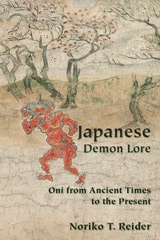
Japanese Demon Lore
Oni from Ancient Times to the PresentNoriko Reider
Utah State University Press, 2010
Oni, ubiquitous supernatural figures in Japanese literature, lore, art, and religion, usually appear as demons or ogres. Characteristically threatening, monstrous creatures with ugly features and fearful habits, including cannibalism, they also can be harbingers of prosperity, beautiful and sexual, and especially in modern contexts, even cute and lovable. There has been much ambiguity in their character and identity over their long history. Usually male, their female manifestations convey distinctivly gendered social and cultural meanings.
Oni appear frequently in various arts and media, from Noh theater and picture scrolls to modern fiction and political propaganda, They remain common figures in popular Japanese anime, manga, and film and are becoming embedded in American and international popular culture through such media. Noriko Reiderýs book is the first in English devoted to oni. Reider fully examines their cultural history, multifaceted roles, and complex significance as "others" to the Japanese.
Japanese Foodways, Past and Present
Edited by Eric C. Rath and Stephanie Assmann
University of Illinois Press, 2010
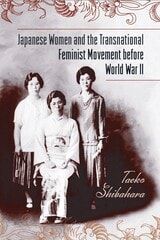
Japanese Women and the Transnational Feminist Movement before World War II
Taeko Shibahara
Temple University Press, 2014
This book traces the development of feminist consciousness in Japan from 1871 to 1941. Taeko Shibahara uncovers some fascinating histories as she examines how middle-class women navigated between domestic and international influences to form ideologies and strategies for reform. They negotiated a humanitarian space as Japan expanded its nationalist, militarist, imperialist, and patriarchal power.
Focusing on these women's political awakening and activism, Shibahara shows how Japanese feminists channeled and adapted ideas selected from international movements and from interactions with mainly American social activists.
Japanese Women and the Transnational Feminist Movement before World War II also connects the development of international contacts with the particular contributions of Ichikawa Fusae to the suffrage movement, Ishimoto Shidzue to the birth control movement, and Gauntlett Tsune to the peace movement by touching on issues of poverty, prostitution, and temperance. The result provides a window through which to view the Japanese women's rights movement with a broader perspective.
Japanese and Americans
Cultural Parallels and ParadoxesCharles Cleaver
University of Minnesota Press, 1976
Japanese and Chinese Immigrant Activists
Organizing in American and International Communist Movements, 1919–1933Fowler, Josephine
Rutgers University Press, 2007
Japanese and Chinese immigrants in the United States have traditionally been characterized as hard workers who are hesitant to involve themselves in labor disputes or radical activism. How then does one explain the labor and Communist organizations in the Asian immigrant communities that existed from coast to coast between 1919 and 1933? Their organizers and members have been, until now, largely absent from the history of the American Communist movement. In Japanese and Chinese Immigrant Activists, Josephine Fowler brings us the first in-depth account of Japanese and Chinese immigrant radicalism inside the United States and across the Pacific.
Drawing on multilingual correspondence between left-wing and party members and other primary sources, such as records from branches of the Japanese Workers Association and the Chinese Nationalist Party, Fowler shows how pressures from the Comintern for various sub-groups of the party to unite as an “American” working class were met with resistance. The book also challenges longstanding stereotypes about the relationships among the Communist Party in the United States, the Comintern, and the Soviet Party.
Japanoise
Music at the Edge of CirculationDavid Novak
Duke University Press, 2013
For its scattered listeners, Noise always seems to be new and to come from somewhere else: in North America, it was called "Japanoise." But does Noise really belong to Japan? Is it even music at all? And why has Noise become such a compelling metaphor for the complexities of globalization and participatory media at the turn of the millennium?
In Japanoise, David Novak draws on more than a decade of research in Japan and the United States to trace the "cultural feedback" that generates and sustains Noise. He provides a rich ethnographic account of live performances, the circulation of recordings, and the lives and creative practices of musicians and listeners. He explores the technologies of Noise and the productive distortions of its networks. Capturing the textures of feedback—its sonic and cultural layers and vibrations—Novak describes musical circulation through sound and listening, recording and performance, international exchange, and the social interpretations of media.
Java Man
How Two Geologists Changed Our Understanding of Human EvolutionCarl C. Swisher III, Garniss H. Curtis, and Roger Lewin
University of Chicago Press, 2001
Originally published by Scribner
2000 ISBN: 0-684-80000-4
Javanese Lives
Women and Men in Modern Indonesian SocietyWilliams, Walter L.
Rutgers University Press, 1991
Java is the most populous island of Indonesia, the fifth largest nation in the world. Yet despite its importance, outsiders know little about the country or its people. With the help of Indonesian students and scholars, Walter L. Williams has collected and translated the life histories of twenty-seven Javanese women and men. The people interviewed tell how they have coped with rapid social and economic change, and the transformation of their traditions. Williams has carefully selected the individuals he includes to represent a wide diversity of Java's people. We hear from fascinating men and women of various religions, from the rich and the poor, and from different ethnic backgrounds. Diversity is a constant theme, as evidenced by a poor pedicab driver who can barely scrape along, by a rich businesswoman who explains how she balances her professional and domestic roles, by an educated and respected homosexual school principal, and by an illiterate mother of fourteen children. All of them present in their lives a unique Javanese approach to living.
These oral histories were derived from elderly people, who have a larger perspective on the changes they have seen in their lifetimes. The focus of the first section of the book is the way people have adapted in their daily lives to massive social and economic changes. In the middle section, we hear from the Javanese who represent traditional values in the midst of change. Finally, we hear from educators and parents who tell us of their concerns for Indonesian youth and the future of Indonesia.