Results by title
479 books match the query 'Sources' and 5 start with j
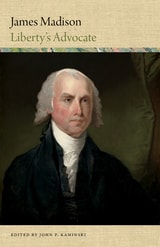
James Madison
Liberty's AdvocateJohn P. Kaminski
Wisconsin Historical Society Press, 2018
America has had few political thinkers who have rivalled James Madison. The son of a wealthy planter, Madison was an unhealthy child and was beset by physical infirmities throughout his long life, and grew into a cerebral man. Madison left Virginia to attend the College of New Jersey, but returned to his native state after completing his studies. Though he aspired to be a college professor, Madison instead went into public service and became one of the most influential, guiding voices of the Founding Era. Madison’s Virginia Plan would be used as a blueprint for the Constitutional Convention, where the Articles of Confederation would be replaced with a new Constitution that bore traces of Madison’s influence throughout.
Editor John Kaminski has gathered a remarkable collection of quotations by and about James Madison for the third installment of his Word Portraits of America’s Founders series. Through these words by and about Madison, we learn more about one of the country’s most influential Founding Fathers, who held a lifelong commitment to liberty and opposed oppression.

Japanese Empire in the Tropics
Selected Documents and Reports of the Japanese Period in Sarawak, Northwest Borneo, 1941–1945Ooi Keat Gin
Ohio University Press, 1997
Although the Japanese interregnum was brief, its dramatic commencement and equally dramatic conclusion represented a watershed in the history of the young state of Sarawak.
In recent years, there has been a groundswell of interest in the war years, culminating in an attempt at reassessment of the Japanese occupation in Southeast Asia by Western and Japanese scholars as well as by those from Southeast Asia.
Presented here in a two-volume edition is a history of the Japanese occupation of Sarawak narrated through the compelling testimonies of the actual participants based on their recollections, memoirs, and correspondence.
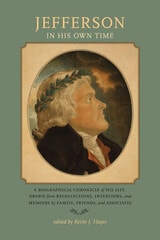
Jefferson in His Own Time
A Biographical Chronicle of His Life, Drawn from Recollections, Interviews, and Memoirs by Family, Friends, and AssociatesKevin J. Hayes
University of Iowa Press, 2012
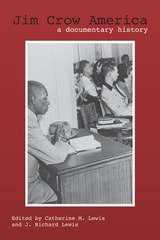
Jim Crow America
A Documentary HistoryCatherine M. Lewis
University of Arkansas Press, 2009
Judicial Decisions in the Ancient Near East
Sophie Démare-Lafont
SBL Press, 2023
This volume presents the first broadly inclusive collection, with accessible text and English translation, of documents related to judicial decisions in the ancient Near East, the oldest setting for such writing in the world. The texts in this volume belong to various genres, especially legal records and letters, and span almost two thousand years. With such varied material, the work depends on the expertise of specialists in each setting, from the Sumerian of early Ur to the late Akkadian of Babylonia under the Persians. The collection brings together not only 183 transliterated texts and new translations but also introductions and commentary that place these legal documents in their historical and social contexts. A glossary of legal terms, a concordance of texts included, and an index of legal terms makes this an invaluable tool for students and scholars across disciplines. The contributors are Dominique Charpin, Sophie Démare-Lafont, Daniel E. Fleming, Francis Joannès, Bertrand Lafont, Brigitte Lion, Ignacio Márquez Rowe, Cécile Michel, and Pierre Villard.