Results by title
476 books match the query 'World War, 1939-1945' and 10 start with j
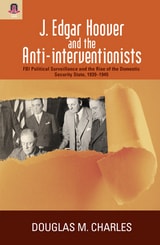
J. Edgar Hoover and the Anti-interventionists
FBI Political Surveillance and the Rise of the Domestic Security State, 1939–1945Douglas M. Charles
The Ohio State University Press, 2007
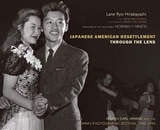
Japanese American Resettlement through the Lens
Hikaru Iwasaki and the WRA's Photographic Section, 1943-1945Lane Ryo Hirabayashi
University Press of Colorado, 2009
In Japanese American Resettlement through the Lens, Lane Ryo Hirabayashi gathers a unique collection of photographs by War Relocation Authority photographer Hikaru Iwasaki, the only full-time WRA photographer from the period still living.
With substantive focus on resettlement - and in particular Iwasaki's photos of Japanese Americans following their release from WRA camps from 1943 to 1945 - Hirabayashi explores the WRA's use of photography in its mission not only to encourage "loyal" Japanese Americans to return to society at large as quickly as possible but also to convince Euro-Americans this was safe and advantageous. Hirabayashi also assesses the relative success of the WRA project, as well as the multiple uses of the photographs over time, first by the WRA and then by students, scholars, and community members in the present day.
Although the photos have been used to illustrate a number of publications, this book is the first sustained treatment addressing questions directly related to official WRA photographs. How and under what conditions were they taken? Where were they developed, selected, and stored? How were they used during the 1940s? What impact did they have during and following the war?
By focusing on the WRA's Photographic Section, Japanese American Resettlement through the Lens makes a unique contribution to the body of literature on Japanese Americans during World War II.

Japanese Empire in the Tropics
Selected Documents and Reports of the Japanese Period in Sarawak, Northwest Borneo, 1941–1945Ooi Keat Gin
Ohio University Press, 1997
Although the Japanese interregnum was brief, its dramatic commencement and equally dramatic conclusion represented a watershed in the history of the young state of Sarawak.
In recent years, there has been a groundswell of interest in the war years, culminating in an attempt at reassessment of the Japanese occupation in Southeast Asia by Western and Japanese scholars as well as by those from Southeast Asia.
Presented here in a two-volume edition is a history of the Japanese occupation of Sarawak narrated through the compelling testimonies of the actual participants based on their recollections, memoirs, and correspondence.

Jazz and Machine-Age Imperialism
Music, "Race," and Intellectuals in France, 1918-1945Jeremy F. Lane
University of Michigan Press, 2014
Jeremy F. Lane’s Jazz and Machine-Age Imperialism is a bold challenge to the existing homogenous picture of the reception of American jazz in world-war era France. Lane’s book closely examines the reception of jazz among French-speaking intellectuals between 1918 and 1945 and is the first study to consider the relationships, sometimes symbiotic, sometimes antagonistic, between early white French jazz critics and those French-speaking intellectuals of color whose first encounters with the music in those years played a catalytic role in their emerging black or Creole consciousness. Jazz’s first arrival in France in 1918 coincided with a series of profound shocks to received notions of French national identity and cultural and moral superiority. These shocks, characteristic of the era of machine-age imperialism, had been provoked by the first total mechanized war, the accelerated introduction of Taylorist and Fordist production techniques into European factories, and the more frequent encounters with primitive “Others” in the imperial metropolis engendered by interwar imperialism. Through close readings of the work of early white French jazz critics, alongside the essays and poems of intellectuals of color such as the Nardal sisters, Léon-Gontran Damas, Léopold Sédar Senghor, and René Ménil, Jazz and Machine-Age Imperialism highlights the ways in which the French reception of jazz was bound up with a series of urgent contemporary debates about primitivism, imperialism, anti-imperialism, black and Creole consciousness, and the effects of American machine-age technologies on the minds and bodies of French citizens.
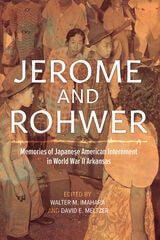
Jerome and Rohwer
Memories of Japanese American Internment in World War II ArkansasWalter M. Imahara
University of Arkansas Press, 2022
This book is a collection of brief memoirs written by former internees of Jerome and Rohwer and their close family members. Here dozens of individuals, almost all of whom are now in their eighties or nineties, share their personal accounts as well as photographs and other illustrations related to their life-changing experiences. The collection, likely to be one of the last of its kind, is the only work composed solely of autobiographical remembrances of life in Jerome and Rohwer, and one of the very few that gathers in a single volume the experiences of internees in their own words.
What emerges is a vivid portrait of lives lived behind barbed wire, where inalienable rights were flouted and American values suspended to bring a misguided sense of security to a race-obsessed nation at war. However, in the barracks and the fields, the mess halls and the makeshift gathering places, values of perseverance, tolerance, and dignity—the gaman the internees shared—gave significance to a transformative experience that changed forever what it means to call oneself an American.
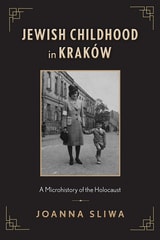
Jewish Childhood in Kraków
A Microhistory of the HolocaustJoanna Sliwa
Rutgers University Press, 2021
Jewish Childhood in Kraków is the first book to tell the history of Kraków in the second World War through the lens of Jewish children’s experiences. Here, children assume center stage as historical actors whose recollections and experiences deserve to be told, analyzed, and treated seriously.
Sliwa scours archives to tell their story, gleaning evidence from the records of the German authorities, Polish neighbors, Jewish community and family, and the children themselves to explore the Holocaust in German-occupied Poland and in Kraków in particular. A microhistory of a place, a people, and daily life, this book plumbs the decisions and behaviors of ordinary people in extraordinary times.
Offering a window onto human relations and ethnic tensions in times of rampant violence, Jewish Childhood in Kraków is an effort both to understand the past and to reflect on the position of young people during humanitarian crises.
Jewish Resistance Against the Nazis
Patrick Henry
Catholic University of America Press, 2014
Jewish and Romani Families in the Holocaust and its Aftermath
Eliyana R. Adler
Rutgers University Press, 2021
In this work, scholars from the United States, Israel, and across Europe bring a variety of backgrounds and disciplines to their study of the Holocaust and its aftermath from the family perspective. Drawing on research from Belarus to Great Britain, and examining both Jewish and Romani families, they demonstrate the importance of recognizing how people continued to function within family units—broadly defined—throughout the war and afterward.

John Steinbeck Goes to War
The Moon is Down as PropagandaDonald V. Coers
University of Alabama Press, 2005
WINNER OF THE ELIZABETH AGEE PRIZE IN AMERICAN LITERATURE
When words became weapons—Steinbeck’s novel and the underground war for freedom.
In March 1942, a desperate period for the allies in World War II, John Steinbeck published his propaganda novel The Moon is Down—the story of ruthless invaders who overrun a militarily helpless country. Throughout the novel, Steinbeck underscored both the fatal weakness of the “invincible” unnamed aggressors and the inherent power of the human values shard by the “conquered” people.
The Moon is Down created an immediate sensation among American literary critics; fierce debate erupted over Steinbeck’s uncommonly sympathetic portrayal of the enemy and the novel’s power as a vehicle for propaganda. Fifty years later, Coers continues the debate, relying heavily on unpublished letters and personal interviews with the lawyers, book dealers, actors, publishers, and housewives associated with the resistance movements in Western Europe. Clandestine translations of The Moon Is Down quickly appeared and were widely circulated under the noses of the Gestapo. Coers documents the fate of Steinbeck’s novel in the hands of World War II resistance fighters and deepens our appreciation of Steinbeck’s unique ability to express the feelings of oppressed peoples.

Justyna's Narrative
Gusta Davidson Draenger
University of Massachusetts Press, 1996
Written during World War II, Justyna's Narrative is a compelling account of the Krakow Jewish resistance. From February through April 1943, Gusta Davidson Draenger (aka “Justyna”) composed the narrative on scraps of paper smuggled into her prison cell. Between sessions of torture and interrogation at the hands of the Gestapo, she recorded the activities and spiritual aspirations of the clandestine group of young Jewish idealists who forged documents, acquired weapons, and committed acts of defiance against the Nazis.