Results by title
28164 books match the query 'History' and 406 start with j
Jane Addams in the Classroom
Edited by David Schaafsma
University of Illinois Press, 2014
Balancing theoretical and practical considerations, the collection examines Addams's emphasis on listening to and learning from those around her and encourages contemporary educators to connect with students through innovative projects and teaching methods. In the first essays, Addams scholars lay out how her narratives drew on experience, history, and story to explicate theories she intended as guides to practice. Six teacher-scholars then establish Addams's ongoing relevance by connecting her principles to exciting events in their own classrooms. An examination of the Jane Addams Children's Book Award and a fictional essay on Addams's work and ideas round out the volume.
Accessible and wide-ranging, Jane Addams in the Classroom offers inspiration for educators while adding to the ongoing reconsideration of Addams's contributions to American thought.
Contributors include Todd DeStigter, Lanette Grate, Susan Griffith, Lisa Junkin, Jennifer Krikava, Lisa Lee, Petra Munro, Bridget O'Rourke, David Schaafsma, Beth Steffen, Darren Tuggle, Erin Vail, and Ruth Vinz.

Jane Addams's Evolutionary Theorizing
Constructing “Democracy and Social Ethics”Marilyn Fischer
University of Chicago Press, 2019
Examining essays Addams wrote in the 1890s and showing how they were revised for Democracy and Social Ethics, Fischer draws from philosophy, history, literature, rhetoric, and more to uncover the array of social evolutionary thought Addams engaged with in her texts—from British socialist writings on the evolution of democracy to British and German anthropological accounts of the evolution of morality. By excavating Addams’s evolutionary reasoning and rhetorical strategies, Fischer reveals the depth, subtlety, and richness of Addams’s thought.

Jane Addams
A BIOGRAPHYJames Weber LinnIntroduction by Anne Firor Scott
University of Illinois Press, 1935
James Weber Linn's life of this forceful public figure offers a rare glimpse of the private Addams, from her childhood and schooling through her first efforts in public service and her rise to a position of national influence. Linn's biography is based on Addams's personal papers, which she turned over to him before she died: files of her manuscripts, published and unpublished, along with all of her letters and papers, from her first valentine to her last speech. Out of this treasure trove, in combination with Addams's substantial published works, he has written a unique life of his aunt, beautifully illuminating her private reflections and inner strength as well as her formidable public persona.

Jane Addams
The Most Dangerous Woman in AmericaMarlene Targ Brill
Ohio University Press, 2024

Jane Austen's Cults and Cultures
Claudia L. Johnson
University of Chicago Press, 2012
Jane Austen completed only six novels, but enduring passion for the author and her works has driven fans to read these books repeatedly, in book clubs or solo, while also inspiring countless film adaptations, sequels, and even spoofs involving zombies and sea monsters. Austen’s lasting appeal to both popular and elite audiences has lifted her to legendary status. In Jane Austen’s Cults and Cultures, Claudia L. Johnson shows how Jane Austen became “Jane Austen,” a figure intensely—sometimes even wildly—venerated, and often for markedly different reasons.
Jane Austen's Names
Riddles, Persons, PlacesMargaret Doody
University of Chicago Press, 2015
In Jane Austen’s Names, Margaret Doody offers a fascinating and comprehensive study of all the names of people and places—real and imaginary—in Austen’s fiction. Austen’s creative choice of names reveals not only her virtuosic talent for riddles and puns. Her names also pick up deep stories from English history, especially the various civil wars, and the blood-tinged differences that played out in the reign of Henry VIII, a period to which she often returns. Considering the major novels alongside unfinished works and juvenilia, Doody shows how Austen’s names signal class tensions as well as regional, ethnic, and religious differences. We gain a new understanding of Austen’s technique of creative anachronism, which plays with and against her skillfully deployed realism—in her books, the conflicts of the past swirl into the tensions of the present, transporting readers beyond the Regency.
Full of insight and surprises for even the most devoted Janeite, Jane Austen’s Names will revolutionize how we read Austen’s fiction.
Jane Austen
A CompanionRoss, Josephine
Rutgers University Press, 2003
This illuminating, entertaining, up-to-date companion is the only general guide to Jane Austen, her work, and her world. Josephine Ross explores the literary scene during the time Austen's works first appeared: the books considered classics then, the "horrid novels" and romances, and the grasping publishers. She looks at the architecture and décor of Austen's era that made up "the profusion and elegance of modern taste." Regency houses for instance, Chippendale furniture, and "picturesque scenery." On a smaller scale she answers questions that may baffle modern readers. What, for example, was "hartshorn"? How did Lizzy Bennet "let down" her gown to hide her muddy petticoat? Ross shows us the fashions, and the subtle ways Jane Austen used clothes to express character. Courtship, marriage, adultery, class and "rank," mundane tasks of ordinary life, all appear, as does the wider political and military world.
This book will add depth to all readers' enjoyment of Jane Austen, whether confirmed addicts or newcomers wanting to learn about one of the world's most popular and enduring writers.
Jane Austen
Women, Politics, and the NovelClaudia L. Johnson
University of Chicago Press, 1990
"By looking at the ways in which Austen domesticates the gothic in Northanger Abbey, examines the conventions of male inheritance and its negative impact on attempts to define the family as a site of care and generosity in Sense and Sensibility, makes claims for the desirability of 'personal happiness as a liberating moral category' in Pride and Prejudice, validates the rights of female authority in Emma, and stresses the benefits of female independence in Persuasion, Johnson offers an original and persuasive reassessment of Jane Austen's thought."—Kate Fullbrook, Times Higher Education Supplement

Jansenism
An International AnthologyShaun Blanchard
Catholic University of America Press, 2024
Janus's Gaze
Essays on Carl SchmittCarlo Galli
Duke University Press, 2015

Japan After Japan
Social and Cultural Life from the Recessionary 1990s to the PresentTomiko Yoda and Harry Harootunian, eds.
Duke University Press, 2006
Several of the essayists reflect on the politics of history, considering changes in the relationship between Japan and the United States, the complex legacy of Japanese colonialism, Japan’s chronic unease with its wartime history, and the postwar consolidation of an ethnocentric and racist nationalism. Others analyze anxieties related to the role of children in society and the weakening of the gendered divide between workplace and home. Turning to popular culture, contributors scrutinize the avid consumption of “real events” in formats including police shows, quiz shows, and live Web camera feeds; the creation, distribution, and reception of Pokémon, the game-based franchise that became a worldwide cultural phenomenon; and the ways that the behavior of zealous fans of anime both reinforces and clashes with corporate interests. Focusing on contemporary social and political movements, one essay relates how a local citizens’ group pressed the Japanese government to turn an international exposition, the Aichi Expo 2005, into a more environmentally conscious project. Another essay offers both a survey of emerging political movements and a manifesto identifying new possibilities for radical politics in Japan. Together the contributors to Japan After Japan present much-needed insight into the wide-ranging transformations of Japanese society that began in the 1990s.
Contributors. Anne Allison, Andrea G. Arai, Eric Cazdyn, Leo Ching, Harry Harootunian, Marilyn Ivy, Sabu Kohso, J. Victor Koschmann, Thomas LaMarre, Masao Miyoshi, Yutaka Nagahara, Naoki Sakai, Tomiko Yoda, Yoshimi Shunya, Mitsuhiro Yoshimoto
Japan and American Children's Books
A JourneySybille Jagusch
Rutgers University Press, 2021
For generations, children’s books provided American readers with their first impressions of Japan. Seemingly authoritative, and full of fascinating details about daily life in a distant land, these publications often presented a mixture of facts, stereotypes, and complete fabrications.
This volume takes readers on a journey through nearly 200 years of American children’s books depicting Japanese culture, starting with the illustrated journal of a boy who accompanied Commodore Matthew Perry on his historic voyage in the 1850s. Along the way, it traces the important role that representations of Japan played in the evolution of children’s literature, including the early works of Edward Stratemeyer, who went on to create such iconic characters as Nancy Drew. It also considers how American children’s books about Japan have gradually become more realistic with more Japanese-American authors entering the field, and with texts grappling with such serious subjects as internment camps and the bombing of Hiroshima and Nagasaki.
Drawing from the Library of Congress’s massive collection, Sybille A. Jagusch presents long passages from many different types of Japanese-themed children’s books and periodicals—including travelogues, histories, rare picture books, folktale collections, and boys’ adventure stories—to give readers a fascinating look at these striking texts.
Published by Rutgers University Press, in association with the Library of Congress.

Japan and China as Charm Rivals
Soft Power in Regional DiplomacyJing Sun
University of Michigan Press, 2013
In international relations today, influence is as essential as military and economic might. Consequently, leaders promote favorable images of the state in order to attract allies and win support for their policies. Jing Sun, an expert on international relations and a former journalist, refers to such soft power campaigns as "charm offensives."
Sun focuses on the competition between China and Japan for the allegiance of South Korea, Taiwan, and other states in the region. He finds that, instead of adopting a one-size-fits-all approach, the Chinese and the Japanese deploy customized charm campaigns for each target state, taking into consideration the target's culture, international position, and political values. He then evaluates the effectiveness of individual campaigns from the perspective of the target state, on the basis of public opinion polls, media coverage, and the response from state leaders.
A deep, comparative study, Japan and China as Charm Rivalsenriches our understanding of soft power by revealing deliberate image campaign efforts and offering a method for assessing the effectiveness of such charm offensives.

Japan in the World
Masao Miyoshi and H. D. Harootunian, eds.
Duke University Press, 1993
Among the many topics covered are: racism in U.S.-Japanese relations; productivity and workplace discourse; Western cultural hegemony; the constructing of a Japanese cultural history; and the place of the novelist in today's world. Originally published as a special issue of boundary 2 (Fall 1991), this edition includes four new essays on Japanese industrial revolution; the place of English studies in Japan; how American cultural, historical, and political discourse represented Japan and in turn how America's version of Japan became Japan's version of itself; and an "archaeology" of hegemonic relationships between Japan and America and Britain in the first half of the twentieth century.
Contributors. Eqbal Ahmad, Perry Anderson, Bruce Cumings, Arif Dirlik, H.D. Harootunian, Kazuo Ishuro, Fredric Jameson, Kojin Karatani, Oe Kenzaburo, Masao Miyoshi, Tetsuo Najita, Leslie Pincus, Naoki Sakai, Miriam Silverberg, Christena Turner, Rob Wilson, Mitsuhiro Yoshimoto

Japan in the World, the World in Japan
Fifty Years of Japanese Studies at MichiganEdited by the Center for Japanese Studies, University of Michigan
University of Michigan Press, 2001

Japan's American Interlude
Kazuo Kawai
University of Chicago Press, 1979
The author, Japanese-born and educated in America, a political scientist and journalist, brings his unique experience and knowledge to bear on these questions. The result is a book which tells the story of the American occupation of Japan from the Japanese point of view.

Japan's Holy War
The Ideology of Radical Shinto UltranationalismWalter A. Skya
Duke University Press, 2009
Skya documents a transformation in the ideology of State Shintō in the late nineteenth century and the early twentieth. He shows that within the religion, support for the German-inspired theory of constitutional monarchy that had underpinned the Meiji Constitution gave way to a theory of absolute monarchy advocated by the constitutional scholar Hozumi Yatsuka in the late 1890s. That, in turn, was superseded by a totalitarian ideology centered on the emperor: an ideology advanced by the political theorists Uesugi Shinkichi and Kakehi Katsuhiko in the 1910s and 1920s. Examining the connections between various forms of Shintō nationalism and the state, Skya demonstrates that where the Meiji oligarchs had constructed a quasi-religious, quasi-secular state, Hozumi Yatsuka desired a traditional theocratic state. Uesugi Shinkichi and Kakehi Katsuhiko went further, encouraging radical, militant forms of extreme religious nationalism. Skya suggests that the creeping democracy and secularization of Japan’s political order in the early twentieth century were the principal causes of the terrorism of the 1930s, which ultimately led to a holy war against Western civilization.
Japan
The Intellectual Foundations of Modern Japanese PoliticsTetsuo Najita
University of Chicago Press, 1980
Japanese American Midwives
Culture, Community, and Health Politics, 1880-1950Susan L. Smith
University of Illinois Press, 2005
In the late nineteenth century, Japan's modernizing quest for empire transformed midwifery into a new woman's profession. With the rise of Japanese immigration to the United States, Japanese midwives (sanba) served as cultural brokers as well as birth attendants for Issei women. They actively participated in the creation of Japanese American community and culture as preservers of Japanese birthing customs and agents of cultural change.
Japanese American Midwives reveals the dynamic relationship between this welfare state and the history of women and health. Susan L. Smith blends midwives' individual stories with astute analysis to demonstrate the impossibility of clearly separating domestic policy from foreign policy, public health from racial politics, medical care from women's caregiving, and the history of women and health from national and international politics. By setting the history of Japanese American midwives in this larger context, Smith reveals little-known ethnic, racial, and regional aspects of women's history and the history of medicine.
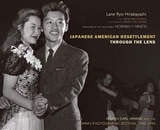
Japanese American Resettlement through the Lens
Hikaru Iwasaki and the WRA's Photographic Section, 1943-1945Lane Ryo Hirabayashi
University Press of Colorado, 2009
In Japanese American Resettlement through the Lens, Lane Ryo Hirabayashi gathers a unique collection of photographs by War Relocation Authority photographer Hikaru Iwasaki, the only full-time WRA photographer from the period still living.
With substantive focus on resettlement - and in particular Iwasaki's photos of Japanese Americans following their release from WRA camps from 1943 to 1945 - Hirabayashi explores the WRA's use of photography in its mission not only to encourage "loyal" Japanese Americans to return to society at large as quickly as possible but also to convince Euro-Americans this was safe and advantageous. Hirabayashi also assesses the relative success of the WRA project, as well as the multiple uses of the photographs over time, first by the WRA and then by students, scholars, and community members in the present day.
Although the photos have been used to illustrate a number of publications, this book is the first sustained treatment addressing questions directly related to official WRA photographs. How and under what conditions were they taken? Where were they developed, selected, and stored? How were they used during the 1940s? What impact did they have during and following the war?
By focusing on the WRA's Photographic Section, Japanese American Resettlement through the Lens makes a unique contribution to the body of literature on Japanese Americans during World War II.

Japanese Americans
The Formation and Transformations of an Ethnic GroupSpickard, Paul
Rutgers University Press, 2008
In this concise history, Paul Spickard traces the struggles and achievements of Japanese Americans in claiming their place in American society. He outlines three forces shaping ethnic groups in general: shared interests, shared institutions, and shared culture, and chronicles the Japanese American experience within this framework, showing how these factors created and nurtured solidarity.

Japanese Brazilian Saudades
Diasporic Identities and Cultural ProductionIgnacio López-Calvo
University Press of Colorado, 2019
López-Calvo addresses the complex creation of Japanese Brazilian identities and the history of immigration, showing how the community has used writing as a form of reconciliation and affirmation of their competing identities as Japanese, Brazilian, and Japanese Brazilian. Japanese in Brazil have employed a twofold strategic, rhetorical engineering: the affirmation of ethno-cultural difference on the one hand, and the collective assertion of citizenship and belonging to the Brazilian nation on the other. López-Calvo also grapples with the community’s inclusion and exclusion in Brazilian history and literature, using the concept of “epistemicide” to refer to the government’s attempt to impose a Western value system, Brazilian culture, and Portuguese language on the Nikkeijin, while at the same time trying to destroy Japanese language and culture in Brazil by prohibiting Japanese language instruction in schools, Japanese-language publications, and even speaking Japanese in public.
Japanese Brazilian Saudades contributes to the literature criticizing the “cognitive injustice” that fails to acknowledge the value of the global South and non-Western ways of knowing and being in the world. With important implications for both Latin American studies and Nikkei studies, it expands discourses of race, ethnicity, nationality, and communal belonging through art and narrative.
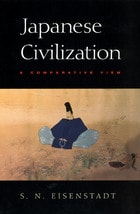
Japanese Civilization
A Comparative ViewS. N. Eisenstadt
University of Chicago Press, 1996

Japanese Empire in the Tropics
Selected Documents and Reports of the Japanese Period in Sarawak, Northwest Borneo, 1941–1945Ooi Keat Gin
Ohio University Press, 1997
Although the Japanese interregnum was brief, its dramatic commencement and equally dramatic conclusion represented a watershed in the history of the young state of Sarawak.
In recent years, there has been a groundswell of interest in the war years, culminating in an attempt at reassessment of the Japanese occupation in Southeast Asia by Western and Japanese scholars as well as by those from Southeast Asia.
Presented here in a two-volume edition is a history of the Japanese occupation of Sarawak narrated through the compelling testimonies of the actual participants based on their recollections, memoirs, and correspondence.
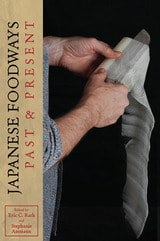
Japanese Foodways, Past and Present
Edited by Eric C. Rath and Stephanie Assmann
University of Illinois Press, 2010
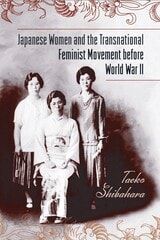
Japanese Women and the Transnational Feminist Movement before World War II
Taeko Shibahara
Temple University Press, 2014
This book traces the development of feminist consciousness in Japan from 1871 to 1941. Taeko Shibahara uncovers some fascinating histories as she examines how middle-class women navigated between domestic and international influences to form ideologies and strategies for reform. They negotiated a humanitarian space as Japan expanded its nationalist, militarist, imperialist, and patriarchal power.
Focusing on these women's political awakening and activism, Shibahara shows how Japanese feminists channeled and adapted ideas selected from international movements and from interactions with mainly American social activists.
Japanese Women and the Transnational Feminist Movement before World War II also connects the development of international contacts with the particular contributions of Ichikawa Fusae to the suffrage movement, Ishimoto Shidzue to the birth control movement, and Gauntlett Tsune to the peace movement by touching on issues of poverty, prostitution, and temperance. The result provides a window through which to view the Japanese women's rights movement with a broader perspective.

Japanese and Chinese Immigrant Activists
Organizing in American and International Communist Movements, 1919–1933Fowler, Josephine
Rutgers University Press, 2007
Japanese and Chinese immigrants in the United States have traditionally been characterized as hard workers who are hesitant to involve themselves in labor disputes or radical activism. How then does one explain the labor and Communist organizations in the Asian immigrant communities that existed from coast to coast between 1919 and 1933? Their organizers and members have been, until now, largely absent from the history of the American Communist movement. In Japanese and Chinese Immigrant Activists, Josephine Fowler brings us the first in-depth account of Japanese and Chinese immigrant radicalism inside the United States and across the Pacific.
Drawing on multilingual correspondence between left-wing and party members and other primary sources, such as records from branches of the Japanese Workers Association and the Chinese Nationalist Party, Fowler shows how pressures from the Comintern for various sub-groups of the party to unite as an “American” working class were met with resistance. The book also challenges longstanding stereotypes about the relationships among the Communist Party in the United States, the Comintern, and the Soviet Party.
Japonisme and the Birth of Cinema
Daisuke Miyao
Duke University Press, 2020
Jarano
By Ramón Beteta
University of Texas Press, 1970
Ramón Beteta was an important figure in Mexican life: politician, Cabinet member, diplomat, economist, professor, journalist. The manuscript of Jarano was found among his papers after his death in 1965 and was published in Mexico in 1966. "Jarano," the kind of broad sombrero worn by charros, was the secret nickname—partly disrespectful, partly amused, partly affectionate—which Ramón and his brother gave to their father. Except for part of the last chapter, the book is about Ramón's childhood and youth: sketches of family life, school experiences, a trip to Veracruz, and incidents of the Revolution.
Beteta brought to these reminiscences the skills of the short story writer, making superb use of dialogue, descriptive details, characterization, and mood. For a small book, the range of emotions is unusually wide, from the comedy of an evening meal to which Jarano has come home drunk to the tragedy of the indio and his wife in the chapter entitled "San Vicente Chicoloapan"—a chapter that gives more of the "feel" of the Revolution than do many longer works.
Javanese Lives
Women and Men in Modern Indonesian SocietyWilliams, Walter L.
Rutgers University Press, 1991
Java is the most populous island of Indonesia, the fifth largest nation in the world. Yet despite its importance, outsiders know little about the country or its people. With the help of Indonesian students and scholars, Walter L. Williams has collected and translated the life histories of twenty-seven Javanese women and men. The people interviewed tell how they have coped with rapid social and economic change, and the transformation of their traditions. Williams has carefully selected the individuals he includes to represent a wide diversity of Java's people. We hear from fascinating men and women of various religions, from the rich and the poor, and from different ethnic backgrounds. Diversity is a constant theme, as evidenced by a poor pedicab driver who can barely scrape along, by a rich businesswoman who explains how she balances her professional and domestic roles, by an educated and respected homosexual school principal, and by an illiterate mother of fourteen children. All of them present in their lives a unique Javanese approach to living.
These oral histories were derived from elderly people, who have a larger perspective on the changes they have seen in their lifetimes. The focus of the first section of the book is the way people have adapted in their daily lives to massive social and economic changes. In the middle section, we hear from the Javanese who represent traditional values in the midst of change. Finally, we hear from educators and parents who tell us of their concerns for Indonesian youth and the future of Indonesia.
Javanmardi
The Ethics and Practice of Persianate PerfectionEdited by Lloyd Ridgeon
Gingko, 2018
The present collection is the product of a three-year project financed by the British Institute of Persian Studies on the theme of "Javanmardi in the Persianate world." The articles in this volume represent the sheer range, influence, and importance that the concept has had in creating and contributing to Persianate identities over the past one hundred and fifty years. The contributions are intentionally broad in scope. Rather than focus, for example, on medieval Sufi manifestations of javanmardi, both medieval and modern studies were encouraged, as were literary, artistic, archaeological, and sociological studies among others. The opening essays examine the concept’s origin in medieval history and legends throughout a geographical background that spans from modern Iran to Turkey, Armenia, and Bosnia, among both Muslim and Christian communities. Subsequent articles explore modern implications of javanmardi within such contexts as sportsmanship, political heroism, gender fluidity, cinematic representations, and the advent of digitalization.

Jazz Cosmopolitanism in Accra
Five Musical Years in GhanaSteven Feld
Duke University Press, 2012
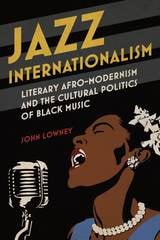
Jazz Internationalism
Literary Afro-Modernism and the Cultural Politics of Black MusicJohn Lowney
University of Illinois Press, 2017
Jazz Internationalism offers a bold reconsideration of jazz's influence in Afro-modernist literature. Ranging from the New Negro Renaissance through the social movements of the 1960s, John Lowney articulates nothing less than a new history of Afro-modernist jazz writing. Jazz added immeasurably to the vocabulary for discussing radical internationalism and black modernism in leftist African American literature. Lowney examines how Claude McKay, Ann Petry, Langston Hughes, and many other writers employed jazz as both a critical social discourse and mode of artistic expression to explore the possibilities—and challenges—of black internationalism. The result is an expansive understanding of jazz writing sure to spur new debates.

Jazz and Machine-Age Imperialism
Music, "Race," and Intellectuals in France, 1918-1945Jeremy F. Lane
University of Michigan Press, 2014
Jeremy F. Lane’s Jazz and Machine-Age Imperialism is a bold challenge to the existing homogenous picture of the reception of American jazz in world-war era France. Lane’s book closely examines the reception of jazz among French-speaking intellectuals between 1918 and 1945 and is the first study to consider the relationships, sometimes symbiotic, sometimes antagonistic, between early white French jazz critics and those French-speaking intellectuals of color whose first encounters with the music in those years played a catalytic role in their emerging black or Creole consciousness. Jazz’s first arrival in France in 1918 coincided with a series of profound shocks to received notions of French national identity and cultural and moral superiority. These shocks, characteristic of the era of machine-age imperialism, had been provoked by the first total mechanized war, the accelerated introduction of Taylorist and Fordist production techniques into European factories, and the more frequent encounters with primitive “Others” in the imperial metropolis engendered by interwar imperialism. Through close readings of the work of early white French jazz critics, alongside the essays and poems of intellectuals of color such as the Nardal sisters, Léon-Gontran Damas, Léopold Sédar Senghor, and René Ménil, Jazz and Machine-Age Imperialism highlights the ways in which the French reception of jazz was bound up with a series of urgent contemporary debates about primitivism, imperialism, anti-imperialism, black and Creole consciousness, and the effects of American machine-age technologies on the minds and bodies of French citizens.

Jazz from Detroit
Mark Stryker
University of Michigan Press, 2019
Stryker’s story starts in the 1940s and ’50s, when the auto industry created a thriving black working and middle class in Detroit that supported a vibrant nightlife, and exceptional public school music programs and mentors in the community like pianist Barry Harris transformed the city into a jazz juggernaut. This golden age nurtured many legendary musicians—Hank, Thad, and Elvin Jones, Gerald Wilson, Milt Jackson, Yusef Lateef, Donald Byrd, Tommy Flanagan, Kenny Burrell, Ron Carter, Joe Henderson, and others. As the city’s fortunes change, Stryker turns his spotlight toward often overlooked but prescient musician-run cooperatives and self-determination groups of the 1960s and ’70s, such as the Strata Corporation and Tribe. In more recent decades, the city’s culture of mentorship, embodied by trumpeter and teacher Marcus Belgrave, ensured that Detroit continued to incubate world-class talent; Belgrave protégés like Geri Allen, Kenny Garrett, Robert Hurst, Regina Carter, Gerald Cleaver, and Karriem Riggins helped define contemporary jazz. The resilience of Detroit’s jazz tradition provides a powerful symbol of the city’s lasting cultural influence.
Stryker’s 21 years as an arts reporter and critic at the Detroit Free Press are evident in his vivid storytelling and insightful criticism. Stryker has fully updated the paperback since the publication of the hardcover. This award-winning book will appeal to jazz aficionados, casual fans, and anyone interested in the vibrant and complex history of cultural life in Detroit.

Jazz on the River
William Howland Kenney
University of Chicago Press, 2005
Simply put, when jazz went upstream, it went mainstream, and in Jazz on the River, William Howland Kenney brings to life the vibrant history of this music and its seduction of the men and women along America's inland waterways. Here for the first time readers can learn about the lives and music of the levee roustabouts promoting riverboat jazz and their relationships with such great early jazz adventurers as Louis Armstrong, Fate Marable, Warren "Baby" Dodds, and Jess Stacy. Kenney follows the boats from Memphis to St. Louis, where new styles of jazz were soon produced, all the way up the Ohio River, where the music captivated audiences in Cincinnati and Pittsburgh alike.
Jazz on the River concludes with the story of the decline of the old paddle wheelers-and thus riverboat jazz-on the inland waterways after World War II. The enduring silence of our rivers, Kenney argues, reminds us of the loss of such a distinctive musical tradition. But riverboat jazz still lives on in myriad permutations, each one in tune with our own times.
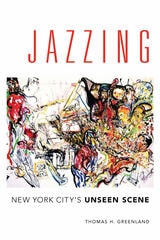
Jazzing
New York City's Unseen SceneThomas H. Greenland
University of Illinois Press, 2016

Jean Baudrillard
In Radical UncertaintyMike Gane
Pluto Press, 2000
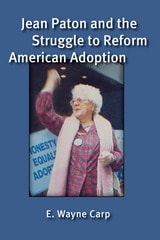
Jean Paton and the Struggle to Reform American Adoption
E. Wayne Carp
University of Michigan Press, 2013
Jean Paton (1908–2002) fought tirelessly to reform American adoption and to overcome prejudice against adult adoptees and women who give birth out of wedlock. Paton wrote widely and passionately about the adoption experience, corresponded with policymakers as well as individual adoptees, promoted the psychological well-being of adoptees, and facilitated reunions between adoptees and their birth parents. E. Wayne Carp's masterful biography brings to light the accomplishments of this neglected civil-rights pioneer, who paved the way for the explosive emergence of the adoption reform movement in the 1970s. Her unflagging efforts over five decades helped reverse harmful policies, practices, and laws concerning adoption and closed records, struggles that continue to this day.
Jean Paul Marat
Tribune of the French RevolutionClifford D. Conner
Pluto Press, 2012
Jean-Paul Marat’s role in the French Revolution has long been a matter of controversy among historians. Often he has been portrayed as a violent, sociopathic demagogue. This biography challenges that interpretation and argues that without Marat’s contributions as an agitator, tactician, and strategist, the pivotal social transformation that the Revolution accomplished might well not have occurred.
Clifford D. Conner argues that what was unique about Marat - which set him apart from all other major figures of the Revolution, including Danton and Robespierre - was his total identification with the struggle of the propertyless classes for social equality.
This is an essential book for anyone interested in the history of the revolutionary period and the personalities that led it.
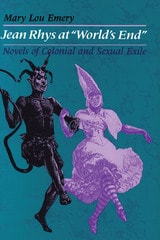
Jean Rhys at "World's End"
Novels of Colonial and Sexual ExileBy Mary Lou Emery
University of Texas Press, 1990
The Caribbean Islands have long been an uneasy meeting place among indigenous peoples, white European colonists, and black slave populations. Tense oppositions in Caribbean culture—colonial vs. native, white vs. black, male conqueror vs. female subject—supply powerful themes and spark complex narrative experiments in the fiction of Dominica-born novelist Jean Rhys. In this pathfinding study, Mary Lou Emery focuses on Rhys's handling of these oppositions, using a Caribbean cultural perspective to replace the mainly European aesthetic, moral, and psychological standards that have served to misread and sometimes devalue Rhys's writing.
Emery considers all five Rhys novels, beginning with Wide Sargasso Sea as the most explicitly Caribbean in its setting, in its participation in the culminating decades of a West Indian literary naissance, and most importantly, in its subversive transformation of European concepts of character. From a sociocultural perspective, she argues persuasively that the earlier novels—Voyage in the Dark, Quartet, After Leaving Mr. Mackenzie, and Good Morning, Midnight—should be read as emergent Caribbean fiction, written in tense dialogue with European modernism. Building on this thesis, she reveals how the apparent passivity, masochism, or silence of Rhys's female protagonists results from their doubly marginalized status as women and as subject peoples. Also, she explores how Rhys's women seek out alternative identities in dreamed of, magically realized, or chosen communities.
These discoveries offer important insights on literary modernism, Caribbean fiction, and the formation of female identity.

Jean Stafford
The Savage HeartBy Charlotte Margolis Goodman
University of Texas Press, 1990
One of America's best short story writers and author of three fine novels, Boston Adventure (1944), The Mountain Lion (1947), and The Catherine Wheel (1952), Jean Stafford has been rediscovered by another generation of readers and scholars. Although her novels and her Pulitzer Prize–winning short stories were widely read in the 1940s and 1950s, her fiction has received less critical attention than that of other distinguished contemporary American women writers such as Carson McCullers, Flannery O'Connor, and Eudora Welty. In this literary biography, Charlotte M. Goodman traces the life of the brilliant yet troubled Jean Stafford and reassesses her importance.
Drawing on a wealth of original material, Goodman describes the vital connections between Stafford's life and her fiction. She discusses Stafford's difficult family relationships, her tempestuous first marriage to the poet Robert Lowell, her unresolved conflicts about gender roles, her alcoholism and bouts with depression—and her amazing ability to transform the chaotic details of her life into elegant works of fiction. These wonderfully crafted works offer insightful portraits of alienated and isolated characters, most of whom exemplify not only human estrangement in the modern world, but also the special difficulties of girls and women who refuse to play traditional roles.
Goodman locates Jean Stafford within the literary world of the 1940s and 1950s. In her own right, and through her marriages to Robert Lowell, Life magazine editor Oliver Jensen, and journalist A. J. Liebling, Stafford associated with many of the major literary figures of her day, including the Southern Fugitives, the New York intellectual coterie, and writers for the New Yorker, to which she regularly contributed short stories. Goodman also describes Stafford's sustaining friendships with other women writers, such as Evelyn Scott and Caroline Gordon, and with her New Yorker editor, Katharine S. White.
This highly readable biography will appeal to a wide audience interested in twentieth-century literature and the writing of women's lives.

Jean-Luc Godard
The Permanent RevolutionaryBert Rebhandl, translated by Edward Maltby
University of Wisconsin Press, 2023
Rebhandl skillfully weaves together biographical details; information about the cultural, intellectual, and cinematic milieu over the decades; and descriptions of Godard’s most significant films to support his assertion that the director was a permanent revolutionary—always seeking new ways to create, understand, and comment on film within a larger context. He views Godard as an artist consistently true to himself while never ceasing to change and evolve, often in unexpected, radical, and controversial ways.
Rebhandl is known as a journalist with deep insights and lucid prose. Despite the wealth of material to analyze, he neither gets lost in the details nor offers a superficial gloss, even while directly tackling such topics as the long-standing charges of antisemitism against Godard and his oeuvre. This volume will be welcome to both casual fans and dedicated devotees.
Jean-Paul Marat
Prophet of TerrorKeith Michael Baker
University of Chicago Press, 2025
Who better to pen an authoritative biography of Jean-Paul Marat (1743–93) than preeminent historian of France Keith Michael Baker? Decades in the making, this monumental work takes readers on a journey through the intriguing, sometimes shocking life of this writer and thinker.
Starting with Marat’s Swiss family and upbringing, Baker then sheds light on his early years in England, his career as an aspiring scientist in Paris, his gradual transformation from impassioned pamphleteer to revolutionary newspaperman, and, finally, his murder and martyrdom. Throughout, Baker offers readers the unique opportunity to reconsider the outbreak and development of the French Revolution through Marat’s eyes and in his own words. To help make sense of Marat’s trajectory, he shows how his violent and incendiary public calls to render unseen forces visible, to inject immediacy into an increasingly abstract modern world, would transform classical republicanism into the language of Terror.
Far beyond a standard rendering of Marat’s life and its milestones, this biography offers readers an opportunity to see the French Revolution as never before, through the perspective of one of its major figures. Baker’s book reveals how someone like Marat could go from translating Newton and engaging with Franklin to calling for an ever-growing number of heads to roll—a transformation as chilling as ever.

Jefferson Davis, Unconquerable Heart
Felicity Allen
University of Missouri Press, 2000
Preeminent Civil War historian Frank Vandiver always longed to see an interpretive biography of Jefferson Davis. Finally, more than twenty years after Vandiver expressed that wish, publication of Jefferson Davis, Unconquerable Heart makes such an interpretive biography available.
Felicity Allen begins this monumental work with Davis's political imprisonment at the end of the Civil War and masterfully flashes back to his earlier life, interweaving Davis's private life as a schoolboy, a Mississippi planter, a husband, a father, and a political leader. She follows him from West Point through army service on the frontier, his election to the U.S. House of Representatives, his regimental command in the Mexican War, his service as U.S. secretary of war and senator, and his term as president of the Confederate States of America.
Although Davis's family is the nexus of this biography, friends and enemies also play major roles. Among his friends intimately met in this book are such stellar figures as Andrew Jackson, John C. Calhoun, Zachary Taylor, Franklin Pierce, Albert Sidney Johnston, and Robert E. Lee.
With the use of contemporary accounts and Davis's own correspondence, Jefferson Davis, Unconquerable Heart casts new light upon this remarkable man, thawing the icy image of Davis in many previous accounts. Felicity Allen shows a strong, yet gentle man; a stern soldier who loved horses, guns, poetry, and children; a master of the English language, with a dry wit; a man of powerful feelings who held them in such tight control that he was considered cold; and a home-loving Mississippian who was drawn into a vortex of national events and eventual catastrophe. At all times, "duty, honor, country" ruled his mind. Davis's Christian view of life runs like a thread throughout the book, binding together his devotion to God, his family, and the land.
Jefferson Davis, Unconquerable Heart brings Davis to life in a way that has never been done before. The variety of his experience, the breadth of his learning, and the consistency of his beliefs make this historical figure eminently worth knowing.

Jefferson in His Own Time
A Biographical Chronicle of His Life, Drawn from Recollections, Interviews, and Memoirs by Family, Friends, and AssociatesKevin J. Hayes
University of Iowa Press, 2012
Jefferson, Lincoln, and the Unfinished Work of the Nation
Ronald L. Hatzenbuehler
Southern Illinois University Press, 2016
In this groundbreaking new study—the first extended examination of the ideas of Lincoln and Jefferson—Hatzenbuehler provides readers with a succinct guide to their opinions, comparing and contrasting their reasoned judgments on America’s republican form of government. Each chapter is devoted to one key area of common interest: race and slavery, the pros and cons of political parties, state rights versus federal authority, religion and the presidency, presidential powers under the Constitution, or the proper political economy for a republic. Relying on the pair’s own words in their letters, writings, and speeches, Hatzenbuehler explores similarities and differences between the two men on contentious issues. Both, for instance, wrote that they were antislavery, but Jefferson never acted on this belief, while Lincoln moved toward a constitutional amendment banning slavery. The book’s title, taken from the Gettysburg Address, builds on both presidents’ expectations that Americans should dedicate themselves to the unfinished work of returning the nation to its founding principles.
Jefferson and Lincoln wrestled with many of the same issues and ideas that intrigue and divide Americans today. In his thought-provoking work, Hatzenbuehler details how the two presidents addressed these issues and ideas, which are essential to understanding not only America’s history but also the continuing influence of the past on the present.
Jeffrey Introduces Thirteen More Southern Ghosts
Commemorative EditionKathryn Tucker Windham
University of Alabama Press, 2015
A commemorative edition of the beloved and best-selling second book in famed folklorist Kathryn Tucker Windham’s southern ghosts series.
Jeffrey was the resident apparition in the Selma, Alabama, home of nationally-known folklorist Kathryn Tucker Windham and the inspiration for Windham’s best-selling collection of macabre tales that reveal two hundred years of Alabama’s ghostly secrets, Thirteen Alabama Ghosts and Jeffrey. One of the most popular books ever published in the state, generations of Alabama children and students have been thrilled and chilled by Windham’s spectral legends.
Following the overwhelming success of Thirteen Alabama Ghosts and Jeffrey, Windham and Jeffrey began to journey across the South assembling a second collection of ghastly tales that repeat Windham’s winning combination of traditional folklore, Southern history and culture, and family-friendly story-telling. In Jeffrey Introduces Thirteen More Southern Ghosts, Windham’s disembodied friend roams the states of Kentucky, Tennessee, Georgia, Mississippi, Louisiana, and Florida to recall thirteen more timeless, spine-tingling tales of baneful and melancholy spirits that spook the most stoic heart.
Opening this volume is “The Girl Nobody Knew.” One midsummer night in the genteel Kentucky mineral spring resort of Harrodsburg, a beautiful lady arrived at the town’s grand hotel. The belle danced late into the night with the town’s smitten gallants only to expire suddenly with the notes of the last quadrille. The spooked residents of Harrodsburg guard a grave you can see to this day. Readers then visit the world-famous Bell Witch of Robinson County, Tennessee. Jeffrey also makes his first trip to old New Orleans to reveal a revenant in residence on Royal Street before continuing his ghostly progress across Dixie.
This new edition returns Jeffrey Introduces Thirteen More Southern Ghosts to its original format in jacketed cloth full of original, black-and-white illustrations in a handsome keepsake edition perfect for gift-giving and for families, folklorists of all ages, and libraries.

Jeffrey's Latest Thirteen
More Alabama Ghosts, Commemorative EditionKathryn Tucker Windham
University of Alabama Press, 2016
A deluxe, commemorative edition of a beloved collection of ghostly stories from famed southern author and folklorist Kathryn Tucker Windham’s home state of Alabama.
Accompanied by her faithful companion, Jeffrey, a friendly spirit who resided in her home in Selma, Alabama, Kathryn Tucker Windham traveled the South, visiting the sites of spectral legends in Mississippi, Georgia, and Tennessee, among other places. In Jeffrey’s Latest Thirteen: More Alabama Ghosts, a sequel to her landmark Thirteen Alabama Ghosts and Jeffrey, Windham introduces readers to thirteen more of Jeffrey's ghostly acquaintances, each with the charm and universal appeal that has created hundreds of thousands of Jeffrey fans.
Among the other hair-raising tales in this collection, Windham spotlights the apparitions of academia. From the three Yankee soldiers who haunt the University of Alabama’s Civil War–era Little Round House to the Confederate soldier who resides in the University Chapel at Auburn University, Alabama’s institutions of higher learning seem to have more than a few paranormal pupils.
Photographs of the sites about which Windham writes are one of the best-loved features of her series of “Jeffrey the Ghost” books. Jeffrey’s Latest Thirteen features the image of a beautiful child who, though not photographed in life, reappeared long enough to be photographed with his bereaved father's borrowed camera. Bewitched readers will find the startling photograph of the child in the next-to-last chapter, just pages before he book’s photograph of Windham’s own spectral muse, Jeffrey.
This commemorative edition returns Windham’s thrilling classic to its original 1982 keepsake quality and includes a new afterword by the author’s children.

Jens Jensen
Writings Inspired by NatureWilliam H. Tishler
Wisconsin Historical Society Press, 2012
Today, Jensen is perhaps best remembered for establishing The Clearing on Wisconsin's Door County Peninsula. But the outspoken views in his writings - many of which were included in ephemeral planning reports, early newspapers, and now out-of-print journals - are virtually forgotten, with the exception of his two small books. "Jens Jensen: Writings Inspired by Nature" is an anthology of Jensen's most significant yet lesser-known articles, including a "Saturday Evening Post" piece that enabled him to reach the largest audience of his publishing career. The scope of Jensen's thoughts represented in this collection will further solidify his legacy and rightful place alongside conservation leaders such as John Muir and Aldo Leopold.