Results by title
22277 books match the query 'Social Science' and 299 start with j
Jazz Cosmopolitanism in Accra
Five Musical Years in GhanaSteven Feld
Duke University Press, 2012
Jazz Journeys to Japan
The Heart WithinWilliam Minor
University of Michigan Press, 2004
Part music history, part cultural meditation, part travel narrative, Jazz Journeys to Japan is the first book to address the experiences of individual players -- Japanese jazz greats such as Toshiko Akiyoshi, Masahiko Satoh, Makoto Ozone, and Yosuke Yamashita.
William Minor navigates the converging streams of Western music and Eastern tradition, revealing through interviews with musicians, critics, and producers the unique synthesis that results from this convergence. And, turning conventional wisdom on its ear, he disproves the widely held notion that Japanese jazz artists don't "swing." Along the way, we experience Minor's growing appreciation of Japanese culture, which mirrors his subjects' discovery of American jazz.
William Minor's previous books include Unzipped Souls: A Jazz Journey through the Soviet Union, and Monterey Jazz Festival: Forty Legendary Years. He has written for Downbeat, Jazz Times, Jazz Notes, Coda, and Swing Journal.
Jazz Radio America
Aaron J. Johnson
University of Illinois Press, 2024
An interwoven story of a music and a medium, Jazz Radio America answers perennial questions about why certain kinds of jazz get played and why even that music is played in so few places.
Jazz in the Time of the Novel
The Temporal Politics of American Race and CultureBruce Evan Barnhart
University of Alabama Press, 2013
WINNER OF THE ELIZABETH AGEE PRIZE IN AMERICAN LITERATURE
Jazz in the Time of the Novel argues that a culture’s understanding of the concept of time plays a central role in its economic, social, and aesthetic affairs and that a culture arrives at its conception of time through its artistic practices.
Bruce Barnhart, in Jazz in the Time of the Novel, shows that American culture of the first three decades of the twentieth century was shaped by the kindred rhythms and movements of two particular art forms: jazz and fiction. At the beginning of the twentieth century, widespread changes in America’s social, demographic, and economic norms threatened longstanding faith in a unified and inevitable movement towards a better future. As Barnhart shows both jazz and novels of the period address these temporal uncertainties, inserting themselves into arguments about the proper unfolding of an affirmative American future. Barnhart proposes that these two aesthetic forms can be viewed as co-participants in an ongoing discussion about the way in which the future should be imagined and experienced—a discussion symptomatic of the broader exchanges taking place within the many trajectories comprising early twentieth-century American culture.
This book includes in-depth approaches to numerous examples of jazz and the novel, including performances by James P. Johnson, Louis Armstrong, Bessie Smith, Duke Ellington, and Ethel Waters, and novels by James Weldon Johnson, F. Scott Fitzgerald, Ernest Hemingway, Gertrude Stein, and Nella Larsen, among others. In addition to the details of specific musical and literary works, Jazz in the Time of the Novel offers careful consideration as to how these works impact their social context.
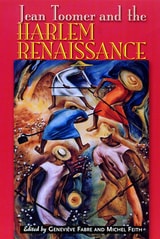
Jean Toomer & Harlem Renaissance
Edited by Geneviève Fabre and Michel Feith
Rutgers University Press, 2000
Jean Toomer's novel Cane has been hailed as the harbinger of the Harlem Renaissance and as a model for modernist writing, yet it eludes categorization and its author remains an enigmatic and controversial figure in American literature. The present collection of essays by European and American scholars gives a fresh perspective by using sources made available only in recent years, highlighting Toomer's bold experimentations, as well as his often ambiguous responses to the questions of his time.
Some of the essays achieve this through close readings of the text, leading to new and challenging interpretations of Toomer's transcendence of genres and styles. Others show how the publication of Cane and his later writings placed Toomer at the heart of contemporary ideological and artistic debates: race and identity, the negro writer and the white literary world, primitivism and modernism.
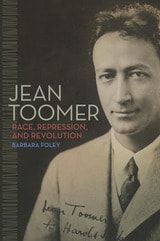
Jean Toomer
Race, Repression, and RevolutionBarbara Foley
University of Illinois Press, 2019
The 1923 publication of Cane established Jean Toomer as a modernist master and one of the key literary figures of the emerging Harlem Renaissance. Though critics and biographers alike have praised his artistic experimentation and unflinching eyewitness portraits of Jim Crow violence, few seem to recognize how much Toomer's interest in class struggle, catalyzed by the Russian Revolution and the post–World War One radical upsurge, situate his masterwork in its immediate historical context. In Jean Toomer: Race, Repression, and Revolution, Barbara Foley explores Toomer's political and intellectual connections with socialism, the New Negro movement, and the project of Young America. Examining his rarely scrutinized early creative and journalistic writings, as well as unpublished versions of his autobiography, she recreates the complex and contradictory consciousness that produced Cane. Foley's discussion of political repression runs parallel with a portrait of repression on a personal level. Examining family secrets heretofore unexplored in Toomer scholarship, she traces their sporadic surfacing in Cane. Toomer's text, she argues, exhibits a political unconscious that is at once public and private.
Jeffrey Introduces Thirteen More Southern Ghosts
Commemorative EditionKathryn Tucker Windham
University of Alabama Press, 2015
A commemorative edition of the beloved and best-selling second book in famed folklorist Kathryn Tucker Windham’s southern ghosts series.
Jeffrey was the resident apparition in the Selma, Alabama, home of nationally-known folklorist Kathryn Tucker Windham and the inspiration for Windham’s best-selling collection of macabre tales that reveal two hundred years of Alabama’s ghostly secrets, Thirteen Alabama Ghosts and Jeffrey. One of the most popular books ever published in the state, generations of Alabama children and students have been thrilled and chilled by Windham’s spectral legends.
Following the overwhelming success of Thirteen Alabama Ghosts and Jeffrey, Windham and Jeffrey began to journey across the South assembling a second collection of ghastly tales that repeat Windham’s winning combination of traditional folklore, Southern history and culture, and family-friendly story-telling. In Jeffrey Introduces Thirteen More Southern Ghosts, Windham’s disembodied friend roams the states of Kentucky, Tennessee, Georgia, Mississippi, Louisiana, and Florida to recall thirteen more timeless, spine-tingling tales of baneful and melancholy spirits that spook the most stoic heart.
Opening this volume is “The Girl Nobody Knew.” One midsummer night in the genteel Kentucky mineral spring resort of Harrodsburg, a beautiful lady arrived at the town’s grand hotel. The belle danced late into the night with the town’s smitten gallants only to expire suddenly with the notes of the last quadrille. The spooked residents of Harrodsburg guard a grave you can see to this day. Readers then visit the world-famous Bell Witch of Robinson County, Tennessee. Jeffrey also makes his first trip to old New Orleans to reveal a revenant in residence on Royal Street before continuing his ghostly progress across Dixie.
This new edition returns Jeffrey Introduces Thirteen More Southern Ghosts to its original format in jacketed cloth full of original, black-and-white illustrations in a handsome keepsake edition perfect for gift-giving and for families, folklorists of all ages, and libraries.
Jeffrey's Latest Thirteen
More Alabama Ghosts, Commemorative EditionKathryn Tucker Windham
University of Alabama Press, 2016
A deluxe, commemorative edition of a beloved collection of ghostly stories from famed southern author and folklorist Kathryn Tucker Windham’s home state of Alabama.
Accompanied by her faithful companion, Jeffrey, a friendly spirit who resided in her home in Selma, Alabama, Kathryn Tucker Windham traveled the South, visiting the sites of spectral legends in Mississippi, Georgia, and Tennessee, among other places. In Jeffrey’s Latest Thirteen: More Alabama Ghosts, a sequel to her landmark Thirteen Alabama Ghosts and Jeffrey, Windham introduces readers to thirteen more of Jeffrey's ghostly acquaintances, each with the charm and universal appeal that has created hundreds of thousands of Jeffrey fans.
Among the other hair-raising tales in this collection, Windham spotlights the apparitions of academia. From the three Yankee soldiers who haunt the University of Alabama’s Civil War–era Little Round House to the Confederate soldier who resides in the University Chapel at Auburn University, Alabama’s institutions of higher learning seem to have more than a few paranormal pupils.
Photographs of the sites about which Windham writes are one of the best-loved features of her series of “Jeffrey the Ghost” books. Jeffrey’s Latest Thirteen features the image of a beautiful child who, though not photographed in life, reappeared long enough to be photographed with his bereaved father's borrowed camera. Bewitched readers will find the startling photograph of the child in the next-to-last chapter, just pages before he book’s photograph of Windham’s own spectral muse, Jeffrey.
This commemorative edition returns Windham’s thrilling classic to its original 1982 keepsake quality and includes a new afterword by the author’s children.
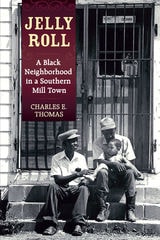
Jelly Roll
A Black Neighborhood in a Southern Mill TownCharles Thomas
University of Arkansas Press, 2012
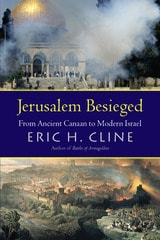
Jerusalem Besieged
From Ancient Canaan to Modern IsraelEric H. Cline
University of Michigan Press, 2005
-Victor Davis Hanson, Stanford University; author of The Other Greeks and Carnage and Culture
"A beautifully lucid presentation of four thousand years of history in a single volume. Cline writes primarily as an archaeologist-avoiding polemic and offering evidence for any religious claims-yet he has also incorporated much journalistic material into this study. Jerusalem Besieged will enlighten anyone interested in the history of military conflict in and around Jerusalem."
-Col. Rose Mary Sheldon, Virginia Military Institute
"This groundbreaking study offers a fascinating synthesis of Jerusalem's military history from its first occupation into the modern era. Cline amply deploys primary source material to investigate assaults on Jerusalem of every sort, starting at the dawn of recorded history. Jerusalem Besieged is invaluable for framing the contemporary situation in the Middle East in the context of a very long and pertinent history."
-Baruch Halpern, Pennsylvania State University
A sweeping history of four thousand years of struggle for control of one city
"[An] absorbing account of archaeological history, from the ancient Israelites' first conquest to today's second intifada. Cline clearly lays out the fascinating history behind the conflicts."
-USA Today
"A pleasure to read, this work makes this important but complicated subject fascinating."
-Jewish Book World
"Jerusalem Besieged is a fascinating account of how and why a baffling array of peoples, ideologies, and religions have fought for some four thousand years over a city without either great wealth, size, or strategic importance. Cline guides us through the baffling, but always bloody, array of Jewish, Roman, Moslem, Crusader, Ottoman, Western, Arab, and Israeli fights for possession of such a symbolic prize in a manner that is both scholarly and engaging."
-Victor Davis Hanson, Stanford University; author of The Other Greeks and Carnage and Culture
Jerusalem
Or on Religious Power and JudaismMoses Mendelssohn
Brandeis University Press, 1983
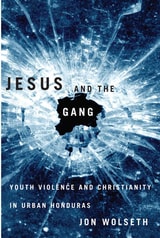
Jesus and the Gang
Youth Violence and Christianity in Urban HondurasJon Wolseth
University of Arizona Press, 2011
While only a small fraction of youths in a neighborhood are active members of a gang, most young men must learn the styles, ways of communicating, and local geography of gangs in order to survive. Due to the absence of gang prevention programs sponsored by the government or outside non-governmental organizations, Catholic and Pentecostal churches have developed their own ways to confront gang violence in their communities. Youths who participate in church organizations do so not only to alter and improve their communities but also to gain emotional and institutional support.
Offering firsthand accounts of these youths and how they make use of religious discourse, narrative practices, or the inscription of tattooed images and words on the body to navigate dangerous social settings, Jesus and the Gang is an unflinching look at how these young men turn away from perpetuating the cycle of violence and how Christianity serves a society where belonging is surviving.
This book will appeal to readers with an interest in Latin American studies, urban anthropology, and youth studies. With its focus on the lives of young men and women, it’s also a compelling read for anyone interested in the plight of urban youth trying to escape the gang life.
Jesus in America and Other Stories from the Field
Claudia Gould
Utah State University Press, 2009
Drawing on ethnographic field work she conducted among Christians in her home state of North Carolina, Claudia Gould crafts stories that lay open the human heart and social complications of fundamentalist belief. These stories and the compelling characters who inhabit them draw us into the complex essence of religious experience among southern American Christians.
Jesus, Jobs, and Justice
African American Women and ReligionBettye Collier-Thomas
Temple University Press, 2013
Jew
Baker, Cynthia M
Rutgers University Press, 2017
Jewhooing the Sixties
American Celebrity and Jewish Identity—Sandy Koufax, Lenny Bruce, Bob Dylan, and Barbra StreisandDavid E. Kaufman
Brandeis University Press, 2012

Jewish Artists in New York
The Holocaust YearsBaigell, Matthew
Rutgers University Press, 2002
Calling attention to the local cultural scene as well as to events taking place in Europe, Matthew Baigell considers the art produced by Jewish artists who were inspired to respond to the murders of their fellow Jews during World War II.
Although there were only a few instances of visual documentation of events until the war’s later stages, responses to news reports and the very few authentic images received of the atrocities of the Holocaust varied from avoidance and denial to scattered attempts to create direct visual representations. Those artists who chose the latter alternative did so with little support from the Jewish intelligentsia of New York City. Art critics such as the influential Clement Greenberg purposely avoided addressing this issue at all. Jewish artists were left to cope with the events of the war in isolation, without a collective visual memory to deal with the traumas presented by news reports.
Baigell discusses how the limited access to images, information, and support during the war led to a unique artistic response created not only by the conflict itself, but also by the anti-Semitic social climate of the United States. Surveys taken in the U.S. between 1940 and 1946 demonstrate that the general population considered Jews a greater menace to the welfare of the country than the Germans or the Japanese.
Artists featured include Marc Chagall, Jacques Lipchitz, Barnett Newman, Abraham Rattner, Mark Rothko, and Max Weber.
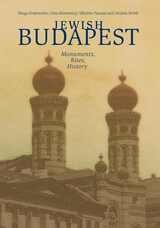
Jewish Budapest
Monuments, Rites, HistoryGéza Komoróczy
Central European University Press, 1999
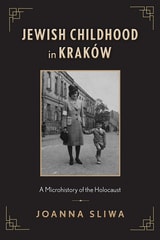
Jewish Childhood in Kraków
A Microhistory of the HolocaustJoanna Sliwa
Rutgers University Press, 2021
Jewish Childhood in Kraków is the first book to tell the history of Kraków in the second World War through the lens of Jewish children’s experiences. Here, children assume center stage as historical actors whose recollections and experiences deserve to be told, analyzed, and treated seriously.
Sliwa scours archives to tell their story, gleaning evidence from the records of the German authorities, Polish neighbors, Jewish community and family, and the children themselves to explore the Holocaust in German-occupied Poland and in Kraków in particular. A microhistory of a place, a people, and daily life, this book plumbs the decisions and behaviors of ordinary people in extraordinary times.
Offering a window onto human relations and ethnic tensions in times of rampant violence, Jewish Childhood in Kraków is an effort both to understand the past and to reflect on the position of young people during humanitarian crises.
Jewish Claims Against East Germany
Angelika Timm
Central European University Press, 1998
This is the first comprehensive history of Jewish negotiations with East Germany regarding restitution and reparations for Nazi war crimes. Angelika Timm analyzes the politics of old and new anti-Semitism and the context in which they grew under the officially propagated ideology of antifascism.
Investigating the mass of unpublished, newly available archival data from the United States, Israel, and the former German Democratic Republic, and more than forty personal interviews, Timm fills a critical gap in the scholarship on postwar Germany. She analyzes the role of the Holocaust and the image of Jews in the historical consciousness and political culture of East Germany and chronicles the efforts of Jewish organizations, especially the Conference on Jewish Material Claims Against Germany, to negotiate reparations with the East German state. The unique relationship between ideology and Realpolitik defined the manner in which East Germany confronted the crimes of its past and allowed anti-Semitism to reemerge.
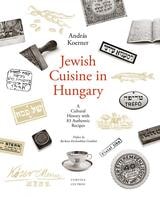
Jewish Cuisine in Hungary
A Cultural History with 83 Authentic RecipesAndrás Koerner
Central European University Press, 2020
Winner of the 2019 National Jewish Book Award in the category of Food Writing & Cookbooks.
The author refuses to accept that the world of pre-Shoah Hungarian Jewry and its cuisine should disappear almost without a trace and feels compelled to reconstruct its culinary culture. His book―with a preface by Barbara Kirshenblatt-Gimblett―presents eating habits not as isolated acts, divorced from their social and religious contexts, but as an organic part of a way of life.
According to Kirshenblatt-Gimblett: “While cookbooks abound, there is no other study that can compare with this book. It is simply the most comprehensive account of a Jewish food culture to date.” Indeed, no comparable study exists about the Jewish cuisine of any country, or―for that matter―about Hungarian cuisine. It describes the extraordinary diversity that characterized the world of Hungarian Jews, in which what could or could not be eaten was determined not only by absolute rules, but also by dietary traditions of particular religious movements or particular communities.
Ten chapters cover the culinary culture and eating habits of Hungarian Jewry up to the 1940s, ranging from kashrut (the system of keeping the kitchen kosher) through the history of cookbooks, the food traditions of weekdays and holidays, the diversity of households, and descriptions of food and hospitality industries to the history of some typical dishes. Although this book is primarily a cultural history and not a cookbook, it includes 83 recipes, as well as nearly 200 fascinating pictures of daily life and documents.i
Jewish Education
Ari Y Kelman
Rutgers University Press, 2024
At the heart of Jewish Education is an innovative alphabetical primer of Jewish educational values, qualities, frameworks, catalysts, and technologies which explore the historical ways in which Jewish communities have produced and transmitted knowledge. The book examines the tension between Jewish education and Jewish Studies to argue that shifting the locus of inquiry from “what people ought to know” to “how do people learn” can provide an understanding of Jewish education that both draws on historical precedent and points to the future of Jewish knowledge.
Jewish Families
Boyarin, Jonathan
Rutgers University Press, 2013
Jonathan Boyarin explores a wide range of scholarship in Jewish studies to argue instead that Jewish family forms and ideologies have varied greatly throughout the times and places where Jewish families have found themselves. He considers a range of family configurations from biblical times to the twenty-first century, including strictly Orthodox communities and new forms of family, including same-sex parents. The book shows the vast canvas of history and culture as well as the social pressures and strategies that have helped shape Jewish families, and suggests productive ways to think about possible futures for Jewish family forms.
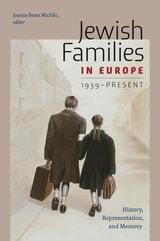
Jewish Families in Europe, 1939-Present
History, Representation, and MemoryEdited by Joanna Beata Michlic
Brandeis University Press, 2017

Jewish Fundamentalism in Israel
Israel Shahak
Pluto Press, 2004
This is a new edition of a classic and highly controversial book that examines the history and consequences of Jewish Fundamentalism in Israel. Fully updated, with new chapters and a new introduction by Norton Mezvinsky, it is essential reading for anyone who wants a full understanding of the way religious extremism has affected the political development of the modern Israeli state.
Acclaimed writer and human rights campaigner Israel Shahak was, up util his death in 2001, one of the most respected of Israel’s peace activists – he was, in the words of Gore Vidal, ‘the latest – if not the last – of the great prophets.’ Written by Shahak together with American scholar Norton Mezvinsky, this books shows how Jewish fundamentalism in Israel, as shown in the activities of religious settlers, is of great political importance.
The authors trace the history and development of Jewish fundamentalism. They place the assassination of Prime Minister Rabin in the context of what they see as a tradition of punishments and killings of those Jews perceived to be heretics. They conclude that Jewish fundamentalism is essentially hostile to democracy.
Jewish History, Jewish Religion
The Weight of Three Thousand YearsIsrael Shahak
Pluto Press, 2008
Israel Shahak was a remarkable man. Born in the Warsaw ghetto and a survivor of Belsen, Shahak arrived in Israel in 1945. Brought up under Jewish Orthodoxy and Hebrew culture, he consistently opposed the expansion of the borders of Israel from 1967.
In this extraordinary and highly acclaimed book, Shahak embarks on a provocative study of the extent to which the secular state of Israel has been shaped by religious orthodoxies of an invidious and potentially lethal nature. Drawing on the Talmud and rabbinical laws, Shahak argues that the roots of Jewish chauvinism and religious fanaticism must be understood before it is too late.
Written from a humanitarian viewpoint by a Jewish scholar, this is a rare and highly controversial criticism of Israel that will both excite and disturb readers worldwide.
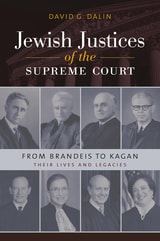
Jewish Justices of the Supreme Court
From Brandeis to KaganDavid G. Dalin
Brandeis University Press, 2017
Jewish Life in Austria and Germany Since 1945
Identity and Communal ReconstructionSusanne Cohen-Weisz
Central European University Press, 2016
Jewish Life in Belarus
The Final Decade of the Stalin Regime, 1944-1953Leonid Smilovitsky
Central European University Press, 2014
Jewish Lives under Communism
New PerspectivesKaterina Capková
Rutgers University Press, 2022
Jewish Mad Men
Advertising and the Design of the American Jewish ExperienceSteinberg, Kerri P
Rutgers University Press, 2015
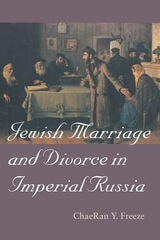
Jewish Marriage and Divorce in Imperial Russia
ChaeRan Y. Freeze
Brandeis University Press, 2001
Jewish Peoplehood
An American InnovationPianko, Noam
Rutgers University Press, 2015
Although fewer American Jews today describe themselves as religious, they overwhelmingly report a strong sense of belonging to the Jewish people. Indeed, Jewish peoplehood has eclipsed religion—as well as ethnicity and nationality—as the essence of what binds Jews around the globe to one another. In Jewish Peoplehood, Noam Pianko highlights the current significance and future relevance of “peoplehood” by tracing the rise, transformation, and return of this novel term.
Jewish Philosophical Politics in Germany, 1789–1848
Sven-Erik Rose
Brandeis University Press, 2014
Jewish Poet and Intellectual in Seventeenth-Century Venice
The Works of Sarra Copia Sulam in Verse and Prose Along with Writings of Her Contemporaries in Her Praise, Condemnation, or DefenseSarra Copia Sulam
University of Chicago Press, 2009
The first Jewish woman to leave her mark as a writer and intellectual, Sarra Copia Sulam (1600?–41) was doubly tainted in the eyes of early modern society by her religion and her gender. This remarkable woman, who until now has been relatively neglected by modern scholarship, was a unique figure in Italian cultural life, opening her home, in the Venetian ghetto, to Jews and Christians alike as a literary salon.
For this bilingual edition, Don Harrán has collected all of Sulam’s previously scattered writings—letters, sonnets, a Manifesto—into a single volume. Harrán has also assembled all extant correspondence and poetry that was addressed to Sulam, as well as all known contemporary references to her, making them available to Anglophone readers for the first time. Featuring rich biographical and historical notes that place Sulam in her cultural context, this volume will provide readers with insight into the thought and creativity of a woman who dared to express herself in the male-dominated, overwhelmingly Catholic Venice of her time.
Jewish Portraits, Indian Frames
Women's Narratives from a Diaspora of HopeJael Silliman
Seagull Books, 2001
Jewish Renaissance and Revival in America
Edited by Eitan P. Fishbane and Jonathan D. Sarna
Brandeis University Press, 2011
Jewish Rhetorics
History, Theory, PracticeEdited by Michael Bernard-Donals and Janice W. Fernheimer
Brandeis University Press, 2014
Jewish Roots in Southern Soil
A New HistoryEdited by Marcie Ferris and Mark I. Greenberg
Brandeis University Press, 2006
Jewish Studies
A Theoretical IntroductionBush, Andrew
Rutgers University Press, 2011
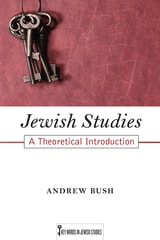
Jewish Studies, the first volume in a groundbreaking new series, Key Words in Jewish Studies, introduces the basic approach of the series by organizing discussion around key concepts in the field that have emerged over the last two centuries: history and science, race and religion, self and community, identity and memory. The book is oriented by contemporary critical theory, especially feminist and postcolonial studies, and the multidisciplinary approaches of cultural studies.
By looking backward and forward—and across continents and disciplines—to unearth the evolution of the scholarly study of Jews, Andrew Bush provides a comprehensive introduction to the development of Jewish studies from the turn of the nineteenth century to the present. In the course of engaging scholarship on periods from the classical to the contemporary and from the disciplines of history, philosophy, sociology, anthropology, psychology, and literary studies, Bush questions male-dominated and Ashkenazi-centric visions of the field. He concludes with an experimental exposition of a new Jewish studies for a time where attention to difference has overtaken the security of canons and commonalities.
Jewish Women in Pre-State Israel
Life History, Politics, and CultureEdited by Ruth Kark, Margalit Shilo, and Galit Hasan-Rokem
Brandeis University Press, 2009
Jewish and Islamic Philosophy
Crosspollinations in the Classic AgeLenn E. Goodman
Rutgers University Press, 1999
Jewish and Romani Families in the Holocaust and its Aftermath
Eliyana R. Adler
Rutgers University Press, 2021
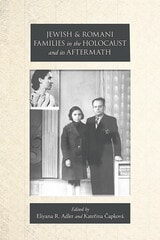
In this work, scholars from the United States, Israel, and across Europe bring a variety of backgrounds and disciplines to their study of the Holocaust and its aftermath from the family perspective. Drawing on research from Belarus to Great Britain, and examining both Jewish and Romani families, they demonstrate the importance of recognizing how people continued to function within family units—broadly defined—throughout the war and afterward.
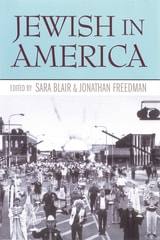
Jewish in America
Sara Blair and Jonathan Freedman, Editors
University of Michigan Press, 2004
-From the Introduction
This rare and original work of cultural studies offers uncommon and engaging perspectives-as well as provocative and humorous insights-on what it means to be Jewish in America.
Jewish in America features poetry, art, essays, and stories from an impressive and respected list of contributors, including among others Stephen Greenblatt, Richard Kostelanetz, Jacqueline Osherow, Robert Pinsky, Sharon Pomerantz, Nancy Reisman, Grace Schulman, Louis Simpson, Alisa Solomon, and Stephen J. Whitfield.
In addition to pieces by some of the country's leading writers, the book features a stunning gallery of original photographs that transport the viewer from the crowded Coney Island beaches of the 1940s to the landscapes of Oaxaca, Mexico in the 1990s.
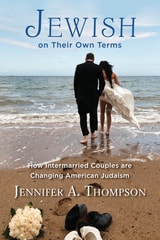
Jewish on Their Own Terms
How Intermarried Couples are Changing American JudaismThompson, Jennifer A
Rutgers University Press, 0
Over half of all American Jewish children are being raised by intermarried parents. This demographic group will have a tremendous impact on American Judaism as it is lived and practiced in the coming decades. To date, however, in both academic studies about Judaism and in the popular imagination, such children and their parents remain marginal.
Jennifer A. Thompson takes a different approach. In Jewish on Their Own Terms, she tells the stories of intermarried couples, the rabbis and other Jewish educators who work with them, and the conflicting public conversations about intermarriage among American Jews. Thompson notes that in the dominant Jewish cultural narrative, intermarriage symbolizes individualism and assimilation. Talking about intermarriage allows American Jews to discuss their anxieties about remaining distinctively Jewish despite their success in assimilating into American culture.
In contrast, Thompson uses ethnography to describe the compelling concerns of all of these parties and places their anxieties firmly within the context of American religious culture and morality. She explains how American and traditional Jewish gender roles converge to put non-Jewish women in charge of raising Jewish children. Interfaith couples are like other Americans in often harboring contradictory notions of individual autonomy, universal religious truths, and obligations to family and history.
Focusing on the lived experiences of these families, Jewish on Their OwnTerms provides a complex and insightful portrait of intermarried couples and the new forms of American Judaism that they are constructing.
Jews Against Zionism
The American Council for Judaism, 1942-1948Thomas A. Kolsky
Temple University Press, 1992
This is the first full-scale history of the only organized American Jewish opposition to Zionism during the 1940s. Despite extensive literature on the Zionist movement, the Jewish opposition to Zionism has received only marginal and usually negative attention. In this impartial study, Thomas A. Kolsky examines the neglected phenomenon of Jewish anti-Zionism, its roots, and its results.
In 1942, a number of dissident Reform rabbis founded the American Council for Judaism, the first and only Jewish organization created to fight against Zionism and the establishment of a Jewish state. Emphasizing the purely religious nature of Judaism and unequivocally rejecting Jewish nationalism, the Council supported free Jewish immigration and equal rights for Jews throughout the world. For Palestine, specifically, it advocated establishment of a democratic state wherein all citizens, regardless of their religion, would enjoy equal political rights.
Summarizing both the history of Zionism and the history of American Jews, Kolsky traces the effects of the Holocaust on the Zionist movement and the personalities that shaped the leadership of the Council. Its position toward Zionism has particular contemporary relevance in understanding the historical relationship between Israel and the Palestinians.
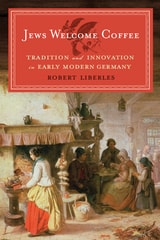
Jews Welcome Coffee
Tradition and Innovation in Early Modern GermanyRobert Liberles
Brandeis University Press, 2012
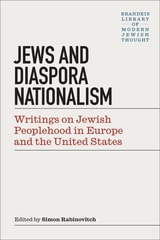
Jews and Diaspora Nationalism
Writings on Jewish Peoplehood in Europe and the United StatesEdited by Simon Rabinovitch
Brandeis University Press, 2012
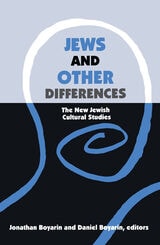
Jews and Other Differences
The New Jewish Cultural StudiesJonathan Boyarin
University of Minnesota Press, 1997
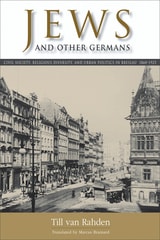
Jews and Other Germans
Civil Society, Religious Diversity, and Urban Politics in Breslau, 1860–1925Till van Rahden
University of Wisconsin Press, 2008
Closely analyzing the political, social, and cultural life in a major German city, van Rahden shows that Jews were a part of a broad urban community that encompassed diversity within unity, at once offering them a large measure of equality while permitting them to remain meaningfully Jewish. Jews and Other Germans also substantially revises the chronology of anti-Semitism in Germany, showing that Jews only began to experience exclusion from Breslau’s social world during World War I.
Yet van Rahden not only illuminates Breslau’s multicultural fabric; he also tells the story of this remarkable city as one of cultural and religious conflict and coexistence. Recounting the experiences of Jews, Protestants, and Catholics within a single narrative, he offers a critical intervention into scholarship on liberalism and civil society in nineteenth- and early twentieth-century Europe.