4743 books match the query 'Religion' and 124 start with j
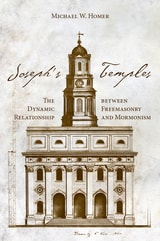
cover of Joseph’s Temples: The Dynamic Relationship between Freemasonry and Mormonism

Joseph’s Temples

The Dynamic Relationship between Freemasonry and Mormonism

Michael W. Homer

University of Utah Press, 2014

The apparent parallels between Mormon ritual and doctrine and those of Freemasonry have long been recognized. That Joseph Smith, Brigham Young, and other early church leaders were, at least for a time, Masons, is common knowledge. Yet while early historians of the LDS Church openly acknowledged this connection, the question of influence was later dismissed and almost became taboo among faithful church members. Just as Mormons have tried to downplay any ties to Freemasonry, Masons have sought to distance themselves from Mormonism. In Joseph’s Temples, Michael Homer reveals how deeply the currents of Freemasonry and Mormonism entwined in the early nineteenth century. He goes on to lay out the later declining course of relations between the two movements, until a détente in recent years.
 
There are indications that Freemasonry was a pervasive foundational element in Mormonism and that its rituals and origin legends influenced not just the secret ceremonies of the LDS temples but also such important matters as the organization of the Mormon priesthood, the foundation of the women’s Relief Society, the introduction and concealment of polygamy, and the church’s position on African Americans’ full membership. Freemasonry was also an important facet of Mormons’ relations with broader American society.
 
The two movements intertwined within a historical context of early American intellectual, social, and religious ferment, which influenced each of them and in varying times and situations placed them either in the current or against the flow of mainstream American culture and politics. Joseph’s Temples provides a comprehensive examination of a dynamic relationship and makes a significant contribution to the history of Mormonism, Freemasonry, and their places in American history. 

Recipient of the Meritorious Book Award from the Utah Division of State History
[more]
cover of José Martí’s Liberative Political Theology

José Martí’s Liberative Political Theology

Miguel A. De La Torre

Vanderbilt University Press, 2021

José Martí's Liberative Political Theology argues that Martí's religious views, which at first glance might appear outdated and irrelevant, are actually critical to understanding his social vision. During a time in which the predominant philosophical view was materialistic (e.g., Darwin, Marx), Martí sought to reconcile social and political trends with the metaphysical, believing that ignoring the spiritual would create a soulless approach toward achieving a liberative society. As such, Martí used religious concepts and ideas as tools that could bring forth a more just social order. In short, this book argues Martí could be considered a precursor to what would come to be called liberation theology.

Miguel De La Torre has authored the most comprehensive text written thus far concerning Martí's religious views and how they affected his political thought. The few similar texts that exist are written in Spanish, and most of them romanticize Martí's spirituality in an attempt to portray him as a “Christian believer.” Only a handful provide an academic investigation of Martí's theological thought based solely on his writings, and those concentrate on just one aspect of Martí's religious influences. José Martí's Liberative Political Theology allows for mutual influence between Martí's political and religious views, rather than assuming one had precedence over the other.
[more]
cover of Journal I, 1945-1955

Journal I, 1945-1955

Mircea Eliade

University of Chicago Press, 1990

Journal I is a story of revewal—of the new life that began for Mircea Eliade in the fall of 1945 when he became an expatriate. Eliade came to Paris virtually empty-handed, following the death of his first wife and the Soviet takeover of Romania, which made him a persona non grata there. He had left half a lifetime in Romania: his parents, whom he never saw again; his library; unpublished and unfinished manuscripts, including the journal notebooks prior to 1940; an academic career; and Zalmoxis, the journal of religious studies he founded.

During the lean years in Paris Eliade lived and worked in small, cold rooms; prepared meals on a Primus stove; pawned his valuables; and asked friends for loans. Eventually he secured a research stipend from the Bollingen Foundation. His ten years in Paris were among his most productive; the books he wrote during this period brought him worldwide acclaim as a historian of religions. He records his first meetings with Carl Jung, Pierre Teilhard de Chardin, Gershom Scholem, Georges Bataille, André Breton, Raffaele Pettazzoni, and many other scholars and writers.

Eliade also continued to write literary works. Numerous entries describe his five-year struggle with his novel The Forbidden Forest. Spanning the twelve fateful years from 1936 to 1948, it expresses within a fictional framework the central themes of Eliade's work on religions. Writing the novel was a Herculean task in which Eliade summarized and memorialized his old Romanian life.
[more]
cover of Journal II, 1957-1969

Journal II, 1957-1969

Mircea Eliade

University of Chicago Press, 1989

Mircea Eliade's journal of the years 1957-1969, originally published in English under the title No Souvenirs, is the testimony of a "wandering scholar" caught between three worlds: his native Romania, the France he fled to, and his last homeland, the United States. The journal is filled with his work, dreams, memories of his youth, stories of his travels, the reflections of each day.
[more]
cover of Journal III, 1970-1978

Journal III, 1970-1978

Mircea Eliade

University of Chicago Press, 1989

More an eloquent chronicle of the mind's life than a recital of daily routine, this volume of Mircea Eliade's journal offers a remarkably candid portrait of a renowned scholar and his work. The entries—full of marvelous ideas, outlines for works never written, responses to the works of others, and much more—reveal many rarely glimpsed sides of the private, as well as public, man. What did he really think of the students who came to him for instruction in black magic? What were his private reflections on feminism, student drug use, the sexual revolution, the nature of American scholars and scholarship? Who were his best friends, why did he enjoy their company, and why did he shun the company of others?

Quite apart from the personal, biographical interest the journal holds, it is a document of cultural and intellectual significance. Eliade remarks on such colleagues and friends as Jung, Dumézil, Ricoeur, Bellow, and Ionesco. Moreover, the period covered encompasses Eliade's most active years as a teacher, and the journal beautifully reflects his developing views on religion, history, and the nature of academic culture. Bits and pieces of Eliade's past life are juxtaposed with thoughts about ongoing projects and work yet to be undertaken as well as with anecdotes of his travels and comments on world events.

A genuine treat for Eliade readers and those interested in history of religions, Journal III provides new perspectives on many of Eliade's other works—the History of Religious Ideas, Ordeal by Labyrinth, the Autobiography. At the same time the journal is a mature scholar's record of the aftermath of the 1960s, a turbulent period that profoundly affected American university life. As such, these writings hold valuable insights into not only the life and work of one man but also the cultural history of an entire era.
[more]
cover of Journal IV, 1979-1985

Journal IV, 1979-1985

Mircea Eliade

University of Chicago Press, 1989

Journal IV is the first publication, in a translation from the Romanian manuscript, of the journal that Mircea Eliade kept during the last seven years of his life. In this period, Eliade is ensconced as a famous scholar—his works are being translated into many languages and books about him arrive regularly in the mail. His encounters with scholars of like repute are recorded in the journal; after a party in Paris, Eliade shares a taxi with Claude Lévi-Strauss and inadvertently makes off with his raincoat.

Running like a fault line through the peak of his success, however, is Eliade's painful awareness of his physical decline—failing vision, arthritic hands, and continual fatigue. Again and again he repeats how little time he has to finish the projects he is working on—his autobiography, the third and fourth volumes of his History of Religious Ideas, and the duties associated with his editorship of the Encyclopedia of Religion. He poignantly recounts the sharpest blow: the disorganization and eventual destruction by fire of his personal library.

Within the scope of Journal IV Eliade and his world go to ruin. What does not decline is the vivid and persistent voice of Eliade the writer, an unbreaking voice that—with death only months away—plans a reply to critics, plots out an article, and ruminates on characters to people another novella.
[more]
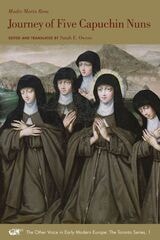
cover of Journey of Five Capuchin Nuns

Journey of Five Capuchin Nuns

Madre María Rosa

Iter Press, 2009

Journey of Five Capuchin Nuns contains all the elements of a riveting adventure story. Through the eyes of the Mother Abbess, María Rosa, the reader is taken along on this journey through wars, pirates, disease, travel on the high seas, and treacherous mountain passes in the Andes. Five nuns set out in the early 1700s from their cloistered convent in Madrid, Spain, to travel halfway around the world to Lima, Peru. The journey lasted three years—an odyssey not all of them would complete. Yet, this unique historical document is so much more than a typical travel narrative. It illuminates the eighteenth-century way of life of religious women on both sides of the Atlantic basin. María Rosa’s lively prose attests to the literary connection among women religious writers of Spain and Latin America. This annotated edition and first-ever English translation of the manuscript will be of interest to scholars, students and anyone who wants to learn more about women’s history.
[more]
cover of Journeys from a Desert Road

Journeys from a Desert Road

Mary Clyde

Signature Books, 2024

When a sheer, brilliant light erupts in the desert night, Jack recognizes it as the awesome and destructive power of an atomic bomb. But in another world, far removed from Jack’s mind, his family sit by his side after a traumatic car accident has rendered him comatose. Jack, relying on fantasies he and his sister fabricated as teenagers, struggles to lead the people he loves out of radiation-contaminated Phoenix as his family keep vigil in his hospital room, marshaling their reserves of patience and determination.

Yet even as Jack and his family experience these different realities, events from one world drift into the other, reshaping and influencing one another  as they move toward a climactic union. Whether fleeing nuclear disaster or pacing by a sickbed, these flawed and stressed individuals behave with fierce loyalty and an equally fierce love that forces an ascension of hope and survival.

 
[more]
cover of Journeys in Church History

Journeys in Church History

Nelson Minnich

Catholic University of America Press, 2015

This collection of essays is taken from the pages of The Catholic Historical Review, the official organ of the American Catholic Historical Association and the only scholarly journal under Catholic auspices in the English-speaking world devoted to the history of the Universal Church. Journeys in Church History offers reflections from six leading contemporary church historians, who describe in their own words how they have come to practice their craft. They trace their family and educational backgrounds, the themes that attracted their attention, the challenges they encountered in researching them, the new methodologies they adopted to answer questions, and the reception given to their findings. They also tell of their experiences in the classroom, both as students and teachers, the difficulties they encountered in their careers due to prejudices based on gender or religion, and how the discipline of church history has changed over their lifetimes. Their often entertaining accounts will serve to inform and inspire fellow historians, both young and old.

The contributors to this volume are: Elizabeth Clark, who pioneered studies of the role of women in the early Church. Caroline Bynum showed how Christians viewed gender and the human body. Jean Delumeau studies the religious attitudes (mentalité) of the ordinary faithful and how these were shaped during the medieval and early modern periods. John W. O'Mally documents that Renaissance humanism was not pagan but profoundly Christian. The promotion of institutions of higher education under the auspices of the Catholic Church in America has been studied by J. Philip Gleason. Margaret Lavinia Anderson was among the first to use computers to analyze voting patterns in modern Germany and thus determine the influence of the Center Party.
[more]
cover of Journeys in Church History Volume 2: Essays from the <i>Catholic Historical Review</i>

Journeys in Church History Volume 2

Essays from the <i>Catholic Historical Review</i>

Nelson H. Minnich

Catholic University of America Press, 2025
Journeys in Church History, Volume 2 offers further reflections from leading contemporary church historians, who describe in their own words how they have come to practice their craft. They trace their family and educational backgrounds, the themes that attracted their attention, the challenges they encountered in researching them, the new methodologies they adopted to answer questions, and the reception given to their findings. They also tell of their experiences in the classroom, both as students and teachers, the difficulties they encountered in their careers due to prejudices based on gender or religion, and how the discipline of church history has changed over their lifetimes. Their often entertaining accounts will serve to inform and inspire fellow historians, both young and old. Featured in this collection are essays from scholars who study the church across the centuries. Dame Avril Cameron focused her work on religion in the Byzantine Empire. John Van Engen has been interested in lay religion in the Middle Ages and has studied the rise of the Modern Devotion with its Imitation of Christ and experiments in communal religious life. Robert Bireley, SJ, specialized on Jesuit confessors to Catholic rulers during the Thirty Years War and laid out how both the Catholic and Protestant churches tried to adjust to a changing world in the early modern period. Asuncion Lavrin has studied the role of women in the religious life of colonial Latin America. Hugh Mc Leod used sociological data to map how various Christian denominations fared in the industrialized world of modern Europe. And Leslie Tentler has traced the changes in American Catholicism, especially those related to the Second Vatican Council and the Church’s teaching on women and sex. Each scholar shares the difficulties he or she encountered in doing their research and how their findings were initially received. This collection of essays is taken from the pages of The Catholic Historical Review, the official organ of the American Catholic Historical Association and the only scholarly journal under Catholic auspices in the English-speaking world devoted to the history of the Universal Church.
[more]
cover of Journeys of Love: Kashmiris, Music, and the Poetics of Migration

Journeys of Love

Kashmiris, Music, and the Poetics of Migration

Thomas Hodgson

University of Chicago Press, 2025

An empathetic and eye-opening portrait of Muslim migrants in England that debunks many misperceptions about their music and poetry.
 
In Journeys of Love, ethnomusicologist Thomas Hodgson offers a sensitive corrective to harmful portrayals of immigrants—specifically, Pakistanis living in England—as a self-segregating group prohibited from making music, a stereotype that has often resulted in violent Islamophobia. He argues that, in practice, these migrants—many of whom come from the Mirpur area of Azad Kashmir—occupy rich musical worlds, full of poetic metaphors, that are central to surviving migration and its attendant losses.
 
Hodgson shows how Mirpuris in England, as well as those who remain in Pakistan, carry on traditions of reciting a collection of poetry by the nineteenth-century Sufi saint Mian Muhammad Bakhsh, translated by Hodgson here as Journeys of Love. With its themes of remaining true to one’s home, the oppressed being saved, having patience, and keeping faith in God, this work has become the story of movement and displacement in its narrative arc, as well as through the way it provides spiritual and ethical frameworks for settling in new lands. These hidden poetics of migration transform across generations as young Mirpuris develop new expressions of the connections across continents. These poetics reveal the connections between Kashmir’s rural village life and urban centers abroad, offering a sensitive and illuminating portrait of migration and multiculturalism in Britain and beyond. 
[more]
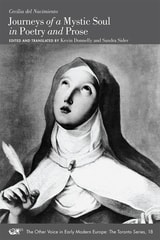
cover of Journeys of a Mystic Soul in Poetry and Prose

Journeys of a Mystic Soul in Poetry and Prose

Cecilia del Nacimiento

Iter Press, 2012

This edition, which offers a bilingual selection of poetry and selected prose translated into English by the nun-author Cecilia del Nacimiento (1570–1646), increases contemporary scholars’ access to, and therefore understanding of, the Spanish early modern religious and intellectual milieu. A significant, rarely-studied mystic and poet, and member of the Discalced Carmelite Order in the years after St. Teresa of Avila’s death, Cecilia del Nacimiento exemplifies the range of possibilities used by women writers who worked within the conventions of hegemonic discourses, while creating a unique literary voice.
—Stacey Schlau
Professor, Department of Languages and Culture and the Women’s Studies Program
West Chester University, Pennsylvania
[more]
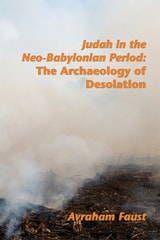
cover of Judah in the Neo-Babylonian Period: The Archaeology of Desolation

Judah in the Neo-Babylonian Period

The Archaeology of Desolation

Avraham Faust

SBL Press, 2012

The Babylonian conquest of Jerusalem in 586 B.C.E. was a watershed event in the history of Judah, the end of the monarchy and the beginning of the exilic period, during which many of the biblical texts were probably written. The conquest left clear archaeological marks on many sites in Judah, including Jerusalem, and the Bible records it as a traumatic event for the population. Less clear is the situation in Judah following the conquest, that is, in the sixth century, a period with archaeological remains the nature and significance of which are disputed. The traditional view is that the land was decimated and the population devastated. In the last two decades, archaeologists arguing that the land was not empty and that the exile had little impact on Judah’s rural sector have challenged this view. This volume examines the archaeological reality of Judah in the sixth century in order to shed new light on the debate. By expanding research into new avenues and examining new data, as well as by applying new methods to older data, the author arrives at fresh insights that support the traditional view of sixth-century Judah as a land whose population, both urban and rural, was devastated and whose recovery took centuries.
[more]
cover of Judaism Despite Christianity: The 1916 Wartime Correspondence Between Eugen Rosenstock-Huessy and Franz Rosenzweig

Judaism Despite Christianity

The 1916 Wartime Correspondence Between Eugen Rosenstock-Huessy and Franz Rosenzweig

Edited by Eugen Rosenstock-Huessy

University of Chicago Press, 2011
Before they were both internationally renowned philosophers, Eugen Rosenstock-Huessy and Franz Rosenzweig were young German soldiers fighting in World War I corresponding by letter and forming the foundation of their deep intellectual friendship. Collected here, this correspondence provides an intimate portrait of their views on history, philosophy, rhetoric, and religion as well as on their writings and professors. Most centrally, Rosenstock-Huessy and Rosenzweig discuss, frankly but respectfully, the differences between Judaism and Chiristianity and the reasons they have chosen their respective faiths.
 
This edition includes a new foreword by Paul Mendes-Flohr, a new preface by Harold Stahmer along with his original introduction, and essays by Dorothy Emmet and Alexander Altmann, who calls this correspondence “one of the most important religious documents of our age” and “the most perfect example of a human approach to the Jewish-Christian problem.”
[more]
cover of Judaism and Christianity in the Age of Constantine: History, Messiah, Israel, and the Initial Confrontation

Judaism and Christianity in the Age of Constantine

History, Messiah, Israel, and the Initial Confrontation

Jacob Neusner

University of Chicago Press, 1987

With the conversion of Constantine in 312, Christianity began a period of political and cultural dominance that it would enjoy until the twentieth century. Jacob Neusner contradicts the prevailing view that following Christianity's ascendancy, Judaism continued to evolve in isolation. He argues that because of the political need to defend its claims to religious authenticity, Judaism was forced to review itself in the context of a triumphant Christianity. The definition of issues long discussed in Judaism—the meaning of history, the coming of the Messiah, and the political identity of Israel—became of immediate and urgent concern to both parties. What emerged was a polemical dialogue between Christian and Jewish teachers that was unprecedented.

In a close analysis of texts by the Christian theologians Eusebius, Aphrahat, and Chrysostom on one hand, and of the central Jewish works the Talmud of the Land of Israel, the Genesis Rabbah, and the Leviticus Rabbah on the other, Neusner finds that both religious groups turned to the same corpus of Hebrew scripture to examine the same fundamental issues. Eusebius and Genesis Rabbah both address the issue of history, Chrysostom and the Talmud the issue of the Messiah, and Aphrahat and Leviticus Rabbah the issue of Israel. As Neusner demonstrates, the conclusions drawn shaped the dialogue between the two religions for the rest of their shared history in the West.
[more]
cover of Judaism and Story: The Evidence of The Fathers According to Rabbi Nathan

Judaism and Story

The Evidence of The Fathers According to Rabbi Nathan

Jacob Neusner

University of Chicago Press, 1992

In this close analysis of The Fathers According to Rabbi Nathan, a sixth-century commentary on the Mishnah-tractate The Fathers (Avot), Jacob Neusner considers the way in which the story, as a distinctive type of narrative, entered the canonical writings of Judaism. The final installment in Neusner's cycle of analyses of the major texts of the Judaic canon, Judaism and Story shows that stories about sages exist in far greater proportion in The Fathers According to Rabbi Nathan than in any of the other principal writings in the canon of Judaism of late antiquity. Neusner's detailed comparison of The Fathers and The Fathers According to Rabbi Nathan demonstrates the transmission and elaboration of these stories and shows how these processes incorporated the newer view of the sage as a supernatural figure and of the eschatological character of Judaic teleology. These distinctions, as Neusner describes them, mark a shift in Jewish orientation to world history.

Judaism and Story documents a chapter of rabbinic tradition that explored the possibility of historical orientation by means of stories. As Neusner demonstrates, this experiment with narrative went beyond the borders of rabbinic preoccupation with rhetorical argumentation focused on the explication of the Torah. The sage story moved in the direction of biography, but without allowing biography to emerge. This development, in Neusner's account, parallels the movement from epistle to Gospel in early Christianity and thus has broad implications for the history of religions.
[more]
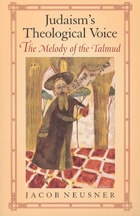
cover of Judaism's Theological Voice: The Melody of the Talmud

Judaism's Theological Voice

The Melody of the Talmud

Jacob Neusner

University of Chicago Press, 1995

Distinguished historian of Judaism Jacob Neusner here ventures for the first time into constructive theology. Taking the everyday life of contemporary Judaism as his beginning, Neusner asks when in the life of the living faith of the Torah does Israel, the holy community, meet God? Where does the meeting take place? What is the medium of the encounter?

In his attempt to answer these questions, Neusner sets forth the character and the form of the Torah as sung theology. Israel, the holy community, meets God in the synagogue, while at prayer, and in the yeshiva, when studying the Torah—at the moment in each setting when the Torah is received. In both circumstances people do not read but sing out its words. With the written part of the Torah sung in the synagogue, and the oral part declaimed in centers of sacred learning, music provides the medium for Judaism's theological voice.

Neusner identifies a reciprocal exchange between the holy community Israel and God: Israel sings to God when the Torah is studied, and God sings to Israel when the Torah is declaimed. Through the metaphor of music, Neusner offers an account of how he believes those faithful to the Torah meet God in the Torah, and how they should listen to the melody of God's self-revelation. The result is an original theological reflection that will interest all students of Judaism.
[more]
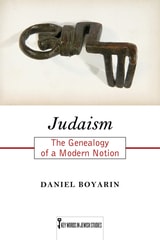
cover of Judaism: The Genealogy of a Modern Notion

Judaism

The Genealogy of a Modern Notion

Boyarin, Daniel

Rutgers University Press, 2019
Judaism makes the bold argument that the very concept of a religion of ‘Judaism’ is an invention of the Christian church. The intellectual journey of world-renowned Talmud scholar Daniel Boyarin, this book will change the study of “Judaism”—an essential key word in Jewish Studies—as we understand it today. Boyarin argues that although the world treats the word “Judaism” as appropriate for naming an alleged religion of the Jews, it is in fact a Christian theological concept only adopted by Jews with the coming of modernity and the adoption of Christian languages.    
[more]
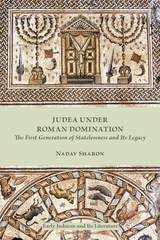
cover of Judea under Roman Domination: The First Generation of Statelessness and Its Legacy

Judea under Roman Domination

The First Generation of Statelessness and Its Legacy

Nadav Sharon

SBL Press, 2017

Investigate a relatively neglected but momentous period in Judean history

Nadav Sharon closely examines a critical period in Judean history, which saw the end of the Hasmonean dynasty and the beginning of Roman domination of Judea leading up to the kingship of Herod (67-37 BCE). In this period renowned Roman figures such as Pompey the Great, Julius Caesar, Gaius Cassius (a conspirator against Caesar), and Mark Anthony, led the Roman Republic on the eve of its transformation into an Empire, each having his own dealings with—and holding sway over—Judea at different times. This volume explores the impact of the Roman conquest on the authors of the Dead Sea Scrolls, enhances the understanding of later Judean-Roman relations and the roots of the Great Revolt, and examines how this early period of Roman domination had on impact on later developments in Judean society and religion.

Features:

  • Part one dedicating to reconstructing Judean history from the death of Alexander to the reign of King Herod
  • Part two examining the effects of Roman domination on Judean society
  • Maps, illustrations, and appendices
[more]
cover of Judicial Decisions in the Ancient Near East

Judicial Decisions in the Ancient Near East

Sophie Démare-Lafont

SBL Press, 2023

This volume presents the first broadly inclusive collection, with accessible text and English translation, of documents related to judicial decisions in the ancient Near East, the oldest setting for such writing in the world. The texts in this volume belong to various genres, especially legal records and letters, and span almost two thousand years. With such varied material, the work depends on the expertise of specialists in each setting, from the Sumerian of early Ur to the late Akkadian of Babylonia under the Persians. The collection brings together not only 183 transliterated texts and new translations but also introductions and commentary that place these legal documents in their historical and social contexts. A glossary of legal terms, a concordance of texts included, and an index of legal terms makes this an invaluable tool for students and scholars across disciplines. The contributors are Dominique Charpin, Sophie Démare-Lafont, Daniel E. Fleming, Francis Joannès, Bertrand Lafont, Brigitte Lion, Ignacio Márquez Rowe, Cécile Michel, and Pierre Villard.
[more]
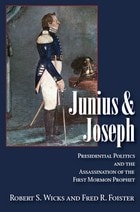
cover of Junius And Joseph: Presidential Politics and the Assassination of the First Mormon Prophet

Junius And Joseph

Presidential Politics and the Assassination of the First Mormon Prophet

Robert S. Wicks & Fred R. Foister

Utah State University Press, 2005
"Junius and Joseph examines Joseph Smith's nearly forgotten [1844] presidential bid, the events leading up to his assassination on June 27, 1844, and the tangled aftermath of the tragic incident. It... establishes that Joseph Smith's murder, rather than being the deadly outcome of a spontaneous mob uprising, was in fact a carefully planned military-style execution. It is now possible to identify many of the key individuals engaged in planning his assassination as well as those who took part in the assault on Carthage jail. And furthermore, this study presents incontrovertible evidence that the effort to remove the Mormon leader from power and influence extended well beyond Hancock County [Illinois] (and included prominent Whig politicians as well as the Democratic governor of the state), thereby transforming his death from an impulsive act by local vigilantes into a political assassination sanctioned by some of the most powerful men in Illinois. The circumstances surrounding Joseph Smith's death also serve to highlight the often unrecognized truth that a full understanding of early Mormon history can be gained only when considered in the context of events taking place in American society as a whole."
[more]
cover of Just Schools: Pursuing Equality in Societies of Difference

Just Schools

Pursuing Equality in Societies of Difference

Martha Minow

Russell Sage Foundation, 2008
Educators and policymakers who share the goal of equal opportunity in schools often hold differing notions of what entails a just school in multicultural America. Some emphasize the importance of integration and uniform treatment for all, while others point to the benefits of honoring cultural diversity in ways that make minority students feel at home. In Just Schools, noted legal scholars, educators, and social scientists examine schools with widely divergent methods of fostering equality in order to explore the possibilities and limits of equal education today. The contributors to Just Schools combine empirical research with rich ethnographic accounts to paint a vivid picture of the quest for justice in classrooms around the nation. Legal scholar Martha Minow considers the impact of school choice reforms on equal educational opportunities. Psychologist Hazel Rose Markus examines culturally sensitive programs where students exhibit superior performance on standardized tests and feel safer and more interested in school than those in color-blind programs. Anthropologist Heather Lindkvist reports on how Somali Muslims in Lewiston, Maine, invoked the American ideal of inclusiveness in winning dress-code exemptions and accommodations for Islamic rituals in the local public school.  Political scientist Austin Sarat looks at a school system in which everyone endorses multiculturalism but holds conflicting views on the extent to which culturally sensitive practices should enter into the academic curriculum. Anthropologist Barnaby Riedel investigates how a private Muslim school in Chicago aspires to universalist ideals, and education scholar James Banks argues that schools have a responsibility to prepare students for citizenship in a multicultural society. Anthropologist John Bowen offers a nuanced interpretation of educational commitments in France and the headscarf controversy in French schools. Anthropologist Richard Shweder concludes the volume by connecting debates about diversity in schools with a broader conflict between national assimilation and cultural autonomy. As America's schools strive to accommodate new students from around the world, Just Schools provides a provocative and insightful look at the different ways we define and promote justice in schools and in society at large.
[more]
cover of Justice After War: <i>Jus Post Bellum</i> in the 21st Century

Justice After War

<i>Jus Post Bellum</i> in the 21st Century

David Chiwon Kwon

Catholic University of America Press, 2023
Justice After War is aimed especially to both undergraduate and graduate students, as well as the general audience who want to understand the significance of a recent development within the just war tradition, namely, the increasing attention given to the category of jus post bellum (postwar justice and peace). While examining the interrelated challenges of moral and social norms in both political and legal domains, as well as church practices, this work proposes an innovative methodology for linking theology, ethics, and social science so that the ideal and the real can inform each other in the ethics of war and peacebuilding. The main task of this project, then, is to identify what the author views as three key themes of jus post bellum, and three practices that are essential to implementing jus post bellum immediately after a war: just policing, just punishment, and just political participation. David Kwon endeavors to challenge the view of those who suggest that reconciliation, mainly political reconciliation, is the foremost ambition of jus post bellum. Instead, he attempts to justify the proposition that achieving just policing, just punishment, and just political participation are essential to building a just peace, a peace in which the fundamental characteristic must be human security. It thus demonstrates that human security is an oft-neglected theme in the recent discourse of moral theologians and that a more balanced understanding of jus post bellum will direct attention to the elements composing human security in a postwar context.
[more]
cover of Justice and Mercy Have Met

Justice and Mercy Have Met

Kurt Martens

Catholic University of America Press, 2017

With the promulgation of the motu proprio Mitus iudex Dominus Jesus for the Latin Church and the motu proprio Mitis et misericors Jesus for the Eastern Catholic Churches, both dated August 15, 2015, Pope Francis addressed the calls during the Third Extraordinary General Assembly of the Synod of Bishops (October 5-19, 2014) for a simplified procedure for the declaration of the nullity of marriages. Pope Francis introduced a briefer process to be conducted by the diocesan bishop and he simplified the current ordinary nullity process. The new procedural norms went into effect on December 8, 2015.

New legislation always challenges first and foremost the practitioner: how is the new legislation to be understood and applied? Immediately after the new law was made public, a number of articles on this new legislation were published in The Jurist. The School of Canon Law of The Catholic University of America organized a March 2016 Workshop on the very topic of this important procedural reform.

These articles are now brought together in one volume to assist those who work with these norms in the various tribunals dealing with marriage cases. It is hoped that this volume will be of great service to all those who serve the people of God in the ministry of justice, and that these contributions will truly be a help in understanding and applying the new norms.
[more]