Results by title
5159 books match the query 'Biography' and 164 start with j
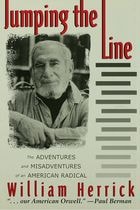
Jumping the Line
The Adventures and Misadventures of an American RadicalWilliam Herrick
University of Wisconsin Press, 1998
An eye-opening account of time served in the great battles of our century— for workers’ rights, against Fascism, Communism, and racism—Jumping the Line is the life story of an American original. William Herrick chronicles his adventures and misadventures on the front lines of the Spanish Civil War, in (and very much out of) the Communist Party, driving a tractor on a communal farm in Michigan, jumping the line as a hobo, organizing African American sharecroppers in Georgia, at work with Orson Welles, and immersed in his own writing.
Herrick chronicles a life of great conviction and great disillusion. He went to Spain in 1936 to fight against the Fascists and there witnessed the horrifying acts that Fascists and Communists alike committed, before he was felled by a near-fatal wound. Here he tells about the life that led him, a working-class Jewish kid from New York, into the idealism and then the murky politics of this internecine conflict. From the bloody fight in Spain he takes us to the battlefields of the Communist movement in the U.S., where he found himself parading up and down the garment district of Manhattan, denouncing his former comrades.
When Paul Berman interviewed Herrick in the Village Voice in 1986, for the fiftieth anniversary of the Spanish Civil War, Herrick’s remarks so incensed other veterans of the Abraham Lincoln battalion that they picketed the paper. What William Herrick has to say doesn’t always go down easily. But for those who like the truth, with a dash of wit and a healthy dose of history, it can be exhilarating.
Junctures in Women's Leadership
BusinessHetfield, Lisa
Rutgers University Press, 2016
Junctures in Women's Leadership
Higher EducationCarmen Twillie Ambar
Rutgers University Press, 2020
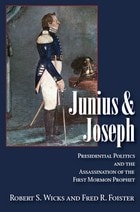
Junius And Joseph
Presidential Politics and the Assassination of the First Mormon ProphetRobert S. Wicks & Fred R. Foister
Utah State University Press, 2005
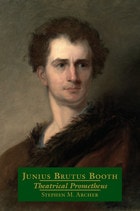
Junius Brutus Booth
Theatrical PrometheusStephen M. Archer
Southern Illinois University Press, 1992
In this, the first thoroughly researched scholarly biography of British actor Junius Brutus Booth, Stephen M. Archer reveals Booth to have been an artist of considerable range and a man of sensitivity and intellect. Archer provides a clear account of Booth’s professional and personal life and places him in relationship to his contemporaries, particularly Edmund Kean and William Charles Macready.
The worldwide fame assured for the Booth family of actors by John Wilkes Booth’s bone-shattering leap from the President’s box had eluded Junius Brutus Booth throughout his lifelong exile in America. But from that event until today, no American family of actors has stimulated such scrutiny as the Booths.
Eight years of research, pursuing Booth from Amsterdam to San Francisco, has resulted in an accurate, fascinating narrative that both records and illuminates the actor’s life.
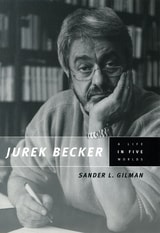
Jurek Becker
A Life in Five WorldsSander L. Gilman
University of Chicago Press, 2003
In the first biography of this fascinating figure, Sander Gilman tells the story of Becker's life in five worlds: the Polish-Jewish middle-class neighborhood where Becker was born; the Warsaw ghetto and the concentration camps where Becker spent his childhood; the socialist order of the GDR, which Becker idealized, resisted, and finally was forced to leave; the isolated world of West Berlin, where he settled down to continue his writing; and the new, reunified Germany, for which Becker served as both conscience and inspiration.
Gilman was close friends with Becker for nearly thirty years, and his biography is based on unprecedented access to both the man and his papers. As Gilman reveals, Becker's story encapsulates the fractured experience of life in twentieth-century Europe, a time and place in which political systems and national borders were constantly in flux. The life of Becker, we learn, was one of great literary achievement and notoriety, but it was also one of profound cultural dislocation. An important theme in the book is Becker's struggle with his Jewishness, an identity he repressed in socialist East Germany, but embraced after reunification, when he found himself at the center of Jewish culture and literature.
Sander Gilman's story of Jurek Becker is biography of the highest order, a portrait of an extraordinarily gifted artist whose hope and courage are manifested in his legacy as one of the greatest German writers of the past century.
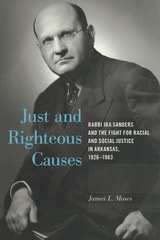
Just and Righteous Causes
Rabbi Ira Sanders and the Fight for Racial and Social Justice in Arkansas, 1926-1963James L. Moses
University of Arkansas Press, 2018
Winner, 2019 Booker Worthen Prize from the Central Arkansas Library System.
A dedicated advocate for social justice long before the term entered everyday usage, Rabbi Ira Sanders began striving against the Jim Crow system soon after he arrived in Little Rock from New York in 1926. Sanders, who led Little Rock’s Temple B’nai Israel for nearly forty years, was a trained social worker as well as a rabbi and his career as a dynamic religious and community leader in Little Rock spanned the traumas of the Great Depression, World War II and the Holocaust, and the social and racial struggles of the 1950s and 1960s.
Just and Righteous Causes—a full biographical study of this bold social-activist rabbi—examines how Sanders expertly navigated the intersections of race, religion, and gender to advocate for a more just society. It joins a growing body of literature about the lives and histories of Southern rabbis, deftly balancing scholarly and narrative tones to provide a personal look into the complicated position of the Southern rabbi and the Jewish community throughout the political struggles of the twentieth-century South.
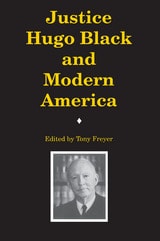
Justice Hugo Black and Modern America
Tony Freyer
University of Alabama Press, 1990
Reexamining the Justice Who Helped Shape Modern Constitutional America.
The struggle to accommodate both individual freedom and community welfare shaped modern America. American have disagreed about whether federal protection of national welfare could be reconciled with defense of individual rights; however, no public figure worked longer or more consistently to meet this challenge than Alabama’s Hugo L. Black
This collection of essays, reprints of the spring 1985 and winter 1987 issues of the Alabama Law Review with a new introduction and minor revisions, suggests that Black’s constitutional principles and personal values provided a means to achieve a balance between majority will and individual freedom. Black’s life and career are reexamined here by leading scholars and jurors in the first major study in twenty years, tracing his relationship to the South, to the development of American liberalism, and to the constitutional revolution in individual rights.
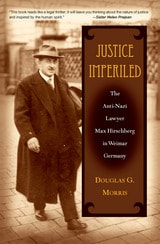
Justice Imperiled
The Anti-Nazi Lawyer Max Hirschberg in Weimar GermanyDouglas G. Morris
University of Michigan Press, 2005
-Sister Helen Prejean
Justice Imperiled is the story of the brilliant lawyer Max Hirschberg, one of Germany's most courageous defenders of justice in the face of Hitler's rise to power.
Hirschberg lived an extraordinary life at a defining moment in German and European history. By the time he fled Nazi Germany in 1934, he had argued a series of cases in Munich's courtrooms that shed light on the history of political justice in pre-Nazi Germany and, by extension, the miscarriage of justice in all Western democracies.
Hirschberg was a rare figure: he fought for cases that reflected the new democracy rather than the old monarchy, that valued equality rather than hierarchy, and that showed respect for workers as well as aristocrats.
Throughout the Weimar period Hirschberg squared off in court against Munich's conservatives, reactionaries, and Nazis-twice facing Hitler himself. As he litigated politically charged disputes, he also began fighting to reverse the criminal convictions of innocent defendants and to study what mistaken verdicts teach us about the criminal justice system as a whole.
In a unique blend of biography and courtroom drama, Justice Imperiled captures the excitement of Hirschberg's actual cases and presents legal battles that still rage, in different circumstances, to this day.
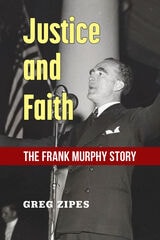
Justice and Faith
The Frank Murphy StoryGreg Zipes
University of Michigan Press, 2021
Murphy is best remembered for his immense legal contributions supporting individual liberty and fighting discrimination, particularly discrimination against the most vulnerable. Despite being a loyal ally of Franklin Delano Roosevelt, when FDR ordered the removal of Japanese Americans during World War II, Supreme Court Justice Murphy condemned the policy as “racist” in a scathing dissent to the Korematsu v. United States decision—the first use of the word in a Supreme Court opinion. Every American, whether arriving by first class or in chains in the galley of a slave ship, fell under Murphy’s definition of those entitled to the full benefits of the American dream.
Justice and Faith explores Murphy’s life and times by incorporating troves of archive materials not available to previous biographers, including local newspaper records from across the country. Frank Murphy is proof that even in dark times, the United States has extraordinary resilience and an ability to produce leaders of morality and courage.
Justice and Science
Trials and Triumphs of DNA EvidenceGeorge "Woody" Clarke
Rutgers University Press, 2007
Databases of both convicted offenders and no-suspect cases demonstrate the power of DNA testing to solve the unsolvable. George “Woody” Clarke is a leading authority in legal circles and among the news media because of his expertise in DNA evidence. In this memoir, Clarke chronicles his experiences in some of the most disturbing and notorious sexual assault and murder court cases in California. He charts the beginnings of DNA testing in police investigations and the fight for its acceptance by courts and juries. He illustrates the power of science in cases he personally prosecuted or in which he assisted, including his work with the prosecution team in the trial of O. J. Simpson.
Clarke also covers cases where DNA evidence was used to exonerate. He directed a special project in San Diego County, proactively examining over six hundred cases of defendants convicted and sentenced to prison before 1993, with the goal of finding instances in which DNA typing might add new evidence and then offered testing to those inmates.
As Clarke tells the story of how he came to understand and use this new form of evidence, readers will develop a new appreciation for the role of science in the legal system.
Justice for All
Selected Writings of Lloyd A. BarbeeLloyd A Barbee
Wisconsin Historical Society Press, 2017
Civil rights leader and legislator Lloyd A. Barbee frequently signed his correspondence with "Justice for All," a phrase that embodied his life’s work of fighting for equality and fairness. An attorney most remembered for the landmark case that desegregated Milwaukee Public Schools in 1972, Barbee stood up for justice throughout his career, from defending University of Wisconsin students who were expelled after pushing the school to offer black history courses, to representing a famous comedian who was arrested after stepping out of a line at a protest march. As the only African American in the Wisconsin legislature from 1965 to 1977, Barbee advocated for fair housing, criminal justice reform, equal employment opportunities, women’s rights, and access to quality education for all, as well as being an early advocate for gay rights and abortion access.
This collection features Barbee’s writings from the front lines of the civil rights movement, along with his reflections from later in life on the challenges of legislating as a minority, the logistics of coalition building, and the value of moving the needle on issues that would outlast him. Edited by his daughter, civil rights lawyer Daphne E. Barbee-Wooten, these documents are both a record of a significant period of conflict and progress, as well as a resource on issues that continue to be relevant to activists, lawmakers, and educators.
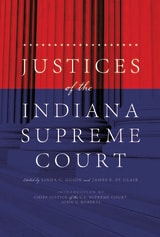
Justices of the Indiana Supreme Court
Linda C. Gugin and James E. St. Clair
Indiana Historical Society Press, 2010
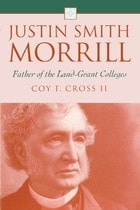
Justin Smith Morrill
Father of the Land-Grant CollegesCoy F. Cross II
Michigan State University Press, 1999
Smith Morrill: Almost every land-grant college or university in the United States has a building named for him; but are his contributions truly recognized and understood? Here is the first biography on this renowned statesman in six decades. Representative and then senator from Vermont, Morrill began his tenure in Congress in 1855 and served continuously for forty-three years. His thirty- one years in the upper chamber alone earned him the title "Father of the Senate." Coy F. Cross reveals a complex and influential political figure who, as chair of the House Ways and Means Committee, and then the Senate Finance Committee, influenced American economic policy for nearly fifty years.
Morrill's most-recognized achievements are the pieces of legislation that bear his name: the Morrill land-grant college acts of 1862 and 1890. His legacy, inspired by the Jeffersonian ideal of an educated electorate, revolutionized American higher education. Prior to this legislation, colleges and universities were open primarily to affluent white men and studies were limited largely to medicine, theology, and philosophy. Morrill's land-grant acts eventually opened American higher education to the working class, women, minorities, and immigrants. Since 1862, more than 20 million people have graduated from the 104 land-grant colleges and universities spawned by his grand vision. In this long-overdue study, Cross shows the "Father of Land-Grant Colleges" to be one of America's formative nineteenth- century political figures.