Results by title
1272 books match the query 'Asia' and 14 start with k
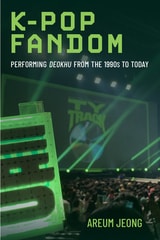
K-Pop Fandom
Performing Deokhu from the 1990s to TodayAreum Jeong
University of Michigan Press, 2026
Through an autoethnography of becoming a K-pop deokhu, Jeong connects their experiences to generations of K-pop fans, showing simultaneously how fandom practices have shifted over time and the intricacies of fan labor participation. This personal connection paved the way for participant-observation and co-performer witnessing methodologies in the study, which crucially allowed for collaborating with fans whose communal pursuits have been stigmatized by dominant discourses that denigrate their activities as solely addictive, uncritical, and wasteful. Jeong’s genre-spanning corpus of fan activities and analyzing its contexts and contents represents an important contribution to the making of a fan archive that is also an archive of affective labor.
Kaleidoscopic Ethnicity
International Migration and the Reconstruction of Community Identities in IndiaKurien, Prema A
Rutgers University Press, 2002
Co-Winner of the 2003 American Sociological Association's Asia/Asian American book award.
Based on ethnographic research in three communities (Ezhava Hindu, Mappila Muslim, and Syrian Christian) in Kerala, India, which sent large numbers of workers to the Middle East for temporary jobs, Kaleidoscopic Ethnicity explores the factors responsible for the striking differences in the groups’ patterns of migration and migration-induced social change. Most broadly, Prema Kurien seeks to understand what ethnicity is and how it affects people’s activities and decisions. She argues that, in each case, a community-specific nexus of religion, gender, and status shaped migration, and was, in turn, transformed by it.
The religious background of the three groups determined their social location within colonial and postcolonial Kerala. This social location in turn affected their occupational profiles, family structures, and social networks, as well as their conceptions of gender and honor, and thus was fundamental in shaping migration patterns. The rapid enrichment brought about by international migration resulted in a reinterpretation of religious identity and practice which was manifested by changes in patterns of gendered behavior and status in each of the three communities. What makes this book unique is its focus on the sociocultural patterns of short-term international migration and its comparative ethnographic approach.
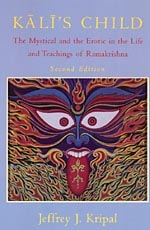
Kali's Child
The Mystical and the Erotic in the Life and Teachings of RamakrishnaJeffrey J. Kripal
University of Chicago Press, 1998
In a substantial new preface to this second edition, Kripal answers his critics, addresses the controversy the book has generated in India, and traces the genealogy of his work in the history of psychoanalytic discourse on mysticism, Hinduism, and Ramakrishna himself. Kali's Child has already proven to be provocative, groundbreaking, and immensely enjoyable.
"Only a few books make such a major contribution to their field that from the moment of publication things are never quite the same again. Kali's Child is such a book."—John Stratton Hawley, History of Religions
Winner of the American Academy of Religion's History of Religions Prize for the Best First Book of 1995
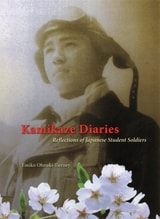
Kamikaze Diaries
Reflections of Japanese Student SoldiersEmiko Ohnuki-Tierney
University of Chicago Press, 2006
This moving history presents diaries and correspondence left by members of the tokkotai and other Japanese student soldiers who perished during the war. Outside of Japan, these kamikaze pilots were considered unbridled fanatics and chauvinists who willingly sacrificed their lives for the emperor. But the writings explored here by Emiko Ohnuki-Tierney clearly and eloquently speak otherwise. A significant number of the kamikaze were university students who were drafted and forced to volunteer for this desperate military operation. Such young men were the intellectual elite of modern Japan: steeped in the classics and major works of philosophy, they took Descartes’ “I think, therefore I am” as their motto. And in their diaries and correspondence, as Ohnuki-Tierney shows, these student soldiers wrote long and often heartbreaking soliloquies in which they poured out their anguish and fear, expressed profound ambivalence toward the war, and articulated thoughtful opposition to their nation’s imperialism.
A salutary correction to the many caricatures of the kamikaze, this poignant work will be essential to anyone interested in the history of Japan and World War II.
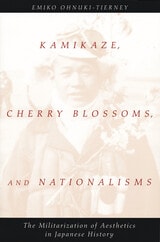
Kamikaze, Cherry Blossoms, and Nationalisms
The Militarization of Aesthetics in Japanese HistoryEmiko Ohnuki-Tierney
University of Chicago Press, 2002
Drawing on diaries never before published in English, Ohnuki-Tierney describes these young men's agonies and even defiance against the imperial ideology. Passionately devoted to cosmopolitan intellectual traditions, the pilots saw the cherry blossom not in militaristic terms, but as a symbol of the painful beauty and unresolved ambiguities of their tragically brief lives. Using Japan as an example, the author breaks new ground in the understanding of symbolic communication, nationalism, and totalitarian ideologies and their execution.
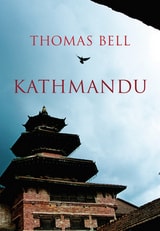
Kathmandu
Thomas Bell
Haus Publishing, 2016
Closed to the outside world until 1951 and trapped in a medieval time warp, Kathmandu is, as Bell argues, a jewel of the art world, a carnival of sexual license, a hotbed of communist revolution, a paradigm of failed democracy, a case study in bungled western intervention, and an environmental catastrophe. The layered development of the city can be seen in the successive generations of its gods and goddesses; its comfort in the caste system and ethos of aristocracy and kingship; and the recent destabilizing effects of consumerist approaches and the push for egalitarianism and democracy. In important ways, Kathmandu’s rapid modernization can be seen as an extreme version of what is happening in other traditional societies. Bell also discusses the ramifications of the recent Nepal earthquake.
A comprehensive look at a top global destination, Kathmandu is an entertaining and accessible chronicle for anyone eager to learn more about this fascinating city.
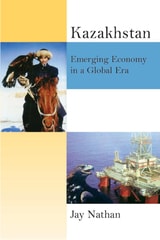
Kazakhstan's New Economy
Post-Soviet, Central Asian Industries in a Global EraJay Nathan
University of Scranton Press, 2013
“An excellent resource on major industries in Kazakhstan.”—Byrganym Aitimova, Minister of Education and Science, the Republic of Kazakhstan
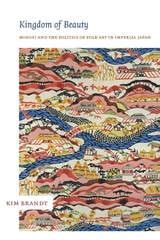
Kingdom of Beauty
Mingei and the Politics of Folk Art in Imperial JapanKim Brandt
Duke University Press, 2007
Kingdom of Beauty shows that the discovery of mingei (folk art) by Japanese intellectuals in the 1920s and 1930s was central to the complex process by which Japan became both a modern nation and an imperial world power. Kim Brandt’s account of the mingei movement locates its origins in colonial Korea, where middle-class Japanese artists and collectors discovered that imperialism offered them special opportunities to amass art objects and gain social, cultural, and even political influence. Later, mingei enthusiasts worked with (and against) other groups—such as state officials, fascist ideologues, rival folk art organizations, local artisans, newspaper and magazine editors, and department store managers—to promote their own vision of beautiful prosperity for Japan, Asia, and indeed the world. In tracing the history of mingei activism, Brandt considers not only Yanagi Muneyoshi, Hamada Shōji, Kawai Kanjirō, and other well-known leaders of the folk art movement but also the often overlooked networks of provincial intellectuals, craftspeople, marketers, and shoppers who were just as important to its success. The result of their collective efforts, she makes clear, was the transformation of a once-obscure category of pre-industrial rural artifacts into an icon of modern national style.
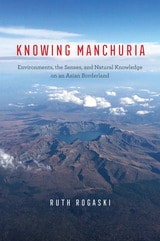
Knowing Manchuria
Environments, the Senses, and Natural Knowledge on an Asian BorderlandRuth Rogaski
University of Chicago Press, 2022
According to Chinese government reports, hundreds of plague-infected rodents fell from the skies over Gannan county on an April night in 1952. Chinese scientists determined that these flying voles were not native to the region, but were vectors of germ warfare, dispatched over the border by agents of imperialism. Mastery of biology had become a way to claim political mastery over a remote frontier. Beginning with this bizarre incident from the Korean War, Knowing Manchuria places the creation of knowledge about nature at the center of our understanding of a little-known but historically important Asian landscape.
At the intersection of China, Russia, Korea, and Mongolia, Manchuria is known as a site of war and environmental extremes, where projects of political control intersected with projects designed to make sense of Manchuria’s multiple environments. Covering more than 500,000 square miles, Manchuria’s landscapes include temperate rainforests, deserts, prairies, cultivated plains, wetlands, and Siberian taiga. With analysis spanning the seventeenth century to the present day, Ruth Rogaski reveals how an array of historical actors—Chinese poets, Manchu shamans, Russian botanists, Korean mathematicians, Japanese bacteriologists, American paleontologists, and indigenous hunters—made sense of the Manchurian frontier. She uncovers how natural knowledge, and thus the nature of Manchuria itself, changed over time, from a sacred “land where the dragon arose” to a global epicenter of contagious disease; from a tragic “wasteland” to an abundant granary that nurtured the hope of a nation.
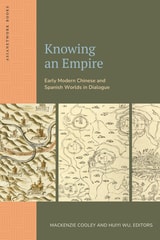
Knowing an Empire
Early Modern Chinese and Spanish Worlds in DialogueEdited by Mackenzie Cooley and Huiyi Wu
Lever Press, 2025
Knowing an Empire does not see the conveyance of information across an empire as a top-down process with an active center as a knowledge-maker. Instead, it amplifies a blend of voices that speak as much to imperial bureaucracy as to the rich local and Indigenous cultures, revealing these two early modern empires as diverse polities whose equilibria were constantly rebalanced among local powers. Comprised of 18 chapters, this edited collection reflects on the historical evolution and inner structures of the imperial epistemologies, as well as the many ways historians today read difangzhi and relaciones geográficas to understand the spatial, natural, and social order in both the Chinese and the Spanish empires. At once a comparative and a connected history, it places Chinese and Spanish imperial knowledge in the globalizing early modern world, highlighting the migration of people, goods, and ideas and revealing how these wide-ranging influences are reflected—or not—in the difangzhi and the relaciones. The book concludes by broadening our scope beyond China and Spain to reflect how other early modern empires, such as the Portuguese, failed to develop such systematized imperial genres.
With contributions from leading scholars across Latin American and Asian Studies, this book synthesizes political, environmental, and socio-economic history with historical anthropology to highlight parallel governance and knowledge structures. The contributors challenge conventional binaries of Western versus Eastern, and colonial versus non-colonial, presenting a nuanced perspective of early modern empires as dynamic, interconnected entities through the shared challenges of scale, diversity, and increasing globalization. Through these dialogues, Knowing an Empire illuminates the complex entanglement of ruling and understanding. This groundbreaking collection offers a highly innovative and dialogic approach to comparative studies of empires, with major implications for Asian, European, Latin American, transnational, and global history.

Korea Letters in the William Elliot Griffis Collection
An Annotated SelectionYoung-mee Yu Cho
Rutgers University Press, 2024
The Korean materials in the Griffis Collection at Rutgers University consist of journals, correspondence, articles, maps, prints, photos, postcards, manuscripts, scrapbooks, and ephemera. These papers reflect Griffis's interests and activities in relation to Korea as a historian, scholar, and theologian. They provide a rare window into the turbulent period of late nineteenth- and twentieth-century Korea, witnessed and evaluated by Griffis and early American missionaries in East Asia. The Korea Letters in the William Elliot Griffis Collection are divided into two parts: letters from missionaries and letters from Japanese and Korean political figures. Newly available and accessible through this collection, these letters develop a multifaceted history of early American missionaries in Korea, the Korean independence movement, and Griffis's views on Korean culture.
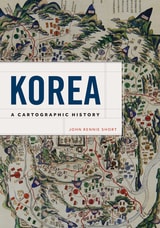
Korea
A Cartographic HistoryJohn Rennie Short
University of Chicago Press, 2012
Kurosawa
Film Studies and Japanese CinemaMitsuhiro Yoshimoto
Duke University Press, 2000
Arguing that Kurosawa’s films arouse anxiety in Japanese and Western critics because the films problematize Japan’s self-image and the West’s image of Japan, Yoshimoto challenges widely circulating clichés about the films and shows how these works constitute narrative answers to sociocultural contradictions and institutional dilemmas. While fully acknowledging the achievement of Kurosawa as a filmmaker, Yoshimoto uses the director’s work to reflect on and rethink a variety of larger issues, from Japanese film history, modern Japanese history, and cultural production to national identity and the global circulation of cultural capital. He examines how Japanese cinema has been “invented” in the discipline of film studies for specific ideological purposes and analyzes Kurosawa’s role in that process of invention. Demonstrating the richness of both this director’s work and Japanese cinema in general, Yoshimoto’s nuanced study illuminates an array of thematic and stylistic aspects of the films in addition to their social and historical contexts.
Beyond aficionados of Kurosawa and Japanese film, this book will interest those engaged with cultural studies, postcolonial studies, cultural globalization, film studies, Asian studies, and the formation of academic disciplines.
Kyongju Things
Assembling PlaceRobert Oppenheim
University of Michigan Press, 2008
Kyongju is South Korea's preeminent "culture city," an urban site rich with archaeological wonders that residents compare to those of Nara, Xian, and Rome. By examining these ancient objects in relation to the controversies that engulfed South Korea's high-speed railway line when it was first proposed in the 1990s, Kyongju Things offers a grounded and theoretically sophisticated account of South Korean development and citizenship in the last quarter of the twentieth century. Its sensitivity to issues of place, knowledge, and cultural heritage and its innovative use of network theory will be of interest to a wide range of scholars in anthropology, Asian studies, the history of science and technology, cultural geography, urban planning, and political science.
Robert Oppenheim is Assistant Professor of Asian Studies at the University of Texas at Austin.
"A tale of South Korea's new politics involving antiquarians, weekend hikers, activists, and entrepreneurs, told with wit and theoretical sophistication."
---Laurel Kendall, Curator, Division of Anthropology, American Museum of Natural History
"In Kyongju Things, Robert Oppenheim employs an innovative theoretical blend to insightfully illuminate the interactions of agency and objects in the making of a 'place.'"
---Roger L. Janelli, Professor Emeritus, Department of East Asian Languages and Cultures and Department of Folklore and Ethnomusicology, Indiana University
"Kyongju Things is responsible, pathbreaking, and ambitious, with a stunning and welcoming introduction . . . Oppenheim calls upon a theoretical tool kit that allows him to productively re-think place, locality, technology, things, and subjectivity in ways that really do challenge the existing scholarship on South Korea. Kyongju Things will make a splash in Korean studies."
---Nancy Abelmann, Associate Professor of Anthropology, University of Illinois at Urbana-Champaign, and author of Echoes of the Past, Epics of Dissent: A South Korean Social Movement