Results by title
403 books match the query 'Environmental Science' and 4 start with k
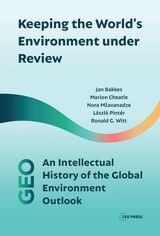
Keeping the World’s Environment under Review
An Intellectual History of the Global Environment OutlookJan Bakkes
Central European University Press, 2022
How do we take stock of the state and direction of the world’s environment, and what can we learn from the experience? Among the myriad detailed narratives about the condition of the planet, the Global Environment Outlook (GEO) reports—issued by the United Nations Environment Programme—stand out as the most ambitious. For nearly three decades the GEO project has not only delivered iconic global assessment reports, but through its multitude of contributors has inspired hundreds of similar processes worldwide from the regional to the local level.
This book provides an inside account of the evolution of the GEO project from its earliest days. Building on meticulous research, including interviews with former heads of the United Nations Environment Programme, diplomats, leading contributing scientists, and senior leaders of collaborating organizations, the story is told from the perspective of five GEO veterans who all played a pivotal role in shaping the periodic assessments. The GEO’s history provides striking insights and will save valuable time to those who commission, design and conduct, as well as critique and improve, assessments of environmental development in the next decade.
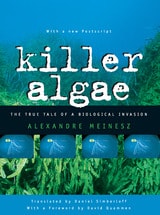
Killer Algae
Alexandre Meinesz
University of Chicago Press, 1999
This supposedly benign little plant—that no one thought could survive the waters of the Mediterranean—has now become a pernicious force. Caulerpa taxifolia now covers 10,000 acres of the coasts of France, Spain, Italy, and Croatia, and has devastated the Mediterranean ecosystem. And it continues to grow, unstoppable and toxic. When Alexandre Meinesz, a professor of biology at the University of Nice, discovered a square-yard patch of it in 1984, he warned biologists and oceanographers of the potential species invasion. His calls went unheeded. At that point, one person could have pulled the small patch out and ended the problem. Now, however, the plant has defeated the French Navy, thwarted scientific efforts to halt its rampage, and continues its destructive journey into the Adriatic Sea.
Killer Algae is the biological and political horror story of this invasion. For despite Meinesz's pleas to scientists and the French government, no agency was willing to take responsibility for the seaweed, and while the buck was passed, the killer algae grew. And through it all, the Oceanographic Museum in Monaco sought to exculpate itself. In short, Killer Algae—part detective story and part bureaucratic object lesson—is a classic case of a devastating ecological invasion and how not to deal with it.
"[U]tterly fascinating, not only because of the ecological battles [Meinesz] describes but also because of the wondrous natural phenomena involved."—Richard Bernstein, New York Times
"Akin to Rachel Carson's Silent Spring, Killer Algae shows the courage of a voice in the wilderness."—Choice
"A textbook case of how not to manage an environmental disaster."—Kirkus Reviews
"Meinesz's story is a frightening one, reading more like a science fiction thriller than a scientific account."—Publishers Weekly
Killing the Koala and Poisoning the Prairie
Australia, America, and the EnvironmentCorey J. A. Bradshaw and Paul R. Ehrlich
University of Chicago Press, 2015
In this book, Bradshaw and Ehrlich provide a spirited exploration of the ways in which the United States and Australia can learn from their shared problems and combine their most successful solutions in order to find and develop new resources, lower energy consumption and waste, and grapple with the dynamic effects of climate change. Peppering the book with humor, irreverence, and extensive scientific knowledge, the authors examine how residents of both countries have irrevocably altered their natural environments, detailing the most pressing ecological issues of our time, including the continuing resource depletion caused by overpopulation. They then turn their discussion to the politics behind the failures of environmental policies in both nations and offer a blueprint for what must be dramatically changed to prevent worsening the environmental crisis.
Although focused on two nations, Killing the Koala and Poisoning the Prairie clearly has global implications—the problems facing the United States and Australia are not theirs alone, and the solutions to come will benefit by being crafted in coalition. This book provides a vital opportunity to learn from both countries’ leading environmental thinkers and to heed their call for a way forward together.
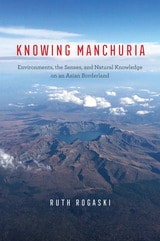
Knowing Manchuria
Environments, the Senses, and Natural Knowledge on an Asian BorderlandRuth Rogaski
University of Chicago Press, 2022
According to Chinese government reports, hundreds of plague-infected rodents fell from the skies over Gannan county on an April night in 1952. Chinese scientists determined that these flying voles were not native to the region, but were vectors of germ warfare, dispatched over the border by agents of imperialism. Mastery of biology had become a way to claim political mastery over a remote frontier. Beginning with this bizarre incident from the Korean War, Knowing Manchuria places the creation of knowledge about nature at the center of our understanding of a little-known but historically important Asian landscape.
At the intersection of China, Russia, Korea, and Mongolia, Manchuria is known as a site of war and environmental extremes, where projects of political control intersected with projects designed to make sense of Manchuria’s multiple environments. Covering more than 500,000 square miles, Manchuria’s landscapes include temperate rainforests, deserts, prairies, cultivated plains, wetlands, and Siberian taiga. With analysis spanning the seventeenth century to the present day, Ruth Rogaski reveals how an array of historical actors—Chinese poets, Manchu shamans, Russian botanists, Korean mathematicians, Japanese bacteriologists, American paleontologists, and indigenous hunters—made sense of the Manchurian frontier. She uncovers how natural knowledge, and thus the nature of Manchuria itself, changed over time, from a sacred “land where the dragon arose” to a global epicenter of contagious disease; from a tragic “wasteland” to an abundant granary that nurtured the hope of a nation.