Results by title
275 books match the query 'Letters' and 6 start with k
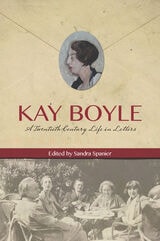
Kay Boyle
A Twentieth-Century Life in LettersEdited and with an Introduction by Sandra Spanier
University of Illinois Press, 2015
<p>Kay Boyle shared the first issue of <i>This Quarter</i> with Gertrude Stein and Ernest Hemingway, expressed her struggles with poetry to William Carlos Williams and voiced warm admiration to Katherine Anne Porter, fled WWII France with Max Ernst and Peggy Guggenheim, socialized with the likes of James Joyce, Marcel Duchamp, and Samuel Beckett, and went to jail with Joan Baez. The letters in this first-of-its-kind collection, authorized by Boyle herself, bear witness to a transformative era illuminated by genius and darkened by Nazism and the Red Scare. Yet they also serve as milestones on the journey of a woman who possessed a gift for intense and enduring friendship, a passion for social justice, and an artistic brilliance that earned her inclusion among the celebrated figures in her ever-expanding orbit.
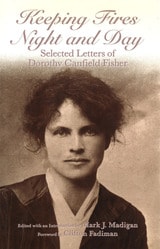
Keeping Fires Night and Day
Selected Letters of Dorothy Canfield FisherEdited & Intro by Mark J. Madigan & Foreword by Clifton Fadiman
University of Missouri Press, 1993
Eleanor Roosevelt called her one of the most influential women in America. Among the earliest and most assertive members of the Book-of-the-Month Club selection committee, Dorothy Canfield Fisher helped define literary taste in America for more than three decades. She helped shape the careers of such great writers as Pearl Buck, Isak Dinesen, and Richard Wright. A best-selling author herself, Fisher was also a deeply committed social activist. In Keeping Fires Night and Day, Mark J. Madigan collects much of Fisher's copious correspondence. With letters to Willa Cather, W.E.B. Du Bois, Albert Einstein, Robert Frost, Margaret Mead, James Thurber, and E.B. White, he documents Fisher's personal and professional life and career in a way that no biography could. Set against the American historical and cultural landscape from 1900 to 1958, these letters offer a firsthand account of one of the twentieth century's most remarkable women.
While Fisher's novels treated such conventional subjects as marriage and domestic life, her own life was anything but conventional. When her best-selling novels made her the chief breadwinner in her marriage, her husband, John Fisher, quietly assumed the role of secretary and editor of her work. Fluent in five languages, Dorothy Canfield Fisher founded a Braille press in France and introduced the educational methods of Dr. Maria Montessori to the United States. She became a pioneering advocate of adult education and served as the first woman on the Vermont Board of Education.
In letters to friends, fans, and colleagues, Fisher discussed her homelife, her work, and the world around her. Her passions and concerns-revealed in her correspondence with wit and poignancy-include the "New Woman' and the suffrage movement, racial discrimination and the emergence of the NAACP, the development of the national education system, two world wars, the depression, and the influence of book clubs in the literary market-place.
Dorothy Canfield Fisher "helped twentieth-century American literature to come of age," writes Clifton Fadimon in his Foreward. Yet lasting recognition has eluded her. In Keeping Fires Night and Day the distinctive voice of this gifted, intelligent and spirited woman is heard once again.
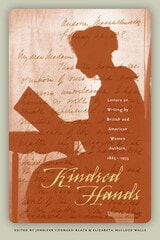
Kindred Hands
Letters on Writing by British and American Women Authors, 1865-1935Jennifer Cognard-Black
University of Iowa Press, 2006
Representing some of the most important female writers of the nineteenth and early twentieth centuries, including transatlantic correspondents, women of color, canonical writers, regional writers, and women living in the British empire, Kindred Hands will enliven scholarship on a host of topics, including reception theory, feminist studies, social history, composition theory, modernism, and nineteenth-century studies. Moreover, because it represents previously unpublished primary sources, the collection will initiate new discussions on race, class, sexuality, ethnicity, and gender with an eye to writing at the turn of the twentieth century.

King James and Letters of Homoerotic Desire
David M. Bergeron
University of Iowa Press, 1999
What can we know of the private lives of early British sovereigns? Through the unusually large number of letters that survive from King James VI of Scotland/James I of England (1566-1625), we can know a great deal. Using original letters, primarily from the British Library and the National Library of Scotland, David Bergeron creatively argues that James' correspondence with certain men in his court constitutes a gospel of homoerotic desire. Bergeron grounds his provocative study on an examination of the tradition of letter writing during the Renaissance and draws a connection between homosexual desire and letter writing during that historical period.
King James, commissioner of the Bible translation that bears his name, corresponded with three principal male favorites—Esmé Stuart (Lennox), Robert Carr (Somerset), and George Villiers (Buckingham). Esmé Stuart, James' older French cousin, arrived in Scotland in 1579 and became an intimate adviser and friend to the adolescent king. Though Esmé was eventually forced into exile by Scottish nobles, his letters to James survive, as does James' hauntingly allegorical poem Phoenix. The king's close relationship with Carr began in 1607. James' letters to Carr reveal remarkable outbursts of sexual frustration and passion.
A large collection of letters exchanged between James and Buckingham in the 1620s provides the clearest evidence for James' homoerotic desires. During a protracted separation in 1623, letters between the two raced back and forth. These artful, self-conscious letters explore themes of absence, the pleasure of letters, and a preoccupation with the body. Familial and sexual terms become wonderfully intertwined, as when James greets Buckingham as "my sweet child and wife."
King James and Letters of Homoerotic Desire presents a modern-spelling edition of seventy-five letters exchanged between Buckingham and James. Across the centuries, commentators have condemned the letters as indecent or repulsive. Bergeron argues that on the contrary they reveal an inward desire of king and subject in a mutual exchange of love.
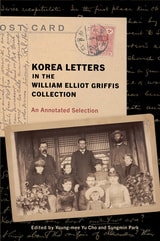
Korea Letters in the William Elliot Griffis Collection
An Annotated SelectionYoung-mee Yu Cho
Rutgers University Press, 2024
The Korean materials in the Griffis Collection at Rutgers University consist of journals, correspondence, articles, maps, prints, photos, postcards, manuscripts, scrapbooks, and ephemera. These papers reflect Griffis's interests and activities in relation to Korea as a historian, scholar, and theologian. They provide a rare window into the turbulent period of late nineteenth- and twentieth-century Korea, witnessed and evaluated by Griffis and early American missionaries in East Asia. The Korea Letters in the William Elliot Griffis Collection are divided into two parts: letters from missionaries and letters from Japanese and Korean political figures. Newly available and accessible through this collection, these letters develop a multifaceted history of early American missionaries in Korea, the Korean independence movement, and Griffis's views on Korean culture.

Kurt Wolff
A Portrait in Essays and LettersKurt Wolff
University of Chicago Press, 1991