Results by title
1787 books match the query 'Literary Collections' and 12 start with k
Kafu the Scribbler
The Life and Writings of Nagai Kafu, 1897–1959Edward Seidensticker
University of Michigan Press, 1990
Kannani and Document of Flames
Two Japanese Colonial NovelsKatsuei Yuasa
Duke University Press, 2005
In his introduction, Mark Driscoll provides a nuanced and engaging discussion of Yuasa’s life and work and of the cultural politics of Japanese colonialism. He describes Yuasa’s sharp turn, in the years following the publication of Kannani and Document of Flames, toward support for Japanese nationalism and the assimilation of Koreans into Japanese culture. This abrupt ideological reversal has made Yuasa’s early writing—initially censored for its anticolonialism—all the more controversial. In a masterful concluding essay, Driscoll connects these novels to larger theoretical issues, demonstrating how a deep understanding of Japanese imperialism challenges prevailing accounts of postcolonialism.
Katherine Mansfield Notebooks
Complete EditionKatherine Mansfield
University of Minnesota Press, 2002
The only unexpurgated collection of Katherine Mansfield’s private writings-now available for the first time!
Edited by Margaret Scott
Katherine Mansfield (1888-1923) published three collections of short stories-In a German Pension, Bliss, and The Garden Party-during her tragically short life, and was acclaimed as one of modernism’s most daring and original writers. After her death from tuberculosis in France, Mansfield’s private writings and letters were edited by her husband, John Middleton Murry, and published in four volumes between 1927 and 1954. Murry, however, took liberties in recasting his wife’s journals and notes. He excluded most of the vast mass of material and revised much of what he included, resulting in a distorted image of Mansfield as a passive, ethereal spirit.More than four decades later, the real Mansfield finally emerges in The Katherine Mansfield Notebooks, the first unexpurgated edition of her private writings. Fully and accurately transcribed by editor Margaret Scott, these infrequent diary entries, drafts of letters, introspective notes jotted on scraps of paper, unfinished stories, half-plotted novels, poems, recipes, and shopping lists offer a complete and compelling portrait of a complex woman who was ambitious and at times ruthless, neurotic and sexually voracious, witty and acerbic, fascinated with the minutiae of daily life and obsessed with death."It is only now, with the publication of Margaret Scott’s complete and unselective transcription of the material bequeathed to Murry, that we can really see Mansfield, off her guard and unexpurgated, for the first time. . . . Mansfield's notebooks are remarkable, touched by a sense of the underlying pathos of things, two parts tragedy and two parts comedy." Times Literary Supplement (London)"Mansfield’s work speaks about what is irretrievably lost, material, mortal, unless it is turned to artifice-and nowhere more than in these notebooks, where she is so reluctantly introspective." London Review of Books
Kay Boyle
A Twentieth-Century Life in LettersEdited and with an Introduction by Sandra Spanier
University of Illinois Press, 2015
<p>Kay Boyle shared the first issue of <i>This Quarter</i> with Gertrude Stein and Ernest Hemingway, expressed her struggles with poetry to William Carlos Williams and voiced warm admiration to Katherine Anne Porter, fled WWII France with Max Ernst and Peggy Guggenheim, socialized with the likes of James Joyce, Marcel Duchamp, and Samuel Beckett, and went to jail with Joan Baez. The letters in this first-of-its-kind collection, authorized by Boyle herself, bear witness to a transformative era illuminated by genius and darkened by Nazism and the Red Scare. Yet they also serve as milestones on the journey of a woman who possessed a gift for intense and enduring friendship, a passion for social justice, and an artistic brilliance that earned her inclusion among the celebrated figures in her ever-expanding orbit.
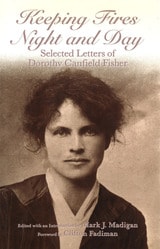
Keeping Fires Night and Day
Selected Letters of Dorothy Canfield FisherEdited & Intro by Mark J. Madigan & Foreword by Clifton Fadiman
University of Missouri Press, 1993
Eleanor Roosevelt called her one of the most influential women in America. Among the earliest and most assertive members of the Book-of-the-Month Club selection committee, Dorothy Canfield Fisher helped define literary taste in America for more than three decades. She helped shape the careers of such great writers as Pearl Buck, Isak Dinesen, and Richard Wright. A best-selling author herself, Fisher was also a deeply committed social activist. In Keeping Fires Night and Day, Mark J. Madigan collects much of Fisher's copious correspondence. With letters to Willa Cather, W.E.B. Du Bois, Albert Einstein, Robert Frost, Margaret Mead, James Thurber, and E.B. White, he documents Fisher's personal and professional life and career in a way that no biography could. Set against the American historical and cultural landscape from 1900 to 1958, these letters offer a firsthand account of one of the twentieth century's most remarkable women.
While Fisher's novels treated such conventional subjects as marriage and domestic life, her own life was anything but conventional. When her best-selling novels made her the chief breadwinner in her marriage, her husband, John Fisher, quietly assumed the role of secretary and editor of her work. Fluent in five languages, Dorothy Canfield Fisher founded a Braille press in France and introduced the educational methods of Dr. Maria Montessori to the United States. She became a pioneering advocate of adult education and served as the first woman on the Vermont Board of Education.
In letters to friends, fans, and colleagues, Fisher discussed her homelife, her work, and the world around her. Her passions and concerns-revealed in her correspondence with wit and poignancy-include the "New Woman' and the suffrage movement, racial discrimination and the emergence of the NAACP, the development of the national education system, two world wars, the depression, and the influence of book clubs in the literary market-place.
Dorothy Canfield Fisher "helped twentieth-century American literature to come of age," writes Clifton Fadimon in his Foreward. Yet lasting recognition has eluded her. In Keeping Fires Night and Day the distinctive voice of this gifted, intelligent and spirited woman is heard once again.
Kept Secret
The Half-Truth in NonfictionJen Hirt
Michigan State University Press, 2017
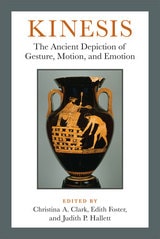
Kinesis
The Ancient Depiction of Gesture, Motion, and EmotionChristina A. Clark, Edith Foster, and Judith P. Hallett, editors
University of Michigan Press, 2015

Kiosk Literature of Silver Age Spain
Modernity and Mass CultureEdited by Jeffrey Zamostny and Susan Larson
Intellect Books, 2017
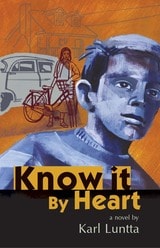
Know It by Heart
Karl Luntta
Northwestern University Press, 2003
When a racially mixed family moves into an all-white neighborhood in East Hartford, Connecticut, in 1961, lives are altered forever. Karl Luntta's Know It by Heart follows the adventures of young Dub Teed, his sister Susan and neighbor Doug Hammer, who befriend newly arrived Ricky Dubois, the daughter of an African-American woman and her white husband. When a burning cross flares in the night—and worse—the young adolescents set out to find justice and discover themselves in the process.
Despite the book's serious anti-racist theme, Know It by Heart is filled with humor reminiscent of Mark Twain. In this suspenseful novel, Karl Luntta brilliantly captures the world of the young adolescent in his characters and dialogue and in the innate comedy and awkwardness of that age. This is a book that will appeal to parents and teenagers alike.
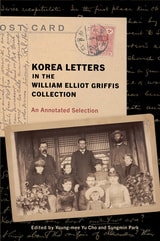
Korea Letters in the William Elliot Griffis Collection
An Annotated SelectionYoung-mee Yu Cho
Rutgers University Press, 2024
The Korean materials in the Griffis Collection at Rutgers University consist of journals, correspondence, articles, maps, prints, photos, postcards, manuscripts, scrapbooks, and ephemera. These papers reflect Griffis's interests and activities in relation to Korea as a historian, scholar, and theologian. They provide a rare window into the turbulent period of late nineteenth- and twentieth-century Korea, witnessed and evaluated by Griffis and early American missionaries in East Asia. The Korea Letters in the William Elliot Griffis Collection are divided into two parts: letters from missionaries and letters from Japanese and Korean political figures. Newly available and accessible through this collection, these letters develop a multifaceted history of early American missionaries in Korea, the Korean independence movement, and Griffis's views on Korean culture.
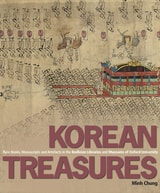
Korean Treasures
Rare Books, Manuscripts and Artefacts in the Bodleian Libraries and Museums of Oxford UniversityMinh Chung
Bodleian Library Publishing, 2011
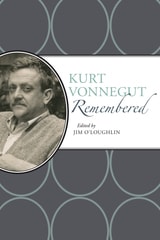
Kurt Vonnegut Remembered
Edited by Jim O'Loughlin
University of Alabama Press, 2019
Kurt Vonnegut (1922–2007), who began his writing career working for popular magazines, held both literary aspirations and an attraction to genre fiction. His conspicuous refusal to respect literary boundaries was part of what made him a countercultural icon in the 1960s and 1970s. Vonnegut’s personal life was marked in large part by public success and private turmoil. Two turbulent marriages, his sudden adoption of his late sister’s four children (and the equally sudden removal of one of those children), and a mid-eighties suicide attempt all signaled the extent of Vonnegut’s inner troubles. Yet, he was a generous friend to many, maintaining close correspondences throughout his life.
Kurt Vonnegut Remembered gathers reminiscences—by those who knew him intimately, and from those met him only once—that span Vonnegut’s entire life. Among the anecdotes in this collection are remembrances from his immediate family, reflections from his comrades in World War II, and tributes from writers he worked with in Iowa City and from those who knew him when he was young. Editor Jim O’Loughlin offers biographical notes on Vonnegut’s relationship with each of these figures.
Since Vonnegut’s death, much has been written on his life and work, but this new volume offers a more generous view of his life, particularly his last years. In O’Loughlin’s introduction to the volume, he argues that we can locate and understand Vonnegut’s best self through his public persona, and that in his performance as the kind and humane figure that many of the speakers here knew him as, Vonnegut became a better person than he ever felt himself to be.