Results by title
479 books match the query 'Methodology' and 39 start with a
A Clearing in the Forest
Law, Life, and MindSteven L. Winter
University of Chicago Press, 2001
Drawing on work in philosophy, psychology, anthropology, linguistics, and literary theory, Steven L. Winter has created nothing less than a tour de force of interdisciplinary analysis. A Clearing in the Forest rests on the simple notion that the better we understand the workings of the mind, the better we will understand all its products-especially law. Legal studies today focus on analytic skills and grand normative theories. But, to understand how real-world, legal actors reason and decide, we need a different set of tools. Cognitive science provides those tools, opening a window on the imaginative, yet orderly mental processes that animate thinking and decisionmaking among lawyers, judges, and lay persons alike. Recent findings about how humans actually categorize and reason make it possible to explain legal reasoning in new, more cogent, more productive ways.
A Clearing in the Forest is a compelling meditation on both how the law works and what it all means. In uncovering the irrepressibly imaginative, creative quality of human reason, Winter shows how what we are learning about the mind changes not only our understanding of law, but ultimately of ourselves. He charts a unique course to understanding the world we inhabit, showing us the way to the clearing in the forest.
A Field on Fire
The Future of Environmental HistoryEdited by Mark D. Hersey and Ted Steinberg
University of Alabama Press, 2019
Inspired by the pioneering work of preeminent environmental historian Donald Worster, the contributors to A Field on Fire: The Future of Environmental History reflect on the past and future of this discipline. Featuring wide-ranging essays by leading environmental historians from the United States, Europe, and China, the collection challenges scholars to rethink some of their orthodoxies, inviting them to approach familiar stories from new angles, to integrate new methodologies, and to think creatively about the questions this field is well positioned to answer.
Worster’s groundbreaking research serves as the organizational framework for the collection. Editors Mark D. Hersey and Ted Steinberg have arranged the book into three sections corresponding to the primary concerns of Worster’s influential scholarship: the problem of natural limits, the transnational nature of environmental issues, and the question of method. Under the heading “Facing Limits,” five essays explore the inherent tensions between democracy, technology, capitalism, and the environment. The “Crossing Borders” section underscores the ways in which environmental history moves easily across national and disciplinary boundaries. Finally, “Doing Environmental History” invokes Worster’s work as an essayist by offering self-conscious reflections about the practice and purpose of environmental history.
The essays aim to provoke a discussion on the future of the field, pointing to untapped and underdeveloped avenues ripe for further exploration. A forward thinker like Worster presents bold challenges to a new generation of environmental historians on everything from capitalism and the Anthropocene to war and wilderness. This engaging volume includes a very special afterword by one of Worster’s oldest friends, the eminent intellectual historian Daniel Rodgers, who has known Worster for close to fifty years.
A Guide to Performing Systematic Reviews of Health and Disease
Kurinchi Gurusamy
University College London, 2025
Systematic reviews are the foundation of evidence-based healthcare, shaping treatment decisions and public health policies. A Guide to Performing Systematic Reviews of Health and Disease is a practical, step-by-step resource designed to help students and health professionals conduct high-quality reviews with confidence, even without extensive statistical training. This guide walks readers through the entire review process using free, open-source software. Each chapter features clear learning objectives and integrated videos to support hands-on learning.
Written by leading expert Kurinchi Gurusamy, this book simplifies complex research methodologies, making systematic reviews more accessible to a broad audience. Whether you are a novice researcher or a healthcare professional seeking to refine your evidence-based practice, this guide provides the essential tools to critically synthesize medical research. With an emphasis on clarity and real-world application, A Guide to Performing Systematic Reviews of Health and Disease is an indispensable resource for anyone looking to contribute to the ever-evolving landscape of healthcare research.
A Poetic for Sociology
Toward a Logic of Discovery for the Human SciencesRichard Harvey Brown
University of Chicago Press, 1989
By recognizing this "aesthetic" common ground between science and art, Brown demonstrates that a fusion can be achieved within the human sciences of these two principal ideals of knowledge—the scientific or positivist one and the artistic or intuitive one. A path, then, is opened for creating a knowledge of ourselves and society which is at once objective and subjective, at once valid scientifically and significantly humane.
A Possible Anthropology
Methods for Uneasy TimesAnand Pandian
Duke University Press, 2019
A Primer for Teaching Digital History
Ten Design PrinciplesJennifer Guiliano
Duke University Press, 2022
A Study of Southwestern Archaeology
Stephen H. Lekson
University of Utah Press, 2018
Focusing on the enigmatic monumental center at Chaco Canyon, the book provides a historical analysis of how Southwest archaeology confined itself, how it can break out of those confines, and how it can proceed into the future. Lekson suggests that much of what we believe about the ancient Southwest should be radically revised. Looking past old preconceptions brings a different Chaco Canyon into view: more than an eleventh-century Pueblo ritual center, Chaco was a political capital with nobles and commoners, a regional economy, and deep connections to Mesoamerica. By getting the history right, a very different science of the ancient Southwest becomes possible and archaeology can be reinvented as a very different discipline.
Notes
https://uofupress.lib.utah.edu/wp-content/uploads/sites/21/2019/04/Lekson-Notes.pdf
A World of Fiction
Digital Collections and the Future of Literary HistoryKatherine Bode
University of Michigan Press, 2018
Abducting Writing Studies
Edited by Sidney I. Dobrin and Kyle Jensen
Southern Illinois University Press, 2017
Each of the twelve essays that comprise this collection sparks new insights about the phenomenon of writing. A must-read for rhetoric and composition scholars and students, Abducting Writing Studies is sure to foster vibrant discussions about what is possible in writing research and instruction.
Abductive Analysis
Theorizing Qualitative ResearchIddo Tavory and Stefan Timmermans
University of Chicago Press, 2014
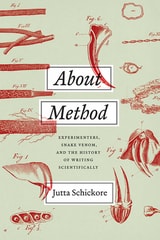
About Method
Experimenters, Snake Venom, and the History of Writing ScientificallyJutta Schickore
University of Chicago Press, 2017
About Method shows that methodological advancement throughout history has not been simply a steady progression toward better, more sophisticated and improved methodologies of experimentation. Rather, it was a progression in awareness of the obstacles and limitations that scientists face in developing strategies to probe the myriad unknown complexities of nature. The first long-term history of this development and of snake venom research, About Method offers a major contribution to integrated history and philosophy of science.
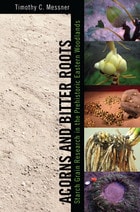
Acorns and Bitter Roots
Starch Grain Research in the Prehistoric Eastern WoodlandsTimothy C. Messner
University of Alabama Press, 2011
Messner’s analysis is based on extensive reviews of the literature on early historic, prehistoric native plant use, and the collation of all available archaeobotanical data, a review of which also guided the author in selecting contemporary botanical specimens to identify and in interpreting starch residues recovered from ancient plant-processing technologies. The evidence presented here sheds light on many local ecological and cultural developments as ancient people shifted their subsistence focus from estuarine to riverine settings. These archaeobotanical datasets, Messner argues, illuminate both the conscious and unintentional translocal movement of ideas and ecologies throughout the Eastern Woodlands.
After Parsons
A Theory of Social Action for the Twenty-First CenturyRenee C. Fox
Russell Sage Foundation, 2005
After the Map
Cartography, Navigation, and the Transformation of Territory in the Twentieth CenturyWilliam Rankin
University of Chicago Press, 2016
In After the Map, William Rankin argues that although this shift did not render traditional maps obsolete, it did radically change our experience of geographic knowledge, from the God’s-eye view of the map to the embedded subjectivity of GPS. Likewise, older concerns with geographic truth and objectivity have been upstaged by a new emphasis on simplicity, reliability, and convenience. After the Map shows how this change in geographic perspective is ultimately a transformation of the nature of territory, both social and political.
Afterlives of Affect
Science, Religion, and an Edgewalker’s SpiritMatthew C. Watson
Duke University Press, 2020
Afterlives of Indigenous Archives
Edited by Ivy Schweitzer and Gordon Henry
Dartmouth College Press, 2019
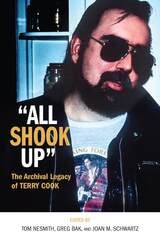
All Shook Up
The Archival Legacy of Terry CookTom Nesmith
Society of American Archivists, 2020
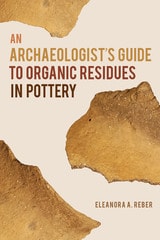
An Archaeologist's Guide to Organic Residues in Pottery
Eleanora A. Reber
University of Alabama Press, 2022
Unlock the chemical secrets of ancient pottery in this guide for mastering organic residue pottery analysis.
Pottery analysis is a crucial component of excavating an archaeological site. Organic residues in pottery are made up of chemicals that absorb into pots over their lifetime. These residues can reveal what people ate, whether different types of vessels were used for different cooking or foodstuffs preparation, and whether “elite” vessels were in use.
Organic residue analysis is a technical specialty that blends an unusual type of instrumental organic chemistry and archaeology. Because it is considered an obscure technique, archaeologists of all degrees of experience tend to struggle with how to apply the technology to archaeological questions and how to sample effectively in the field to answer these questions.
Eleanora A. Reber’s An Archaeologist’s Guide to Organic Residues in Pottery is a user-friendly resource for all archaeologists. Composed of case studies gleaned from Reber’s more than twenty years of archaeological research, this guide covers the range of residues encountered in the field and explains the methods and application of organic residue analysis.
Reber illustrates the useful aspects of residue analysis, such as compound-specific isotope analysis for the identification of traces of maize and marine resources, conifer resins, and the psychoactive alkaloid biomarkers caffeine and nicotine. Special attention is paid to sampling and construction of meaning as well as research questions to help field archaeologists integrate residue analysis seamlessly into their projects
An Epidemic of Uncertainty
Navigating HIV and Young Adulthood in MalawiJenny Trinitapoli
University of Chicago Press, 2023
An Epidemic of Uncertainty advances a new framework for studying social life by emphasizing something social scientists routinely omit from their theories, models, and measures–what people know they don’t know. Taking Malawi’s ongoing AIDS epidemic as an entry point, Jenny Trinitapoli shows that despite admirable declines in new HIV infections and AIDS-related mortality, an epidemic of uncertainty persists; at any given point in time, fully half of Malawian young adults don’t know their HIV status. Reckoning with the impact of this uncertainty within the bustling trading town of Balaka, Trinitapoli argues that HIV-related uncertainty is measurable, pervasive, and impervious to biomedical solutions, with consequences that expand into multiple domains of life, including relationship stability, fertility, and health. Over the duration of a groundbreaking decade-long longitudinal study, rich survey data and poignant ethnographic vignettes vividly depict how individual lives and population patterns unfold against the backdrop of an ever-evolving epidemic. Even as HIV is transformed from a progressive, fatal disease to a chronic and manageable condition, the accompanying epidemic of uncertainty remains fundamental to understanding social life in this part of the world.
Insisting that known unknowns can and should be integrated into social-scientific models of human behavior, An Epidemic of Uncertainty treats uncertainty as an enduring aspect, a central feature, and a powerful force in everyday life.
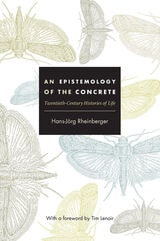
An Epistemology of the Concrete
Twentieth-Century Histories of LifeHans-Jörg Rheinberger
Duke University Press, 2010
An Essay on Philosophical Method
R.G. Collingwood
St. Augustine's Press, 2011
“My best book in matter, in style. I may call it my only book.”
An Essay on Philosophical Method contains the most sustained discussion in the twentieth century of the subject matter and method of philosophy and an unparalleled explanation of why philosophy has a distinctive domain of enquiry that differs from that of the sciences of nature.
Collingwood’s mature work of metaphysics seeks to overhaul the notion of philosophical method, assigning philosophy the task of “thinking out the idea of an object that shall completely satisfy the demands of reason.” The Essay is particularly interesting as an embodiment of the idealistic metaphysics Collingwood abandoned in later life.
This edition (a reprint of the 1933 edition) of the Essay focuses on Collingwood’s contribution to metaphilosophy and locates his argument for the autonomy of philosophy against the twentieth-century trend to naturalize its subject matter. Collingwood argues that the distinctions which philosophers make, for example, between the concepts of duty and utility in moral philosophy, or between the concepts of mind and body in the philosophy of mind, are not empirical taxonomies that cut nature at the joints but semantic distinctions to which there may correspond no empirical classes. This identification of philosophical distinctions with semantic distinctions provides the basis for an argument against the naturalization of the subject matter of philosophy for it entails that not all concepts are empirical concepts and not all classifications are empirical classifications. Collingwood’s explanation of why philosophy has a distinctive subject matter thus constitutes a clear challenge to the project of radical empiricism.
“One of the finest restatements in contemporary British philosophy of a Platonic and Hegelian metaphysic viewed from a modern standpoint.” – Times Literary Supplement
An Introduction to Legal Reasoning
Edward H. Levi
University of Chicago Press, 2013
For this edition, the book includes a substantial new foreword by leading contemporary legal scholar Frederick Schauer that helpfully places this foundational book into its historical and legal contexts, explaining its continuing value and relevance to understanding the role of analogical reasoning in the law. This volume will continue to be of great value to students of logic, ethics, and political philosophy, as well as to members of the legal profession and everyone concerned with problems of government and jurisprudence.
Anaximander
Carlo Rovelli
Westholme Publishing, 2011
THIS EBOOK IS NO LONGER AVAILABLE.
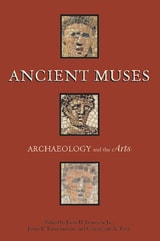
Ancient Muses
Archaeology and the ArtsEdited by John H. Jameson Jr., John E. Ehrenhard, and Christine A. Finn
University of Alabama Press, 2003
Known widely in Europe as “interpretive narrative archaeology,” the practice of using creative methods to interpret and present current knowledge of the past is gaining popularity in North America. This book is the first compilation of international case studies of the various artistic methods used in this new form of education—one that makes archaeology “come alive” for the nonprofessional. Plays, opera, visual art, stories, poetry, performance dance, music, sculpture, digital imagery—all can effectively communicate archaeological processes and cultural values to public audiences.
The contributors to this volume are a diverse group of archaeologists, educators, and artisans who have direct experience in schools, museums, and at archaeological sites. Citing specific examples, such as the film The English Patient, science fiction mysteries, and hypertext environments, they explain how creative imagination and the power of visual and audio media can personalize, contextualize, and demystify the research process. A 16-page color section illuminates their examples, and an accompanying CD includes relevant videos, music, web sites, and additional color images.
*
Ancient Plants and People
Contemporary Trends in ArchaeobotanyEdited by Marco Madella, Carla Lancelotti, and Manon Savard
University of Arizona Press, 2014
Food has both a public and a private role, and it permeates the life of all people in a society. Food choice, production, and distribution probably represent the most complex indicators of social life, and thus a study of foods consumed by ancient peoples reveals many clues about their lifestyles. But in addition to yielding information about food production, distribution, preparation, and consumption, plant remains recovered from archaeological sites offer precious insights on past landscapes, human adaptation to climate change, and the relationship between human groups and their environment. Revealing important aspects of past human societies, these plant-driven insights widen the spectrum of information available to archaeologists as we seek to understand our history as a biological and cultural species.
Often answers raise more questions. As a result, archaeobotanists are constantly pushed to reflect on the methodological and theoretical aspects of their discipline. The contributors discuss timely methodological issues and engage in debates on a wide range of topics from plant utilization by hunter-gatherers and agriculturalists, to uses of ancient DNA. Ancient Plants and People provides a global perspective on archaeobotanical research, particularly on the sophisticated interplay between the use of plants and their social or environmental context.
Anthropology and the Politics of Representation
Gabriela Vargas-Cetina
University of Alabama Press, 2013
In Anthropology and the Politics of Representation volume editor Gabriela Vargas-Cetina brings together a group of international scholars who, through their fieldwork experiences, reflect on the epistemological, political, and personal implications of their own work. To do so, they focus on such topics as ethnography, anthropologists’ engagement in identity politics, representational practices, the contexts of anthropological research and work, and the effects of personal choices regarding self-involvement in local causes that may extend beyond purely ethnographic goals.
Such reflections raise a number of ethnographic questions: What are ethnographic goals? Who sets the agenda for ethnographic writing? How does fieldwork change the anthropologist’s identity? Do ethnography and ethnographers have an impact on local lives and self-representation? How do anthropologists balance long-held respect for cultural diversity with advocacy for local people? How does an author choose what to say and write, and what not to disclose? Should anthropologists support causes that may require going against their informed knowledge of local lives?
Apples and Oranges
Explorations In, On, and With ComparisonBruce Lincoln
University of Chicago Press, 2018
Lincoln presents critiques of recent attempts at grand comparison, and enlists numerous theoretical examples of how a more modest, cautious, and discriminating form of comparison might work and what it can accomplish. He does this through studies of shamans, werewolves, human sacrifices, apocalyptic prophecies, sacred kings, and surveys of materials as diverse and wide-ranging as Beowulf, Herodotus’s account of the Scythians, the Native American Ghost Dance, and the Spanish Civil War.
Ultimately, Lincoln argues that concentrating one's focus on a relatively small number of items that the researcher can compare closely, offering equal attention to relations of similarity and difference, not only grants dignity to all parties considered, it yields more reliable and more interesting—if less grandiose—results. Giving equal attention to the social, historical, and political contexts and subtexts of religious and literary texts also allows scholars not just to assess their content, but also to understand the forces, problems, and circumstances that motivated and shaped them.
Approaches to Social Theory
Stewart Lindenberg
Russell Sage Foundation, 1986
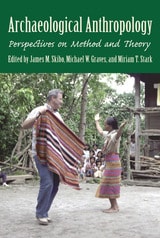
Archaeological Anthropology
Perspectives on Method and TheoryEdited by James M. Skibo, Michael W. Graves, and Miriam T. Stark
University of Arizona Press, 2014
In this collection of twelve new chapters, four generations of Longacre protégés show how they are building upon and developing but also modifying the theoretical paradigm that remains at the core of Americanist archaeology. The contributions focus on six themes prominent in Longacre’s career: the intellectual history of the field in the late twentieth century, archaeological methodology, analogical inference, ethnoarchaeology, cultural evolution, and reconstructing ancient society.
More than a comprehensive overview of the ideas developed by one of the most influential scholars in the field, however, Archaeological Anthropology makes stimulating contributions to contemporary research. The contributors do not unequivocally endorse Longacre’s ideas; they challenge them and expand beyond them, making this volume a fitting tribute to a man whose robust research and teaching career continues to resonate.
Archaeological Concepts for the Study of the Cultural Past
Alan P Sullivan III
University of Utah Press, 2008
By using the theoretical tension that has arisen between archaeology and cultural anthropology, the contributors illustrate the effectiveness of concepts and methods that have little, if any, overlap with those of the mother discipline.
Archaeological Concepts for the Study of the Cultural Past examines the degree to which the historically close relationship between archaeology and cultural anthropology may actually have inhibited archaeological investigations—particularly of those aspects of the cultural past that may be ethnographically undocumented or incompletely described.
Archaeological Structuration
A Critical Engagement for the Twenty-First CenturyMichael T. Searcy
University of Arizona Press, 2025
To illustrate the usefulness of structuration theory, archaeologist Michael T. Searcy deploys it to uncover new understandings of ancient societies, particularly focusing on the Casas Grandes civilization in precolonial northern Mexico. Spanning more than seven hundred years, this society exemplifies the rise of social complexity in the Western Hemisphere. Searcy reexamines previous hypotheses about major structural shifts during the twelfth and thirteenth centuries CE, providing fresh insights and updated perspectives.
This book not only revisits the foundational influence of structuration theory but also introduces new methodologies to study the longue durée, the long-term historical trajectories of ancient societies. Searcy deftly bridges the gap between theoretical frameworks and practical archaeological applications, providing a thorough analysis of how structuration can address real-world problems through the lens of ancient societal transformations.
Archaeological Variability and Interpretation in Global Perspective
Alan P. Sullivan
University Press of Colorado, 2016
The chapters explore how the analysis of artifact, assemblage, and site distributions at different spatial and temporal scales provides new insights into how mobility strategies affect lithic assemblage composition, what causes unstable interaction patterns in complex societies, and which factors promote a sense of “place” in landscapes of abandoned structures. In addition, several chapters illustrate how new theoretical approaches and innovative methods promote reinterpretations of the regional significance of historically important archaeological sites such as Myrtos-Pyrgos (Crete, Greece), Aztalan (Wisconsin, USA), Tabun Cave (Israel), and Casas Grandes (Chihuahua, Mexico).
The studies presented in Archaeological Variability and Interpretation in Global Perspective challenge orthodoxy, raise research-worthy controversies, and develop strong inferences about the diverse evolutionary pathways of humankind using theoretical perspectives that consider both new information and preexisting archaeological data.
Contributors: C. Michael Barton, Brian F. Byrd, Gerald Cadogan, Philip G. Chase, Harold L. Dibble, Matthew J. Douglass, Patricia C. Fanning, Lynne Goldstein, Simon J. Holdaway, Kathryn A. Kamp, Sam Lin, Emilia Oddo, Zeljko Rezek, Julien Riel-Salvatore, Gary O. Rollefson, Jeffrey Rosenthal, Barbara J. Roth, Sissel Schroeder, Justin I. Shiner, John C. Whittaker, David R. Wilcox
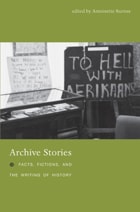
Archive Stories
Facts, Fictions, and the Writing of HistoryAntoinette Burton, ed.
Duke University Press, 2005
Archive Stories brings together ethnographies of the archival world, most of which are written by historians. Some contributors recount their own experiences. One offers a moving reflection on how the relative wealth and prestige of Western researchers can gain them entry to collections such as Uzbekistan’s newly formed Central State Archive, which severely limits the access of Uzbek researchers. Others explore the genealogies of specific archives, from one of the most influential archival institutions in the modern West, the Archives nationales in Paris, to the significant archives of the Bakunin family in Russia, which were saved largely through the efforts of one family member. Still others explore the impact of current events on the analysis of particular archives. A contributor tells of researching the 1976 Soweto riots in the politically charged atmosphere of the early 1990s, just as apartheid in South Africa was coming to an end. A number of the essays question what counts as an archive—and what counts as history—as they consider oral histories, cyberspace, fiction, and plans for streets and buildings that were never built, for histories that never materialized.
Contributors. Tony Ballantyne, Marilyn Booth, Antoinette Burton, Ann Curthoys, Peter Fritzsche, Durba Ghosh, Laura Mayhall, Jennifer S. Milligan, Kathryn J. Oberdeck, Adele Perry, Helena Pohlandt-McCormick, John Randolph, Craig Robertson, Horacio N. Roque Ramírez, Jeff Sahadeo, Reneé Sentilles
Are You Sure About That?
Discerning Fact from FictionKaren A. Cerulo
Rutgers University Press, 2027
Phone in hand, TV on, we wake up and fall asleep to endless information. There’s no escape—we are drowning in a sea of breaking news, notifications, and popular beliefs and claims. Every day, we encounter hundreds of posts and podcasts on politics, celebrities, or current events. People share links to “expert” recommendations on Instagram or Reddit. YouTube and TikTok bring us those who want to instruct us on the realities of the world or pass on longstanding conventional wisdom, all in the hopes of influencing our decisions and actions.
The information overload of the constant news and information cycle is exhausting and extremely frustrating. You may ask: Just what or whom should we believe? Are You Sure About That? Discerning Fact from Fiction helps readers navigate the perilous informational terrain of contemporary life. We provide a game plan of strategies and guidance for easily and reliably assessing the accuracy of any claim, helping readers to cut through the noise and adjust what they know.
Around the Texts of Writing Center Work
An Inquiry-Based Approach to Tutor EducationR. Mark Hall
Utah State University Press, 2017
Around the Texts of Writing Center Work reveals the conceptual frameworks found in and created by ordinary writing center documents. The values and beliefs underlying course syllabi, policy statements, website copy and comments, assessment plans, promotional flyers, and annual reports critically inform writing center practices, including the vital undertaking of tutor education.
In each chapter, author R. Mark Hall focuses on a particular document. He examines its origins, its use by writing center instructors and tutors, and its engagement with enduring disciplinary challenges in the field of composition, such as tutoring and program assessment. He then analyzes each document in the contexts of the conceptual framework at the heart of its creation and everyday application: activity theory, communities of practice, discourse analysis, reflective practice, and inquiry-based learning.
Around the Texts of Writing Center Work approaches the analysis of writing center documents with an inquiry stance—a call for curiosity and skepticism toward existing and proposed conceptual frameworks—in the hope that the theoretically conscious evaluation and revision of commonplace documents will lead to greater efficacy and more abundant research by writing center administrators and students.

Artist Scholar
Reflections on Writing and ResearchG. James Daichendt
Intellect Books, 2012
Artist Scholar: Reflections on Writing and Research is part history, introduction, and discussion for artists and designers entering, graduating, and employed by the contemporary art academy in the United States. The evolution of art education in the university continues to expand in the 21st century as the variables of craft, skill, technique, theory, history and criticism shift and expand as the perspective of arts-based research is introduced into this professionalized environment. Given this context: what can M.F.A. students do to improve their understanding of writing and research without sacrificing their commitment to their studio art process?
Through a series of essays, the text argues for better writing at the M.F.A. level with the purpose of becoming better artists. By contextualizing art practice in the university and providing a foundation for future artist scholarship, it serves as an invitation to artist scholars to push their work further and develop the confidence to situate their art in the university context.

Assessing Liaison Librarians
Documenting Impact ForDaniel Mack
American Library Association, 2014

Assessing Liaison Librarians
Documenting Impact for Positive ChangeDaniel C. Mack
Assoc of College & Research Libraries, 2014
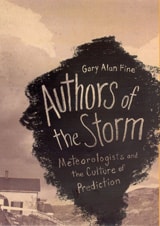
Authors of the Storm
Meteorologists and the Culture of PredictionGary Alan Fine
University of Chicago Press, 2007
Whether it is used as an icebreaker in conversation or as the subject of serious inquiry, “the weather” is one of the few subjects that everyone talks about. And though we recognize the faces that bring us the weather on television, how government meteorologists and forecasters go about their jobs is rarely scrutinized. Given recent weather-related disasters, it’s time we find out more. In Authors of the Storm, Gary Alan Fine offers an inside look at how meteorologists and forecasters predict the weather.
Based on field observation and interviews at the Storm Prediction Center in Oklahoma, the National Weather Service in Washington, D.C., and a handful of midwestern outlets, Fine finds a supremely hard-working, insular clique of professionals who often refer to themselves as a “band of brothers.” In Fine’s skilled hands, we learn their lingo, how they “read” weather conditions, how forecasts are written, and, of course, how those messages are conveyed to the public. Weather forecasts, he shows, are often shaped as much by social and cultural factors inside local offices as they are by approaching cumulus clouds. By opening up this unique world to us, Authors of the Storm offers a valuable and fascinating glimpse of a crucial profession.