225 books match the query 'Modernism' and 4 start with k

cover of King's Vibrato: Modernism, Blackness, and the Sonic Life of Martin Luther King Jr.

King's Vibrato

Modernism, Blackness, and the Sonic Life of Martin Luther King Jr.

Maurice O. Wallace

Duke University Press, 2022
In King’s Vibrato Maurice O. Wallace explores the sonic character of Martin Luther King Jr.’s voice and its power to move the world. Providing a cultural history and critical theory of the black modernist soundscapes that helped inform King’s vocal timbre, Wallace shows how the qualities of King’s voice depended on a mix of ecclesial architecture and acoustics, musical instrumentation and sound technology, audience and song. He examines the acoustical architectures of the African American churches where King spoke and the centrality of the pipe organ in these churches, offers a black feminist critique of the influence of gospel on King, and outlines how variations in natural environments and sound amplifications made each of King’s three deliveries of the “I Have a Dream” speech unique. By mapping the vocal timbre of one of the most important figures of black hope and protest in American history, Wallace presents King as the embodiment of the sound of modern black thought.
[more]
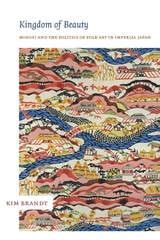
cover of Kingdom of Beauty: Mingei and the Politics of Folk Art in Imperial Japan

Kingdom of Beauty

Mingei and the Politics of Folk Art in Imperial Japan

Kim Brandt

Duke University Press, 2007

A Study of the Weatherhead East Asian Institute, Columbia University

Kingdom of Beauty
shows that the discovery of mingei (folk art) by Japanese intellectuals in the 1920s and 1930s was central to the complex process by which Japan became both a modern nation and an imperial world power. Kim Brandt’s account of the mingei movement locates its origins in colonial Korea, where middle-class Japanese artists and collectors discovered that imperialism offered them special opportunities to amass art objects and gain social, cultural, and even political influence. Later, mingei enthusiasts worked with (and against) other groups—such as state officials, fascist ideologues, rival folk art organizations, local artisans, newspaper and magazine editors, and department store managers—to promote their own vision of beautiful prosperity for Japan, Asia, and indeed the world. In tracing the history of mingei activism, Brandt considers not only Yanagi Muneyoshi, Hamada Shōji, Kawai Kanjirō, and other well-known leaders of the folk art movement but also the often overlooked networks of provincial intellectuals, craftspeople, marketers, and shoppers who were just as important to its success. The result of their collective efforts, she makes clear, was the transformation of a once-obscure category of pre-industrial rural artifacts into an icon of modern national style.

[more]
cover of Knossos and the Prophets of Modernism

Knossos and the Prophets of Modernism

Cathy Gere

University of Chicago Press, 2009

In the spring of 1900, British archaeologist Arthur Evans began to excavate the palace of Knossos on Crete, bringing ancient Greek legends to life just as a new century dawned amid far-reaching questions about human history, art, and culture. With Knossos and the Prophets of Modernism, Cathy Gere relates the fascinating story of Evans’s excavation and its long-term effects on Western culture. After the World War I left the Enlightenment dream in tatters, the lost paradise that Evans offered in the concrete labyrinth—pacifist and matriarchal, pagan and cosmic—seemed to offer a new way forward for writers, artists, and thinkers such as Sigmund Freud, James Joyce, Giorgio de Chirico, Robert Graves, and Hilda Doolittle. 

Assembling a brilliant, talented, and eccentric cast at a moment of tremendous intellectual vitality and wrenching change, Cathy Gere paints an unforgettable portrait of the age of concrete and the birth of modernism.
[more]
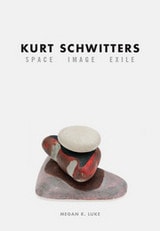
cover of Kurt Schwitters: Space, Image, Exile

Kurt Schwitters

Space, Image, Exile

Megan R. Luke

University of Chicago Press, 2014

German artist Kurt Schwitters (1887–1948) is best known for his pioneering work in fusing collage and abstraction, the two most transformative innovations of twentieth-century art. Considered the father of installation art, Schwitters was also a theorist, a Dadaist, and a writer whose influence extends from Robert Rauschenberg and Eva Hesse to Thomas Hirschhorn. But while his early experiments in collage and installation from the interwar period have garnered much critical acclaim, his later work has generally been ignored. In the first book to fill this gap, Megan R. Luke tells the fascinating, even moving story of the work produced by the aging, isolated artist under the Nazi regime and during his years in exile.
 
Combining new biographical material with archival research, Luke surveys Schwitters’s experiments in shaping space and the development of his Merzbau, describing his haphazard studios in Scandinavia and the United Kingdom and the smaller, quieter pieces he created there. She makes a case for the enormous relevance of Schwitters’s aesthetic concerns to contemporary artists, arguing that his later work provides a guide to new narratives about modernism in the visual arts. These pieces, she shows, were born of artistic exchange and shaped by his rootless life after exile, and they offer a new way of thinking about the history of art that privileges itinerancy over identity and the critical power of humorous inversion over unambiguous communication. Packed with images, Kurt Schwitters completes the narrative of an artist who remains a considerable force today.
[more]