Results by title
968 books match the query 'Movements' and 9 start with k
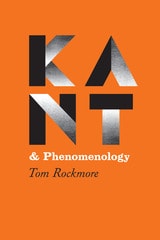
Kant and Phenomenology
Tom Rockmore
University of Chicago Press, 2010
Phenomenology, together with Marxism, pragmatism, and analytic philosophy, dominated philosophy in the twentieth century—and Edmund Husserl is usually thought to have been the first to develop the concept. His views influenced a variety of important later thinkers, such as Heidegger and Merleau-Ponty, who eventually turned phenomenology away from questions of knowledge. But here Tom Rockmore argues for a return to phenomenology’s origins in epistemology, and he does so by locating its roots in the work of Immanuel Kant.
Kant and Phenomenology traces the formulation of Kant’s phenomenological approach back to the second edition of Kant’s Critique of Pure Reason. In response to various criticisms of the first edition, Kant more forcefully put forth a constructivist theory of knowledge. This shift in Kant’s thinking challenged the representational approach to epistemology, and it is this turn, Rockmore contends, that makes Kant the first great phenomenologist. He then follows this phenomenological line through the work of Kant’s idealist successors, Fichte and Hegel. Steeped in the sources and literature it examines, Kant and Phenomenology persuasively reshapes our conception of both of its main subjects.
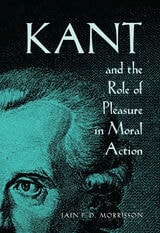
Kant and the Role of Pleasure in Moral Action
Iain P. D. Morrisson
Ohio University Press, 2008
Kant scholars since the early nineteenth century have disaxadgreed about how to interpret his theory of moral motivation. Kant tells us that the feeling of respect is the incentive to moral action, but he is notoriously ambiguous on the question of what exactly this means. In Kant and the Role of Pleasure in Moral Action, Iain Morrisson offers a new view on Kant’s theory of moral action.
In a clear, straightforward style, Morrisson responds to the ongoing interpretive stalemate by taking an original approach to the problem. Whereas previous commentators have attempted to understand Kant’s feeling of respect by studying the relevant textual evidence in isolation, Morrisson illuminates this evidence by determining what Kant’s more general theory of action commits him to regarding moral action. After looking at how Kant’s treatment of desire and feeling can be reconciled with his famous account of free maxim-based action, Morrisson argues that respect moves us to moral action in a way that is structurally parallel to the way in which nonmoral pleasure motivates nonmoral action.
In reconstructing a unified theory of action in Kant, Morrisson integrates a number of distinct elements in his practical philosophy. Kant and the Role of Pleasure in Moral Action is part of a new wave of interest in Kant’s anthropological (that is, psychological) works.
Kant's Worldview
How Judgment Shapes Human ComprehensionRudolf A. Makkreel
Northwestern University Press, 2022
To comprehend, according to Kant, is to possess sufficient insight into situations so as to also achieve some purpose. This requires that reason be applied with the discernment that reflective judgment makes possible. Comprehension, practical as well as theoretical, can fill in Kant’s world concept and his sublime evocation of a Weltanschauung with a more down-to-earth worldview.
Scholars have recently stressed Kant’s impure ethics, his nonideal politics, and his pragmatism. Makkreel complements these efforts by using Kant’s ethical, sociopolitical, religious, and anthropological writings to provide a more encompassing account of the role of human beings in the world. The result is a major contribution to our understanding of Kant and the history of European philosophy.

Kant, Kantianism, and Idealism
The Origins of Continental PhilosophyEdited by Thomas J. Nenon
University of Chicago Press, 2010
From Kant to Kierkegaard, from Hegel to Heidegger, continental philosophers have indelibly shaped the trajectory of Western thought since the eighteenth century. Although much has been written about these monumental thinkers, students and scholars lack a definitive guide to the entire scope of the continental tradition. The most comprehensive reference work to date, this eight-volume History of Continental Philosophy will both encapsulate the subject and reorient our understanding of it. Beginning with an overview of Kant’s philosophy and its initial reception, the History traces the evolution of continental philosophy through major figures as well as movements such as existentialism, phenomenology, hermeneutics, and poststructuralism. The final volume outlines the current state of the field, bringing the work of both historical and modern thinkers to bear on such contemporary topics as feminism, globalization, and the environment. Throughout, the volumes examine important philosophical figures and developments in their historical, political, and cultural contexts.
The first reference of its kind, A History of Continental Philosophy has been written and edited by internationally recognized experts with a commitment to explaining complex thinkers, texts, and movements in rigorous yet jargon-free essays suitable for both undergraduates and seasoned specialists. These volumes also elucidate ongoing debates about the nature of continental and analytic philosophy, surveying the distinctive, sometimes overlapping characteristics and approaches of each tradition. Featuring helpful overviews of major topics and plotting road maps to their underlying contexts, A History of Continental Philosophy is destined to be the resource of first and last resort for students and scholars alike.

Kierkegaard, Literature, and the Arts
Edited by Eric Ziolkowski
Northwestern University Press, 2018
The essays in Kierkegaard, Literature, and the Arts, contextualized with an insightful introduction by Eric Ziolkowski, explore Kierkegaard’s relationship to literature (poetry, prose, and storytelling), the performing arts (theater, music, opera, and dance), and the visual arts, including film. The collection is rounded out with a comparative section that considers Kierkegaard in juxtaposition with a romantic poet (William Blake), a modern composer (Arnold Schoenberg), and a contemporary singer‑songwriter (Bob Dylan). Kierkegaard was as much an aesthetic thinker as a philosopher, and his philosophical writings are complemented by his literary and music criticism.
Kierkegaard, Literature, and the Arts will offer much of interest to scholars concerned with Kierkegaard as well as teachers, performers, and readers in the various aesthetic fields discussed.
CONTRIBUTORS: Christopher B. Barnett, Martijn Boven, Anne Margrete Fiskvik, Joakim Garff, Ronald M. Green, Peder Jothen, Ragni Linnet, Jamie A. Lorentzen, Edward F. Mooney, George Pattison, Nils Holger Petersen, Howard Pickett, Marcia C. Robinson, James Rovira
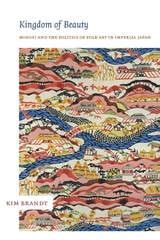
Kingdom of Beauty
Mingei and the Politics of Folk Art in Imperial JapanKim Brandt
Duke University Press, 2007
Kingdom of Beauty shows that the discovery of mingei (folk art) by Japanese intellectuals in the 1920s and 1930s was central to the complex process by which Japan became both a modern nation and an imperial world power. Kim Brandt’s account of the mingei movement locates its origins in colonial Korea, where middle-class Japanese artists and collectors discovered that imperialism offered them special opportunities to amass art objects and gain social, cultural, and even political influence. Later, mingei enthusiasts worked with (and against) other groups—such as state officials, fascist ideologues, rival folk art organizations, local artisans, newspaper and magazine editors, and department store managers—to promote their own vision of beautiful prosperity for Japan, Asia, and indeed the world. In tracing the history of mingei activism, Brandt considers not only Yanagi Muneyoshi, Hamada Shōji, Kawai Kanjirō, and other well-known leaders of the folk art movement but also the often overlooked networks of provincial intellectuals, craftspeople, marketers, and shoppers who were just as important to its success. The result of their collective efforts, she makes clear, was the transformation of a once-obscure category of pre-industrial rural artifacts into an icon of modern national style.
Knowing by Heart
Loving as Participation and CritiqueAnthony J. Steinbock
Northwestern University Press, 2021
Knowing by Heart describes the movement of loving as a participation that bears on all beings. Eschewing the dichotomy of rationalism and sensibility that has dominated discussions of love and emotion, Steinbock understands the heart as a vast schema ranging from the deepest loving to affects and felt conditions. The book brings into focus the importance of a full‑bodied relational account of a normative critique based in emotion. From a phenomenological description of diverse feelings to the normativity of loving as the discernment of the heart, this work evaluates hating’s relation to loving. At the basis of all this is a phenomenological and philosophical anthropology in response to the basic question: In reality, who and what are we?
Knowledge in the Age of Digital Capitalism
An Introduction to Cognitive MaterialismMariano Zukerfeld
University of Westminster Press, 2017
Author Mariano Zukerfeld was awarded the best book prize by The Association ESOCITE (Asociación Latinamericana de Estudios Sociales de la Cience y la Tecnología).
“the book is a refreshing, dynamic approach leading back into discussions which have been neglected during the last 20 years.” -https://www.triple-c.at/index.php/tripleC/article/view/971
Knowledge in the Age of Digital Capitalism proposes a new critical theory concerning the functioning of capitalism and how we consider knowledge and information. This ambitious book systematically and lucidly introduces contemporary phenomena into the framework of cognitive materialism to address some of the great themes of the social sciences: knowledge, exploitation and social class in an account of capitalism's totality in the present day. Author Mariano Zukerfeld reinvigorates materialist study of communications, presenting a typology of knowledge to explain the underlying material forms of information, intellectual property and cognitive work in contemporary societies. Using current examples the book also examines concerns such as free labour and the pivotal role of intellectual property. The book offers nothing less than an introduction to the theory of cognitive materialism and an account of the entirety of the digital (or knowledge) capitalism of our time.

Kurt Schwitters
Space, Image, ExileMegan R. Luke
University of Chicago Press, 2014