Results by title
2916 books match the query 'Politics and government' and 20 start with k
Kalmykia in Russia's Past and Present National Policies and Administrative System
Konstantin N. Maksimov
Central European University Press, 2008
Karl Renner
AustriaJamie Bulloch
Haus Publishing, 2009

Karnali Under Stress
Livelihood Strategies and Seasonal Rhythms in a Changing Nepal HimalayaBarry C. Bishop
University of Chicago Press, 1990

Kayanerenkó
wa: The Great Law of PeaceKayanesenh Paul Williams
University of Manitoba Press, 2018

Keeping the Faith
Ordinary People, Extraordinary LivesWayne Flynt
University of Alabama Press, 2011
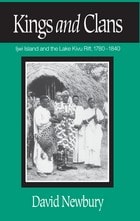
Kings And Clans
Ijwi Island And The Lake Kivu Rift, 1780-1840David Newbury
University of Wisconsin Press, 1992
Drawing on detailed ethnographic observations of the social and ritual organizations of Ijwi society, an extensive body of oral data, and evidence from written sources, Newbury shows that the clans of Ijwi were not static formations, nor did the establishment of a royal family on the island emerge from military conquest and internal social breakdown. Instead, clan identities changed over time, and these changes actually facilitated the creation of kingship on Ijwi. Through a detailed examination of succession struggles, of local factors influencing the outcome of such struggles, and of specific clan participation in public rituals that legitimize royalty, Newbury’s study illustrates the importance of clan identities in both the creation of state power and its reproduction over time.

Kingship and Justice in the Ottonian Empire
Laura E. Wangerin
University of Michigan Press, 2019
Scholars have recognized the importance of ritual and symbolic behaviors in the Ottonian political sphere, while puzzling over the apparent lack of administrative organization, a contradiction between what we know about the Ottonians as successful rulers and their traditional characterization as rulers of a disorganized polity. Trying to account for the apparent disparity between their political and military achievements, cultural and artistic efflorescence, and relative dynastic stability, which seemingly accompanied a disinterest in writing law or creating a centralized hierarchical administration, is a tension that persists in the scholarship. This book argues that far from being accidental successes or employing primitive methods of governance, the Ottonians were shrewd rulers and administrators who exploited traditional methods of conflict resolution and delegated jurisdictional authority to keep control over their vast empire. Thus, one of the important things that this book aims to accomplish is to challenge our preconceived notions of what successful government looks like.
Kinship Myth in Ancient Greece
By Lee E. Patterson
University of Texas Press, 2010
In ancient Greece, interstate relations, such as in the formation of alliances, calls for assistance, exchanges of citizenship, and territorial conquest, were often grounded in mythical kinship. In these cases, the common ancestor was most often a legendary figure from whom both communities claimed descent.
In this detailed study, Lee E. Patterson elevates the current state of research on kinship myth to a consideration of the role it plays in the construction of political and cultural identity. He draws examples both from the literary and epigraphical records and shows the fundamental difference between the two. He also expands his study into the question of Greek credulity—how much of these founding myths did they actually believe, and how much was just a useful fiction for diplomatic relations? Of central importance is the authority the Greeks gave to myth, whether to elaborate narratives or to a simple acknowledgment of an ancestor. Most Greeks could readily accept ties of interstate kinship even when local origin narratives could not be reconciled smoothly or when myths used to explain the link between communities were only "discovered" upon the actual occasion of diplomacy, because such claims had been given authority in the collective memory of the Greeks.
Kinship to Kingship
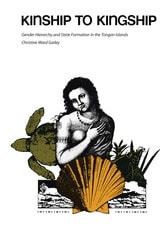
Gender Hierarchy and State Formation in the Tongan IslandsBy Christine Ward Gailey
University of Texas Press, 1987
Have women always been subordinated? If not, why and how did women’s subordination develop? Kinship to Kingship was the first book to examine in detail how and why gender relations become skewed when classes and the state emerge in a society.
Using a Marxist-feminist approach, Christine Ward Gailey analyzes women’s status in one society over three hundred years, from a period when kinship relations organized property, work, distribution, consumption, and reproduction to a class-based state society. Although this study focuses on one group of islands, Tonga, in the South Pacific, the author discusses processes that can be seen through the neocolonial world.
This ethnohistorical study argues that evolution from a kin-based society to one organized along class lines necessarily entails the subordination of women. And the opposite is also held to be true: state and class formation cannot be understood without analyzing gender and the status of women. Of interest to students of anthropology, political science, sociology, and women’s studies, this work is a major contribution to social history.

Kinship, Business, and Politics
The Martinez Del Rio Family in Mexico, 1823-1867By David W. Walker
University of Texas Press, 1987
The Martínez del Río family was a vigorous contestant in the highly politicized economy of early national Mexico. David Walker’s case study of its successes and failures provides a unique insider’s view of the trials and tribulations of doing business in a hostile environment. The family’s ordeal in Mexico—a series of personal dislocations and traumas—mirrored the painful contractions of an old society reluctantly giving birth to a new nation.
Using previously undiscovered primary source materials (including the private correspondence and business records of the family, public notary documents, transcripts of judicial proceedings, and the archives of Mexico’s Ministry of Foreign Relations and the British Foreign Office), Walker employs family history to analyze problems relating more generally to the development of state and society in newly independent Mexico.
The processes of socioeconomic formation in Mexico differed from those of Western Europe and the United States; accordingly, entrepreneurial activity had markedly contrasting implications for economic development and class formation. In the downwardly spiraling economy of nineteenth-century Mexico, economic activity was a zero-sum game. No new wealth was being created; most sectors remained stagnant and unproductive. To make their fortunes, empresarios, the Mexican capitalists, could not rely on income generated from authentic economic growth. Instead, they exploited the arbitrary acts of the interventionist Mexican state, which proscribed the free movement of factors within the marketplace. Speculation in the public debt took the place of more substantive undertakings. Coercive state power was diverted to create artificial environments in which otherwise inefficient and unproductive enterprises could flourish. But however well the empresarios might imitate the outward forms of industrial capitalism, they could not unlock the productive capacity of the Mexican economy. Instead, they and their allies and rivals engaged in destructive struggles to manipulate the state for personal gain, to the detriment of class interests, economic growth, and political stability.

Kissing Fidel
A Memoir of Cuban American Terrorism in the United StatesMagda Montiel Davis
University of Iowa Press, 2020
What does it mean to be instantly transformed into the most hated person in your community? After meeting Fidel Castro at a Havana reception in 1994, Cuban-born Magda Montiel Davis, founder of one of the largest immigration law firms in South Florida, soon found out. The reception—attended by hundreds of other Cuban émigrés—was videotaped for historical archives. In a seconds-long clip, Fidel pecks the traditional protocol kiss on Montiel Davis’s cheek as she thanks him for the social benefits conferred upon the Cuban people. The video, however, was mysteriously sold to U.S. reporters and aired incessantly throughout South Florida. Soon the encounter was an international cause célèbre.
Life as she knew it was over for Montiel Davis and her family, including a father who worked with the CIA to topple Fidel, a nohablo-inglés mother who lived with the family, her five children, and her Jewish Brooklyn-born attorney husband. Kissing Fidel shares the sometimes dismal, sometimes comical realities of an ordinary citizen being thrown into a world of death threats, mob attacks, and terrorism.

Knowledge Regulation and National Security in Postwar America
Mario Daniels and John Krige
University of Chicago Press, 2022
In this groundbreaking book, Mario Daniels and John Krige set out to show the enormous political relevance that export control regulations have had for American debates about national security, foreign policy, and trade policy since 1945. Indeed, they argue that from the 1940s to today the issue of how to control the transnational movement of information has been central to the thinking and actions of the guardians of the American national security state. The expansion of control over knowledge and know-how is apparent from the increasingly systematic inclusion of universities and research institutions into a system that in the 1950s and 1960s mainly targeted business activities. As this book vividly reveals, classification was not the only—and not even the most important—regulatory instrument that came into being in the postwar era.
Kongo in the Age of Empire, 1860–1913
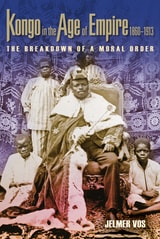
The Breakdown of a Moral OrderJelmer Vos
University of Wisconsin Press, 2015
Vos underlines that Kongo's incorporation in the European state system also had tragic consequences, including the undermining of local African structures of authority—on which the colonial system actually depended. Kongo in the Age of Empire carefully documents the involvement of Kongo's royal court in the exercise of Portuguese rule in northern Angola and the ways that Kongo citizens experienced colonial rule as an increasingly illegitimate extension of royal power.

Kosovo Liberation Army
The Inside Story of an InsurgencyHenry H. Perritt Jr.
University of Illinois Press, 2008
The military intervention by NATO in Kosovo was portrayed in American media as a necessary step to prevent the Serbian armed forces from repeating the ethnic cleansing that had so deeply damaged the former Yugoslavia. Serbia trained its military on Kosovo because of an ongoing armed struggle by ethnic Albanians to wrest independence from Serbia. Warfare in the Balkans seemed to threaten the stability of Europe, as well as the peace and security of Kosovars, and yet armed resistance seemed to offer the only possibility of future stability. Leading the struggle against Serbia was the Kosovo Liberation Army, also known as the KLA.
Kosovo Liberation Army: The Inside Story of an Insurgency provides a historical background for the KLA and describes its activities up to and including the NATO intervention. Henry H. Perritt Jr. offers firsthand insight into the motives and organization of a popular insurgency, detailing the strategies of recruitment, training, and financing that made the KLA one of the most successful insurgencies of the post-cold war era. This volume also tells the personal stories of young people who took up guns in response to repeated humiliation by "foreign occupiers," as they perceived the Serb police and intelligence personnel. Perritt illuminates the factors that led to the KLA's success, including its convergence with political developments in eastern Europe, its campaign for popular support both at home and abroad, and its participation in international negotiations and a peace settlement that helped pave the long road from war to peace.
Kupilikula
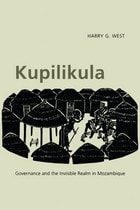
Governance and the Invisible Realm in MozambiqueHarry G. West
University of Chicago Press, 2005
In this historical ethnography of sorcery, Harry G. West draws on a decade of fieldwork and combines the perspectives of anthropology and political science to reveal how Muedans expect responsible authorities to monitor the invisible realm of sorcery and to overturn or, as Muedans call it, "kupilikula" sorcerers' destructive attacks by practicing a constructive form of counter-sorcery themselves. Kupilikula argues that, where neoliberal policies have fostered social division rather than security and prosperity, Muedans have, in fact, used sorcery discourse to assess and sometimes overturn reforms, advancing alternative visions of a world transformed.
Kurdish Awakening
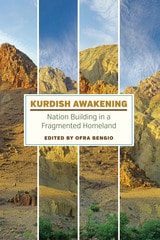
Nation Building in a Fragmented HomelandEdited by Ofra Bengio
University of Texas Press, 2014
Kurdish Awakening examines key questions related to Kurdish nationalism and identity formation in Syria, Iraq, Iran, and Turkey. The world’s largest stateless ethnic group, Kurds have steadily grown in importance as a political power in the Middle East, particularly in light of the “Arab Spring.” As a result, Kurdish issues—political, cultural, and historical alike—have emerged as the subject of intense scholarly interest. This book provides fresh ways of understanding the historical and sociopolitical underpinnings of the ongoing Kurdish awakening and its already significant impact on the region.
Rather than focusing on one state or angle, this anthology fills a gap in the literature on the Kurds by providing a panoramic view of the Kurdish homeland’s various parts. The volume focuses on aspects of Kurdish nationalism and identity formation not addressed elsewhere, including perspectives on literature, gender, and constitution making. Further, broad thematic essays include a discussion of the historical experiences of the Kurds from the time of their Islamization more than a millennium ago up until the modern era, a comparison of the Kurdish experience with other ethno-national movements, and a treatment of the role of tribalism in modern nation building. This collection is unique in its use of original sources in various languages. The result is an analytically rich portrayal that sheds light on the Kurds’ prospects and the challenges they confront in a region undergoing sweeping upheavals.

Kurdistan on the Global Stage
Kinship, Land, and Community in IraqKing, Diane E
Rutgers University Press, 2014
Anthropologist Diane E. King has written about everyday life in the Kurdistan Region of Iraq, which covers much of the area long known as Iraqi Kurdistan. Following the overthrow of Saddam Hussein’s Ba’thist Iraqi government by the United States and its allies in 2003, Kurdistan became a recognized part of the federal Iraqi system. The Region is now integrated through technology, media, and migration to the rest of the world.
Focusing on household life in Kurdistan’s towns and villages, King explores the ways that residents connect socially, particularly through patron-client relationships and as people belonging to gendered categories. She emphasizes that patrilineages (male ancestral lines) seem well adapted to the Middle Eastern modern stage and viceversa. The idea of patrilineal descent influences the meaning of refuge-seeking and migration as well as how identity and place are understood, how women and men interact, and how “politicking” is conducted.
In the new Kurdistan, old values may be maintained, reformulated, or questioned. King offers a sensitive interpretation of the challenges resulting from the intersection of tradition with modernity. Honor killings still occur when males believe their female relatives have dishonored their families, and female genital cutting endures. Yet, this is a region where modern technology has spread and seemingly everyone has a mobile phone. Households may have a startling combination of illiterate older women and educated young women. New ideas about citizenship coexist with older forms of patronage.
King is one of the very few scholars who conducted research in Iraq under extremely difficult conditions during the Saddam Hussein regime. How she was able to work in the midst of danger and in the wake of genocide is woven throughout the stories she tells. Kurdistan on the Global Stage serves as a lesson in field research as well as a valuable ethnography.
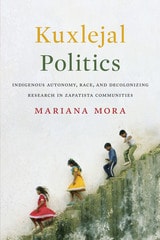
Kuxlejal Politics
Indigenous Autonomy, Race, and Decolonizing Research in Zapatista CommunitiesBy Mariana Mora
University of Texas Press, 2017
Over the past two decades, Zapatista indigenous community members have asserted their autonomy and self-determination by using everyday practices as part of their struggle for lekil kuxlejal, a dignified collective life connected to a specific territory. This in-depth ethnography summarizes Mariana Mora’s more than ten years of extended research and solidarity work in Chiapas, with Tseltal and Tojolabal community members helping to design and evaluate her fieldwork. The result of that collaboration—a work of activist anthropology—reveals how Zapatista kuxlejal (or life) politics unsettle key racialized effects of the Mexican neoliberal state.
Through detailed narratives, thick descriptions, and testimonies, Kuxlejal Politics focuses on central spheres of Zapatista indigenous autonomy, particularly governing practices, agrarian reform, women’s collective work, and the implementation of justice, as well as health and education projects. Mora situates the proposals, possibilities, and challenges associated with these decolonializing cultural politics in relation to the racialized restructuring that has characterized the Mexican state over the past twenty years. She demonstrates how, despite official multicultural policies designed to offset the historical exclusion of indigenous people, the Mexican state actually refueled racialized subordination through ostensibly color-blind policies, including neoliberal land reform and poverty alleviation programs. Mora’s findings allow her to critically analyze the deeply complex and often contradictory ways in which the Zapatistas have reconceptualized the political and contested the ordering of Mexican society along lines of gender, race, ethnicity, and class.
Kwame Nkrumah
The Father of African NationalismJeffrey S. Ahlman
Ohio University Press, 1998
Kwame Nkrumah
Visions of LiberationJeffrey S. Ahlman
Ohio University Press, 2021