Results by title
368 books match the query 'West' and 3 start with k

Ken Saro-Wiwa
Roy Doron
Ohio University Press, 2016
Hanged by the Nigerian government on November 10, 1995, Ken Saro-Wiwa became a martyr for the Ogoni people and human rights activists, and a symbol of modern Africans’ struggle against military dictatorship, corporate power, and environmental exploitation. Though he is rightly known for his human rights and environmental activism, he wore many hats: writer, television producer, businessman, and civil servant, among others. While the book sheds light on his many legacies, it is above all about Saro-Wiwa the man, not just Saro-Wiwa the symbol.
Roy Doron and Toyin Falola portray a man who not only was formed by the complex forces of ethnicity, race, class, and politics in Nigeria, but who drove change in those same processes. Like others in the Ohio Short Histories of Africa series, Ken Saro-Wiwa is written to be accessible to the casual reader and student, yet indispensable to scholars.
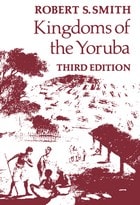
Kingdoms Of The Yoruba
Robert S. Smith
University of Wisconsin Press, 1988
The twenty million Yorubas are one of the largest and most important groups of people on the African continent. Historically they were organized in a series of autonomous kingdoms and their past is richly recorded in oral tradition and archaeology. From the fifteenth century onwards there are descriptions by visitors and from the nineteenth century there are abundant official reports from administrators and missionaries.
Yoruba sculpture in stone, metal, ivory, and wood is famous. Less well-known are the elaborate and carefully designed constitutional forms which were evolved in the separate kingdoms, the methods of warfare and diplomacy, the oral literature, and the religion based on the worship of a “high god” surrounded by a pantheon of more accessible deities. Many of these aspects are shown in the drawings and photographs which have been used—for the first time—to illustrate this distinguished work.
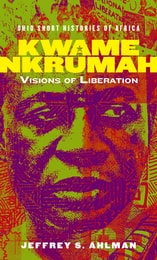
Kwame Nkrumah
Visions of LiberationJeffrey S. Ahlman
Ohio University Press, 2021