Results by title
19 books match the query 'Abolition'
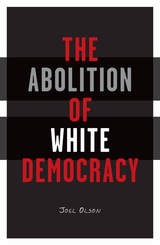
Abolition Of White Democracy
Joel Olson
University of Minnesota Press, 2004
Offers a new way of understanding the tortured relationship between race and democracy in the United States
Racial discrimination embodies inequality, exclusion, and injustice and as such has no place in a democratic society. And yet racial matters pervade nearly every aspect of American life, influencing where we live, what schools we attend, the friends we make, the votes we cast, the opportunities we enjoy, and even the television shows we watch.
Joel Olson contends that, given the history of slavery and segregation in the United States, American citizenship is a form of racial privilege in which whites are equal to each other but superior to everyone else. In Olson’s analysis we see how the tension in this equation produces a passive form of democracy that discourages extensive participation in politics because it treats citizenship as an identity to possess rather than as a source of empowerment. Olson traces this tension and its disenfranchising effects from the colonial era to our own, demonstrating how, after the civil rights movement, whiteness has become less a form of standing and more a norm that cements white advantages in the ordinary operations of modern society. To break this pattern, Olson suggests an “abolitionist-democratic” political theory that makes the fight against racial discrimination a prerequisite for expanding democratic participation.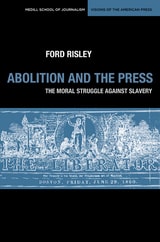
Abolition and the Press
The Moral Struggle Against SlaveryFord Risley
Northwestern University Press, 2008
This examination of nineteenth-century journalism explores the specific actions and practices of the publications that provided a true picture of slavery to the general public. From Boston's strident <i>Liberator</i> to Frederick Douglass' <i>North Star</i>, the decades before the Civil War saw more than forty newspapers founded with the specific aim of promoting emancipation. Not only did these sheets provide a platform for discourse, but they also gave slavery a face for a wider audience. The reach of the abolitionist press only grew as the fiery publications became objects of controversy and targets of violence in both South and North. These works kept the issue of slavery in the public eye even as mainstream publications took up the call for emancipation, as the nation went to war, up to the end of slavery. Their legacy has endured, as dedicated reform writers and editors continue to view the press as a vital tool in the fight for equality.
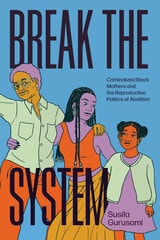
Break the System
Criminalized Black Mothers and the Reproductive Politics of AbolitionSusila Gurusami
University of Chicago Press, 2026
Upends the “broken systems” myth and reveals how the law deliberately criminalizes and punishes Black women, inflicting lasting harm on Black communities in the process.
The United States has one of the highest rates of incarceration in the world, with Black Americans representing a disproportionate share of theimprisoned. Many view this statistic as evidence of a broken system. But sociologist Susila Gurusami argues that the carceral system that so disproportionately harms Black families is not broken at all. In fact, it works just as it was intended. Looking closely at the lives of formerly incarcerated Black mothers, Gurusami shows how state institutions—the criminal-legal, child welfare, and healthcare systems—keep Black mothers from their families, harming Black communities in the process. She also shows how Black women work towards conditions that seem impossible—and even utopian—as part of their everyday mothering labor, but find themselves criminalized for these same actions.
Drawing on ethnographic data and interviews with formerly incarcerated Black women in South Los Angeles, Gurusami challenges dominant assumptions about mothering and criminal justice reform. Gurusami finds that criminalized Black women endure multigenerational political, social, and embodied assaults–what she calls “reproductive warfare”— and still, they build networks, practices, and theories of radical care that protect Black maternal life, legacies, and futures. With incarcerated, formerly incarcerated, and system-impacted Black mothers at the forefront of the growing movement to abolish prisons and jails, Gurusami demonstrates how their everyday mothering work—what she calls “abolitionist motherwork”—is essential to imagining the end of incarceration and ultimately achieving it.
Written with a tender and honest voice, Break the System shares moving vignettes that underscore why we must break the system, rather than reform it, and why we must imagine a future that is radically different than the one we’re told we must accept or salvage.
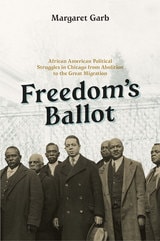
Freedom's Ballot
African American Political Struggles in Chicago from Abolition to the Great MigrationMargaret Garb
University of Chicago Press, 2014
Freedom’s Ballot is the history of three generations of African American activists—the ministers, professionals, labor leaders, clubwomen, and entrepreneurs—who transformed twentieth-century urban politics. This is a complex and important story of how black political power was institutionalized in Chicago in the half-century following the Civil War. Margaret Garb explores the social and political fabric of Chicago, revealing how the physical makeup of the city was shaped by both political corruption and racial empowerment—in ways that can still be seen and felt today.
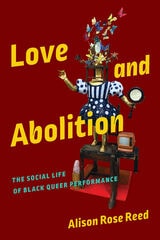
Love and Abolition
The Social Life of Black Queer PerformanceAlison Rose Reed
The Ohio State University Press, 2022
Reed identifies abolition literature as an emergent field of inquiry that emphasizes social relationships in the ongoing struggle to dismantle systems of coercion, criminalization, and control. Focusing on love as an affective modality and organizing tool rooted in the Black radical tradition’s insistence on collective sociality amidst unrelenting state violence, Reed provides fresh readings of visionaries such as James Baldwin, Ntozake Shange, Sharon Bridgforth, and vanessa german. Both abolitionist manifesto and examination of how Black queer performance offers affective modulations of tough and tender love, Love and Abolition ultimately calls for a critical reconsideration of the genre of prison literature—and the role of the humanities—during an age of mass incarceration.

Mobile Households
Indian Ocean Intimate Economies in the Age of AbolitionHollian Wint-Frederick
Duke University Press, 2027

Mu, 49 Marks of Abolition
Sora Y. Han
Duke University Press, 2024
Progressive Dystopia
Abolition, Antiblackness, and Schooling in San FranciscoSavannah Shange
Duke University Press, 2019
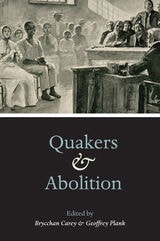
Quakers and Abolition
Edited by Brycchan Carey and Geoffrey Plank
University of Illinois Press, 2014
This collection of fifteen insightful essays examines the complexity and diversity of Quaker antislavery attitudes across three centuries, from 1658 to 1890. Contributors from a range of disciplines, nations, and faith backgrounds show Quaker's beliefs to be far from monolithic. They often disagreed with one another and the larger antislavery movement about the morality of slaveholding and the best approach to abolition.
Not surprisingly, contributors explain, this complicated and evolving antislavery sensibility left behind an equally complicated legacy. While Quaker antislavery was a powerful contemporary influence in both the United States and Europe, present-day scholars pay little substantive attention to the subject. This volume faithfully seeks to correct that oversight, offering accessible yet provocative new insights on a key chapter of religious, political, and cultural history.
Contributors include Dee E. Andrews, Kristen Block, Brycchan Carey, Christopher Densmore, Andrew Diemer, J. William Frost, Thomas D. Hamm, Nancy A. Hewitt, Maurice Jackson, Anna Vaughan Kett, Emma Jones Lapsansky-Werner, Gary B. Nash, Geoffrey Plank, Ellen M. Ross, Marie-Jeanne Rossignol, James Emmett Ryan, and James Walvin.

Quakers and Abolition
Brycchan Carey
University of Illinois Press, 2018
Resistance and Abolition in the Borderlands
Confronting Trump's Reign of TerrorEdited by Arturo J. Aldama and Jessica Ordaz; Foreword by Leo R. Chavez; Afterword by Karma R. Chávez
University of Arizona Press, 2024
This volume provides a well-argued look at the Trump era. Insightful contributions delve into the impact of Donald Trump’s rhetoric and policies on migrants detained and returned, immigrant children separated from their parents and placed in detention centers, and migrant women subjected to sexual and reproductive abuses, among other timely topics. The chapter authors document a long list in what the book calls “Trump’s Reign of Terror.”
Organized thematically, the book has four sections: The first gathers histories about the Trump years’ roots in a longer history of anti-migration; the second includes essays on artistic and activist responses on the border during the Trump years; the third critiques the normalization of Trump’s rhetoric and actions in popular media and culture; and the fourth envisions the future.
Resistance and Abolition in the Borderlands is an essential reader for those wishing to understand the extent of the damage caused by the Trump era and its impact on Latinx people.
Contributors
Arturo J. Aldama
Rebecca Avalos
Cynthia Bejarano
Tria Blu Wakpa
Renata Carvalho Barreto
Karma R. Chávez
Leo R. Chavez
Jennifer Cullison
Jasmin Lilian Diab
Allison Glover
Jamila Hammami
Alexandria Herrera
Diana J. Lopez
Sergio A. Macías
Cinthya Martinez
Alexis N. Meza
Roberto A. Mónico
José Enrique Navarro
Jessica Ordaz
Eliseo Ortiz
Kiara Padilla
Leslie Quintanilla
J-M Rivera
Heidy Sarabia
Tina Shull
Nishant Upadhyay
Maria Vargas
Antonio Vásquez
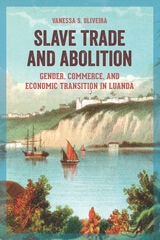
Slave Trade and Abolition
Gender, Commerce, and Economic Transition in LuandaVanessa S. Oliveira
University of Wisconsin Press, 2022
Vanessa S. Oliveira traces how existing commercial networks adapted to changes in the Atlantic slave trade during the first half of the nineteenth century. Slave Trade and Abolition reveals how women known as donas (a term adapted from the title granted to noble and royal women in the Iberian Peninsula) were often important cultural brokers. Acting as intermediaries between foreign and local people, they held high socioeconomic status and even competed with the male merchants who controlled the trade. Oliveira provides rich evidence to explore the many ways this Luso-African community influenced its society. In doing so, she reveals an unexpectedly nuanced economy with regard to the dynamics of gender and authority.
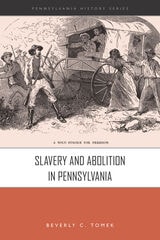
Slavery and Abolition in Pennsylvania
Beverly C. Tomek
Temple University Press, 2021
In her concise history Slavery and Abolition in Pennsylvania, Beverly Tomek corrects the long-held notion that slavery in the North was “not so bad” as, or somehow “more humane” than, in the South due to the presence of abolitionists. While the Quaker presence focused on moral and practical opposition to bondage, slavery was ubiquitous. Nevertheless, Pennsylvania was the first state to pass an abolition law in the United States.
Slavery and Abolition in Pennsylvania traces this movement from its beginning to the years immediately following the American Civil War. Discussions of the complexities of the state’s antislavery movement illustrate how different groups of Pennsylvanians followed different paths in an effort to achieve their goal. Tomek also examines the backlash abolitionists and Black Americans faced. In addition, she considers the civil rights movement from the period of state reconstruction through the national reconstruction that occurred after the Civil War.
While the past few decades have shed light on enslavement and slavery in the South, much of the story of northern slavery remains hidden. Slavery and Abolition in Pennsylvania tells the full and inclusive story of this history, bringing the realities of slavery, abolition, and Pennsylvania's attempt to reconstruct its post-emancipation society.
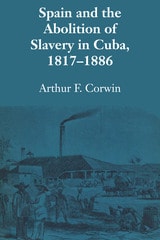
Spain and the Abolition of Slavery in Cuba, 1817–1886
By Arthur F. Corwin
University of Texas Press, 1967
This book explores the abolition of African slavery in Spanish Cuba from 1817 to 1886—from the first Anglo-Spanish agreement to abolish the slave trade until the removal from Cuba of the last vestige of black servitude. Making extensive use of heretofore untapped research sources from the Spanish archives, the author has developed new perspectives on nineteenth-century Spanish policy in Cuba. He skillfully interrelates the problem of slavery with international politics, with Cuban conservative and liberal movements, and with political and economic developments in Spain itself.
Arthur Corwin finds that the study of this problem falls naturally into two phases, the first of which, 1817–1860, traces the gradual reduction of the African traffic to the Spanish Antilles and constitutes, in effect, a study in Anglo-Spanish diplomacy. He gives special attention here to the aggressive nature of British abolitionist diplomacy and the mounting but generally ineffective indignation resulting from Spanish failure to apply sanctions against the traffic, as well as the increasing North American interest in the annexation of Cuba. The first phase has for its principal theme the manner in which for decades Spain feigned compliance with agreements to end the slave trade while actually protecting slaveholding interests as the best means of holding Cuba.
The American Civil War, which destroyed the greatest bulwark of black slavery in the New World, marked the opening of a new phase, 1860–1886. The author strongly emphasizes here such influences as the rise of the Creole reform movement in Cuba and Puerto Rico, which, reading the signs of the times, gave the initial impulse to a Spanish abolitionist movement and contributed to closing the Cuban slave trade in 1866; the liberal revolution of 1868 in Spain and its promise of colonial reforms; the outbreak of the great Creole rebellion in Cuba, 1868–1878, and the abolitionist promises of the rebel chieftains; the threat of American intervention and the abolitionist pressure of American diplomacy; and the protests of the Spanish reactionaries in Spain and Cuba, leading to further procrastination in Madrid. The second phase has as its principal theme the shaping, through all these intertwined factors, of Spain’s first measure of gradual emancipation, the Moret Law of 1870, and all subsequent steps toward abolition.

Tendings
Feminist Esoterisms and the Abolition of ManNathan Snaza
Duke University Press, 2024
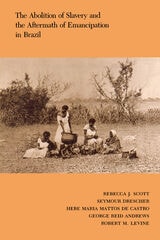
The Abolition of Slavery and the Aftermath of Emancipation in Brazil
Rebecca Scott, Seymour Drescher, Hebe Maria Mattos de Castro, George Reid Andrews, and Robert Levine
Duke University Press, 1988
The articles presented here represent a broad scope of scholarly inquiry that covers developments across a wide canvas of Brazilian history and accentuates the importance of formal abolition as a watershed in that nation’s development.

The Abolition of Species
Dietmar Dath
Seagull Books, 2012
Cyrus the Lion sends the wolf Dmitri Stepanovich on a diplomatic mission, and in the course of his journey he discovers truths about natural history, war, and politics for which he was unprepared. The subsequent war that breaks out in The Abolition of Species will come to span three planets and thousands of years—encompassing treachery and massacres, music and mathematics, savagery and decadence, as well as the terraformation of Mars and Venus and the manipulation of time itself. By turns grandiose, horrific, erotic, scathing, and visionary, The Abolition of Species is a tale of love and war after the fall of man and an epic meditation on the theory of evolution unlike any other.

The Dutch Atlantic
Slavery, Abolition and EmancipationKwame Nimako and Glenn Willemsen
Pluto Press, 2011
The Dutch Atlantic interrogates the Dutch involvement in Atlantic slavery and assesses the historical consequences of this for contemporary European society.
Kwame Nimako and Glenn Willemsen show how the slave trade and slavery intertwined economic, social and cultural elements, including nation-state formation in the Netherlands and across Europe. They explore the mobilisation of European populations in the implementation of policies that facilitated Atlantic slavery and examine how European countries created and expanded laws that perpetuated colonisation.
Addressing key themes such as the incorporation of the formerly enslaved into post-slavery states and contemporary collective efforts to forget and/or remember slavery and its legacy in the Netherlands, this is an essential text for students of European history and postcolonial studies.
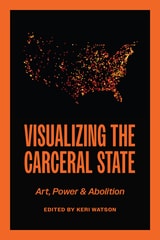
Visualizing the Carceral State
Art, Power, and AbolitionKeri Watson
University of Arkansas Press, 2027
Visualizing the Carceral State: Art, Power, and Abolition explores how visual culture has shaped, justified, and contested systems of incarceration. Bringing together leading scholars in art history and related fields, this interdisciplinary volume examines the images, objects, and spaces that have made the carceral state visible—in everything from prison architecture and colonial exhibitions to photography, print culture, and contemporary art. Across thirteen essays, contributors investigate how visual forms have helped construct public understandings of punishment, race, empire, and state authority. Thoughtfully edited by Keri Watson, Visualizing the Carceral State highlights cultural producers who have challenged these systems, offering alternative ways of seeing incarceration and imagining its abolition. Moving from the nineteenth century to the present and across multiple geopolitical contexts, this volume traces the visual languages through which carceral power operates and the creative practices that resist it. By situating art and visual culture at the center of debates about mass incarceration, Visualizing the Carceral State opens new avenues for thinking about the relationship between aesthetics, politics, and justice.