Results by title
106 books match the query 'Western' and 2 start with k
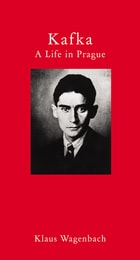
Kafka's Prague
Klaus Wagenbach
Haus Publishing, 2020
Drawing from a range of documents and historical materials, this is the first book specifically dedicated to the relationship between Kafka and Prague. Klaus Wagenbach’s account of Kafka’s life in the city is a meticulously researched insight into the author’s family background, his education and employment, his attitude toward the town of his birth, his literary influences, and his relationships with women. The result is a fascinating portrait of the twentieth century’s most enigmatic writer and the city that provided him with so much inspiration. W. G. Sebald recognized that “literary and life experience overlap” in Kafka’s works, and the same is true of this book.
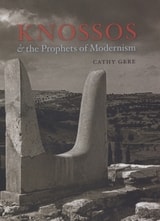
Knossos and the Prophets of Modernism
Cathy Gere
University of Chicago Press, 2009
In the spring of 1900, British archaeologist Arthur Evans began to excavate the palace of Knossos on Crete, bringing ancient Greek legends to life just as a new century dawned amid far-reaching questions about human history, art, and culture. With Knossos and the Prophets of Modernism, Cathy Gere relates the fascinating story of Evans’s excavation and its long-term effects on Western culture. After the World War I left the Enlightenment dream in tatters, the lost paradise that Evans offered in the concrete labyrinth—pacifist and matriarchal, pagan and cosmic—seemed to offer a new way forward for writers, artists, and thinkers such as Sigmund Freud, James Joyce, Giorgio de Chirico, Robert Graves, and Hilda Doolittle.
Assembling a brilliant, talented, and eccentric cast at a moment of tremendous intellectual vitality and wrenching change, Cathy Gere paints an unforgettable portrait of the age of concrete and the birth of modernism.