5550 books match the query 'Biography & Autobiography' and 59 start with k
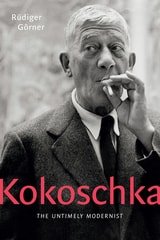
cover of Kokoschka: The Untimely Modernist

Kokoschka

The Untimely Modernist

Rüdiger Görner

Haus Publishing, 2024

The Austrian artist Oskar Kokoschka (1886–1980) achieved global fame with his intense expressionistic portraits and landscapes. In this first English-language biography, Rüdiger Görner depicts the artist in all his fascinating and contradictory complexity. He traces Kokoschka’s path from bête noire of the bourgeoisie and “hunger artist” who had to flee the Nazis to a wealthy and cosmopolitan political and critical artist who played a significant role in shaping the European art scene of the twentieth century and whose relevance is undiminished to this day. 

In Kokoschka: A Life in Art, Görner emphasizes the artist’s versatility. Kokoschka, although best known for his expressionistic portraits and landscapes, was more than a mere visual artist: his achievements as a playwright, essayist, and poet bear witness to a remarkable literary talent. Music, too, played a central role in his work, and a passion for teaching led him to establish in 1953 the School of Seeing, an unconventional art school intended to revive humanist ideals in the horrific aftermath of war.  This biography shows brilliantly how all the pieces of Kokoschka’s disparate interests and achievements cohered in the richly creative life of a singular artist.
[more]
cover of Kore-eda Hirokazu

Kore-eda Hirokazu

Marc Yamada

University of Illinois Press, 2023

Films like Shoplifters and After the Storm have made Kore-eda Hirokazu one of the most acclaimed auteurs working today. Critics often see Kore-eda as a director steeped in the Japanese tradition defined by Yasujirō Ozu. Marc Yamada, however, views Kore-eda’s work in relation to the same socioeconomic concerns explored by other contemporary international filmmakers. Yamada reveals that a type of excess, not the minimalism associated with traditional aesthetics, defines Kore-eda’s trademark humanism. This excess manifests in small moments when a desire for human connection exceeds the logic of the institutions and policies formed by the neoliberal values that have shaped modern-day Japan. As Yamada shows, Kore-eda captures the shared spaces formed by bodies that move, perform, and assemble in ways that express the humanistic impulse at the core of the filmmaker’s expanding worldwide appeal.
[more]
cover of Korea Letters in the William Elliot Griffis Collection: An Annotated Selection

Korea Letters in the William Elliot Griffis Collection

An Annotated Selection

Young-mee Yu Cho

Rutgers University Press, 2024

William Elliot Griffis (1843 – 1928) graduated from Rutgers College in 1869 and taught four years in Fukui and Tokyo. After his return to the United States, he devoted himself to his research and writing on East Asia throughout his life. He authored 20 books about Japan and five books about Korea including, Corea: The Hermit Nation (1882), Corea, Without and Within: Chapters on Corean History, Manners and Religion (1885), The Unmannerly Tiger, and Other Korean Tales (1911), A Modern Pioneer in Korea: The Life Story of Henry G. Appenzeller (1912), and Korean Fairy Tales (1922). In particular, his bestseller, Corea: The Hermit Nation (1882) was reprinted numerous times through nine editions over thirty years. He was not only known as "the foremost interpreter of Japan to the West before World War I but also the American expert on Korea. After his death, his collection of books, documents, photographs and ephemera was donated to Rutgers.

The Korean materials in the Griffis Collection at Rutgers University consist of journals, correspondence, articles, maps, prints, photos, postcards, manuscripts, scrapbooks, and ephemera. These papers reflect Griffis's interests and activities in relation to Korea as a historian, scholar, and theologian. They provide a rare window into the turbulent period of late nineteenth- and twentieth-century Korea, witnessed and evaluated by Griffis and early American missionaries in East Asia. The Korea Letters in the William Elliot Griffis Collection are divided into two parts: letters from missionaries and letters from Japanese and Korean political figures. Newly available and accessible through this collection, these letters develop a multifaceted history of early American missionaries in Korea, the Korean independence movement, and Griffis's views on Korean culture.
[more]
cover of Kurt Kren: Structural Films

Kurt Kren

Structural Films

Edited by Nicky Hamlyn, Simon Payne, and A. L. Rees

Intellect Books, 2016
Kurt Kren was a vital figure in Austrian avant-garde cinema of the postwar period. His structural films—often shot frame-by-frame following elaborately prescored charts and diagrams—have influenced filmmakers for decades, even as Kren himself remained a nomadic and obscure public figure. Kurt Kren, edited by Nicky Hamlyn, Simon Payne, and A. L. Rees, brings together interviews with Kren, film scores, and classic, out-of-print essays, alongside the reflections of contemporary academics and filmmakers, to add much-needed critical discussion of Kren’s legacy. Taken together, the collection challenges the canonical view of Kren that ignores his underground lineage and powerful, lyrical imagery.
[more]
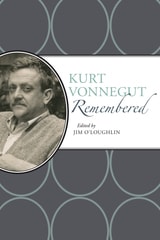
cover of Kurt Vonnegut Remembered

Kurt Vonnegut Remembered

Edited by Jim O'Loughlin

University of Alabama Press, 2019

A collection of reminiscences that illuminate the career and private life of the iconic author of 'Slaughterhouse-Five'
 
Kurt Vonnegut (1922–2007), who began his writing career working for popular magazines, held both literary aspirations and an attraction to genre fiction. His conspicuous refusal to respect literary boundaries was part of what made him a countercultural icon in the 1960s and 1970s. Vonnegut’s personal life was marked in large part by public success and private turmoil. Two turbulent marriages, his sudden adoption of his late sister’s four children (and the equally sudden removal of one of those children), and a mid-eighties suicide attempt all signaled the extent of Vonnegut’s inner troubles. Yet, he was a generous friend to many, maintaining close correspondences throughout his life.

Kurt Vonnegut Remembered gathers reminiscences—by those who knew him intimately, and from those met him only once—that span Vonnegut’s entire life. Among the anecdotes in this collection are remembrances from his immediate family, reflections from his comrades in World War II, and tributes from writers he worked with in Iowa City and from those who knew him when he was young. Editor Jim O’Loughlin offers biographical notes on Vonnegut’s relationship with each of these figures.
 
Since Vonnegut’s death, much has been written on his life and work, but this new volume offers a more generous view of his life, particularly his last years. In O’Loughlin’s introduction to the volume, he argues that we can locate and understand Vonnegut’s best self through his public persona, and that in his performance as the kind and humane figure that many of the speakers here knew him as, Vonnegut became a better person than he ever felt himself to be.
[more]
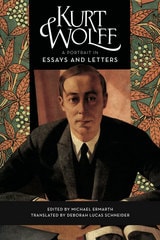
cover of Kurt Wolff: A Portrait in Essays and Letters

Kurt Wolff

A Portrait in Essays and Letters

Kurt Wolff

University of Chicago Press, 1991
Kurt Wolff (1887-1963) was a singular presence in the literary world of the twentieth century, a cultural force shaping modern literature itself and pioneering significant changes in publishing. During an intense, active career that spanned two continents and five decades, Wolff launched seven publishing houses and nurtured an extraordinary array of writers, among them Franz Kafka, Lou Andreas-Salomé, Boris Pasternak, Günter Grass, Robert Musil, Paul Valéry, Julian Green, Lampedusa, and Anne Morrow Lindbergh.
[more]
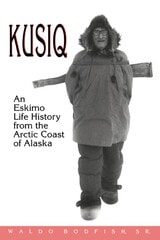
cover of Kusiq: An Eskimo Life History from the Arctic Coast of Alaska.

Kusiq

An Eskimo Life History from the Arctic Coast of Alaska.

Waldo Bodfish Sr.

University of Alaska Press, 1991

If you are a casual reader who wants an intriguing glimpse into Eskimo life, a novice oral historian who wants to know how it is done right, or a student of Alaska who wants an Inupiat perspective of the changes that swept the western Arctic this century, read Kusiq.
(Journal of the West)

A vivid 'inside' account of an observant Eskimo male who mastered much of the traditional subsistence technology and lore and who lived through the end of commercial whaling, the development and decline of introduced reindeer herding and the fur market, and through World War II and its aftermath. In its scope as well as in the presentation of historical, cultural, and linguistic context,Kusiq is far more extensive than [other] autobiographies.
(American Indian Culture and Research Journal)

Kusiq represents a new wave in literature, the expressions of cultural awakenings among native American cultures, the attempt to redefine the native world in written form, to recast history, a history for too long the domain of the white system.
(ARCTIC)

It would be difficult to find a better, more interesting first-person account of Eskimo life during the first half of this century. [It is] second in an ambitious series of oral histories developed by the University of Alaska Press.
(Scan-A-Book)

The collaborators for this book include William Schneider, curator of oral history at the Elmer E. Rasmuson Library, University of Alaska Fairbanks; Leona Kisautaq Okakok, manager of the Arctic Education Foundation at the Arctic Slope Regional Corporation; and James Mumigana Nageak, coordinator of bilingual and multicultural instruction at the North Slope Borough School District. Schneider recorded and compiled Bodfish's stories, while Okakok and Nageak, both Inupiaq Eskimo language specialists, contributed their skills in interviewing, translating, and clarifying Inupiaq concepts. The book contains twelve chapters of Bodfish's narrative, background and commentary by the collaborators, and information on pronunciation, personal names, genealogical relations, and place names.
[more]
cover of Kwame Nkrumah: The Father of African Nationalism

Kwame Nkrumah

The Father of African Nationalism

Jeffrey S. Ahlman

Ohio University Press, 1998
The first African statesman to achieve world recognition was Kwame Nkrumah (1909-1972), who became president of the new Republic of Ghana in 1960. He campaigned ceaselessly for African solidarity and for the liberation of southern Africa from white settler rule. His greatest achievement was to win the right of black peoples in Africa to have a vote and to determine their own destiny. He turned a dream of liberation into a political reality. He was the leader of Ghana who urged Africa to shed the colonial yoke and who inspired black people everywhere to seek their freedom. This revised edition of Birmingham’s fine and accessible biography chronicles the public accomplishments of this extraordinary leader, who faced some of the century’s most challenging political struggles over colonial transition. African nationalism, and pan-Africanism. It also relates some of the personal trials of a complex individual. As a student in America in the late 1930s, Nkrumah, shy, disorganized, but ambitious and persistent, earned four degrees in ten years. For political training he then went to England. Nkrumah found writing difficult throughout his lifetime, but once back in his African homeland, with its oral heritage, Nkrumah blossomed as a charming conversationalist, a speechmaker, and eventually a visionary and inspiring leader. Nkrumah’s crusades were controversial, however, and in the 1960s he gradually lost his heroic stature both among his own people and among his fellow leaders. He lived his last years in exile. This remarkable life story, which touches on many of the issues facing modern Africa, will open a window of understanding for the general leader as well as for graduate and undergraduate classes. In this new edition, Birmingham also examines Nkrumah’s exile and provides insight into the image of Nkrumah that has emerged in the light of research recently published.
[more]
cover of Kwame Nkrumah: Visions of Liberation

Kwame Nkrumah

Visions of Liberation

Jeffrey S. Ahlman

Ohio University Press, 2021

A new biography of Ghana’s Kwame Nkrumah, one of the most influential political figures in twentieth-century African history. As the first prime minister and president ofthe West African state of Ghana, Kwame Nkrumah helped shape the global narrative of African decolonization. After leading Ghana to independence in 1957, Nkrumah articulated a political vision that aimed to free the country and the continent—politically, socially, economically, and culturally—from the vestiges of European colonial rule, laying the groundwork for a future in which Africans had a voice as equals on the international stage. Nkrumah spent his childhood in the maturing Gold Coast colonial state. During the interwar and wartime periods he was studying in the United States. He emerged in the postwar era as one of the foremost activists behind the 1945 Manchester Pan-African Congress and the demand for an immediate end to colonial rule. Jeffrey Ahlman’s biography plots Nkrumah’s life across several intersecting networks: colonial, postcolonial, diasporic, national, Cold War, and pan-African. In these contexts, Ahlman portrays Nkrumah not only as an influential political leader and thinker but also as a charismatic, dynamic, and complicated individual seeking to make sense of a world in transition.
[more]