Results by title
1048 books match the query 'African American & Black' and 32 start with l

Ladies of the Throne
Léonora Miano
Diaphanes, 2025
“Most of the time, it is the power of men that we remember.” With these words, which open Léonora Miano’s text for Objects Talk Back, an astonishing new narrative unfurls around Mandu Yenu, a throne from the ancient Kingdom of Bamum (present day Cameroon).
The Germans long claimed the object was a gift from King Njoya to Kaiser Wilhelm II. Miano reads “between the lines of beads and cowrie shells” to show the complex intricacies of colonial and gender relations. Dismissing all pretense of egalitarianism between colonizer and colonized, she hones in on the very nature of power—how and by whom it is defined-wielded-subverted.
King Njoya said he “felt like a woman in his relationship with the Germans.” Miano takes this as a prompt to examine contrasting cultural notions of femininity and thus reveals how central women are to the story of the throne. As the very name of the object suggests, it is the power of women we should remember.

Langston Hughes and the *Chicago Defender*
Essays on Race, Politics, and Culture, 1942-62Langston Hughes. Edited by Christopher C. De Santis
University of Illinois Press, 1995
But it was as a columnist for the famous African-American newspaper the Chicago Defender that Hughes chronicled the hopes and despair of his people. For twenty years, he wrote forcefully about international race relations, Jim Crow, the South, white supremacy, imperialism and fascism, segregation in the armed forces, the Soviet Union and communism, and African-American art and culture. None of the racial hypocrisies of American life escaped his searing, ironic prose.
This is the first collection of Hughes's nonfiction journalistic writings. For readers new to Hughes, it is an excellent introduction; for those familiar with him, it gives new insights into his poems and fiction.
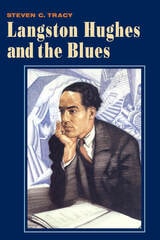
Langston Hughes and the Blues
Steven C. Tracy
University of Illinois Press, 2024

Las Palmas
Keith Jones
Omnidawn, 2026
The poems of Las Palmas conjure, walk beside, and tarry with the entangled grief of the long histories and violences in which we are all still embedded. Jones offers homage to the anguished beauties and truths that poet Jay Wright once said were “the disturbances” that “our ancestors create in us.” Grounded in musicality and haptics, Las Palmas seeks to salvage and mend while meditating on materiality, loss, cartography, kinship, displacement, coloniality, the “modern” world, and climate disasters. Throughout this collection, Keith Jones finds truth and community amid despair and the cruelest of circumstances, working through traumatic intimacies and mapping new imaginaries.
Las Palmas is the winner of the 2023 Omnidawn Poetry Chapbook Contest, selected by Brody Parrish Craig.

Laughing at the End of the World
Unsettling Laughter in Black LiteratureDiego A. Millan
Duke University Press, 2027

Leap & Grow Feathers
Yona Harvey
Four Way Books, 2026
Both an instruction and a divination, Leap & Grow Feathers is an extraordinary transmission. In her third full-length collection, Yona Harvey listens — to her predecessors, her instincts, and her environment — gleaning sense from the static fraying our nerves, knowing the personal and the historical travel along the same frequency. Responding to the physical disruption and emotional disassociation of of the COVID-19 pandemic, the poet argues that the societal insistence on returning to “business as usual” reflects an institutional, academic, and political ineptitude to provide either physiological healing or social repair, a structural denial that erodes our humanity. As authoritarianism and ecological devastation progressively encroach on our lives, these poems prioritize hoodoo, spirit, intuition, and ancestral conversations in their readings, invoking the carekeeping and persistence of Harriet Tubman, Nikki Giovanni, and the countless forbears, unnamed and named, who traveled the Middle Passage and the Kalunga Crossing. This book channels the power and promise of that legacy as well as the full emotional range of sisterhood, the heartache and borrowed strength and shared laughter. Its humor, whitespace, sparseness, and longform narratives elicit reader participation and, in turn, enduring consideration. "This float. This bob. This drown. This rock. // (This Rock. This Rock.) // This Great Goddamn." What do we find in this vastness, the simultaneity of the ever expanding time that lies ahead and full presence of history consolidating here now? An invitation to join Harvey in her vow: “May I never pretend, / May eye be I.” This collection unveils our vision so we can see it all, not only yesterday’s “Nina Simone lyric / Spun out over a newborn Sunday” in this very moment but also the music unfurling over each incipient morning of the future world we might build together. Leap & Grow Feathers describes and directs: everything we need to survive, to shelter one another, and to protect the Earth lives already in our bodies, our lineages, and our lore.
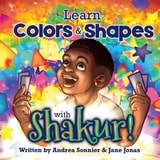
Learn Colors and Shapes with Shakur!
A Shakur Series Board BookAndrea Sonnier
Gallaudet University Press, 2024
About the Shakur Series:
The Shakur Series features Black deaf characters who use American Sign Language, offering a unique and inclusive reading experience for children. The vibrant illustrations showcase a signing family and will captivate young minds, while the engaging text reinforces learning. These charming board books contain positive messages and practical lessons, support early childhood development, and encourage children to explore the world with Shakur. This series honors and celebrates Black deaf experiences through everyday adventures that will resonate with young children and their families.
Published in partnership with The Laurent Clerc National Deaf Education Center.
Legacies of Slavery
Shared History and Family Conversations with Myra Davis-Branic, Frye Gaillard, and Kern JacksonEdited by Frye Gaillard
University of Alabama Press, 2026
Documents conversations between two southern writers and friends whose families were intertwined in slavery
Legacies of Slavery commemorates a story of racial reconciliation in the South. Writers, educators, and friends Frye Gaillard and Myra Davis-Branic discovered a shared family history of slavery in Eutawville, South Carolina, where Davis-Branic’s family was enslaved by Gaillard’s family.
In 2024, the University of South Alabama’s Kern Jackson moderated three conversations with Davis-Branic and Gaillard in Mobile. These conversations are presented here in an edited format. Davis-Branic and Gaillard discussed their intertwined family history and what they each learned from research into their ancestors. They relay origin stories and the role of a key grandparent who greatly impacted their lives. They also talk about their own trajectories in a historical context, the issue of slavery in their families, and the legacy of slavery for their children and families.
The book concludes with short excerpts, one from Davis-Branic’s book Cornbread My Soul: The Davis Family of Eutawville, South Carolina, and one from Gaillard’s family history, Lessons from the Big House: One Family’s Passage Through the History of the South, a Memoir. Legacies of Slavery stands as a powerful and unique documentation for all who are interested in how two southern families, bound by slavery in the past and now by friendship and a degree of understanding, have found some measure of redemption.
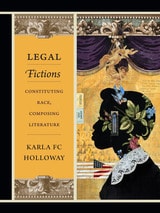
Legal Fictions
Constituting Race, Composing LiteratureKarla FC Holloway
Duke University Press, 2014

Les Matériaux
Une autre histoire de l’art moderneMonika Wagner
Diaphanes, 2025
Utilizing exemplary works, Monika Wagner considers traditional materials, as well as materials that have been newly developed or are originally foreign to art, placing them beyond the personal mythologies of individual artists and in the context of their ordinary uses and attributes. This critical reconstruction of their meaning opens up a new avenue for understanding modern art. The materials discussed and studied are at the heart of twentieth-century art, from color in painting to everyday and natural objects, and even the most intangible materials such as air and light. The examples chosen by Wagner reveal what these materials tell us in the conjunction of their uses throughout history and their assignments to society or gender. Numerous illustrations complement and illuminate the analyses of the works studied.

Lessons in Gratitude
A Memoir on Race, the Arts, and Mental HealthAaron P. Dworkin
University of Michigan Press, 2024
Aaron’s unique journey, which begins with his adoption by a white Jewish couple from Chicago at two weeks of age, leads him to the ultimate reunification with his birth family at the age of 31. Lessons of Gratitude is a coming of age story that examines the difficulties of biracial identity across generations and the challenges that mixed race families still face today. It is also a painful and honest adoption memoir, further complicating the narrator’s experiences of racial identity throughout his life and shaping his experiences with his own children. Through his work in the arts and the impact of this work, Dworkin has been able to “pay forward” the first thing that offered him unconditional love—music.
Lessons in Gratitude
A Memoir on Race, the Arts, and Mental HealthAaron P. Dworkin
University of Michigan Press, 2024
Aaron’s unique journey, which begins with his adoption by a white Jewish couple from Chicago at two weeks of age, leads him to the ultimate reunification with his birth family at the age of 31. Lessons in Gratitude is a coming of age story that examines the difficulties of biracial identity across generations and the challenges that mixed race families still face today. It is also a painful and honest adoption memoir, further complicating the narrator’s experiences of racial identity throughout his life and shaping his experiences with his own children. Through his work in the arts and the impact of this work, Dworkin has been able to “pay forward” the first thing that offered him unconditional love—music.
Let It Be Broke
Ed Pavlic
Four Way Books, 2020
Let Me See It
StoriesJames Magruder
Northwestern University Press, 2014
James Magruder’s collection of linked stories follows two gay cousins, Tom and Elliott, from adolescence in the 1970s to adulthood in the early ’90s. With a rueful blend of comedy and tenderness, Magruder depicts their attempts to navigate the closet and the office and the lessons they learn about libidinous coworkers, résumé boosting, Italian suffixes, and frozen condoms. As Tom and Elliot search for trusting relationships while the AIDS crisis deepens, their paths diverge, leading Tom to a new sense of what matters most. Magruder is especially adept at rendering the moments that reveal unwritten codes of behavior to his characters, who have no way of learning them except through painful experience.
Loss is sudden, the fallout portrayed with a powerful economy. In Tom and Elliott, readers come to recognize themselves, driven by the same absurd desires and unconscious impulses, subjected to the same fates.
Let Us Alone
The Origins of Baltimore's Police StateMichael Casiano
University of Illinois Press, 2025

Letters from the Black Ark
D.S. Marriott
Omnidawn, 2023
The poems in this collection center on the word “dub,” which accrues a subtle lyrical connotation throughout its various forms and meanings—to bestow, vest, crown, and also to suspend, reverb, echo, and sever. Dub poetry plays with revealing and concealing, while also pointing the way to the conditions that produce black poetic music. In D.S. Marriott’s poetry, tragic catastrophes of current black existence—London knife crime, the Windrush scandal, Grenfell, and deadly race violence—are portrayed as questions of language. To speak this language, as Marriott’s poem show, is to take on the forces that cause rupture. Throughout these poems of loss, exile, and obliteration, the poet foresees his downfall and metamorphosis, ultimately realizing too late that he cannot transcend the reverberations and echoes laden with black social death.
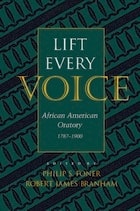
Lift Every Voice
African American Oratory, 1787-1901Philip S. Foner
University of Alabama Press, 1997
The essential collection of African American voices that shaped the struggle for freedom, equality, and citizenship.
Lift Every Voice is a completely revised, updated, and expanded version of Philip Foner's 1972 classic Voice of Black America, which Library Journal hailed as "indispensable.""This well-edited and
richly inclusive work," wrote Benjamin Quarles, "unveils the full sweep of Black expression as found in platform addresses" by "men and women who join eloquence with reason in articulating their
grievances and their aspirations and in arousing their listeners with their ringing and prophetic challenges." This new collection includes over 60 additional texts and revised and expanded introductory essays that provide historical, biographical, and critical information for each speech.
For Americans of the 19th century, as W. E. B. Du Bois observed, eloquent speeches were 'the shining lights of civilization' that both expressed and sought to improve the lives and communities from which they sprang. Through political speeches, sermons, lectures, oral testimonies, and ceremonial addresses, African Americans offered diverse responses to the issues and events of their times, including not only slavery and racial equality but also women's rights, education, religion, immigration, socialism, war, Indian policy, and labor organization, among others. The speeches in this
collection are among the most powerful expressions of African American opinions on these issues and were delivered on occasions and before audiences where the speakers believed their words might be transformative.
Containing more than 150 speeches, this anthology represents the most extensive and diverse collection of African American oratory of the 18th and 19th centuries ever published. Lift Every Voice makes readily accessible not only the classic orations of such well-known figures as Frederick Douglass, Sojourner Truth, and Booker T. Washington but also dozens of lesser-known but important speeches deserving greater recognition and study. Many of these speeches are previously unpublished, uncollected, or long out of print.
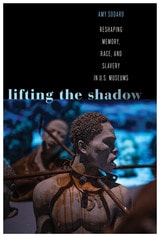
Lifting the Shadow
Reshaping Memory, Race, and Slavery in U.S. MuseumsAmy Sodaro
Rutgers University Press, 2025

Lighting the Shadow
Rachel Eliza Griffiths
Four Way Books, 2015
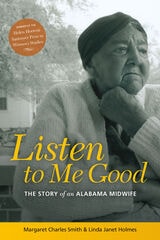
Listen to Me Good
The Story of an Alabama MidwifeMargaret Charles Smith and Linda Janet Holmes
The Ohio State University Press, 1996
Margaret Charles Smith, a ninety-one-year-old Alabama midwife, has thousands of birthing stories to tell. Sifting through nearly five decades of providing care for women in rural Greene County, she relates the tales that capture the life-and-death struggle of the birthing experience and the traditions, pharmacopeia, and spiritual attitudes that influenced her practice. She debunks images of the complacent southern “granny” midwife and honors the determination, talent, and complexity of midwifery.
Fascinating to read, this book is part of the new genre of writing that recognizes the credibility of midwives who have emerged from their own communities and were educated through apprenticeship and personal experience. Past descriptions of southern black midwives have tended to denigrate their work in comparison with professional established medicine. Believed to be the oldest living (though retired) traditional African American midwife in Alabama, Smith is one of the few who can recount old-time birthing ways. Despite claims that midwives contributed to high infant mortality rates, Smith’s story emphasizes midwives' successes in facing medical challenges and emergencies.
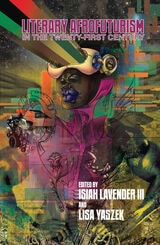
Literary Afrofuturism in the Twenty-First Century
Edited by Isiah Lavender III and Lisa Yaszek
The Ohio State University Press, 2020
In Literary Afrofuturism in the Twenty-First Century, eminent contributors pay tribute to Afrofuturism as a powerful and evolving aesthetic practice that communicates the experience of science, technology, and race across centuries, continents, and cultures. While Ryan Coogler and Janelle Monáe may have helped bring the genre into contemporary pop consciousness, it in fact extends back to the writing of eighteenth-century poet Phyllis Wheatley and has continued in the work of Samuel R. Delany, Octavia E. Butler, N. K. Jemisin, and many others. In examining this heritage, contributors in this volume question generic boundaries, recover lost artists and introduce new ones, and explore how the meteoric rise of a new, pan-African speculative literary tradition may or may not connect with Afrofuturism.
Additionally, the editors have marshaled some of today’s most exciting writers for a roundtable discussion of the genre: Bill Campbell, Minister Faust, Nalo Hopkinson, N. K. Jemisin, Chinelo Onwualu, Nisi Shawl, and Nick Wood. Pioneering author and editor Sheree R. Thomas limns how black women have led new developments in contemporary Afrofuturism, and artist Stacey Robinson’s illustrations orient readers to the spirited themes of this enduring and consequential literary tradition.
Literary Sisters
Dorothy West and Her Circle, A Biography of the Harlem RenaissanceMitchell, Verner D
Rutgers University Press, 2012
Harlem Renaissance writer Dorothy West led a charmed life in many respects. Born into a distinguished Boston family, she appeared in Gershwin’s Porgy and Bess, then lived in the Soviet Union with a group that included Langston Hughes, to whom she proposed marriage. She later became friends with Jacqueline Kennedy Onassis, who encouraged her to finish her second novel, The Wedding, which became the octogenarian author’s first bestseller.
Literary Sisters reveals a different side of West’s personal and professional lives—her struggles for recognition outside of the traditional literary establishment, and her collaborations with talented African American women writers, artists, and performers who faced these same problems. West and her “literary sisters”—women like Zora Neale Hurston and West’s cousin, poet Helene Johnson—created an emotional support network that also aided in promoting, publishing, and performing their respective works. Integrating rare photos, letters, and archival materials from West’s life, Literary Sisters is not only a groundbreaking biography of an increasingly important author but also a vivid portrait of a pivotal moment for African American women in the arts.
Little Armageddon
PoemsGregory Fraser
Northwestern University Press, 2021
It is our everyday explorations—the small explosions within life, family, and “ordinary” survival—that make up Gregory Fraser’s fourth collection of poetry, Little Armageddon. Fraser writes at eye level, detailing the experiences of fatherhood, love, and the quiet of daily life, poised at the brink of abrupt upheaval.
These poems are an exercise in precision and reflection. Free verse and prose show readers the life within the landscape. In “My Daughter and the Lizard,” the speaker reflects on grace, meditating on the reptile his child is inspecting: “I scissor-jab three holes through the lid / of a Mason jar and tell her to be gentle, / ‘It’s a living thing,’ I say, ‘not a toy.’”
We are how we live. These poems balance imagination and truth telling with rich verse that brings the reader’s ear closer to the quiet—and how intense it truly is.
Little Man, Little Man
A Story of ChildhoodJames Baldwin
Duke University Press, 1976
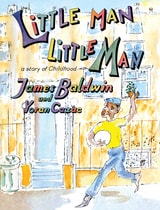
Now available for the first time in forty years, this new edition of Little Man, Little Man—which retains the charming original illustrations by French artist Yoran Cazac—includes a foreword by Baldwin’s nephew Tejan "TJ" Karefa-Smart and an afterword by his niece Aisha Karefa-Smart, with an introduction by two Baldwin scholars. In it we not only see life in 1970s Harlem from a black child’s perspective, but we also gain a fuller appreciation of the genius of one of America’s greatest writers.

Lloyd Gaines and the Fight to End Segregation
James W. Endersby and William T. Horner
University of Missouri Press, 2016
Winner, 2017 Missouri Conference on History Book Award
In 1936, Lloyd Gaines’s application to the University of Missouri law school was denied based on his race. Gaines and the NAACP challenged the university’s decision. Missouri ex rel. Gaines v. Canada (1938) was the first in a long line of decisions by the U.S. Supreme Court regarding race, higher education, and equal opportunity. The court case drew national headlines, and the NAACP moved Gaines to Chicago after he received death threats. Before he could attend law school, he vanished.
This is the first book to focus entirely on the Gaines case and the vital role played by the NAACP and its lawyers—including Charles Houston, known as “the man who killed Jim Crow”—who advanced a concerted strategy to produce political change. Horner and Endersby also discuss the African American newspaper journalists and editors who mobilized popular support for the NAACP’s strategy. This book uncovers an important step toward the broad acceptance of racial segregation as inherently unequal.
This is the inaugural volume in the series Studies in Constitutional Democracy, edited by Justin Dyer and Jeffrey Pasley of the Kinder Institute on Constitutional Democracy.

Lord, Please Don't Take Me in August
African-Americans in Newport and Saratoga Springs, 1870-1930Myra B. Young Armstead
University of Illinois Press, 1999
The lives built by Black Americans in a pair of summer resort towns
In the late nineteenth and early twentieth centuries, northern resort towns were in their heyday as celebrated retreats for America's wealthy. Lord, Please Don't Take Me in August documents the experiences of African Americans in Saratoga Springs, New York, and Newport, Rhode Island--towns that provided a recurring season of expanded employment opportunities, enhanced social life, cosmopolitan experience, and, in a good year, enough money to last through the winter.
Affirming that the decision to live in their tiny resort communities was conscious and deliberate, Myra B. Young Armstead shows how Afro-Saratogians and Afro-Newporters organized their rhythms, their routines, and their communities to create meaningful identities for themselves. Living on streets close to their churches, developing social organizations that promoted their standards of gentility and respectability, and lobbying for wider opportunities, these African Americans actively shaped their lives within the structures and limitations imposed on them.
Armstead situates the resort town between the poles of the rural South and the large industrial cities of the North. She shows how these small northern towns, with their seasonal economic rhythms and domestic wage work, permitted an important continuity between rural and urban lifestyles and a path from rural South to urban North besides the jarring, disruptive journey that often ended in the ghetto.
"Lord, Please Don't Take Me in August" tells a story that is at once American and uniquely African American: a story of economic imperatives and enlarged social aspirations culminating in a season--June, July, and August--that brought Blacks as close as they could get to the American Dream.
Lovable Racists, Magical Negroes, and White Messiahs
David Ikard
University of Chicago Press, 2017
In the book, Ikard explodes the fiction of a postracial society while awakening us to the sobering reality that we must continue to fight for racial equality or risk losing the hard-fought gains of the Civil Rights movement. Through his close reading of novels, films, journalism, and political campaigns, he analyzes willful white blindness and attendant master narratives of white redemption—arguing powerfully that he who controls the master narrative controls the perception of reality. The book sounds the alarm about seemingly innocuous tropes of white redemption that abound in our society and generate the notion that blacks are perpetually indebted to whites for liberating, civilizing, and enlightening them. In Lovable Racists, Magical Negroes, and White Messiahs, Ikard expertly and unflinchingly gives us a necessary critical historical intervention.
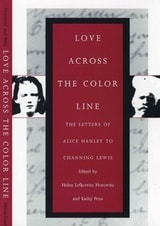
Love Across the Color Line
Helen Lefkowitz Horowitz
University of Massachusetts Press, 1996
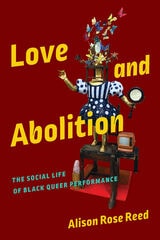
Love and Abolition
The Social Life of Black Queer PerformanceAlison Rose Reed
The Ohio State University Press, 2022
Reed identifies abolition literature as an emergent field of inquiry that emphasizes social relationships in the ongoing struggle to dismantle systems of coercion, criminalization, and control. Focusing on love as an affective modality and organizing tool rooted in the Black radical tradition’s insistence on collective sociality amidst unrelenting state violence, Reed provides fresh readings of visionaries such as James Baldwin, Ntozake Shange, Sharon Bridgforth, and vanessa german. Both abolitionist manifesto and examination of how Black queer performance offers affective modulations of tough and tender love, Love and Abolition ultimately calls for a critical reconsideration of the genre of prison literature—and the role of the humanities—during an age of mass incarceration.
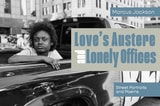
Love’s Austere and Lonely Offices
Street Portraits and PoemsMarcus Jackson
Northwestern University Press, 2026
An astounding collection of photographs from a renowned poet
Created during the tumultuous years of 2020 and 2021, Love’s Austere and Lonely Offices: Street Portraits and Poems intersects the lens of accomplished poet and photographer Marcus Jackson with his words. The focus: the Black experience and existence. Amid isolation, protest, and survival, Jackson is the aperture and scribe giving visual consciousness and breath to these human portraits. His camera strips the view of endless cycles of social and moral injustices, presenting a resonant collection of photographs that make space for the moments and the people whose beings represent the ongoing interplay between history, society, and the individual soul.
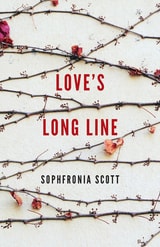
Love’s Long Line
Sophfronia Scott
The Ohio State University Press, 2018
Sophfronia Scott turns an unflinching eye on her life to deliver a poignant collection of essays ruminating on faith, motherhood, race, and the search for meaningful connection in an increasingly disconnected world.
In Love’s Long Line, Scott contemplates what her son taught her about grief after the shootings at his school, Sandy Hook Elementary; how a walk with Lena Horne became a remembrance of love for Scott’s illiterate and difficult steelworker father; the unexpected heartache of being a substitute school bus driver; and the satisfying fantasy of paying off a mortgage. Scott’s road is also a spiritual journey ignited by an exploration of her first name, the wonder of her physical being, and coming to understand why her soul must dance like Saturday Night Fever’s Tony Manero.
Inspired by Annie Dillard’s observation in Holy the Firm that we all “reel out love’s long line alone . . . like a live wire loosed in space to longing and grief everlasting,” Scott’s essays acknowledge the loneliness, longing, and grief exacted by a fearless engagement with the everyday world. But she shows that by holding the line, there is an abundance of joy and forgiveness and grace to be had as well.
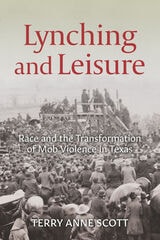
Lynching and Leisure
Race and the Transformation of Mob Violence in TexasTerry Anne Scott
University of Arkansas Press, 2022
Winner, 2022 Ottis Lock Endowment “Best Book” Award from the East Texas Historical Association
In Lynching and Leisure, Terry Anne Scott examines how white Texans transformed lynching from a largely clandestine strategy of extralegal punishment into a form of racialized recreation in which crowd involvement was integral to the mode and methods of the violence. Scott powerfully documents how lynchings came to function not only as tools for debasing the status of Black people but also as highly anticipated occasions for entertainment, making memories with friends and neighbors, and reifying whiteness. In focusing on the sense of pleasure and normality that prevailed among the white spectatorship, this comprehensive study of Texas lynchings sheds new light on the practice understood as one of the chief strategies of racial domination in the nineteenth- and twentieth-century South.