Results by title
86 books match the query 'Chile' and 4 start with l
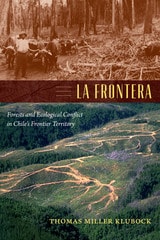
La Frontera
Forests and Ecological Conflict in Chile's Frontier TerritoryThomas Miller Klubock
Duke University Press, 2014
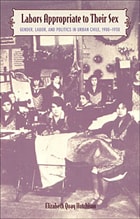
Labors Appropriate to Their Sex
Gender, Labor, and Politics in Urban Chile, 1900–1930Elizabeth Quay Hutchison
Duke University Press, 2001
In addition to population and industrial censuses, Hutchison culls published and archival sources to illuminate such misconceptions and to reveal how women’s paid labor became a locus of anxiety for a society confronting social problems—both real and imagined—that were linked to industrialization and modernization. The limited options of working women were viewed by politicians, elite women, industrialists, and labor organizers as indicative of a society in crisis, she claims, yet their struggles were also viewed as the potential springboard for reform. Labors Appropriate to Their Sex thus demonstrates how changing norms concerning gender and work were central factors in conditioning the behavior of both male and female workers, relations between capital and labor, and political change and reform in Chile.
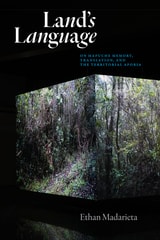
Land's Language
On Mapuche Memory, Translation, and the Territorial AporiaEthan Madarieta
Northwestern University Press, 2026
Presenting a new framework for understanding indigeneity and Indigenous peoples’ demands for territorial restitution
Asserting that the work of critical theory today must attend to an epistemic locality rather than the universalizing impulse of its European intellectual genealogy, Ethan Madarieta makes central to his study the literatures and philosophy of the Mapuche peoples of Wallmapu (comprising south-central regions of what are currently known as Chile and Argentina). In doing so, he argues that the primary site of settler and Indigenous antagonisms is not “land,” as is ubiquitously asserted, but the overlapping and incommensurate conceptual orders within which land and body are constituted and accrue meaning.
Land’s Language works to unsettle the stability and universality of how land and body are understood by calling into question what can or will be restored or returned and to whom. Drawing on Latin American and Mapuche historical, philosophical, and literary studies in dialogue with global critical theory and Anglophone critical Indigenous studies, this book demonstrates how Mapuche knowledge and thought, and that of each Indigenous nation across the planet, offer ways to live in ethical relation beyond that of the state and under the wider systemic hegemony of colonial racial capitalism.
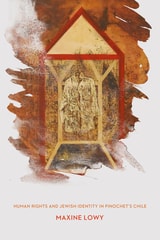
Latent Memory
Human Rights and Jewish Identity in ChileMaxine Lowy
University of Wisconsin Press, 2022
Maxine Lowy draws upon hundreds of first-person testimonials and archival resources to explore Chilean Jewish identity in the wake of Pinochet's coup, exposing the complex and sometimes contradictory development of collective traumatic memory and political sensibilities in an oppressive new context. Latent Memory points to processes of community gestures of moral reparation and signals the pathways to justice and healing associated with Shoah and the Jewish experience. Lowy asks how individuals and institutions may overcome fear, indifference, and convenience to take a stand even under intense political duress, posing questions applicable to any nation emerging from state repression.