Results by title
55 books match the query 'Civil society' and 5 start with l
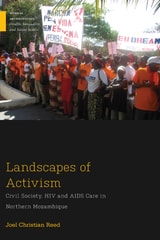
Landscapes of Activism
Civil Society, HIV and AIDS Care in Northern MozambiqueReed, Joel Christian
Rutgers University Press, 2018
Leadership From the Margins
Women and Civil Society Organizations in Argentina, Chile, and El SalvadorCosgrove, Serena
Rutgers University Press, 2010
Leadership from the Margins describes and analyzes the unique leadership styles and challenges facing the women leaders of CSOs in Argentina, Chile, and El Salvador. Based on ethnographic research, Serena Cosgrove's analysis offers a nuanced account of the distinct struggles facing women, and how differences of class, political ideology, and ethnicity have informed their outlook and organizing strategies. Using a gendered lens, she reveals the power and potential of women's leadership to impact the direction of local, regional, and global development agendas.
Liberals under Autocracy
Modernization and Civil Society in Russia, 1866–1904Anton A. Fedyashin
University of Wisconsin Press, 2012
With its rocky transition to democracy, post-Soviet Russia has made observers wonder whether a moderating liberalism could ever succeed in such a land of extremes. But in Liberals under Autocracy, Anton A. Fedyashin looks back at the vibrant Russian liberalism that flourished in the country’s late imperial era, chronicling its contributions to the evolution of Russia’s rich literary culture, socioeconomic thinking, and civil society.
For five decades prior to the revolutions of 1917, The Herald of Europe (Vestnik Evropy) was the flagship journal of Russian liberalism, garnering a large readership. The journal articulated a distinctively Russian liberal agenda, one that encouraged social and economic modernization and civic participation through local self-government units (zemstvos) that defended individual rights and interests—especially those of the peasantry—in the face of increasing industrialization. Through the efforts of four men who turned The Herald into a cultural nexus in the imperial capital of St. Petersburg, the publication catalyzed the growing influence of journal culture and its formative effects on Russian politics and society.
Challenging deep-seated assumptions about Russia’s intellectual history, Fedyashin’s work casts the country’s nascent liberalism as a distinctly Russian blend of self-governance, populism, and other national, cultural traditions. As such, the book stands as a contribution to the growing literature on imperial Russia's nonrevolutionary, intellectual movements that emphasized the role of local politics in both successful modernization and the evolution of civil society in an extraparliamentary environment.
Life, Emergent
The Social in the Afterlives of ViolenceYasmeen Arif
University of Minnesota Press, 2016
How does an inquiry into life as it lives (or dies) amid mass violence look like from the perspective of the “social”? Taking us from Sierra Leone to India to Lebanon, Life, Emergent challenges conventional understandings of biopolitics, weaving a politics of life through the lens of life, not death.
Arguing that the “letting die” element of biopolitics has been overemphasized, Yasmeen Arif zeros in on biopolitics’ other pole: “making live.” She does so by highlighting the various means and the forms of life configured in the aftermath—or afterlives—of violent events in contexts of law, justice, community, and identity. Her analysis of the social repercussions is both global and local in scope. Arif examines the convictions made in the Special Court of Sierra Leone, the first hybrid court of its nature under international criminal law. Next, she explores the making of a justice movement in the context of Hindu–Muslim violence in 2002 in the state of Gujarat, India. From there she revisits the Sikh carnage in Delhi of 1984. Finally, she explores a span of civil violence in Lebanon, and particularly, its effects on the city of Beirut.
This rigorously argued book brings together the various strands of life and the social that each chapter has disentangled—and in doing so it begins to frame a politics of, and in, life.
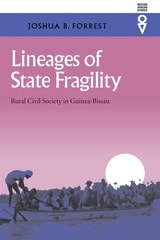
Lineages Of State Fragility
Rural Civil Society In Guinea-BissauJoshua B. Forrest
Ohio University Press, 2003
In Guinea-Bissau, as elsewhere in Africa, there is a disjuncture between the central state and rural civil society. It is this significant and overlooked aspect of Guinea-Bissau’s political evolution—the continuing ability of civil society to evade and thwart state power—that is at the heart of Joshua B. Forrest’s Lineages of State Fragility.
Professor Forrest argues that despite European influences, the contemporary fragility of African states can be fully appreciated only by examining the indigenous social context in which these states evolved. Focusing on Guinea-Bissau, Forrest exposes the emergence of a strong and adaptable “rural civil society” that can be traced back to precolonial times.
Lineages of State Fragility analyzes the social, political, and military experiences of this rural civil society to account for the origins of Guinea-Bissau’s soft state. For example, Forrest identifies interethnic social and military practices that became entrenched in rural social structures and continued to evolve through the colonial period, enabling Guinea-Bissauans to resist state predation.
Lineages of State Fragility offers an unorthodox explanation of African politics by tracing the direct social links among the precolonial, colonial, and postcolonial periods and affirms the role of rural actors in determining present-day political outcomes.
Based on remarkably extensive research conducted in archives in Guinea-Bissau, Senegal, and Portugal, Lineages of State Fragility represents both a new approach to the region’s past and present and an important synthesis of the political analysis that has come before.