Results by title
71 books match the query 'Conservation and restoration' and 6 start with l
Leaving the Pink House
Ladette Randolph
University of Iowa Press, 2014
On September 12, 2001, Randolph and her husband bought a dilapidated farmhouse on twenty acres outside Lincoln, Nebraska, and set about gutting and rebuilding the house themselves. They had nine months to complete the work. The project, undertaken at a time of national unrest and uncertainty, led Randolph to reflect on the houses of her past and the stages of her life that played out in each, both painful and joyful. As the couple struggles to bring the dilapidated house back to life, Randolph simultaneously traces the contours of a life deeply shaped by the Nebraska plains, where her family has lived for generations, and how those roots helped her find the strength to overcome devastating losses as a young adult. Weaving together strands of departures and arrivals, new houses and deep roots, cycles of change and the cycles of the seasons, Leaving the Pink House is a richly layered and compelling memoir of the meaning of home and family, and how they can never really leave us, even if we leave them.
Legacies of Space and Intangible Heritage
Archaeology, Ethnohistory, and the Politics of Cultural Continuity in the AmericasFernando Armstrong-Fumero
University Press of Colorado, 2017
Legacies of Space and Intangible Heritage is an interdisciplinary exploration of the intersections between the study and management of physical sites and the reproduction of intangible cultural legacies. The volume provides nine case studies that explore different ways in which place is mediated by social, political, and ecological processes that have deep historical roots and that continue to affect the politics of heritage management.
Spaces of human habitation are both historical records of the past and key elements in reproducing the knowledge and values that define lives in the present. Practices, knowledge, and skills that communities recognize as part of their culture—and that a range of legal statutes define as protected intangible heritages—are threatened by increased migration, the displacement of indigenous peoples, and limits on access to culturally or historically significant sites. This volume addresses how different physical environments contribute to the reproduction of cultural forms even in the wake of these processes of displacement and change. Case studies from North and South America reveal a pattern of abandonment and reestablishment of settlements and show how collective memory drives people back to culturally meaningful sites.
This tendency for communities to return to the sites that shaped their collective histories, along with the growing importance granted to intangible heritage, challenges archaeologists and other heritage workers to find new ways of incorporating the cultural legacies that link societies to place into the work of research and stewardship. By examining the politics of cultural continuity through the lenses of archaeology and ethnohistory, Legacies of Space and Intangible Heritage demonstrates this complex relationship between a people’s heritage and the landscape that affects the making of "place."
Contributors: Rani Alexander, Hannah Becker, Minette Church, Bonnie Clark, Chip Colwell, Winifred Creamer, Emiliana Cruz, T. J. Ferguson, Julio Hoil Gutierrez, Jonathan Haas, Saul Hedquist, Maren Hopkins, Stuart B. Koyiyumptewa, Christine Kray, Henry Marcelo Castillo, Anna Roosevelt, Jason Yaeger, Keiko Yoneda
Leonardo, The Last Supper
Pinin Brambilla Barcilon and Pietro C. Marani
University of Chicago Press, 2001
The technical problems with the Last Supper began as soon as Leonardo started to paint it. He jettisoned the traditional fresco technique of applying paint to wet plaster, a method unsuited to Leonardo's slow and thorough execution, and created the work instead with an experimental technique that involved painting directly on the dry plaster. With this renegade method, Leonardo rendered one of the most enduring painting techniques volatile and unstable. Added to this initial complication have been centuries of pollution, tourists, candle smoke, and the ravages of age, not to mention food fights in the refectory staged by Napoleonic soldiers and Allied bombs in 1943. By the middle of the twentieth century, the Last Supper was in desperate need of a complete restoration.
Pinin Brambilla Barcilon was chosen to head this twenty-year project, and Leonardo, The Last Supper is the official record of her remarkable effort. It first documents the cleaning and removal of the overpainting performed in the other attempts at restoration and then turns to Barcilon's meticulous additions in watercolor, which were based on Leonardo's preparatory drawings, early copies of the painting, and contemporary textual descriptions. This book presents full-scale reproductions of details from the fresco that clearly display and distinguish Leonardo's hand from that of the restorer. With nearly 400 sumptuous color reproductions, the most comprehensive technical documentation of the project by Barcilon, and an introductory essay by art historian and project codirector Pietro C. Marani that focuses on the history of the fresco, Leonardo, The Last Supper is an invaluable historic record, an extraordinarily handsome book, and an essential volume for anyone who appreciates the beauty, technical achievements, and fate of Renaissance painting.

Library as Safe Haven
Disaster Planning, Response, and Recovery; A How-To-Do-It Manual for LibrariansDeborah D. Halsted
American Library Association, 2014
Living Matter
The Preservation of Biological Materials in Contemporary Art: An International Conference Held in Mexico City, June 3–5, 2019Rachel Rivenc
J. Paul Getty Trust, The, 2022
Eggshells, flowers, onion peels, sponge cake, dried bread, breast milk, bacteria, living organisms—these are just a few of the biological materials that contemporary artists are using to make art. But how can works made from such perishable ingredients be preserved? And what logistical, ethical, and conceptual dilemmas might be posed by doing so?
Because they are prone to rapid decay, even complete disappearance, biological materials used in art pose a range of unique conservation challenges. This groundbreaking book probes the issues associated with displaying, collecting, and preserving these unique works of art. The twenty-four papers from the conference present a range of case studies, prominently featuring artists’ perspectives, as well as conceptual discussions, thereby affording a comprehensive and richly detailed overview of current thinking and practices on this topic. Living Matter is the first publication to explore broadly the role of biological materials in the creative process and present a variety of possible approaches to their preservation.
The free online edition of this open-access publication is available at www.getty.edu/publications/living-matter/ and includes videos and zoomable illustrations. Also available are free PDF, EPUB, and Kindle/MOBI downloads of the book.
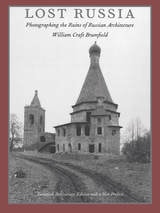
Lost Russia
Photographing the Ruins of Russian ArchitectureWilliam Craft Brumfield
Duke University Press, 1995
The twentieth century in Russia has been a cataclysm of rare proportions, as war, revolution, famine, and massive political terror tested the limits of human endurance. The results of this assault on Russian culture are particularly evident in ruined architectural monuments, some of which are little known even within Russia itself. Over the past four decades William Craft Brumfield, noted historian and photographer of Russian architecture, has traveled throughout Russia and photographed many of these neglected, lost buildings, poignant and haunting in their ruin. Lost Russia provides a unique view of Brumfield’s acclaimed work, which illuminates Russian culture as reflected in these remnants of its distinctive architectural traditions.
Capturing the quiet, ineffable beauty that graces these buildings, these photographs are accompanied by a text that provides not only a brief historical background for Russian architecture, but also Brumfield’s personal impressions, thoughts, and insights on the structures he views. Churches and monasteries from the fifteenth to the twentieth century as well as abandoned, ruined manor houses are shown—ravaged by time, willful neglect, and cultural vandalism. Brumfield also illustrates examples of recent local initiatives to preserve cultural landmarks from steady decline and destruction.
Concluding with photographs of the remarkable log architecture found in Russia’s far north, Lost Russia is a book for all those concerned with the nation’s cultural legacy, history, and architecture, and with historic and cultural preservation generally. It will also interest those who appreciate the fine art of exceptional photography.