Results by title
114 books match the query 'Decision Making' and 6 start with l
Landscape Learning in the Pleistocene Great Basin
David B. Hunt
University of Utah Press, 2025
Hunt seeks insight into the initial development of adaptive strategies related to the procurement of essential resources within a region. Incorporating data from archaeological investigation at the Old River Bed Delta in Utah and focusing specifically on the lithics recovered, Hunt develops what he terms the Discoverability Model. He proposes this model as a way for archaeologists to begin quantifying the qualitative aspects of colonization and landscape learning models.
Lawyers in Practice
Ethical Decision Making in ContextEdited by Leslie C. Levin and Lynn Mather
University of Chicago Press, 2012
How do lawyers resolve ethical dilemmas in the everyday context of their practice? What are the issues that commonly arise, and how do lawyers determine the best ways to resolve them? Until recently, efforts to answer these questions have focused primarily on rules and legal doctrine rather than the real-life situations lawyers face in legal practice.
The first book to present empirical research on ethical decision making in a variety of practice contexts, including corporate litigation, securities, immigration, and divorce law, Lawyers in Practice fills a substantial gap in the existing literature. Following an introduction emphasizing the increasing importance of understanding context in the legal profession, contributions focus on ethical dilemmas ranging from relatively narrow ethical issues to broader problems of professionalism, including the prosecutor’s obligation to disclose evidence, the management of conflicts of interest, and loyalty to clients and the court. Each chapter details the resolution of a dilemma from the practitioner’s point of view that is, in turn, set within a particular community of practice. Timely and practical, this book should be required reading for law students as well as students and scholars of law and society.
Leadership in the Time of Covid
Pandemic Responses in Central EuropeMilada Polisenská
Central European University Press, 2023
The Covid pandemic has put all modern societies to a serious test of resilience. The interdisciplinary research on which this book is based examined how four European governments behaved in these circumstances. During the months of the crisis, the team of experts coordinated by the editors of this volume took a close look at the decision-making processes in the Czech Republic, Hungary, Poland, and Slovakia – the so-called Visegrad Four.
The inquiries focused on experiences from the academic, health, economic and social fields. The methods of comparison included surveys, interviews, discourse analysis, for which the adaptive leadership theory provided the conceptual framework.
The conclusions are both academic and practical. Aside the description of the pandemic responses, the research had a formative dimension: how can an adaptive leadership approach better help societies manage the health and societal impacts of similar challenges? The spectrum of emerging anti-democratic tendencies in the region provided the specific context of the exercise. The four states face varying degrees of democratic backsliding as well as illiberal influences that have affected their response to the pandemic, which gives this research on the Visegrad Four a worldwide resonance.
Legislative Style
William Bernhard and Tracy Sulkin
University of Chicago Press, 2018
Bernhard and Sulkin have developed a systematic approach for looking at legislative style through a variety of criteria, including the number of the bills passed, number of speeches given, amount of money raised, and the percentage of time a legislator voted in line with his or her party. Applying this to ten congresses, representing twenty years of congressional data, from 1989 to 2009, they reveal that legislators’ activity falls within five predictable styles. These styles remain relatively consistent throughout legislators’ time in office, though a legislator’s style can change as career goals evolve, as well as with changes to individual or larger political interests, as in redistricting or a majority shift. Offering insight into a number of enduring questions in legislative politics, Legislative Style is a rich and nuanced account of legislators’ activity on Capitol Hill.

Library Improvement through Data Analytics
Lesley S. J. Farmer
American Library Association, 2016
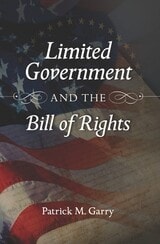
Limited Government and the Bill of Rights
Patrick M. Garry
University of Missouri Press, 2012
What was the intended purpose and function of the Bill of Rights? Is the modern understanding of the Bill of Rights the same as that which prevailed when the document was ratified? In Limited Government and the Bill of Rights, Patrick Garry addresses these questions. Under the popular modern view, the Bill of Rights focuses primarily on protecting individual autonomy interests, making it all about the individual. But in Garry’s novel approach, one that tries to address the criticisms of judicial activism that have resulted from the Supreme Court’s contemporary individual rights jurisprudence, the Bill of Rights is all about government—about limiting the power of government. In this respect, the Bill of Rights is consistent with the overall scheme of the original Constitution, insofar as it sought to define and limit the power of the newly created federal government.
Garry recognizes the desire of the constitutional framers to protect individual liberties and natural rights, indeed, a recognition of such rights had formed the basis of the American campaign for independence from Britain. However, because the constitutional framers did not have a clear idea of how to define natural rights, much less incorporate them into a written constitution for enforcement, they framed the Bill of Rights as limited government provisions rather than as individual autonomy provisions. To the framers, limited government was the constitutional path to the maintenance of liberty. Moreover, crafting the Bill of Rights as limited government provisions would not give the judiciary the kind of wide-ranging power needed to define and enforce individual autonomy.
With respect to the application of this limited government model, Garry focuses specifically on the First Amendment and examines how the courts in many respects have already used a limited government model in their First Amendment decision-making. As he discusses, this approach to the First Amendment may allow for a more objective and restrained judicial role than is often applied under contemporary First Amendment jurisprudence.
Limited Government and the Bill of Rights will appeal to anyone interested in the historical background of the Bill of Rights and how its provisions should be applied to contemporary cases, particularly First Amendment cases. It presents an innovativetheory about the constitutional connection between the principle of limited government and the provisions in the Bill of Rights.