Results by title
281 books match the query 'Disease & Health Issues' and 8 start with l
Labor of Love
Gestational Surrogacy and the Work of Making BabiesJacobson, Heather
Rutgers University Press, 2016
For more, visit http://www.heatherjacobsononline.com/
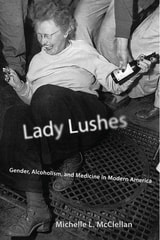
Lady Lushes
Gender, Alcoholism, and Medicine in Modern AmericaMcClellan, Michelle L
Rutgers University Press, 2017
In Lady Lushes, medical historian Michelle L. McClellan traces the story of the female alcoholic from the late-nineteenth through the twentieth century. She draws on a range of sources to demonstrate the persistence of the belief that alcohol use is antithetical to an idealized feminine role, particularly one that glorifies motherhood. Lady Lushes offers a fresh perspective on the importance of gender role ideology in the formation of medical knowledge and authority.
Landscapes of Disease
Malaria in Modern GreeceKaterina Gardikas
Central European University Press, 2018
Malaria has existed in Greece since prehistoric times. Its prevalence fluctuated depending on climatic, socioeconomic and political changes. The book focuses on the factors that contributed to the spreading of the disease in the years between independent statehood in 1830 and the elimination of malaria in the 1970s.
By the nineteenth century, Greece was the most malarious country in Europe and the one most heavily infected with its lethal form, falciparum malaria. Owing to pressures on the environment from economic development, agrarian colonization and heightened mobility, the situation became so serious that malaria became a routine part of everyday life for practically all Greek families, further exacerbated by wars. The country’s highly fragmented geography and its variable rainfall distribution created an environment that was ideal for sustaining and spreading of diseases, which, in turn, affected the tolerance of the population to malaria. In their struggle with physical suffering and death, the Greeks developed a culture of avid quinine consumption and were likewise eager to embrace the DDT spraying campaign of the immediate post WW II years, which, overall, had a positive demographic effect.
Legitimating Life
Adoption in the Age of Globalization and Biotechnologyvan Wichelen, Sonja
Rutgers University Press, 2019
Lethal Decisions
The Unnecessary Deaths of Women and Children from HIV/AIDSArthur J. Ammann
Vanderbilt University Press, 2017
Inexplicably, the World Health Organization recommended withholding treatment for the majority of HIV-infected individuals in poor countries, and clinical researchers embarked on studies to evaluate inferior treatment approaches even while the pandemic continued to claim the lives of millions of women and children. Why did it take an additional twenty years for international health organizations to recommend the treatment and prevention measures that had had such a profound impact on the pandemic in wealthy countries? The surprising answers are likely to be debated by medical historians and ethicists.
At last, in 2015, came a universal call for treating all HIV-infected individuals with triple-combination antiretroviral drugs. But this can only be accomplished if the mistakes of the past are rectified. The book ends with recommendations on how the pediatric HIV/AIDS epidemic can finally be brought to an end.
Living with Lupus
Women and Chronic Illness in EcuadorBy Ann Miles
University of Texas Press, 2013
Once associated only with the wealthy and privileged in Latin America, lifelong illnesses are now emerging among a wider cross section of the population as an unfortunate consequence of growing urbanization and increased life expectancy. One of these diseases is the chronic autoimmune disorder lupus erythematosus. Difficult to diagnose and harder still to effectively manage, lupus challenges the very foundations of women’s lives, their real and imagined futures, and their carefully constructed gendered identities. While the illness is validated by medical science, it is poorly understood by women, their families, and their communities, which creates multiple tensions as women attempt to make sense of an unpredictable, expensive, and culturally suspect medically managed illness.
Living with Lupus vividly chronicles the struggles of Ecuadorian women as they come to terms with the experience of debilitating chronic illness. Drawing on years of ethnographic research, Ann Miles sensitively portrays the experiences and stories of Ecuadorian women who suffer with the intractable and stigmatizing disease. She uses in-depth case histories, rich in ethnographic detail, to explore not only how chronic illness can tear at the seams of women’s precarious lives, but also how meanings are reconfigured when a biomedical illness category moves across a cultural landscape. One of the few books that deals with the meanings and experiences of chronic illness in the developing world, Living with Lupus contributes to our understanding of a significant global health transition.
Lost
Miscarriage in Nineteenth-Century AmericaWithycombe, Shannon
Rutgers University Press, 2019
In Lost, medical historian Shannon Withycombe weaves together women’s personal writings and doctors’ publications from the 1820s through the 1910s to investigate the transformative changes in how Americans conceptualized pregnancy, understood miscarriage, and interpreted fetal tissue over the course of the nineteenth century. Withycombe’s pathbreaking research reveals how Americans construed, and continue to understand, miscarriage within a context of reproductive desires, expectations, and abilities. This is the first book to utilize women’s own writings about miscarriage to explore the individual understandings of pregnancy loss and the multiple social and medical forces that helped to shape those perceptions. What emerges from Withycombe’s work is unlike most medicalization narratives.

Love in the Time of Zika
Environmental Crisis and the Future of ReproductionPaige Marie Patchin
Duke University Press, 2026