Results by title
347 books match the query 'Early works to 1800' and 14 start with l
L. Annaeus Cornutus
Greek Theology, Fragments, and TestimoniaGeorge Boys-Stones
SBL Press, 2018
The first English translation of Greek Theology
The first-century CE North African philosopher Cornutus lived in Rome as a philosopher and is best known today for his surviving work Greek Theology, which explores the origins and names of the Greek gods. However, he was also interested in the language and literature of the poets Persius and Lucan and wrote one of the first commentaries on Virgil. This book collects and translates all of our evidence for Cornutus for the first time and includes the first published English translation of Greek Theology. This collection offers entirely fresh insight into the intellectual world of the first century.
Features
- Translation based on the latest critical text
- The first truly holistic picture of Cornutus’s intellectual profile
- A new account of the early debate over Aristotle’s Categories and the Stoic contribution to it
La Florida del Inca and the Struggle for Social Equality in Colonial Spanish America
Jonathan D. Steigman
University of Alabama Press, 2005
A cross-disciplinary view of an important De Soto chronicle.
Among the early Spanish chroniclers who contributed to popular images of the New World was the Amerindian-Spanish (mestizo) historian and literary writer, El Inca Garcilaso de la Vega (1539-1616). He authored several works, of which La Florida del Inca (1605) stands out as the best because of its unique Amerindian and European perspectives on the De Soto expedition (1539-1543). As the child of an Indian mother and a Spanish father, Garcilaso lived in both worlds--and saw value in each. Hailed throughout Europe for his excellent contemporary Renaissance writing style, his work was characterized as literary art. Garcilaso revealed the emotions, struggles, and conflicts experienced by those who participated in the historic and grandiose adventure in La Florida. Although criticized for some lapses in accuracy in his attempts to paint both the Spaniards and the Amerindians as noble participants in a world-changing event, his work remains the most accessible of all the chronicles.
In this volume, Jonathan Steigman explores El Inca’s rationale and motivations in writing his chronicle. He suggests that El Inca was trying to influence events by influencing discourse; that he sought to create a discourse of tolerance and agrarianism, rather than the dominant European discourse of intolerance, persecution, and lust for wealth. Although El Inca's purposes went well beyond detailing the facts of De Soto’s entrada, his skill as a writer and his dual understanding of the backgrounds of the participants enabled him to paint a more complete picture than most--putting a sympathetic human face on explorers and natives alike.

Ladie Borlase's Receiptes Booke
David E. Schoonover
University of Iowa Press, 1998
Language and Authority in De Lingua Latina
Varro's Guide to Being RomanDiana Spencer
University of Wisconsin Press, 2022
Language and Power in the Early Middle Ages
Patrick J. Geary
Brandeis University Press, 2013
Lectures on Rhetoric and Belles Lettres
Hugh Blair. Edited by Linda Ferreira-Buckley and S. Michael Halloran
Southern Illinois University Press, 2005
This new edition of Hugh Blair’s Lectures on Rhetoric and Belles Lettres, edited by Linda Ferreira-Buckley and S. Michael Halloran, answers the need for a complete, reliable text. The book seeks to generate a renewed interest in Blair by provoking new inquiries into the tradition of belletristic rhetoric and by serving as both aid and incentive to others who may join in the project of improving understanding of this landmark rhetorical scholarship.
This editioncontains forty-seven lectures and remains faithful to the text of the 1785 London edition. The editors contextualize Hugh Blair’s motivations and thinking by providing in their introduction an extended account of Blair’s life and era. The bibliography of works by and about Blair is an invaluable aid, surpassing previous research on Blair.
Although the extent of its influence cannot be measured fully, Blair’s Lectures on Rhetoric and Belles Lettres was undoubtedly a primary vehicle for introducing many eighteenth- and nineteenth-century scholars to classical rhetoric and French belletristic rhetoric—its success due in part to the ease with which the lectures combine neoclassical and Enlightenment thought, accommodating emerging social concerns. Ferreira-Buckley and Halloran’s extensive treatment revives the tradition of belletristic rhetoric, improving the understanding of Blair’s place in the study of eighteenth- and nineteenth-century discourse, while finding him relevant in the twenty-first century.
Letter to Beaumont, Letters Written from the Mountain, and Related Writings
Jean-Jacques Rousseau
Dartmouth College Press, 2012
Letters on Ethics
To LuciliusLucius Annaeus Seneca
University of Chicago Press, 2015
Written as much for a general audience as for Lucilius, these engaging letters offer advice on how to deal with everything from nosy neighbors to sickness, pain, and death. Seneca uses the informal format of the letter to present the central ideas of Stoicism, for centuries the most influential philosophical system in the Mediterranean world. His lively and at times humorous expositions have made the Letters his most popular work and an enduring classic. Including an introduction and explanatory notes by Margaret Graver and A. A. Long, this authoritative edition will captivate a new generation of readers.
Life of Aesop the Philosopher
Grammatiki A. Karla
SBL Press, 2024
The Life of Aesop the Philosopher, an anonymous Greek literary work, presents one version of the novelistic biography of Aesop, which dates to the fourth to fifth century CE. In this volume, Grammatiki A. Karla offers an extended introduction to the Life of Aesop in general, the history of the textual tradition, and the MORN manuscript family and its relationship to other versions and papyrus fragments. She then presents a new edition of the late antique version (MORN) alongside David Konstan’s English translation. A commentary addresses editorial choices and focuses on words and phrases that are of interest for the history of the Greek language.
Lineages of European Political Thought
Explorations along the Medieval/Modern Divide from John of Salisbury to HegelCary J. Nederman
Catholic University of America Press, 2009
London
Prints & Drawings before 1800Bernard Nurse
Bodleian Library Publishing, 2017
This book presents more than a hundred images of Greater London from before 1800, all from the Gough Collection of the Bodleian Library. We see prints of London before and after the Great Fire, images of the 1780 tornado, panoramas of the Thames, depictions of the building and destruction of landmark bridges, and much more. Making brilliant use of the most extensive collection of London images amassed by any private collector of the period, the book will be essential to anyone delving into the history of the city.
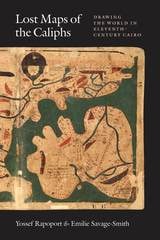
Lost Maps of the Caliphs
Drawing the World in Eleventh-Century CairoYossef Rapoport and Emilie Savage-Smith
University of Chicago Press, 2018
Lost Maps of the Caliphs provides the first general overview of The Book of Curiosities and the unique insight it offers into medieval Islamic thought. Opening with an account of the remarkable discovery of the manuscript and its purchase by the Bodleian Library, the authors use The Book of Curiosities to re-evaluate the development of astrology, geography, and cartography in the first four centuries of Islam. Their account assesses the transmission of Late Antique geography to the Islamic world, unearths the logic behind abstract maritime diagrams, and considers the palaces and walls that dominate medieval Islamic plans of towns and ports. Early astronomical maps and drawings demonstrate the medieval understanding of the structure of the cosmos and illustrate the pervasive assumption that almost any visible celestial event had an effect upon life on Earth. Lost Maps of the Caliphs also reconsiders the history of global communication networks at the turn of the previous millennium. It shows the Fatimid Empire, and its capital Cairo, as a global maritime power, with tentacles spanning from the eastern Mediterranean to the Indus Valley and the East African coast.
As Lost Maps of the Caliphs makes clear, not only is The Book of Curiosities one of the greatest achievements of medieval mapmaking, it is also a remarkable contribution to the story of Islamic civilization that opens an unexpected window to the medieval Islamic view of the world.
Lysias
By S. C. Todd
University of Texas Press, 2000
This is the second volume in the Oratory of Classical Greece series. Planned for publication over several years, the series will present all of the surviving speeches from the late fifth and fourth centuries B.C. in new translations prepared by classical scholars who are at the forefront of the discipline. These translations are especially designed for the needs and interests of today's undergraduates, Greekless scholars in other disciplines, and the general public.
Classical oratory is an invaluable resource for the study of ancient Greek life and culture. The speeches offer evidence on Greek moral views, social and economic conditions, political and social ideology, and other aspects of Athenian culture that have been largely ignored: women and family life, slavery, and religion, to name just a few.
This volume contains all the complete works and eleven of the largest fragments attributed to Lysias, the leading speechwriter of the generation (403-380 B.C.) after the Peloponnesian War, who was also one of the finest and most deceptive storytellers of all time. As a noncitizen resident in Athens, Lysias could take no direct part in politics, but his speeches, written for clients to deliver in court, paint vivid pictures of various private and public disputes: one speaker defends himself on a charge of murdering his wife's lover, while another is accused of having caused the deaths of democratic activists under the short-lived oligarchy of the Thirty (404/3), despite his claim to be protected by the amnesty that accompanied the restoration of democracy in 403.
L’Honnête Femme
The Respectable Woman in Society and the New Collection of Letters and Responses by Contemporary WomenJacques Du Bosc
Iter Press, 2014
—Reverend John J. Conley, SJ
Knott Professor of Philosophy, Loyola University Maryland