Results by title
679 books match the query 'Ecology' and 17 start with l

La Selva
Ecology and Natural History of a Neotropical Rain ForestEdited by Lucinda A. McDade, Kamaljit S. Bawa, Henry A. Hespenheide, and Gary S.
University of Chicago Press, 1994
the most intensively studied and best-understood tropical field sites
in the world. For over thirty years, La Selva has been a major focus
of research on rainforest ecology, flora, and fauna. This volume
provides the first comprehensive review of this research, covering La
Selva's geographical history and physical setting, its plant and
animal life, and agricultural development and land use.
Drawing together a wealth of information never before available in a
single volume, La Selva offers a substantive treatment of the
ecology of a rainforest. Part 1 summarizes research on the physical
setting and environment of the rainforest, as well as the history of
the research station. Some chapters in this part focus on climate,
geomorphology, and aquatic systems, while others look at soils,
nutrient acquisition, and cycles of energy.
Part 2 synthesizes what is known about the plant community. It begins
with chapters on vegetation types and plant diversity, and also
explores plant demography, spatial patterns of trees, and the impact
of treefall gaps on forest structure and dynamics. Other chapters
address plant physiological ecology, as well as plant reproductive
systems.
Part 3 covers the animal community, summarizing information on the six
best-known animal taxa of the region: fishes, amphibians, reptiles,
birds, mammals, and butterflies. This part includes an overview of
faunal studies at La Selva and a chapter on animal population biology,
which examines animal demography and abundance, and interactions
between predators and prey. Part 4 addresses interactions between
plants and animals and the effects of these interactions on species
diversity.
Part 5 considers the impact of land use and agricultural development
on La Selva and other areas of Costa Rica. One chapter examines land
colonization and conservation in Sarapiqui, another covers subsistence
and commercial agricultural development in the Atlantic lowlands
region, and a third looks at the forest industry in northeastern Costa
Rica. This part also assesses the role and research priorities of La
Selva.
La Selva provides an introduction to tropical ecology for
students and researchers at La Selva, a major source of comparative
information for biologists working in other tropical areas, and a
valuable resource for conservationists.
Land of Bears and Honey
A Natural History of East TexasBy Joe C. Truett and Daniel W. Lay
University of Texas Press, 1994
Winner, Ottis Lock Endowment Award for the best book on East Texas, East Texas Historical Association, 1985
Texas Literary Festival Award for Nonfiction (Southwestern Booksellers Association & Dallas Times Herald), 1985
Annual Publication Award, Texas Chapter of the Wildlife Society, 1984
The story of the land, wildlife, and ecology of East Texas.
Land of Extremes
A Natural History of the Arctic North Slope of AlaskaAlex Huryn and John Hobbie
University of Alaska Press, 2012
This book is a comprehensive guide to the natural history of the North Slope, the only arctic tundra in the United States. The first section provides detailed information on climate, geology, landforms, and ecology. The second provides a guide to the identification and natural history of the common animals and plants and a primer on the human prehistory of the region from the Pleistocene through the mid-twentieth century. The appendix provides the framework for a tour of the natural history features along the Dalton Highway, a road connecting the crest of the Brooks Range with Prudhoe Bay and the Arctic Ocean, and includes mile markers where travelers may safely pull off to view geologic formations, plants, birds, mammals, and fish. Featuring hundreds of illustrations that support the clear, authoritative text, Land of Extremes reveals the arctic tundra as an ecosystem teeming with life.
Landscapes of Movement and Predation
Perspectives from Archaeology, History, and AnthropologyBrenda J. Bowser and Catherine M. Cameron
University of Arizona Press, 2024
Landscapes of predation also developed in precolonial times in places where people were subjected to repeated ruthless attacks and dislocation. With contributions from archaeologists and a historian, the book provides a startling new perspective on an aspect of the past that is often overlooked: the role of violence in shaping where, how, and with whom people lived. Using ethnohistoric, ethnographic, historic, and archaeological data, the authors explore the actions of both predators and their targets and uncover the myriad responses people took to protect themselves.
Contributors
Fernando Almeida
Thomas John Biginagwa
Brenda J. Bowser
Catherine M. Cameron
Charles Cobb
Robbie Ethridge
Thiago Kater
Richard M. Leventhal
Lydia Wilson Marshall
Cliverson Pessoa
Neil Price
Ben Raffield
Andrés Reséndez
Samantha Seyler
Fabíola Andréa Silva

Landscapes
Selected Writings of J.B. JacksonJ. B. Jackson
University of Massachusetts Press, 1970
Letters from Alabama
Chiefly Relating to Natural HIstoryPhilip Henry Gosse, introduction by Harvey H. Jackson III, edited by Virginia Hamilton
University of Alabama Press, 1993
A naturalist's captivating portrait of Alabama's wildlife, landscapes, and people.
Philip Henry Gosse (1810-1888), a British naturalist, left home at age 17 and made his way to Alabama in 1838, where he had heard educated people were in demand. He was employed by Judge Reuben Saffold at Pleasant Hill in Dallas County as a teacher for about a dozen children of local landowners, but his principal interest was natural history. During the eight months he lived in th Black Belt he watched, listened, thought, took notes, and made sketches--activities that eventually led to Letters from Alabama. He lived among Alabamians, talked and listened to them, saw them at their best and their worst, and came to understand their hopes and fears. They were a part of the natural world, and he paid attention to them as any good scientist would. With the skills of a scientist and the temperament of an artist, Gosse set down an account of natural life in frontier Alabama that has no equal. Written to no one in particular, a common literary device of the period, the letters were first published in a magazine, and in 1859 appeared as a book. By that time Gosse was an established scholar and one of England’s most noted scientific illustrators.
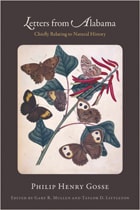
Letters from Alabama
Chiefly Relating to Natural HistoryPhilip Henry Gosse, Edited by Gary R. Mullen and Taylor D. Littleton
University of Alabama Press, 2013
New and improved edition of a naturalist's captivating portrait of Alabama's wildlife, landscapes, and people.
Philip Henry Gosse (1810–1888), a British naturalist, left home at age seventeen and made his way to Alabama in 1838. He was employed by Judge Reuben Saffold and other planters near Pleasant Hill in Dallas County as a teacher for about a dozen of their children, but his principal interest was natural history. Letters from Alabama is a personalized record of Gosse’s perceptive observations during his eight-month residence in this small antebellum community. The work addresses a Victorian readership, including entomologists, who Gosse believed were relatively uninformed about the novelty and beauty of this “hilly region of the State of Alabama.” Written in an engaging literary style and organized as a series of epistolary discussions, the book is unparalleled in its detailed evocations of the natural history and cultural conditions of frontier Alabama. By the time Letters from Alabama appeared in 1859, Gosse’s scientific publications and fine illustrations had led to his being elected a Fellow of the Royal Society of London.
Edited by Gary R. Mullen and Taylor D. Littleton, this authoritative edition features thirty grayscale lithographs shot directly from the 1859 edition, reset type for easier reading, a new introduction and index by the two foremost scholars of Gosse in Alabama, a new appendix that provides modern scientific and common names for the plant and animal species described by Gosse, and a four-color cover featuring one of the plates from Gosse’s Entomologia Alabamensis.
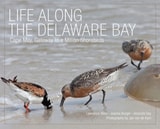
Life Along the Delaware Bay
Cape May, Gateway to a Million ShorebirdsNiles, Lawrence
Rutgers University Press, 2012
The Delaware Bay is the second largest and most diverse bay on the East Coast. It has a rich cultural history, has played an important role in the region’s commerce and tourism, and has spectacular and vital natural resources. Birdwatchers gather along its shores to watch the spectacle of thousands of spawning horseshoe crabs, the dense flocks of migrant shorebirds, the fall hawk migration, and the huge migration of monarch butterflies.
Life Along the Delaware Bay focuses on the area as an ecosystem, the horseshoe crab as a keystone species within that system, and the crucial role that the bay plays in the migratory ecology of shorebirds. An abundance of horseshoe crabs spawning on the Delaware Bay beaches results in an abundance of eggs brought to the surface, providing a source of high-quality food and bringing hundreds of thousands of shorebirds to the bay to forage in late May and early June. A dramatic decline in horseshoe crabs has resulted in a rapid and dramatic decline in birds, particularly the red knot. This decline has sounded an alarm throughout the world, prompting a host of biologists to converge on the bay each spring, to understand the biology and conservation of red knots and other shorebirds.
Lawrence Niles, Joanna Burger, and Amanda Dey examine current efforts to protect the bay and identify new efforts that must take place to ensure it remains an intact ecological system. Over three hundred stunning color photographs and maps capture the beauty and majesty of this unique treasure—one that must be protected today and for generations to come.

Life Out of Balance
Homeostasis and Adaptation in a Darwinian WorldJoel B. Hagen
University of Alabama Press, 2021
Exploring how scientists came to understand life's balance between stability and adaptation.
Life Out of Balance focuses on a period in history when new ideas of self-regulation, adaptation, and fitness became central to a variety of biological disciplines. During the decades surrounding World War II, these ideas developed in several quite different contexts and led to greater debates about the merits of such models as applied to larger systems, including society at large. Particularly in its later cybernetic form, homeostasis seemed to provide new ways of discussing balance and regulation that avoided discredited approaches of earlier champions of vitalism and mechanism. It provided a common perspective and terminology for discussing self-regulating “systems,” whether biological, mechanical, or social. Although enormously fruitful and influential, homeostatic perspectives also generated numerous controversies when critics questioned the degree to which biological systems are characterized by balance and self-regulation. Resolving these controversies continues to be a challenge in modern biology.
If natural selection constitutes the first law of biology, scientists who champion homeostasis as a theoretical model claim that it is a second law, equally important and closely related to the first. Such claims notwithstanding, homeostasis has generated a series of controversies since it was formalized by Walter Cannon in the late 1920s. Critics contended that Cannon took a too-optimistic view of life, not only ignoring pathological deviations from normality but also failing to adequately explain the ability of living things to respond adaptively to environmental challenges.
Underlying these controversies was the unresolved problem of integrating physiology and other areas of functional biology with the emerging evolutionary synthesis of Mendelian genetics and Darwinian natural selection. The physiological idea of homeostasis as the adaptive “fit” between the organism and its environment and the Darwinian idea of adaptation and fitness in terms of reproductive success might seem to be complementary in an unproblematic way, but historically they have had an uneasy relationship.
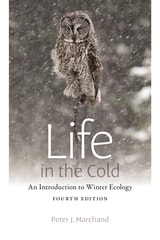
Life in the Cold
An Introduction to Winter Ecology, fourth editionPeter J. Marchand
University Press of New England, 2014
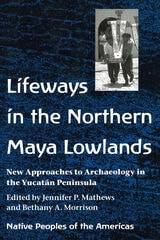
Lifeways in the Northern Maya Lowlands
New Approaches to Archaeology in the Yucatán PeninsulaEdited by Jennifer P. Mathews and Bethany A. Morrison
University of Arizona Press, 2006
By exploring various social and political levels of Maya society through a broad expanse of time, Lifeways in the Northern Maya Lowlands not only reconstructs a little-known past, it also suggests the broad implications of archaeology for related studies of tourism, household economies, and ethnoarchaeology. It is a benchmark work that pointedly demonstrates the need for researchers in both north and south to ignore modern geographic boundaries in their search for new ideas to further their understanding of the ancient Maya.
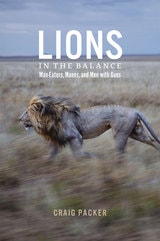
Lions in the Balance
Man-Eaters, Manes, and Men with GunsCraig Packer
University of Chicago Press, 2015
Monsters take many forms: from man-eating lions to the people who hunt them, from armed robbers to that midnight knock at the door of a cheap hotel room in Dar es Salaam. And celebrated biologist Craig Packer has faced them all. Head on.
With Lions in the Balance, Packer takes us back into the complex, tooth-and-claw world of the African lion, offering revealing insights into both the lives of one of the most iconic and dangerous animals on earth and the very real risks of protecting them. A sequel to his prize-winning Into Africa—which gave many readers their first experience of fieldwork in Africa, of cooperative lions on dusty savannas, and political kidnappings on the shores of Lake Tanganyika—this new diary-based chronicle of cutting-edge research and heartbreaking corruption will both alarm and entertain. Packer’s story offers a look into the future of the lion, one in which the politics of conservation will require survival strategies far more creative and powerful than those practiced anywhere in the world today.
Packer is sure to infuriate millionaires, politicians, aid agencies, and conservationists alike as he minces no words about the problems he encounters. But with a narrative stretching from far flung parts of Africa to the corridors of power in Washington, DC, and marked by Packer’s signature humor and incredible candor, Lions in the Balance is a tale of courage against impossible odds, a masterly blend of science, adventure, and storytelling, and an urgent call to action that will captivate a new generation of readers.

Liquid Relations
Contested Water Rights and Legal ComplexityRoth, Dik
Rutgers University Press, 2005
Water management plays an increasingly critical role in national and international policy agendas. Growing scarcity, overuse, and pollution, combined with burgeoning demand, have made socio-political and economic conflicts almost unavoidable. Proposals to address water shortages are usually based on two key assumptions: (1) water is a commodity that can be bought and sold and (2) “states,” or other centralized entities, should control access to water.
Liquid Relations criticizes these assumptions from a socio-legal perspective. Eleven case studies examine laws, distribution, and irrigation in regions around the world, including the United States, Nepal, Indonesia, Chile, Ecuador, India, and South Africa. In each case, problems are shown to be both ecological and human-made. The essays also consider the ways that gender, ethnicity, and class differences influence water rights and control.
In the concluding chapter, the editors draw on the essays’ findings to offer an alternative approach to water rights and water governance issues. By showing how issues like water scarcity and competition are embedded in specific resource use and management histories, this volume highlights the need for analyses and solutions that are context-specific rather than universal.
Liquidity, Flows, Circulation
The Cultural Logic of EnvironmentalizationEdited by Mathias Denecke, Holger Kuhn, and Milan Stürmer
Diaphanes, 2022
Placed at the intersection of art, media, and cultural studies as well as economic theory, Liquidity, Flows, Circulation investigates the cultural logic of environmentalization. As flows, circulations, and liquidity resurface in all aspects of recent culture and contemporary art, this volume investigates the hypothesis of a genuine cultural logic of environmentalization through these three concepts.
It thus brings together two areas of research that have been largely separate. On the one hand, this volume takes up discussions about ecologies with and without nature and environmentalization as a contemporary form of power and capital. On the other hand, it takes its cue from Fredric Jameson’s notion that each stage of capitalism is accompanied by a genuine cultural logic. The volume introduces this current of materialist thinking into the ongoing discussions of ecologies and environmentalization. By analyzing contemporary art, architecture, theater, films, and literature, the fifteen contributions by scholars and artists explore different fields where liquid forms, semantics flow, or processes of circulation emerge as a contemporary cultural logic.
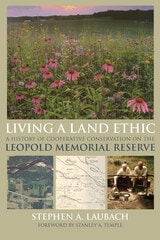
Living a Land Ethic
A History of Cooperative Conservation on the Leopold Memorial ReserveStephen A. Laubach
University of Wisconsin Press, 2014
Living a Land Ethic chronicles the formation of the 1,600-acre reserve surrounding the Shack. When the Leopold Memorial Reserve was founded in 1967, five neighboring families signed an innovative agreement to jointly care for their properties in ways that honored Aldo Leopold's legacy. In the ensuing years, the Reserve's Coleman and Leopold families formed the Sand County Foundation and the Aldo Leopold Foundation. These organizations have been the primary stewards of the Reserve, carrying on a tradition of ecological restoration and cooperative conservation. Author Stephen A. Laubach draws from the archives of both foundations, including articles of incorporation, correspondence, photos, managers' notes, and interviews to share with readers the Reserve's untold history and its important place in the American conservation movement.
Living in the Plastic Age
Perspectives from Humanities, Social Sciences and Natural SciencesEdited by Johanna Kramm and Carolin Völker
Campus Verlag, 2022
The anthology Living in the Plastic Age focuses on the multidimensional facets of plastics and microplastics from different disciplinary angles. Small plastic fragments (microplastics) and larger plastic waste can be found even on the remotest island. Plastic waste all over the planet is the visual footprint of humanity’s consumerism and mass production. Plastics shape the relationship between society and nature in such a profound way that we can today speak of the “Plastic Age.” This anthology aims to question the role of plastics in our society and the implications plastics have for the environment and human health. The detection of this emergent contaminant opens up a new field of scientific engagement for natural sciences on the effects of (micro-) plastics for the environment and the social sciences on new governance regimes on marine litter as well as on solution strategies to combat plastic waste.
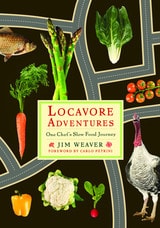
Locavore Adventures
One Chef's Slow Food JourneyWeaver, Jim
Rutgers University Press, 2012
America’s fast food culture reflects not only what we eat—foods that are processed and packaged for convenience—but also how we eat—munching as we multitask and not really tasting the super-sized meals we ingest. But in recent years, a more thoughtful philosophy about food has emerged. Developed in Italy, where fresh ingredients and artisanal techniques are prized, the Slow Food movement has rapidly gained a following in North America. The skeptics among us might wonder if it is possible truly to enjoy a Slow Food lifestyle—one based around local, seasonal ingredients—in our fast-paced world.
In Locavore Adventures, acclaimed New Jersey chef and restaurateur Jim Weaver shares his personal story of how he came to solve this problem—building a local slow food culture that is ecologically responsible and also yields delicious results. Weaver tells of his odyssey founding the Central New Jersey chapter of Slow Food, connecting local farmers, food producers, and chefs with the public to forge communities that value the region’s unique bounty. More than forty recipes throughout the book, from Hot Smoked Brook Trout with Asparagus Puree and Pickled Cippollini Onions to Zuppa di Mozzarella, will inspire readers to be creative in their own kitchens. Locavore Adventures is a thoughtful memoir about growing a sustainable food culture and a guide to slowing down, savoring locally grown food, and celebrating life.