Results by title
240 books match the query 'English as a Second Language' and 6 start with l
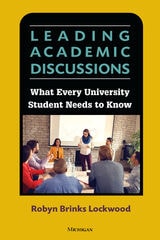
Leading Academic Discussions
What Every University Student Needs to KnowRobyn Brinks Lockwood
University of Michigan Press, 2021
Although discussions are heavily reliant on words, they are also influenced and affected by other verbal cues, such as pronunciation, stress, pitch, or tone. Because speakers need to both notice and use these cues to make their messages clear to other participants, the text addresses these factors as well. Additionally, non-verbal communication plays an essential role as well, so one chapter is devoted to it.
Throughout the text, reflection questions about leading discussions are provided for those who are or hope to be teaching assistants (TAs) and project leads/managers. Video analysis tasks are included to accompany the six mini discussion videos that are open and available at www.press.umich.edu/elt/compsite/leading.
Linguistics Across Cultures
Applied Linguistics for Language TeachersRobert Lado
University of Michigan Press, 1957
Linking Assignments to Assessments
A Guide for TeachersDeborah Crusan and Todd Ruecker
University of Michigan Press, 2022
The book shares foundational information on the importance of assessment literacy and on how language acquisition, student backgrounds, and language standards need to be considered. Linking Assignments to Assessments offers step-by-step instructions on creating effective assessments for listening and reading, speaking and writing, grammar and vocabulary. Teachers are provided context for understanding standardized assessments and strategies to advocate for and prepare English learners in high-stakes assessment contexts. Each chapter includes activities, discussion questions, and strategies for developing an assessment philosophy to help educators link their theory and practice.
Linking Literacies
Perspectives on L2 Reading-Writing ConnectionsDiane Belcher and Alan Hirvela, Editors
University of Michigan Press, 2001
Linking Literacies provides the most up to date theoretical overview of the connection between reading and writing in second language acquisition. Belcher and Hirvela have brought together the definitive collection of developments in reading-writing relations research and pedagogy. Papers are organized into these parts:
Ground Practice: Theory, Research, and History
In the Classroom: Teaching Reading as Writing and Writing as Reading
(E)Merging Literacies and the Challenge of Textual Ownership
Technology-Assisted Reading and Writing.
In addition to examining the ways in which L1 influences have affected the development of L2 reading-writing theory and pedagogy, Linking Literacies looks at how L2 reading-writing scholarship has created an identity separate of an L1 framework. Linking Literacies examines a broad range of questions and concerns within the structure of L2 reading-writing connections and L2 academic literacy through discussions of theory, research, and
Listening Myths
Applying Second Language Research to Classroom TeachingSteven Brown
University of Michigan Press, 2011
This volume was conceived as a "best practices" resource for teachers of ESL listening courses in the way that Vocabulary Myths by Keith S. Folse (and Writing Myths by Joy Reid) is one for reading and vocabulary teachers. It was written to help ensure that teachers of listening are not perpetuating the myths of teaching listening.
Both the research and pedagogy in this book are based on the newest research in the field of second language acquisition. Steven Brown is the author of the Active Listening textbook series and is a teacher trainer.
The myths debunked in this book are:
§ Listening is the same as reading.
§ Listening is passive.
§ Listening equals comprehension.
§ Because L1 language ability is effortlessly acquired, L2 listening ability is too.
§ Listening means listening to conversations.
§ Listening is an individual, inside-the-head process.
§ Students should only listen to authentic materials.
§ Listening can’t be taught
Lives in Two Languages
An Exploration of Identity and CultureLinda Watkins-Goffman
University of Michigan Press, 2001
Lives in Two Languages focuses on the experience of multicultural authors--like Richard Rodriguez, Amy Tan, Eva Hoffman, Chang-rae Lee, and Julia Alvarez--whose experiences can be related to anyone who has moved from one culture or subculture to another. As such, this text is an excellent comprehensive introduction to the multicultural experience for teachers and educators in all disciplines, as well as of interest to anyone interested in language culture and psychological process of identity.