Results by title
7 books match the query 'Devotional'
Biblical Religion and the Search for Ultimate Reality
Paul Tillich
University of Chicago Press, 1955
Dr. Tillich shows here that in spite of the contrast between philosophical and biblical language, it is neither necessary nor possible to separate them from each other. On the contrary, all the symbols used in biblical religion drive inescapably toward the philosophical quest for being. An important statement of a great theologian's position, this book presents an eloquent plea for the essential function of philosophy in religious thought.
[more]
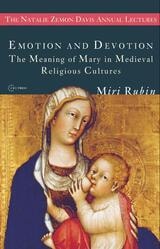
Emotion and Devotion
The Meaning of Mary in Medieval Religious CulturesMiri Rubin
Central European University Press, 2009
In Emotion and Devotion Miri Rubin explores the craft of the historian through a series of studies of medieval religious cultures. In three original chapters she approaches the medieval figure of the Virgin Mary with the aim of unravelling meaning and experience. Hymns and miracle tales, altarpieces and sermons – a wide range of sources from many European regions – are made to reveal the creativity and richness which they elicited in medieval people, women and men, clergy and laity, people of status and riches as well as those of modest means.
[more]
Mystical Languages of Unsaying
Michael A. Sells
University of Chicago Press, 1994
The subject of Mystical Languages of Unsaying is an important but neglected mode of mystical discourse, apophasis. which literally means "speaking away." Sometimes translated as "negative theology," apophatic discourse embraces the impossibility of naming something that is ineffable by continually turning back upon its own propositions and names. In this close study of apophasis in Greek, Christian, and Islamic texts, Michael Sells offers a sustained, critical account of how apophatic language works, the conventions, logic, and paradoxes it employs, and the dilemmas encountered in any attempt to analyze it.
This book includes readings of the most rigorously apophatic texts of Plotinus, John the Scot Eriugena, Ibn Arabi, Marguerite Porete, and Meister Eckhart, with comparative reference to important apophatic writers in the Jewish tradition, such as Abraham Abulafia and Moses de Leon. Sells reveals essential common features in the writings of these authors, despite their
wide-ranging differences in era, tradition, and theology.
By showing how apophasis works as a mode of discourse rather than as a negative theology, this work opens a rich heritage to reevaluation. Sells demonstrates that the more radical claims of apophatic writers—claims that critics have often dismissed as hyperbolic or condemned as pantheistic or nihilistic—are vital to an adequate account of the mystical languages of unsaying. This work also has important implications for the relationship of classical apophasis to contemporary languages of the unsayable. Sells challenges many widely circulated characterizations of apophasis among deconstructionists as well as a number of common notions about medieval thought and gender relations in medieval mysticism.
[more]
Sabbath Born
Reflections of a Reluctant ProphetBritt Allen Skarda
Parkhurst Brothers, Inc., 2022
A devotional essays by a prominent Methodist minister.
[more]
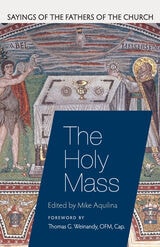
The Holy Mass
Mike Aquilia
Catholic University of America Press, 2021
The Catholic University of America Press is proud to present the third volume in its Sayings of the Fathers of the Church series. Featuring esteemed scholars and writers compiling material from our acclaimed Fathers of the Church volumes, each title is devoted to select areas of theology. The inaugural volumes covered the Seven Deadly Sins and the Four Last Things, and now we turn to The Holy Mass.
The documents of early Christianity are rich in mentions of the Mass and its component parts. Sometimes they’re detailed descriptions, sometimes quick allusions. In this volume Mike Aquilina, a popular author on early Christianity, takes readers step by step through the Mass, from the Sign of the Cross through the Dismissal, illuminating the way with the words of the Fathers. Along the way readers encounter familiar rites, words, and gestures, but also familiar complaints — about long homilies, bad singing, liturgical abuses, and distracted congregations.
The Holy Mass is divided into chapters based on the parts of the Mass known to modern Catholics of the Roman Rite. The Mass did not follow this sequence through the entirety of the era of the Fathers. Gregory the Great moved the position of the Lord’s Prayer. There were geographic variants for the placement of the Sign of Peace. Some ancient liturgies lacked a specific penitential rite — though all the liturgies had a penitential dimension to their prayers.
Mike Aquilina’s introduction provides historical context and describes the rich development of the liturgy through the Church’s first few centuries. A foreword by Thomas Weinandy, a member of the Vatican’s International Theological Commission, speaks of the relevance of this material for worshipers today.
[more]
The Prayers of Kierkegaard
Edited by Perry D. LeFevre
University of Chicago Press, 1956
Read the book that a Kierkegaard biographer called “the best book on Kierkegaard that has been written in English--or any other language”!
Soren Kierkegaard's influence has been felt in many areas of human thought from theology to psychology. The nearly one hundred of his prayers gathered here from published works and private papers, not only illuminate his own life of prayer, but speak to the concerns of Christians today.
The second part of the volume is a reinterpretation of the life and thought of Kierkegaard. Long regarded as primarily a poet or a philosopher, Kierkegaard is revealed as a fundamentally religious thinker whose central problem was that of becoming a Christian, of realizing personal existence. Perry D. LeFevre's penetrating analysis takes the reader to the religious center of Kierkegaard's world.
The second part of the volume is a reinterpretation of the life and thought of Kierkegaard. Long regarded as primarily a poet or a philosopher, Kierkegaard is revealed as a fundamentally religious thinker whose central problem was that of becoming a Christian, of realizing personal existence. Perry D. LeFevre's penetrating analysis takes the reader to the religious center of Kierkegaard's world.
[more]
The Quotable Saint Jerome
Jerome Saint Jerome
Catholic University of America Press, 2020
Among the illustrious writers of the early Church, Saint Jerome (345-420) had a way with words few could equal. To honor the 1600th anniversary of the death of this patron saint of librarians and Scripture scholars, the Catholic University of America Press is releasing The Quotable Jerome, a well-organized collection of memorable wisdom from this early witness to Catholic truth.
While Jerome is known for acerbic wits, editor Justin McClain shows that much of the time, Jerome's writings are instructive and even inspiring. Homilists will easily be able to find what Jerome said on any number of topics--Scripture, the Trinity, the sacraments, persecution, heresy, divine revelation, or chastity--just to name a few. All citations are clearly sourced if the reader wants to pursue the longer passage in question.
“I am upset because I am human; I control my tongue because I am a Christian. Anger surges up in my heart, but I do not give vent to it.” - Homilies on the Psalms, Homily 10, Psalm 76 (77) (FOTC 48)
“The doer of evil has, indeed, killed his own soul; but the heretic—the liar—has killed as many souls as he has seduced.” - Homilies on the Psalms, Homily 2, Psalm 5 (FOTC 48)
“The Church does not consist in walls, but in the truths of her teachings. The Church is there where there is true faith.” - Homilies on the Psalms, Homily 46, Psalm 133 (134)
“To err is human, but to lay snares is diabolical.” - Dogmatic and Polemical Works, The Apology Against the Books of Rufinus, Book Three, paragraph 33 (FOTC 53)
“So much for what Scripture says; learn now what it means.” - Homilies on the Psalms, Homily 15, Psalm 82 (83) (FOTC 48)
[more]