Results by title
3745 books match the query 'Europe' and 107 start with l
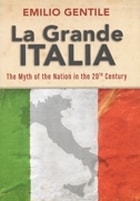
La Grande Italia
The Rise and Fall of the Myth of the Nation in the Twentieth CenturyEmilio Gentile
University of Wisconsin Press, 2008
Gentile’s definition of “Italians” encompasses the whole range of political, cultural, and social actors: Liberals and Catholics, Monarchists and Republicans, Fascists and Socialists. La Grande Italia presents a sweeping study of the development of Italian national identity in all its incarnations throughout the twentieth century. This important contribution to the study of modern Italian nationalism and the ambition to achieve a “great Italy” between the unification of Italy and the advent of the Italian Republic will appeal to anyone interested in modern European history, Fascism, and nationalism.
Best Books for Special Interests, selected by the American Association of School Librarians, and Best Books for Regional General Interests, selected by the Public Library Association
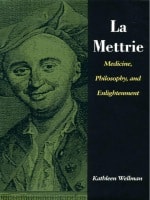
La Mettrie
Medicine, Philosophy, and EnlightenmentKathleen Wellman
Duke University Press, 1992
Wellman’s study presents La Mettrie as an advocate of progressive medical theory and practice who consistently applied his medical concerns to the reform of philosophy, morals, and society. By examining his training with the Dutch physician Hermann Boerhaave, his satires lampooning the ignorance and venality of the medical profession, and his medical treatises on subjects ranging from vertigo to veneral disease, Wellman illuminates the medical roots of La Mettrie’s philosophy. She shows how medicine encouraged La Mettrie to undertake an impiricist critique of the philosophical tradition and provided the foundation for a medical materialism that both shaped his understanding of the possibilities of moral and social reform and led him to espouse the cause of the philosophers.
Elucidating the medical view of nature, human beings, and society that the Enlightenment and La Mettrie in particular bequethed to the modern world, La Mettrie makes an important contribution to our understanding of both that period and our own.

Labour Statistics for a Market Economy
Challenges and Solutions in the Transition Countries of Central and Eastern Europe and the Former Soviet UnionIgor Chernyshev
Central European University Press, 1995
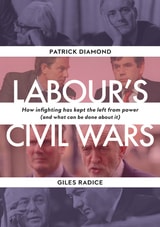
Labour's Civil Wars
How Infighting has Kept the Left from Power (and What Can Be Done About It)Patrick Diamond and Giles Radice
Haus Publishing, 2023
The biblical adage that “if a house be divided against itself, that house cannot stand” remains sound theological advice. It is also essential counsel for any political party that aspires to win elections. When a party is riven with division, the public does not know what it stands for. Though both major UK parties have been subject to internal conflict over the years, the Labour Party has been more prone to damaging splits. The divide exposed by the Corbyn insurgency is only the most recent example in almost a century of destructive infighting. Indeed, it has often seemed as though Labour has been more adept at fighting itself than in defeating the Tory party. This book examines the history of Labour’s civil wars and the underlying causes of the party’s schisms, from the first split of 1931, engineered by Ramsay MacDonald, to the ongoing battle for the future between the incumbent, Keir Starmer, and those who fundamentally altered the party’s course under his predecessor, Jeremy Corbyn.
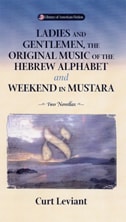
Ladies & Gentleman, The Original Music
Of The Hebrew Alphabet And Weekend In MustarraCurt Leviant
University of Wisconsin Press, 2002
"Ladies and Gentlemen, the Original Music of the Hebrew Alphabet" is set in Budapest during the Communist era. The story focuses on the tenuous seesaw between Dr. Isaac Gantz, a musicologist, and engineer Ferdinand Friedman, a Holocaust survivor who believes that he possesses one of the greatest manuscripts of the ages, a Rosetta Stone of Judaica. Friedman is willing to share it—but there is a "but." In pursuing this prize, Gantz enters a world of strange human relationships filled with doubts and surprises. A vibrant cast of characters adds dimension to this gripping story in which Jewish folklore, music, and history coalesce.
"Weekend in Mustara" unfolds on the fictional island of Mustara in southern Europe, a mountainous, totalitarian country that tolerates Judaism. Its few Jews cling to their heritage, embodied in their beautiful but sparsely attended synagogue and their museum, where a great memorial book is inscribed with the names of all Mustara Jews martyred during World War II. A scholar of medieval Hebrew manuscripts comes to the island, searching for traces of Yehuda Halevi, the great Hebrew poet of the Spanish Golden Age. He is soon enmeshed among elusive personalities and tangled loyalties, but only when he finds himself displaced in time—in a kind of theater of the absurd—are the purposes of his journey finally realized.
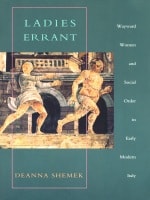
Ladies Errant
Wayward Women and Social Order in Early Modern ItalyDeanna Shemek
Duke University Press, 1998
Seeing errancy as an act of resistance rather than of error, Shemek carries her study beyond the didactic and prescriptive literature on femininity in early modern Italy to an arena in which theories about femininity are considered jointly with real and fictional instances of women’s waywardness. As prostitutes, warriors, lovers, and poets, the women of Shemek’s study are found in canonical texts, marginal works, and popular artistic activity, appearing, for instance, in literature, paintings, legal proceedings, and accounts of public festivals. By juxtaposing these varied places of errancy—from Ariosto’s chivalric Orlando furioso to the prostitutes’ race in the Palio di San Giorgio—Shemek points to the important contact between elite and popular cultures in early modernity, revealing the strength and flexibility of a gender boundary fundamental to early modern conceptions of social order.
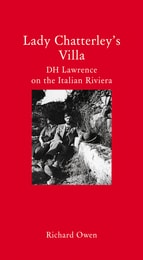
Lady Chatterley's Villa
D. H. Lawrence on the Italian RivieraRichard Owen
Haus Publishing, 2014
But before long Frieda found herself irresistibly attracted to their landlord, a dashing Italian army officer, and the resulting affair served as the background for Lawrence’s writing: while in the villa, he turned out two stories, “Sun” and “The Virgin and the Gypsy,” both prefiguring Lady Chatterley’s Lover in their depiction of women fatally drawn to earthy, muscular men.
Built on the unpublished, and previously unexplored, letters and diaries of Rina Secker, the Anglo-Italian wife of Lawrence’s publisher, and featuring never-before-published letters from Lawrence, Lady Chatterley’s Villa reconstructs the drama of the tempestuous marriage, and the ways it fired Lawrence’s creativity. Along the way, Richard Owen offers a new accounting of Lawrence’s passion for Italy, tracing his travels along the coasts and islands and his deep engagement with Italian culture. This exploration of a little-studied, but crucial period of the writer’s life will be a must for Lawrence’s many fans.
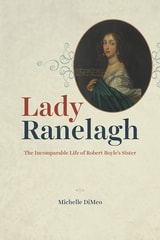
Lady Ranelagh
The Incomparable Life of Robert Boyle's SisterMichelle DiMeo
University of Chicago Press, 2021
Philosophers, mathematicians, politicians, and religious authorities sought her opinion on everything from decimalizing the currency to producing Hebrew grammars. She practiced medicine alongside distinguished male physicians, treating some of the most elite patients in London. Her medical recipes, political commentaries, and testimony concerning the philosophers’ stone gained international circulation. She was an important influence on Boyle and a formidable thinker in her own right.
Drawing from a wealth of new archival sources, Michelle DiMeo fills out Lady Ranelagh’s legacy in the context of a historically sensitive and nuanced interpretation of gender, science, and religion. The book re-creates the intellectual life of one of the most respected and influential women in seventeenth-century Europe, revealing how she managed to gain the admiration of diverse contemporaries, effect social change, and shape contemporary science.

Lafayette and the Liberal Ideal 1814-1824
Politics and Conspiracy in an Age of ReactionSylvia Neely
Southern Illinois University Press, 1991
Sylvia Neely provides both the first scholarly study of Lafayette’s life after the French Revolution and a detailed analysis of French politics during the early Restoration.
Lafayette, advocating a liberalism based on the American example, used both legal and illegal means to overturn a conservative government. The personification of liberalism for many of his contemporaries, he and his friends Benjamin Constant, Voyer d’Argenson, and Charles Goyet saw themselves as fighters in an international struggle that set liberalism against the forces of reaction and obscurantism. Although he ultimately failed, Lafayette was convinced that the liberal ideals derived from the Enlightenment and from his personal mentor, George Washington, would prevail.
Neely makes Lafayette’s actions clear by considering seriously the principles that guided his life and by describing the political climate of the early nineteenth century. She discloses previously overlooked features of the revolutions of the 1820s which account for the divisions among the revolutionary groups. She also examines relationships between Lafayette and the prominent writers and thinkers of the period, among them Augustin Thierry, Jeremy Bentham, Lady Morgan, and Frances Wright.
Lakanal the Regicide
John Charles Dawson
University of Alabama Press, 1948
Revolution, Republic, and Reform: The Life of a French Enlightenment Statesman in an Age of Upheaval.
After being comparatively neglected for several generations, Joseph Lakanal received many posthumous honors. These memorials of esteem were the tribute of the men of the Third French Republic to an outstanding character of the First Republic, established by the National Convention in 1792.
In numerous towns and cities of France streets and boulevards were named for Lakanal, among them Paris, Tours, Toulouse, and Montpellier. Elementary schools received his name at Perigueux, Cette, Beziers. Secondary schools were named in his honor, such as the Lycee Lakanal at Paris and the College Lakanal at Beziers. At least two monuments were erected to his memory, the more imposing of which was a life-sized statue in bronze at Foix in his native Ariege. The ancient adage that a prophet is not without honor save in his own country was not true of Lakanal.
Lakanal belonged to a group of thinkers at the end of the eighteenth century known as Ideologists, a derogatory term applied to them by First Consul Bonaparte. When, during the period of the Consulate, Bonaparte had signed a Concordat with the Pope whereby Catholicism was restored to France, and when in 1802 he had sought to put into force the terms of the Concordat, he found a stumbling-block to his plans in the membership of the Class of Moral and Political Sciences of the lnstitut de France. In this group were to be found the most influential free-thinkers of the day: Lakanal, Garat, Cabanis, Volney, Ginguene, Mercier, Naigeon, Destutt de Tracy and others who had been consistently hostile to the Church, and who had become hostile to the ambition of Bonaparte.
On the political side, Lakanal was an austere democrat, and remained one all his life. Had he been willing to compromise, he would undoubtedly have gone far under Napoleon. His career is quite in contrast with that of Talleyrand, whose chameleon-like qualities enabled him to occupy high place in the Revolution, the Consulate, the Empire, the Restoration, and the more liberal government of Louis Philippe.
In his profound belief in democracy and public education, and in the wide variety of his knowledge and interest in the various sciences, Lakanal is to be compared with Thomas Jefferson. The two men were of the same school of thought and possessed much in, common. In his passion for public education Lakanal may also be compared to Horace Mann.
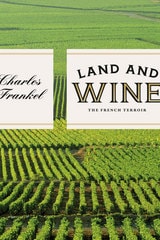
Land and Wine
The French TerroirCharles Frankel
University of Chicago Press, 2014
For centuries, France has long been the world’s greatest wine-producing country. Its wines are the global gold standard, prized by collectors, and its winemaking regions each offer unique tasting experiences, from the spice of Bordeaux to the berry notes of the Loire Valley. Although grape variety, climate, and the skill of the winemaker are essential in making good wine, the foundation of a wine’s character is the soil in which its grapes are grown. Who could better guide us through the relationship between the French land and the wine than a geologist, someone who deeply understands the science behind the soil? Enter scientist Charles Frankel.
In Land and Wine, Frankel takes readers on a tour of the French winemaking regions to illustrate how the soil, underlying bedrock, relief, and microclimate shape the personality of a wine. The book’s twelve chapters each focus in-depth on a different region, including the Loire Valley, Alsace, Burgundy, Champagne, Provence, the Rhône valley, and Bordeaux, to explore the full meaning of terroir. In this approachable guide, Frankel describes how Cabernet Franc takes on a completely different character depending on whether it is grown on gravel or limestone; how Sauvignon yields three different products in the hills of Sancerre when rooted in limestone, marl, or flint; how Pinot Noir will give radically different wines on a single hill in Burgundy as the vines progress upslope; and how the soil of each château in Bordeaux has a say in the blend ratios of Merlot and Cabernet-Sauvignon. Land and Wine provides a detailed understanding of the variety of French wine as well as a look at the geological history of France, complete with volcanic eruptions, a parade of dinosaurs, and a menagerie of evolution that has left its fossils flavoring the vineyards.
Both the uninitiated wine drinker and the confirmed oenophile will find much to savor in this fun guide that Frankel has spiked with anecdotes about winemakers and historic wine enthusiasts—revealing which kings, poets, and philosophers liked which wines best—while offering travel tips and itineraries for visiting the wineries today.

Land of Shame and Glory
Britain 2021–22Peter Hennessy
Haus Publishing, 2023
2021 and 2022 were two of the most turbulent and disruptive years experienced by Britain in peacetime. Land of Shame and Glory: Britain 2021–22 addresses a series of unprecedented challenges that laid bare the fragility of Britain and the Union during this time. Beginning with the chaotic Fall of Kabul, which exposed Britain's military dependence on the United States, through the prolonged, unsatisfying removal of a prime minister—and the economically catastrophic, short-lived tenure of his successor—that further exposed the vulnerabilities of an unwritten constitution; to the country sweltering in record-breaking temperatures amid dire warnings of climate catastrophe; and finally, to the death of a much-loved monarch, who was a point of consistency during decades of tremendous social and technological change. Peter Hennessy considers the continuities and upheavals of the last seventy years, asking whether there can be said to have been a second Elizabethan Age and lamenting that the post-war period came to its close amid such upheaval and loss.
Landscape for a Good Woman
A Story of Two LivesCarolyn Kay Steedman
Rutgers University Press, 1987
This book is about lives lived out on the borderlands, lives for which the central interpretative devices of the culture don't quite work. It has a childhood at its centre - my childhood, a personal past - and it is about the disruption of that fifties childhood by the one my mother had lived out before me, and the stories she told about it.'
Intricate and inspiring, this unusual book uses autobiographical elements to depict a mother and her daughter and two working-class childhoods (Burnley in the 1920s, South London in the 1950s) and to find a place for their stories in history and politics, in psychoanalysis and feminism.
'Provocative and quite dazzling in its ambitions. . . Beautifully written, intellectually compelling'.' Judith Walkowitz
--From 500 Great Books by Women; review by Jesse Larsen.
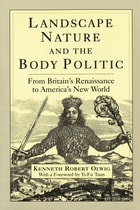
Landscape, Nature, and the Body Politic
From Britain's Renaissance to America's New WorldKenneth Robert Olwig
University of Wisconsin Press, 2002
Landscape, Nature, and the Body Politic explores the origins and lasting influences of two contesting but intertwined discourses that persist today when we use the words landscape, country, scenery, nature, national. In the first sense, the land is a physical and bounded body of terrain upon which the nation state is constructed (e.g., the purple mountain majesties above the fruited plain, from sea to shining sea). In the second, the country is constituted through its people and established through time and precedence (e.g., land where our fathers died, land of the Pilgrims’ pride). Kenneth Robert Olwig’s extended exploration of these discourses is a masterful work of scholarship both broad and deep, which opens up new avenues of thinking in the areas of geography, literature, theater, history, political science, law, and environmental studies.
Olwig tracks these ideas though Anglo-American history, starting with seventeenth-century conflicts between the Stuart kings and the English Parliament, and the Stuart dream of uniting Scotland with England and Wales into one nation on the island of Britain. He uses a royal production of a Ben Jonson masque, with stage sets by architect Inigo Jones, as a touchstone for exploring how the notion of "landscape" expands from artful stage scenery to a geopolitical ideal. Olwig pursues these contested concepts of the body politic from Europe to America and to global politics, illuminating a host of topics, from national parks and environmental planning to theories of polity and virulent nationalistic movements.
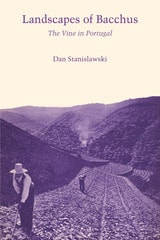
Landscapes Of Bacchus
The Vine in PortugalBy Dan Stanislawski
University of Texas Press, 1970
In a country of disparate parts and of long, unbroken historical experience, there may be one dominant feature, a clue to the character of its regions. In Portugal the vine serves as this clue.
The vine has been an important aspect of the Iberian landscape since prehistoric times, and farmers still use Roman methods of cultivation that have been adapted to regional physical conditions and to socioeconomic structure. Southern Portugal today is almost vineless, but in the north three areas can be distinguished by their vine forms and their products. Dan Stanislawski examines these areas in detail.
High tree-vines surround plots of grain in the Minho Province. The grains and the slightly acid Green Wines provide subsistence and cash for the densely settled area of owner-operated small farms.
In the hanging garden terrace of the Douro, vines grown on tawny, baked schist slopes yield world-famous Port Wine, a product that must conform to strict quantity and quality controls supervised by the central government.
Mature table wines are produced in the Dão, an isolated cul-de-sac where cordons of vines are planted on small, individually owned plots. Control of wine-making is exercised by a central governing group and by producers’ cooperatives.
Various wines originate in central Portugal. The lesser demarcated zones of Setubal, Colares, Carcavelos, and Bucelas yield fine wines. In other parts of the central region several wine types are produced in bulk. Some are used for blending and some for aging into quality table wines, but none is distinguished as a wine whose character is derived from its geographical location.
Dan Stanislawski demonstrates that vine form differences—and differences in the resulting product, wine—mirror the Portuguese historical experience and indicate regional distinctions in Portuguese life styles.
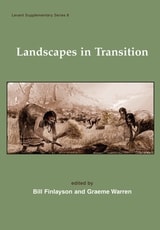
Landscapes in Transition
B. Finlayson
Council for British Research in the Levant, 2010
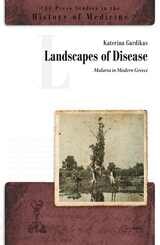
Landscapes of Disease
Malaria in Modern GreeceKaterina Gardikas
Central European University Press, 2018
Malaria has existed in Greece since prehistoric times. Its prevalence fluctuated depending on climatic, socioeconomic and political changes. The book focuses on the factors that contributed to the spreading of the disease in the years between independent statehood in 1830 and the elimination of malaria in the 1970s.
By the nineteenth century, Greece was the most malarious country in Europe and the one most heavily infected with its lethal form, falciparum malaria. Owing to pressures on the environment from economic development, agrarian colonization and heightened mobility, the situation became so serious that malaria became a routine part of everyday life for practically all Greek families, further exacerbated by wars. The country’s highly fragmented geography and its variable rainfall distribution created an environment that was ideal for sustaining and spreading of diseases, which, in turn, affected the tolerance of the population to malaria. In their struggle with physical suffering and death, the Greeks developed a culture of avid quinine consumption and were likewise eager to embrace the DDT spraying campaign of the immediate post WW II years, which, overall, had a positive demographic effect.
Language and Power in the Early Middle Ages
Patrick J. Geary
Brandeis University Press, 2013
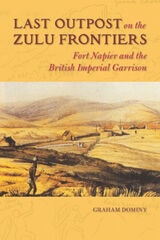
Last Outpost on the Zulu Frontiers
Fort Napier and the British Imperial GarrisonGraham Dominy
University of Illinois Press, 2016
Late Enlightenment
Emergence of the Modern 'National Idea'Marius Turda
Central European University Press, 2006
Latin Classics in Medieval Hungary
Eleventh CenturyElod Nemerkényi
Central European University Press, 2004

Latin Inscriptions in Oxford
Compiled with Translations by Reginald H. Adams
Bodleian Library Publishing, 2015
For Latin Inscriptions in Oxford, Reginald H. Adams, a former scholar at St. John’s College, University of Oxford, has translated a selection of Latin inscriptions. Among them, he finds a great many tributes and memorials—to Queen Anne, Cardinal Wolsey, and T. E. Lawrence, but also to Irene Frude, a “most kindly landlady” on Little Clarendon who “provided each day for almost thirty-five years enormous breakfasts.” Some of the inscriptions offer concise commentary—“Without experiment, it is not possible to know anything adequately.” While others are instructive like the Rhodes House’s warning, “Let no one who is smoke-bearing enter here.”
Evocative mementoes of the past, the inscriptions collected by Adams bring insight to the vivid history of Oxford, the city and the university.
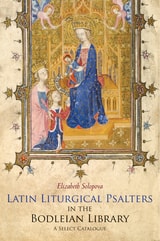
Latin Liturgical Psalters in the Bodleian Library
A Select CatalogueElizabeth Solopova
Bodleian Library Publishing, 2013
Latin Liturgical Psalters in the Bodleian Library describes more than one hundred psalters from Britain, France, the Netherlands, Germany, Austria, Italy, and Spain, ranging from the ninth to the sixteenth century and reflecting a wide range of requirements and interests. Each entry includes a description of the psalter’s contents, physical makeup, and provenance, alongside full-color images of pages, a bibliography, and tables to assist in the study of illumination and the liturgical use of psalms.
Bringing together important information on a stunning selection of little-known manuscripts held by the Bodleian Library, this volume will prove a valuable resource.
Laughter and Civility
The Theater of Emma GadLynn R. Wilkinson
University of Wisconsin Press, 2020
Laughter and Civility, the first biographical and scholarly volume to examine and contextualize her dramas, deeply explores how and why influential women are so often excluded from the canon. Lynn R. Wilkinson provides insightful readings into all twenty-five of Gad’s plays and demonstrates how writers and intellectuals of the time, including Georg and Edvard Brandes, took her critically acclaimed work seriously. This volume rightfully reinstates Emma Gad’s work into the repertory of European drama and is crucial for scholars interested in turn‐of‐the‐century Scandinavian drama, literature, culture, and politics.
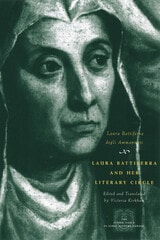
Laura Battiferra and Her Literary Circle
An Anthology: A Bilingual EditionLaura Battiferra degli Ammannati
University of Chicago Press, 2006
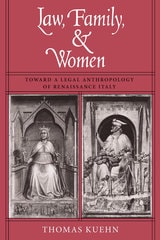
Law, Family, and Women
Toward a Legal Anthropology of Renaissance ItalyThomas Kuehn
University of Chicago Press, 1991
influence of law on Italian society during the Renaissance,
especially in the spheres of family and women. Kuehn's use
of legal sources along with letters, diaries, and
contemporary accounts allows him to present a compelling
image of the social processes that affected the shape and
function of the law.
The numerous law courts of Italian city-states
constantly devised and revised statutes. Kuehn traces the
permutations of these laws, then examines their use by
Florentines to arbitrate conflict and regulate social
behavior regarding such issues as kinship, marriage,
business, inheritance, illlegitimacy, and gender. Ranging
from one man's embittered denunciation of his father to
another's reaction to his kinsmen's rejection of him as
illegitimate, Law, Family, and Women provides
fascinating evidence of the tensions riddling family life in
Renaissance Florence. Kuehn shows how these same tensions,
often articulated in and through the law, affected women. He
examines the role of the mundualdus—a male legal guardian
for women—in Florence, the control of fathers over their
married daughters, and issues of inheritance by and through
women. An ambitious attempt to reformulate the agenda of
Renaissance social history, Kuehn's work will be of value to
both legal anthropologists and social historians.
Thomas Kuehn is professor of history at Clemson
University.

Law, Sex, and Christian Society in Medieval Europe
James A. Brundage
University of Chicago Press, 1990
"Brundage's book is consistently learned, enormously useful, and frequently entertaining. It is the best we have on the relationships between theological norms, legal principles, and sexual practice."—Peter Iver Kaufman, Church History

Laws of Early Iceland
Gragas IAndrew Dennis
University of Manitoba Press, 2007

Laws of Early Iceland
Gragas IIAndrew Dennis
University of Manitoba Press, 2000
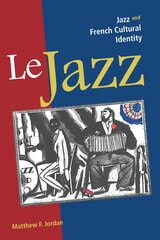
Le Jazz
Jazz and French Cultural IdentityMatthew F. Jordan
University of Illinois Press, 2010
In Le Jazz, Matthew F. Jordan deftly blends textual analysis, critical theory, and cultural history in a wide-ranging and highly readable account of how jazz progressed from a foreign cultural innovation met with resistance by French traditionalists to a naturalized component of the country's identity. Jordan draws on sources including ephemeral critical writing in the press and twentieth-century French literature to trace the country's reception of jazz, from the Cakewalk dance craze and the music's significance as a harbinger of cultural recovery after World War II to its place within French ethnography and cultural hybridity.
Countering the histories of jazz's celebratory reception in France, Jordan delves in to the reluctance of many French citizens to accept jazz with the same enthusiasm as the liberal humanists and cosmopolitan crowds of the 1930s. Jordan argues that some listeners and critics perceived jazz as a threat to traditional French culture, and only as France modernized its identity did jazz become compatible with notions of Frenchness. Le Jazz speaks to the power of enlivened debate about popular culture, art, and expression as the means for constructing a vibrant cultural identity, revealing crucial keys to understanding how the French have come to see themselves in the postwar world.
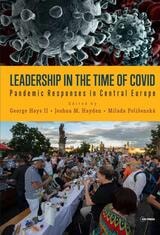
Leadership in the Time of Covid
Pandemic Responses in Central EuropeMilada Polisenská
Central European University Press, 2023
The Covid pandemic has put all modern societies to a serious test of resilience. The interdisciplinary research on which this book is based examined how four European governments behaved in these circumstances. During the months of the crisis, the team of experts coordinated by the editors of this volume took a close look at the decision-making processes in the Czech Republic, Hungary, Poland, and Slovakia – the so-called Visegrad Four.
The inquiries focused on experiences from the academic, health, economic and social fields. The methods of comparison included surveys, interviews, discourse analysis, for which the adaptive leadership theory provided the conceptual framework.
The conclusions are both academic and practical. Aside the description of the pandemic responses, the research had a formative dimension: how can an adaptive leadership approach better help societies manage the health and societal impacts of similar challenges? The spectrum of emerging anti-democratic tendencies in the region provided the specific context of the exercise. The four states face varying degrees of democratic backsliding as well as illiberal influences that have affected their response to the pandemic, which gives this research on the Visegrad Four a worldwide resonance.
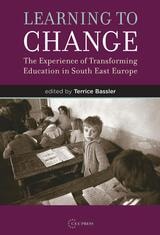
Learning to Change
The Experience of Transforming Education in South East EuropeTerrice Bassler
Central European University Press, 2005
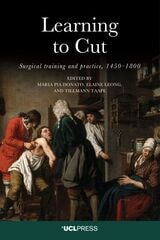
Learning to Cut
Surgical Training and Practice, 1450–1800Edited by Maria Pia Donato, Elaine Leong, and Tillmann Taape
University College London, 2026
The first-ever volume to offer a broader European narrative on surgical training and education in the early modern era.
This volume brings together case studies from the French, Italian, German, and English contexts to reveal diverse modes of surgical teaching and learning that were shaped by local contexts in early modern towns and cities. The chapters reveal the many spaces where practitioners learned and experienced surgery, shedding new light on the practice of early modern surgery.
Left Populism in Europe
Lessons from Jeremy Corbyn to PodemosMarina Prentoulis
Pluto Press, 2021

Legacies of Anti-Semitism in France
Jeffrey Mehlman
University of Minnesota Press, 1983
Legacies of Anti-Semitism in France was first published in 1983. Minnesota Archive Editions uses digital technology to make long-unavailable books once again accessible, and are published unaltered from the original University of Minnesota Press editions.
These four essays—on Blanchot, Lacan, Giraudoux, and Gide—have as their focus the barely imaginable coherence which the writings of four major contemporaries take on when read in the light of France's pre-World War II heritage of anti-Jewish thought. As the essays delve into such crucial topics as the inaugural silence in Blanchot's sense of literature, the "style" of Lacan, Giraudoux's relation to Racine, and the sexual politics of Gide, they engage a realm that at times seems—or seemed—anti-Semitic in its essence. Negotiating the complex ramifications of a lost tradition and the structure of its obliteration, Jeffrey Mehlman, in his conclusion, speculates on the emblematic value of Walter Benjamin's perpetually deferred "journey to Palestine via France" and its import for textual interpretation.
A French version of Mehlman's essay on Blanchot, published in Tel quel,spurred an impassioned journalistic debate in Paris and London. Broadening still further the context of that inquiry, Legacies will prove a source of provocation and insight to all who are interested in the intellectual history of contemporary France.

Legal Norms, Proceures, and Exchanges in the Early Modern <i>ius commune</i?
Damian Smith
Catholic University of America Press, 2026

Legislating the French Family
Feminism, Theater, and Republican Politics: 1870-1920Jean Elisabeth Pedersen
Rutgers University Press, 2003
Legitimacy of Philanthropic Foundations
United States and European PerspectivesKenneth Prewitt
Russell Sage Foundation, 2006
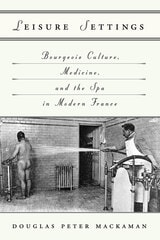
Leisure Settings
Bourgeois Culture, Medicine, and the Spa in Modern FranceDouglas P. Mackaman
University of Chicago Press, 1998
Taking us into the vibrant social world of France's great spas, Mackaman explores the links between class identity and vacationing. Mackaman shows how, after 1800, physicians and entrepreneurs zealously tried to break their milieu's strong association with aristocratic excess and indecency by promoting spas as a rational, ordered equivalent to the busy lives of the bourgeoisie. Rather than seeing leisure time as slothful, Mackaman argues, the bourgeoisie willingly became patients at spas and viewed this therapeutic vacation as a sensible, even productive, way of spending time. Mackaman analyzes this transformation, and ultimately shows how the premier vacation of an era made and was made by the bourgeoisie.

Les Icariens
THE UTOPIAN DREAM IN EUROPE AND AMERICARobert P. Sutton
University of Illinois Press, 1994
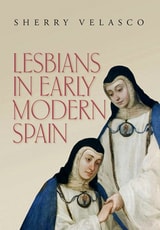
Lesbians in Early Modern Spain
Sherry Velasco
Vanderbilt University Press, 2011
The women in these accounts, stories, and cases range from internationally famous transgendered celebrities to lesbian criminals, from those suspected of "special friendships" in the convent to ordinary villagers.
Velasco argues that the diverse and recurrent representations of lesbian desire provide compelling evidence of how different groups perceived intimacy between women as more than just specific sex acts. At times these narratives describe complex personal relationships and occasionally characterize these women as being of a certain "type," suggesting an early modern precursor to what would later be recognized as divergent lesbian, bisexual, and transgender identities.
Lessons and Legacies XII
New Directions in Holocaust Research and EducationEdited and with an introduction by Wendy Lower and Lauren Faulkner Rossi
Northwestern University Press, 2017
Lessons and Legacies, Volume XVI
Rethinking ParadigmsSarah Phillips Casteel and Jennifer V. Evans
Northwestern University Press, 2027
Bringing forth new perspectives previously unrepresented in Holocaust studies
Lessons and Legacies, Volume XVI: Rethinking Paradigms does the difficult but crucial work of thinking through new methods and modes of representation that speak to where we find ourselves in Holocaust studies today, responding to—and developing new tools to analyze—the shifting shape of Holocaust memory: spatially, temporally, and in and across diverse media. The collection foregrounds the challenges visual sources pose to how we think about the Holocaust, including how it is represented differently in visual media, from photography to graphic novels, and establishes translation as a crucial concept for reframing Holocaust testimony and memory. The contributing authors also model ethical, nuanced ways to conduct comparative, connective work that challenges Eurocentric narratives of the Holocaust. The volume concludes with a section on memory work and activism that approaches the subject of post-1945 memory through different lenses to surface lesser-known aspects of Holocaust history.

Lessons from the Northern Ireland Peace Process
Edited by Timothy J. White; Foreword by Martin Mansergh
University of Wisconsin Press, 2013
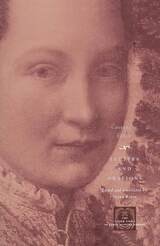
Letters and Orations
Cassandra Fedele
University of Chicago Press, 2000
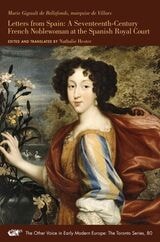
Letters from Spain
A Seventeenth-Century French Noblewoman at the Spanish Royal CourtMarie Gigault de Bellefonds
Iter Press, 2021
This volume includes her surviving letters from Madrid to her friend Madame de Coulanges and an appendix of her letters sent from Paris and Turin. The letters from Spain, written between 1679 and 1681, paint a vivid and engaging picture of the royal court and its new queen.
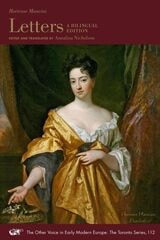
Letters
A Bilingual EditionHortense Mancini
Iter Press, 2025
During the seventeenth century, Hortense Mancini, Duchess of Mazarin (1646–99), became an icon of women’s emancipation. In 1668, she shocked Europe when she fled her coercive husband and began a nomadic exile. Her notoriety increased in 1675 with the publication of her memoir—one of the first to appear in French by a woman—and was later magnified by her stint as the royal mistress of Charles II of England and by her establishment of a freethinking salon in London. As a salonnière, an exile, and a litigant fighting for legal separation from her husband, Mancini’s letters were a means of connection, collusion, and survival as well as cultural collaboration. Collected and translated here for the first time, this correspondence charts her struggle for autonomy in her own words.
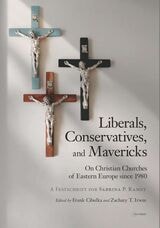
Liberals, Conservatives, and Mavericks
On Christian Churches of Eastern Europe since 1980. A Festschrift for Sabrina P. RametFrank Cibulka
Central European University Press, 2025
No Church is monolithic—this is the preliminary premise of this volume on the public place of religion in a representative number of post-communist countries. The studies confirm that within any religious organization we can expect to find fissures, factions, theological or ideological quarrels, and perhaps even competing interest groups, such as missionary workers, regular clergy versus secular clergy, and sometimes even competing ecclesiastical hierarchies. The main focus of the book rests on the divisions arising within select Christian Churches, as they confront the processes of secularization and atheization. The coverage area includes Russia and the Ukraine, East-Central Europe and South-Eastern Europe. Some chapters focus on individual clergy who challenge the mainstream of their given Church either from a more liberal or from a more conservative perspective, while others deal with the divisive forces impacting the religious organizations.
This festschrift to honor Sabrina Ramet’s seminal contribution to the study of religion in the politics of the communist and post-communist world, brings together several generations of scholars from a variety of countries, both those well established in their fields of study as well as young promising academics.
Liberty and the Search for Identity
Ivan Zoltan Denes
Central European University Press, 2006
Libri Annales Pontificum Maximorum
The Origins of the Annalistic TraditionBruce W. Frier
University of Michigan Press, 1999
When first published, the volume sparked a lively debate among classicists and historians of the ancient world. Previous scholarship had often assigned the pontifical chronicle a central role not only in preserving the history of the early Republic, but also in shaping the form of the annalistic tradition. But the author showed that these assumptions rested on insecure foundations; to a large extent, they misrepresented the historiographic development of the annalistic tradition as we know it from, above all, Livy and Dionysius of Halicarnassus.
Perhaps the book's most controversial contention was that the final eighty-book edition of the chronicle, which previous scholars had dated to the later second century BCE, is more probably a massive reworking of materials in the Augustan period. This finding will likely require a considerable revision in our understanding of the development of the annalistic tradition. In the course of making these innovative arguments, the author offers extensive information about the origins of the annalistic tradition and about the early history and historiography of Rome.
Bruce W. Frier is Professor of Classics and Roman Law, and Henry King Ransom Professor of Law, University of Michigan. He has published numerous books and articles on classical and legal topics, and has won the Charles J. Goodwin Award of Merit from the American Philological Association.