148 books match the query 'Evaluation' and 8 start with l
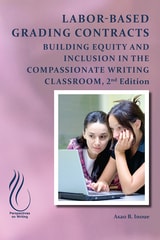
cover of Labor-Based Grading Contracts: Building Equity and Inclusion in the Compassionate Classroom

Labor-Based Grading Contracts

Building Equity and Inclusion in the Compassionate Classroom

Asao B. Inoue

University Press of Colorado, 2023
In the second edition of Labor-Based Grading Contracts, Asao B. Inoue refines his exploration of labor-based grading contracts in the writing classroom. Drawing on antiracist teaching practices, he argues that labor-based grading contracts offer a compassionate approach that is strongly grounded in social justice work. Updated with a new foreword and revised chapters, the book offers a meditation on how Inoue’s use of Freirean problem-posing led him to experiment with grading contracts. The result is a robust Marxian theory of labor that considers Hannah Arendt’s theory of labor-work-action and Barbara Adam’s concept of “timescapes.” The heart of the book details the theoretical and practical ways labor-based grading contracts can be used and assessed for effectiveness in classrooms and programs. Inoue concludes his exploration of labor-based grading by moving outside the classroom, considering how assessing writing in the socially just ways he offers in the book may provide a way to address the violence and discord seen in the world today.
 
[more]
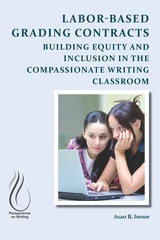
cover of Labor-Based Grading Contracts: Building Equity and Inclusion in the Compassionate Writing Classroom

Labor-Based Grading Contracts

Building Equity and Inclusion in the Compassionate Writing Classroom

Asao B. Inoue

University Press of Colorado, 2019

In Labor-Based Grading Contracts, Asao B. Inoue argues for the use of labor-based grading contracts along with compassionate practices to determine course grades as a way to do social justice work with students. He frames this practice by considering how Freirean problem-posing led him to experiment with grading contracts and explore the literature on grading contracts. Inoue offers a robust Marxian theory of labor that considers Hannah Arendt's theory of labor-work-action and Barbara Adam's concept of "timescapes." The heart of the book details the theoretical and practical ways labor-based grading contracts can be used and assessed for effectiveness in classrooms and programs. Inoue concludes the book by moving outside the classroom, considering how assessing writing in the socially just ways he offers in the book may provide a way to address the violence and discord seen in the world today.
[more]
cover of Leading Change In Academic Libraries

Leading Change In Academic Libraries

Colleen Boff

Assoc of College & Research Libraries, 2020
[more]
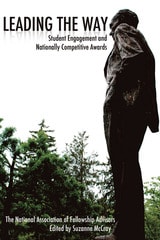
cover of Leading the Way: Student Engagement and Nationally Competitive Awards

Leading the Way

Student Engagement and Nationally Competitive Awards

Suzanne McCray

University of Arkansas Press, 2009
Here are eleven essays addressing various aspects of the application process: building an office, engaging students in research, connecting them to internships and other special opportunities, embracing diversity, defining leadership, involving faculty, and preparing for an interview. There are also realistic assessments of the odds of winning a scholarship. Three of the essays are by directors or presidents of the Ron Brown Scholar Program, the Senator George J. Mitchell Scholarship Research Institute, and the Coca-Cola Scholars Foundation. The essays are a result of the National Association of Fellowships Advisors conference, NAFA in Washington: Scholarships in a National Context, held in Washington, D.C., in July of 2007. The collection is a valuable resource for faculty, advisors, and administrators who want to provide opportunities for student engagement and to use the process to help shape tomorrow’s leaders. The book also includes two appendices: “NAFA Foundation and Institutional Membership” and “Competitive Scholarships, Opportunities, Internships, and Programs at a Glance.”
[more]
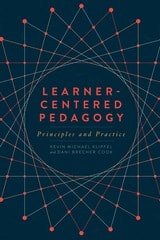
cover of Learner-Centered Pedagogy: Principles and Practice

Learner-Centered Pedagogy

Principles and Practice

Kevin Michael Klipfel

American Library Association, 2017

Today's emphasis on metrics and personalization make evidence-based instruction an imperative. In this practice-based handbook, the authors draw on the research of the humanistic psychologist and educator Carl Rogers to present an empathetic approach to information literacy sessions, reference service, and outreach.  With an eye on everyday library work, they offer concrete, empirically-based strategies to connect with learners at all levels. Offering plentiful examples of pedagogy in action, this book covers:

  • 6 cognitive principles for organizing information literacy instruction, with sample worksheets and organization tools for instruction planning;
  • how to establish rapport and kindle learners' motivation;
  • tactics for transcending "cite 5 sources" and other uninspiring research assignments;
  • educational evidence debunking the mythical perception that because students are skilled at computers and mobile technology, they already know how to do research;
  • questions to keep in mind for inspiring autonomous learning;
  • the power of story, as described by Joan Didion, Brené Brown's Ted Talk, and educational psychology research;
  • the science behind information overload; and
  • a balanced framework for evaluating specific educational technology tools.

Fusing theory with practice, this handbook is a valuable resource to help every practitioner connect with learners more effectively.
[more]
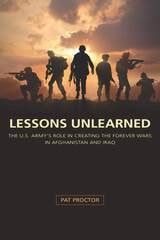
cover of Lessons Unlearned: The U.S. Army's Role in Creating the Forever Wars in Afghanistan and Iraq

Lessons Unlearned

The U.S. Army's Role in Creating the Forever Wars in Afghanistan and Iraq

Pat Proctor

University of Missouri Press, 2020

Colonel Pat Proctor’s long overdue critique of the Army’s preparation and outlook in the all-volunteer era focuses on a national security issue that continues to vex in the twenty-first century: Has the Army lost its ability to win strategically by focusing on fighting conventional battles against peer enemies? Or can it adapt to deal with the greater complexity of counterinsurgent and information-age warfare?
 
In this blunt critique of the senior leadership of the U.S. Army, Proctor contends that after the fall of the Soviet Union, the U.S. Army stubbornly refused to reshape itself in response to the new strategic reality, a decision that saw it struggle through one low-intensity conflict after another—some inconclusive, some tragic—in the 1980s and 1990s, and leaving it largely unprepared when it found itself engaged—seemingly forever—in wars in Afghanistan and Iraq. The first book-length study to connect the failures of these wars to America’s disastrous performance in the war on terror, Proctor’s work serves as an attempt to convince Army leaders to avoid repeating the same mistakes.
 
[more]
cover of Library Improvement through Data Analytics

Library Improvement through Data Analytics

Lesley S. J. Farmer

American Library Association, 2016

[more]
cover of Listening Myths: Applying Second Language Research to Classroom Teaching

Listening Myths

Applying Second Language Research to Classroom Teaching

Steven Brown

University of Michigan Press, 2011

This volume was conceived as a "best practices" resource for teachers of ESL listening courses in the way that Vocabulary Myths by Keith S. Folse (and Writing Myths by Joy Reid) is one for reading and vocabulary teachers. It was written to help ensure that teachers of listening are not perpetuating the myths of teaching listening.

Both the research and pedagogy in this book are based on the newest research in the field of second language acquisition. Steven Brown is the author of the Active Listening textbook series and is a teacher trainer.

The myths debunked in this book are:

§ Listening is the same as reading.

§ Listening is passive.

§ Listening equals comprehension.

§ Because L1 language ability is effortlessly acquired, L2 listening ability is too.

§ Listening means listening to conversations.

§ Listening is an individual, inside-the-head process.

§ Students should only listen to authentic materials.

§ Listening can’t be taught

[more]