85 books match the query 'Experience' and 3 start with l
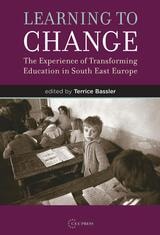
cover of Learning to Change: The Experience of Transforming Education in South East Europe

Learning to Change

The Experience of Transforming Education in South East Europe

Terrice Bassler

Central European University Press, 2005
A collection of first-person narratives by specialists in the field of education in South East Europe. The contributors are recognized leaders in civil society, government, academia and schools. Their works chronicle the profound effect armed conflict, political transition, and the increasing openness the region has experienced on education. It is a significant achievement as it is the work of individuals who are involved in the field and have a first hand perspective on issues of education in the region. The essays shed light on the reality of the educational reforms: they are far from beeing linear progressive processes, on the contrary, they are very often paradoxical and even controversial.
[more]
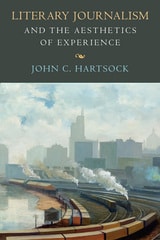
cover of Literary Journalism and the Aesthetics of Experience

Literary Journalism and the Aesthetics of Experience

John C. Hartsock

University of Massachusetts Press, 2016

Proponents and practitioners of narrative literary journalism have sought to assert its distinctiveness as both a literary form and a type of journalism. In Literary Journalism and the Aesthetics of Experience, John C. Hartsock argues that this often neglected kind of journalism—exemplified by such renowned works as John Hersey's Hiroshima, James Agee's Let Us Now Praise Famous Men, and Joan Didion's Slouching Towards Bethlehem—has emerged as an important genre of its own, not just a hybrid of the techniques of fiction and the conventions of traditional journalism.

Hartsock situates narrative literary journalism within the broader histories of the American tradition of “objective” journalism and the standard novel. While all embrace the value of narrative, or storytelling, literary journalism offers a particular “aesthetics of experience” lacking in both the others. Not only does literary journalism disrupt the myths sustained by conventional journalism and the novel, but its rich details and attention to everyday life question readers' cultural assumptions. Drawing on the critical theories of Nietzsche, Bakhtin, Benjamin, and others, Hartsock argues that the aesthetics of experience challenge the shibboleths that often obscure the realities the other two forms seek to convey.

At a time when print media appear in decline, Hartsock offers a thoughtful response to those who ask, “What place if any is there for a narrative literary journalism in a rapidly changing media world?”

[more]
cover of Love Known: Theology and Experience in George Herbert's Poetry

Love Known

Theology and Experience in George Herbert's Poetry

Richard Strier

University of Chicago Press, 1983

This book changes the way we read one of the greatest masters of the lyric poem in English. Unlike much recent scholarship on George Herbert, Love Known demonstrates the inseparability of Herbert's theology and poetry. Richard Strier argues persuasively for a strongly Protestant Herbert who shared Luther's sense of the primacy of the doctrine of justification by faith. Cutting across traditional lines, the book is the first sustained study of the theological basis of Herbert's poetry, pointing out connections between Herbert and the Protestant "left" of his own and the following era.
 
In each chapter, Strier closely analyzes a coherent group of Herbert's lyrics to reveal the theological motives of their movements and design. When placed in a theological context, the poems come into focus in a remarkable way: many hitherto puzzling or unnoticed details are clarified, some neglected poems emerge into prominence, and familiar poems like "Love" (III) and "The Collar" take on new cogency. The chapters build on one another , moving from the darker implications of "faith alone," the insistence on the pervasiveness of sin and pride, to the comforting implications of the doctrine, the assertion of the possibility of freedom from anxiety, and the defense of individual experience.
 
Love Known thus offers not only a new historical approach to Herbert, but a new appreciation of the relationship between the psychological realism and human appeal of the lyrics and their theological core.
[more]