Results by title
455 books match the query 'Feminism' and 17 start with l
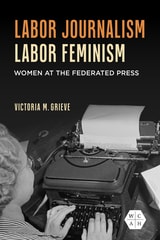
Labor Journalism, Labor Feminism
Women at the Federated PressVictoria M. Grieve
University of Illinois Press, 2026
These journalists wrote women into labor news by shedding light on essential issues like the need for equal pay and an end to discrimination. Their work increased women’s visibility in unions and the workforce while revealing that not only class but gender and race shaped their on-the-job experiences. Grieve also examines labor feminism within the larger stories of links between the Old Left and New Left and the FP’s pioneering role in articulating early iterations of intersectional feminism.
A compelling portrait of four women and a movement, Labor Journalism, Labor Feminism looks at an essential labor press organization and profiles politically active, leftist women who created relationships, established networks, and worked for social change.
Labs of Our Own
Feminist Tinkerings with ScienceSig / Sara Giordano
Rutgers University Press, 2025
Latin American Women and the Search for Social Justice
Francesca Miller
University Press of New England, 1991
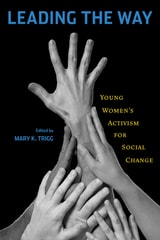
Leading the Way
Young Women's Activism for Social ChangeTrigg, Mary K
Rutgers University Press, 2009
Bringing together graduates of a women's leadership certificate program at Rutgers University's Institute for Women's Leadership, these essays provide a contrasting picture to assumptions about the current death of feminism, the rise of selfishness and individualism, and the disaffected Millennium Generation. Reflecting on a critical juncture in their lives, the years during college and the beginning of careers or graduate studies, the contributors' voices demonstrate the ways that diverse, young, educated women in the United States are embodying and formulating new models of leadership, at the same time as they are finding their own professional paths, ways of being, and places in the world. They reflect on controversial issues such as gay marriage, gender, racial profiling, war, immigration, poverty, urban education, and health care reform in a post-9/11 era.
Leading the Way introduces readers to young women who are being prepared and empowered to assume leadership roles with men in all public arenas, and to accept equal responsibility for making positive social change in the twenty-first century.

Legislating the French Family
Feminism, Theater, and Republican Politics: 1870-1920Jean Elisabeth Pedersen
Rutgers University Press, 2003
Lesbian Potentiality and Feminist Media in the 1970s
Jed Samer
Duke University Press, 2022

Lesbian Trouble
Feminism, Heterosexuality, and the French Women's Liberation MovementIlana Eloit
Duke University Press, 2027
Letting Go
Feminist and Social Justice Insight and ActivismDonna King
Vanderbilt University Press, 2015
There is a huge difference between letting go and "chilling out." In a lean-in society, self-care is promoted as something women and men should do to learn how to "relax" and find a comfortable work-life balance. By contrast, a feminist letting-go and its attendant self-care have the potential to be a radical act of awakening to social and environmental injustice and a call to activism.

Liberating Method
Feminism and Social ResearchMarjorie Devault
Temple University Press, 1999
DeVault believes in "writing carefully," that is with care (precision) and caring (empathy). In addition to essays on how women write, are silenced, and can speak up, she includes an autobiographical sketch, a discussion of "the self as resource," and a section on what she calls "excavation," or the work of recovering unrecognized or suppressed aspects of women's experience. She explores the sources and meanings of feminist methodology, the strategies of reflexive analysis, and the issues that arise when writing and teaching feminist research. Committed to a feminism attentive to oppressions that operate simultaneously with gender, DeVault considers exclusions and distortions in feminist research and strategies for building more inclusive approaches. Including a closing essay that presents "practical advice" for oppositional researchers, LiberatingMethod reflects DeVault's conviction that feminist insights can and should contribute to a sounder, more rigorous social science.
Liberating Shahrazad
Feminism, Postcolonialism, and IslamSuzanne Gauch
University of Minnesota Press, 2006
In Liberating Shahrazad, Suzanne Gauch analyzes how postcolonial writers and filmmakers from Algeria, Morocco, and Tunisia have reclaimed the storyteller in order to portray Muslim women in ways that highlight their power to shape their own destinies. Gauch looks at Maghrebian works that incorporate Shahrazad’s storytelling techniques into unexpected and unforeseen narratives. Highlighting the fluid nature of storytelling, Gauch demonstrates how these new depictions of Shahrazad—from artists such as Moufida Tlatli, Fatima Mernissi, Tahar Ben Jelloun, Assia Djebar, Leïla Sebbar—navigate the demands of a global marketplace, even as they reshape the stories told about the Islamic world.
In the face of both rising fundamentalism and proliferating Western media representations of Arab and Muslim women as silent, exploited, and uneducated victims, Gauch establishes how contemporary works of literature and film revive the voice of a long-silenced Shahrazad—and, ultimately, overthrow oppressive images of Muslim women. Suzanne Gauch is assistant professor of English and women’s studies at Temple University.
Life in Language
Mission Feminists and the Emergence of a New Protestant SubjectIngie Hovland
University of Chicago Press, 2025
The language of the Bible is a powerful lens through which many Protestants understand themselves and their world, and its prohibitions on women’s speech pose complicated challenges to women. Nevertheless, women frequently serve as vocal leaders in Protestant organizations, including the early twentieth-century Norwegian Mission Society. In Life in Language, Ingie Hovland offers a unique biography of Henny Dons, a leader of the society’s so-called mission feminists, that grapples with ways Protestant women crafted innovative, expansive self-understandings through Christian language. More than their male peers, the mission feminists turned to religious speech to express material, as well as heavenly, desires for paid work, voting rights, and more, and Hovland argues that these experiments in women speaking, reading, writing, and listening paved the way for a new way of being in the world.
Liminal Lives
Imagining the Human at the Frontiers of BiomedicineSusan Merrill Squier
Duke University Press, 2004
Drawing on archival materials of twentieth-century biology; little-known works of fiction and science fiction; and twentieth- and twenty-first century U.S. and U.K. government reports by the National Institutes of Health, the Parliamentary Advisory Group on the Ethics of Xenotransplantation, and the President’s Council on Bioethics, she examines a number of biomedical changes as each was portrayed by scientists, social scientists, and authors of fiction and poetry. Among the scientific developments she considers are the cultured cell, the hybrid embryo, the engineered intrauterine fetus, the child treated with human growth hormone, the process of organ transplantation, and the elderly person rejuvenated by hormone replacement therapy or other artificial means. Squier shows that in the midst of new phenomena such as these, literature helps us imagine new ways of living. It allows us to reflect on the possibilities and perils of our liminal lives.
Living a Feminist Life
Sara Ahmed
Duke University Press, 2017
Living for the Revolution
Black Feminist Organizations, 1968–1980Kimberly Springer
Duke University Press, 2005
The organizations that Springer examines were the first to explicitly use feminist theory to further the work of previous black women’s organizations. As she describes, they emerged in response to marginalization in the civil rights and women’s movements, stereotyping in popular culture, and misrepresentation in public policy. Springer compares the organizations’ ideologies, goals, activities, memberships, leadership styles, finances, and communication strategies. Reflecting on the conflicts, lack of resources, and burnout that led to the demise of these groups, she considers the future of black feminist organizing, particularly at the national level. Living for the Revolution is an essential reference: it provides the history of a movement that influenced black feminist theory and civil rights activism for decades to come.
Living the Changes
Joan Turner
University of Manitoba Press, 1990
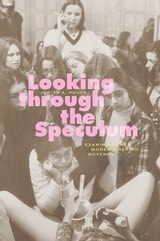
Looking through the Speculum
Examining the Women’s Health MovementJudith A. Houck
University of Chicago Press, 2024
The women’s health movement in the United States, beginning in 1969 and taking hold in the 1970s, was a broad-based movement seeking to increase women’s bodily knowledge, reproductive control, and well-being. It was a political movement that insisted that bodily autonomy provided the key to women’s liberation. It was also an institution-building movement that sought to transform women’s relationships with medicine; it was dedicated to increasing women’s access to affordable health care without the barriers of homophobia, racism, and sexism. But the movement did not only focus on women’s bodies. It also encouraged activists to reimagine their relationships with one another, to develop their relationships in the name of personal and political change, and, eventually, to discover and confront the limitations of the bonds of womanhood.
This book examines historically the emergence, development, travails, and triumphs of the women’s health movement in the United States. By bringing medical history and the history of women’s bodies into our emerging understandings of second-wave feminism, the author sheds light on the understudied efforts to shape health care and reproductive control beyond the hospital and the doctor’s office—in the home, the women’s center, the church basement, the bookshop, and the clinic. Lesbians, straight women, and women of color all play crucial roles in this history. At its center are the politics, institutions, and relationships created by and within the women’s health movement, depicted primarily from the perspective of the activists who shaped its priorities, fought its battles, and grappled with its shortcomings.
Lyric Interventions
Feminism, Experimental Poetry, DiscourseLinda A. Kinnahan
University of Iowa Press, 1998
Lyric Interventions explores linguistically innovative poetry by contemporary women in North America and Britain whose experiments give rise to fresh feminist readings of the lyric subject. The works discussed by Linda Kinnahan explore the lyric subject in relation to the social: an “I” as a product of social discourse and as a conduit for change.
Contributing to discussions of language-oriented poetries through its focus on women writers and feminist perspectives, this study of lyric experimentation brings attention to the cultural contexts of nation, gender, and race as they significantly shift the terms by which the “experimental” is produced, defined, and understood.
This study focuses upon lyric intervention in distinct but related spheres as they link public and ideological norms of identity. Firstly, lyric innovations with visual and spatial realms of cultural practice and meaning, particularly as they naturalize ideologies of gender and race in North America and the post-colonial legacies of the Caribbean, are investigated in the works of Barbara Guest, Kathleen Fraser, Erica Hunt, and M. Nourbese Philip. Secondly, experimental engagements with nationalist rhetorics of identity, marking the works of Carol Ann Duffy, Denise Riley, Wendy Mulford, and Geraldine Monk, are explored in relation to contemporary evocations of “self” in Britain. And thirdly, in discussions of all of the poets, but particularly accenuated in regard to Guest, Fraser, Riley, Mulford, and Monk, formal experimentation with the lyric “I” is considered through gendered encounters with critical and avant-garde discourses of poetics.
This fresh, energetic study will be of great interest to literary critics and womens studies scholars, as well as poets on both sides of the Atlantic.