Results by title
3388 books match the query 'Fiction' and 128 start with l
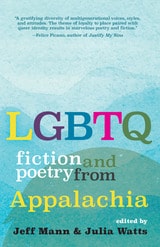
LGBTQ Fiction and Poetry from Appalachia
Jeff Mann
West Virginia University Press, 2018
This collection, the first of its kind, gathers original and previously published fiction and poetry from lesbian, gay, bisexual, transgender, and queer authors from Appalachia. Like much Appalachian literature, these works are pervaded with an attachment to family and the mountain landscape, yet balancing queer and Appalachian identities is an undertaking fraught with conflict. This collection confronts the problematic and complex intersections of place, family, sexuality, gender, and religion with which LGBTQ Appalachians often grapple.
With works by established writers such as Dorothy Allison, Silas House, Ann Pancake, Fenton Johnson, and Nickole Brown and emerging writers such as Savannah Sipple, Rahul Mehta, Mesha Maren, and Jonathan Corcoran, this collection celebrates a literary canon made up of writers who give voice to what it means to be Appalachian and LGBTQ.
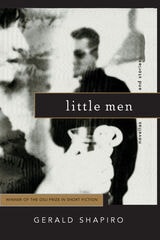
LITTLE MEN
NOVELLAS AND STORIESGERALD SHAPIRO
The Ohio State University Press, 2004
Ira Mittelman, the middle-aged hero of “A Box of Ashes,” one of two novellas in Little Men, is wrestling with a dilemma: should he fulfill his late father’s dying wish by taking the old man’s ashes back to Missouri, to scatter them on the grounds of Camp HaHaTonka, the Boy Scout camp where Ira spent several summers as a boy? It’s a long way to go just to dump some ashes, and if Ira makes this pilgrimage, his absence might jeopardize the fragile relationship he’s managed to maintain with his ex-wife (they’re still having sex every Friday night).
In “Spivak in Babylon,” Little Men’s other novella, it’s 1982, and Leo Spivak, an ambitious 30-year-old copywriter at a large Chicago advertising agency, is about to get his big break: a chance to go to Hollywood to participate for the first time in the filming of a television commercial. A week in Hollywood, on the company’s expense account! A room at the fabled Chateau Marmont (Garbo’s old suite, in fact)! The only problem is the subject of the commercial itself: a new feminine hygiene spray to be marketed to pre-adolescent girls. Hovering over all the proceedings in “Spivak in Babylon” is the genial, befuddled presence of President Ronald Reagan, the Leader of the Free World, who haunts Leo’s dreams.
LOTE
Shola von Reinhold
Duke University Press, 2020
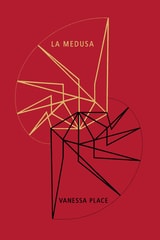
La Medusa
Vanessa Place
University of Alabama Press, 2008
La Medusa is a polyphonic novel of post-conceptual consciousness. At the heart of the whole floats Medusa, an androgynous central awareness that anchors the novel throughout. La Medusa is at once the city of Los Angeles, with its snaking freeways and serpentine shifts between reality and illusion, and a brain—a modern mind that is both expansive and penetrating in its obsessions and perceptions.
Vanessa Place’s characters—a trucker and his wife, a nine-year-old saxophonist, an ice cream vendor, a sex worker, and a corpse, among others—are borderless selves in a borderless city, a city impossible to contain. Her expert ventriloquism and explosive imagination anchor this epic narrative in language that is fierce and vibrant, a penetrating a cross-section of contemporary Los Angeles and a cross-section of the modern mind.

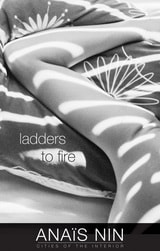
Ladders To Fire
New Expanded EditionAnaïs Nin
Ohio University Press, 1959
After struggling with her own press and printing her own works, Anaïs Nin succeeded in getting Ladders to Fire accepted and published in 1946. This recognition marked a milestone in her life and career. Admitted into the fellowship of American novelists, she maintained the individuality of her literary style. She resisted realistic writing and drew on the experience and intuitions of her diary to forge a novelistic style emphasizing free association, the language of emotion, spontaneity, and improvisation.
Ladders to Fire is the first volume of Nin’s celebrated series of novels called Cities of the Interior
For Anaïs Nin, her writing and her life were not separable, they were both part of the same experience. She claimed that “is it the fiction writer who edited the diary.”
Anaïs Nin continues to find an audience, whether for her fiction, her diaries, or her own life story, which has enjoyed the attention of biographers and filmmakers. This 1995 reissue of Ladders to Fire has a new cover and foreword.
Ladders to Fire
Anaïs Nin
Ohio University Press, 2014
Anaïs Nin’s Ladders to Fire interweaves the stories of several women, each emotionally inhibited in her own way: through self-doubt, fear, guilt, moral drift, and distrust. The novel follows their inner struggles to overcome these barriers to happiness and wholeness. The author’s own experiences, as recorded in her famous diaries, supplied the raw material for her fiction. It was her intuitive, experimental, and always original style that transformed one into the other. Nin herself memorably claimed that “it was the fiction writer who edited the diary.”
Ladders to Fire is the first book of Nin’s continuous novel, Cities of the Interior, which also includes Children of the Albatross,The Four-Chambered Heart,A Spy in the House of Love, and Seduction of the Minotaur. These loosely interlinked stories develop the characters and themes established in the first volume, leading slowly toward a resolution of inner turmoil and conflict.
This Swallow Press reissue of Ladders to Fire includes a new introduction by Nin scholar Benjamin Franklin V, as well as Gunther Stuhlmann’s classic foreword to the 1995 edition.
Ladies & Gentleman, The Original Music
Of The Hebrew Alphabet And Weekend In MustarraCurt Leviant
University of Wisconsin Press, 2002
"Ladies and Gentlemen, the Original Music of the Hebrew Alphabet" is set in Budapest during the Communist era. The story focuses on the tenuous seesaw between Dr. Isaac Gantz, a musicologist, and engineer Ferdinand Friedman, a Holocaust survivor who believes that he possesses one of the greatest manuscripts of the ages, a Rosetta Stone of Judaica. Friedman is willing to share it—but there is a "but." In pursuing this prize, Gantz enters a world of strange human relationships filled with doubts and surprises. A vibrant cast of characters adds dimension to this gripping story in which Jewish folklore, music, and history coalesce.
"Weekend in Mustara" unfolds on the fictional island of Mustara in southern Europe, a mountainous, totalitarian country that tolerates Judaism. Its few Jews cling to their heritage, embodied in their beautiful but sparsely attended synagogue and their museum, where a great memorial book is inscribed with the names of all Mustara Jews martyred during World War II. A scholar of medieval Hebrew manuscripts comes to the island, searching for traces of Yehuda Halevi, the great Hebrew poet of the Spanish Golden Age. He is soon enmeshed among elusive personalities and tangled loyalties, but only when he finds himself displaced in time—in a kind of theater of the absurd—are the purposes of his journey finally realized.

Ladies of the Throne
Léonora Miano
Diaphanes, 2025
“Most of the time, it is the power of men that we remember.” With these words, which open Léonora Miano’s text for Objects Talk Back, an astonishing new narrative unfurls around Mandu Yenu, a throne from the ancient Kingdom of Bamum (present day Cameroon).
The Germans long claimed the object was a gift from King Njoya to Kaiser Wilhelm II. Miano reads “between the lines of beads and cowrie shells” to show the complex intricacies of colonial and gender relations. Dismissing all pretense of egalitarianism between colonizer and colonized, she hones in on the very nature of power—how and by whom it is defined-wielded-subverted.
King Njoya said he “felt like a woman in his relationship with the Germans.” Miano takes this as a prompt to examine contrasting cultural notions of femininity and thus reveals how central women are to the story of the throne. As the very name of the object suggests, it is the power of women we should remember.
Lady in Ermine
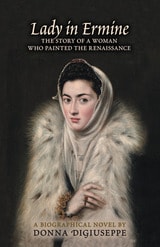
The Story of a Woman Who Painted the Renaissance. A Biographical NovelDonna DiGiuseppe
Arizona Center for Medieval and Renaissance Studies, 2019
Lady in Ermine: The Story of a Woman Who Painted the Renaissance reveals the discovery of an historic figure who embodies the struggle of women throughout the ages while immersing the reader in the sixteenth century world of the Renaissance figures she paints.
As a girl in Lombardy, Sofonisba Anguissola trains to paint with mannerist masters, and though society frowns upon women having such ambition, Sofonisba’s father unwaveringly encourages her. A royal tour by Prince Philip of Spain inspires her lifelong dream: to perfect the king’s portrait and show his truth on canvas, the highest calling for a Renaissance portraitist. Her drive to vindicate her loving father, a bastard of nobility, propels her. Politics of the Spanish empire brings Sofonisba to the heart of the royal court in Madrid. She aspires to achieve her goal while others at court work to undermine her as a female artist. Tragedy unfolds in the royal household, but in the process, Sofonisba finds her opportunity to paint the King of Spain, honoring her family name with her success. In life after court, Sofonisba navigates two marriages, royal appointments, love, hardship, and bankruptcy, while leaving a legacy of hundreds of paintings and influencing generations of artists from Anthony van Dyck to Peter Paul Rubens. This is her story.
Lake Song
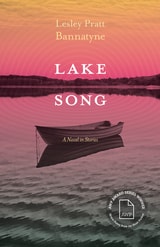
A Novel in StoriesLesley Pratt Bannatyne
The Ohio State University Press, 2025
Selected by Deesha Philyaw as winner of the AWP Grace Paley Prize in Short Fiction
Shortlisted, 2026 Massachusetts Book Award, Fiction Category
The linked stories of Lake Song, set in the fictional town of Kinder Falls in New York’s Finger Lakes region, span decades to plumb the complexities, violence, and compassion of small-town life as the twentieth century hurtles forward. Against a backdrop of historical events—bootlegging, Klan attacks, gold smuggling, the Albany Ketchup Murders, the 1965 Northeast blackout—a generations-long mystery unwinds. In 1906 Mavis Staunch drowns in Okisee Lake days after she refuses to sell her land to a trio of brothers. The same night, one of the brothers, Angus Epps, doesn’t come home. Few suspect the two events are connected, and no one imagines the role that a ten-year-old boy, a canoe, and a pack of coyotes play in the tragedies. Spiritualists, grifters, sugar makers, arsonists, seekers, and saleswomen wind through each other’s lives and across decades to add layers of resonance to each captivating story. The mercurial lake that unites the people of Kinder Falls sustains as much as it haunts, both witness and diary.

Lamps at High Noon
Jack S. Balch
University of Illinois Press, 1941
Charlie Gest, the wide-eyed and well-intentioned protagonist of the novel, confronts firsthand the project's sometimes underhanded efforts to monitor the political views of its writers. Named assistant director of the project in Monroe (a fictional St. Louis), Gest is vaguely aware that the program's good intentions do not always overshadow the abuses it tolerates, which include shielding corporate interests and avoiding hiring highly qualified black writers. Gest is hounded by a nagging suspicion that, like lamps that burn in broad daylight, the issues at stake in the work stoppage are not the ones that most need addressing.
Part radical socialist commentary, part absurdist theater, Balch's novel offers a peerless critical engagement of the economic constraints and political exigencies surrounding debates over the federal funding of art since the New Deal.
Land of Cockaigne
Jeffrey Lewis
Haus Publishing, 2023
In Jeffrey Lewis’s novel, the Land of Cockaigne, once an old medieval peasants’ vision of a sensual paradise on earth, is reimagined as a plot on the coast of Maine. In efforts to assuage their grief over their son’s death and to make meaning of his life, Walter Rath and Catherine Gray build what they hope will be a version of paradise for a group of young men from the Bronx. As Walter and Catherine work to reinvent this land, formerly a summer resort, the surrounding town of Sneeds Harbor proves resistant. The residents’ well-meaning doubts lead to well-hidden threats, and the Raths’ marriage unravels as Walter loses faith in democracy. Meanwhile, the Bronx boys, who have only ever known the city, try to navigate this new land that is completely alien to them. Written as a parable of contemporary American society, Land of Cockaigne is by turns furious, funny, subversive, tragic, and horrifying. Faced with the question of what to do amid disastrous times, Walter Rath offers a clue: Love is an action, not a feeling. Once you go down this path of faith, there is much to be done.
Land of Milk and Money
A NovelAnthony Barcellos
Tagus Press, 2012
Landfall
A Ring of StoriesJulie Hensley
The Ohio State University Press, 2016
Last Mountain Dancer
Hard-Earned Lessons in Love, Loss, and Honky-Tonk Outlaw LifeChuck Kinder
West Virginia University Press, 2018
This gonzo-style metamemoir follows Chuck Kinder on a wild tour of the back roads of his home state of West Virginia, where he encounters Mountain State legends like Sid Hatfield, Dagmar, Robert C. Byrd, the Mothman, Chuck Yeager, Soupy Sales, Don Knotts, and Jesco White, the “Dancing Outlaw.”
Last Stands
StoriesStories by Gordon Weaver
University of Missouri Press, 2004
Last Words of the Holy Ghost
Matt Cashion
University of North Texas Press, 2015
Late Fire, Late Snow
New and Uncollected PoemsRobert Francis
University of Massachusetts Press, 1992
Latin Moon in Manhattan
A NovelJaime Manrique
University of Wisconsin Press, 2003
Exuberant and colorful, Latin Moon in Manhattan paints a vivid portrait of New York City as the land of El Dorado for today’s Latino immigrants. From Little Colombia in Queens to the street life of Times Square, this brilliant novel is crowded with an extraordinary cast of characters: Hot Sauce, a midget hooker; Simon Bolivar, a parrot who croons Julio Iglesias songs; the Urrutias, a family rich from cocaine smuggling; Santiago Martinez, a loner and would-be poet whose ancient cat, Mr. O’Donnell, is slowly dying of an enlarged heart. Exploding with a profusion of plots and subplots involving drug smuggling, romance, and the literary politics of Queens, Latin Moon in Manhattan is a rich and utterly charming work.
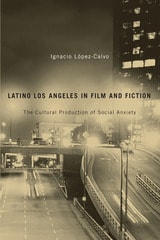
Latino Los Angeles in Film and Fiction
The Cultural Production of Social AnxietyIgnacio López-Calvo
University of Arizona Press, 2014
Latino Los Angeles in Film and Fiction sets out to reconfigure the scope of Latino literary and cultural studies. Integrating histories of different regions and nations, the book sets the interplay of unresolved contradictions in this particular metropolitan area. The novelists studied here stem from multiple areas, including the U.S. Southwest, Guatemala, and Chile. The study also incorporates non-Latino writers who have contributed to the Latino culture of the city.
The first chapter examines Latino cultural production from an ecocritical perspective on urban interethnic relations. Chapter 2 concentrates on the representation of daily life in the barrio and the marginalization of Latino urban youth. The third chapter explores the space of women and how female characters expand their area of operations from the domestic space to the public space of both the barrio and the city.
A much-needed contribution to the fields of urban theory, race critical theory, Chicana/o–Latina/o studies, and Los Angeles writing and film, López-Calvo offers multiple theoretical perspectives—including urban theory, ecocriticism, ethnic studies, gender studies, and cultural studies— contextualized with notions of transnationalism and post-nationalism.
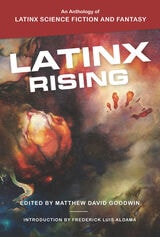
Latinx Rising
An Anthology of Latinx Science Fiction and FantasyEdited by Matthew David Goodwin / Introduction by Frederick Luis Aldama
The Ohio State University Press, 2020
The new and established voices assembled here (including Kathleen Alcalá, Carmen Maria Machado, Ernest Hogan, and other luminaries) invite us to imagine a Latinx past, present, and future that have not been whitewashed by mainstream perspectives. As in the best mixtapes, this anthology moves satisfyingly through the loud and brash, the quiet and thoughtful. There are ghosts, space aliens, robots—and a grandmother who unwittingly saves the universe through her cooking. The result is a deeply pleasurable read that pushes beyond magical realism and social realism to demonstrate all the thrilling possibilities of what Latinx literature can be.
Latter-day Lore
Mormon Folklore StudiesEric A. Eliason
University of Utah Press, 2013

Laughing Stock
Thomas S. Stribling
University of Alabama Press, 2003
In the intense blossoming of American literary talent between the World Wars, T.S. Stribling took his place with Faulkner, Hemingway, Dos Passos, and other members of his generation with the Pulitzer Prize in 1933 for his bestselling novel The Store. In Laughing Stock, Stribling’s autobiography, the gifted writer reflects with humor, irony, and passion on his trajectory from a remote southern town to the literary heights of Paris and New York.
Laughing Whitefish
Robert Traver
Michigan State University Press, 2011
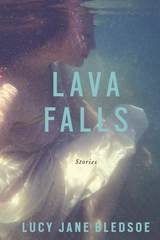
Lava Falls
Lucy Jane Bledsoe
University of Wisconsin Press, 2020
Refusing to buckle under the pressures of family and political traumas, the sojourners in this collection are unified by themes of creative expression and of love—how we define it, how we are impelled by it, and how we are lifted by it.
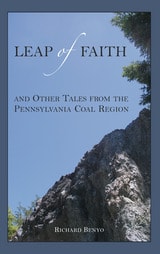
Leap of Faith
Richard Benyo
University of Scranton Press, 2009
Eastern Pennsylvania during the 1950s: King Coal has been dethroned, the railroads are all but defunct, and the region is in an economic depression. Fathers are forced to commute many miles to work, while at home the kids know no other pastime but to run wild in the woods. From the same author who intrigued readers with his whimsical stories of childhood in Jim Thorpe Never Slept Here comes an all-new batch of coming-of-age tales in Leap of Faith.
In these eight stories, the adults are often offstage, leaving the children to make up the rules as they go. From the story of an unrepentant bully who gets more than he deserves to the tale of a boy who finds serenity in short bursts of flight, Richard Benyo captures a time and a place where small triumphs are enormous, where the strong rule and the swift survive, and where the outside world—beyond the mountains that enclose Mauch Chunk, Pennsylvania—seldom intrudes.

Learning Processes with a Deadly Outcome
Alexander Kluge
Duke University Press, 1996
Whether describing the scene in China where the devastated landscape is reconstructed according to old paintings, or in the galactic realm of the Starway where giant, turf-battling, corporate colonizing forces exploit the universe’s resources, Kluge tells his tale by inventing various forms of “evidence” that satirize the discourses of administrative bureaucracy, the law, military security, and the media. He gives us some of his most bizarre and hilarious characters in this peculiar world in which the remains of the past are mixed with the most advanced elements of the future. The cast includes highly specialized women workers who have adapted to the massive gravitational field of their heavy-metal planets, a commander with lethal foot-fungus, and ex-Nazi space pioneers who, in their lonely exile from the conflagrations on earth, spend their time carving enormous facsimiles of operatic sheet music in the forests of uninhabited planets.
With parody, and humor, Kluge shows how the survivors of Armageddon attempt to learn the art of civilization, and, despite the disaster they have suffered, how they set out to reproduce at new sites a caricature of a classic and fascistic feudal capitalism.
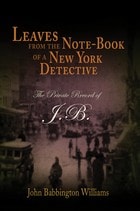
Leaves from the Note-Book of a New York Detective
The Private Record of J.B.John Babbington Williams
Westholme Publishing, 2008
A welcome link to the chain connecting the early masters of detective fiction.... The collection offers a window into the early days of American detective fiction and the power of deductive thinking."—Sarah Weinman, Los Angeles Times
"This story collection featuring New York City private detective James Brampton will intrigue Sherlock Holmes fans, given the number of eerie parallels between the two characters."—Publishers Weekly
"It is the observation of small things that makes a good detective, for it is often the most trivial circumstance which supplies the first link in the chain." —James Brampton
Twenty years before the Sherlock Holmes mysteries were written, a fictional New York private investigator was celebrated for his ability to solve crimes based on the principles of observation and deductive reasoning that later became Holmes' hallmark. Originally published in 1864 and never before reprinted, Leaves from the Note-Book of a New York Detective features twenty-nine cases of James Brampton, the first American detective hero to appear in fiction. The book opens with a chance meeting between a medical doctor, John Babbington Williams (the actual author of the stories), and detective James Brampton. They become acquaintances, and after Brampton has retired after twenty years of service, he sends his case notebooks to Dr. Williams to be edited and published. The result is a stunning collection of intriguing mysteries, including "The Defrauded Heir," "The Phantom Face," "A Satanic Compact," and "The Walker Street Tragedy." In case after case, using his power of observation, detective Brampton is able prove the innocence of the wrongly accused. Never before reprinted, this first modern edition of this important work now takes its place once more in the development of detective fiction between Edgar Allan Poe and Arthur Conan Doyle, the casebook of the original American detective hero.
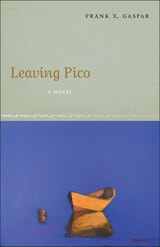
Leaving Pico
A NovelFrank X. Gaspar
Tagus Press, 2022
Winner of the Barnes and Noble Discovery Prize
Winner of the California Book Award for First Fiction
A New York Times Notable Book
In the insular Portuguese fishing community of Provincetown, Josie Carvalho’s life has been shaped by the annual influx of summer tourists and his great aunt’s fervent, if idiosyncratic, Catholicism. The counterweight to these forces has always been Josie’s relationship with his grandfather John Joseph, a drunk, clam-poaching old man who is nevertheless a sly and masterful storyteller.
After a stranger starts dating Josie’s mother and upsets the family’s equilibrium, John Joseph heals the rift with the colorful and adventurous stories of their ancestor, Francisco Carvalho, a Portuguese explorer who just may have beaten Columbus to the New World. With the guidance of these obscure but inspired tales, Josie begins to find new ways of understanding his family and the outside world. This new edition of Leaving Pico makes Frank X. Gaspar’s award-winning coming-of-age novel accessible to a new generation of readers.
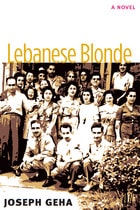
Lebanese Blonde
Joseph Geha
University of Michigan Press, 2012
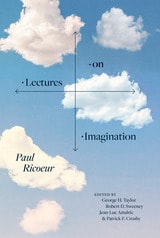
Lectures on Imagination
Paul Ricoeur
University of Chicago Press, 2024
The eminent philosopher Paul Ricoeur was devoted to the imagination. These previously unpublished lectures offer Ricoeur’s most significant and sustained reflections on creativity as he builds a new theory of imagination through close examination, moving from Aristotle, Pascal, Spinoza, Hume, and Kant to Ryle, Price, Wittgenstein, Husserl, and Sartre. These thinkers, he contends, underestimate humanity’s creative capacity. While the Western tradition generally views imagination as derived from the reproductive example of the image, Ricoeur develops a theory about the mind’s power to produce new realities. Modeled most clearly in fiction, this productive imagination, Ricoeur argues, is available across conceptual domains. His theory provocatively suggests that we are not constrained by existing political, social, and scientific structures. Rather, our imaginations have the power to break through our conceptual horizons and remake the world.
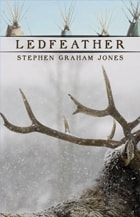
Ledfeather
Stephen Graham Jones
University of Alabama Press, 2008
A story of life, death, love, and the ties that bind us not only to what has been, but what will be.
After burning up the blacktop in New Mexico with The Fast Red Road and rewriting Indian history on the Great Plains with The Bird is Gone, Stephen Graham Jones now takes us to Montana. Set on a Blackfeet Indian reservation, Ledfeather lays bare the life of one Indian boy, Doby Saxon: his near-death experience, his suicide attempts, his brief glimpse of victory, and the unnecessary death of one of his best friends.
But through Doby emerges a connection to the past, to an Indian Agent who served the United States government over a century before. This revelation leads to another and another until it becomes clear that the decisions of this single Indian agent have impacted the lives of generations of Blackfeet Indians—and the life of Doby Saxon, a boy standing in the middle of the road at night, his hands balled into fists, the reservation wheeling all around him like the whole of Blackfeet history collapsing in on him.
Jones’s beautifully complex novel is a story of life, death, love, and the ties that bind us not only to what has been, but what will be: the power of one moment, the weight of one decision, the inevitability of one outcome, and the price of one life.
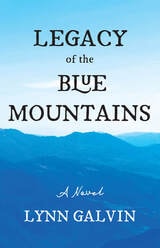
Legacy of the Blue Mountains
A NovelLynn Galvin
University of Nevada Press, 2025
In Legacy of the Blue Mountains, author Lynn Galvin asks: What might happen to a group of Apache children, born in present times, yet living as if in the past and marooned in the Sierra Madre mountains of Mexico when their last renegade adult dies? As they attempt to reach their nearest, last known family members, they embark on a journey to a place none of them has ever seen or visited before. Will they be able to remain undetected while following a memorized path laid out in previous centuries that will lead them into the modern world? As the last remaining Apache children confront the challenges of survival in unfamiliar lands, will they endure long enough to reunite with their remaining relatives?
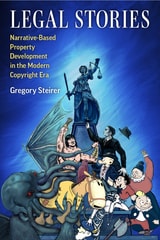
Legal Stories
Narrative-Based Property Development in the Modern Copyright EraGregory Steirer
University of Michigan Press, 2024
Steirer’s expansive view of intellectual property law encompasses not only statutes and judicial opinions, but also the everyday practices and productions of authors, editors, fans, and other legal laypersons. The result is a history of the law as improvisatory and accident-prone, taking place as often outside the courtroom as inside, and shaped as much by laypersons as lawyers. Through the examination of influential legal disputes involving early properties such as Dashiell Hammett’s Sam Spade, H. P. Lovecraft’s Cthulhu Mythos, and Robert E. Howard’s Conan the Barbarian, Steirer provides a ground’s eye view of how copyright law has operated and evolved in practice.
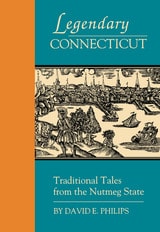
Legendary Connecticut
Traditional Tales from the Nutmeg StateDavid E. Philips
Northwestern University Press, 1995
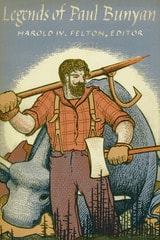
Legends of Paul Bunyan
Harold W. Felton
University of Minnesota Press, 2008
The collected lore of Minnesota's favorite lumberjack hero
Paul Bunyan is a true American folk character, created in logging camp bunkhouses by men who spun exaggerated stories that combined hard work and fantasy.
While the origins of Paul Bunyan and his sidekick Babe the Blue Ox are hazy, many storytellers have over the years contributed their own takes to produce an existing body of work--a true American legend--that matches the size of the lumberjack himself. Collected in colorful and engaging sections such as "Paul the Man," "Paul and the Animal Kingdom," and "The Wonderful Big Blue Ox, Babe," Legends of Paul Bunyan features more than thirty authors celebrating the largest lumberman, including stories by such Bunyan luminaries as James Stevens and W. B. Laughead, as well as such literary icons as Robert Frost and Carl Sandburg.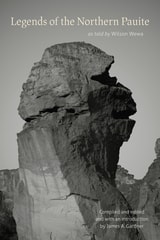
Legends of the Northern Paiute
as told by Wilson WewaWilson Wewa
Oregon State University Press, 2017
The legends in this volume were recorded, transcribed, reviewed, and edited by Wilson Wewa and James Gardner. Each legend was recorded, then read and edited out loud, to respect the creativity, warmth, and flow of Paiute storytelling. The stories selected for inclusion include familiar characters from native legends, such as Coyote, as well as intriguing characters unique to the Northern Paiute, such as the creature embodied in the Smith Rock pinnacle, now known as Monkey Face, but known to the Paiutes in Central Oregon as Nuwuzoho the Cannibal.
Wewa’s apprenticeship to Northern Paiute culture began when he was about six years old. These legends were passed on to him by his grandmother and other tribal elders. They are now made available to future generations of tribal members, and to students, scholars, and readers interested in Wewa’s fresh and authentic voice. These legends are best read and appreciated as they were told—out loud, shared with others, and delivered with all of the verve, cadence, creativity, and humor of original Paiute storytellers on those clear, cold winter nights in the high desert.

Legends of the Slow Explosion
Eleven Modern LivesBaron Wormser
Tupelo Press, 2018
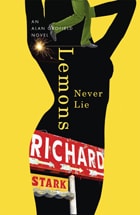
Lemons Never Lie
An Alan Grofield NovelRichard Stark
University of Chicago Press, 1971
Donald E. Westlake is one of the greats of crime fiction. Under the pseudonym Richard Stark, he wrote twenty-four fast-paced, hardboiled novels featuring Parker, a shrewd career criminal with a talent for heists. Using the same nom de plume, Westlake also completed a separate series in the Parker universe, starring Alan Grofield, an occasional colleague of Parker. While he shares events and characters with several Parker novels, Grofield is less calculating and more hot-blooded than Parker; think fewer guns, more dames.

Leon and Louise
Alex Capus
Haus Publishing, 2011
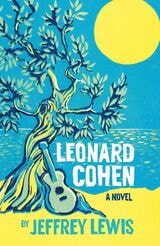
Leonard Cohen
A NovelJeffrey Lewis
Haus Publishing, 2025
The Leonard Cohen at the center of Leonard Cohen: A Novel is an everyman, a would-be artist, a would-be lover, a would-be tragic figure, yet a man haunted by the greatness of his namesake. He struggles to compete. He struggles to be more than a punchline in his own mind. He struggles, in particular, to write one song as great as the least of the great Leonard Cohen's songs.
At the center of Leonard's life is Daphne. In their meeting on a Greek island, a contemporary fable of Daphne and Apollo plays out. But even with Daphne, Leonard is shadowed by the other Leonard Cohen, whom he fears is the real Apollo. The ancient myth haunts the fated lovers, and the nobody Leonard Cohen’s life becomes at once a mystery, a miracle, and a myth on its own terms.
Once upon a time, Apollo fell hard for Daphne, who turned herself into a laurel tree. No less a fate awaits the protagonists of this slender yet universal novel, where art, love, and fame all fatefully intertwine.

Leonardo's Horse
Ralph M. Berry
University of Alabama Press, 1997
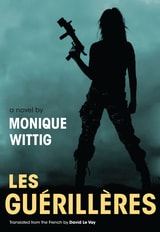
Les Guerilleres
Monique Wittig. Translated from the French by David Le Vay
University of Illinois Press, 2007
One of the most widely read feminist texts of the twentieth century, and Monique Wittig’s most popular novel, Les Guérillères imagines the attack on the language and bodies of men by a tribe of warrior women. Among the women’s most powerful weapons in their assault is laughter, but they also threaten literary and linguistic customs of the patriarchal order with bullets. In this breathtakingly rapid novel first published in 1969, Wittig animates a lesbian society that invites all women to join their fight, their circle, and their community. A path-breaking novel about creating and sustaining freedom, the book derives much of its energy from its vaunting of the female body as a resource for literary invention.

Les Matériaux
Une autre histoire de l’art moderneMonika Wagner
Diaphanes, 2025
Utilizing exemplary works, Monika Wagner considers traditional materials, as well as materials that have been newly developed or are originally foreign to art, placing them beyond the personal mythologies of individual artists and in the context of their ordinary uses and attributes. This critical reconstruction of their meaning opens up a new avenue for understanding modern art. The materials discussed and studied are at the heart of twentieth-century art, from color in painting to everyday and natural objects, and even the most intangible materials such as air and light. The examples chosen by Wagner reveal what these materials tell us in the conjunction of their uses throughout history and their assignments to society or gender. Numerous illustrations complement and illuminate the analyses of the works studied.
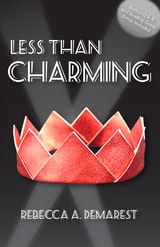
Less Than Charming
A NovelRebecca A. Demarest
Parkhurst Brothers, Inc., 2016
One character sands in the Prince’s way—Princess Sophia from Grimm’s lesser known “12 Dancing Princesses.” She’s stable—mostly—but Prince Charming is most definitely not. The good Storyteller and the First Character have tasked Sophia with stopping the Prince from destroying their world, and, by extension, ours.
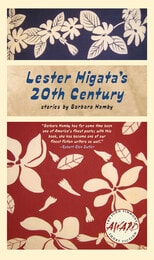
Lester Higata's 20th Century
Barbara Hamby
University of Iowa Press, 2010
“Lester Higata knew his life was about to end when he walked out on the lanai behind his house in Makiki and saw his long-dead father sitting in a lawn chair near the little greenhouse where Lester kept his orchids.” Thus begins Barbara Hamby’s magical narrative of the life of a Japanese American man in Honolulu. The quietly beautiful linked stories in Lester Higata’s 20th Century bring us close to people who could be, and should be, our friends and neighbors and families.
Starting in 1999 with his conversation with his father, continuing backward in time throughout his life with his wife, Katherine, and their children in Hawai‘i, and ending with his days in the hospital in 1946, as he heals from a wartime wound and meets the woman he will marry, Hamby recreates not just one but any number of the worlds that have shaped Lester. The world of his mother, as stubbornly faithful to Japan and Buddhism as Katherine’s mother is to Ohio and conservative Christianity; the world of his children, whose childhoods and adulthoods are vastly different from his own; the world after Pearl Harbor and Vietnam; the world of a professional engineer and family man: the worlds of Lester Higata’s 20th Century are filled with ordinary people living extraordinary lives, moving from farms to classrooms and offices, from racism to acceptance and even love, all in a setting so paradisal it should be heaven on earth.
Never forgetting the terrors of wartime—“We wake one morning with the wind racing toward us like an animal, and nothing is ever the same”—but focusing on the serene joys of peacetime, Lester populates his worlds with work, faith, and family among the palm trees and blue skies of the island he loves.
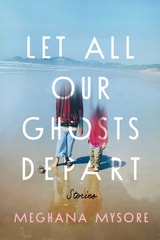
Let All Our Ghosts Depart
StoriesMeghana Mysore
West Virginia University Press, 2026
In this powerful debut collection, present-day women of the South Asian diaspora grapple with belonging and are haunted by intergenerational inheritances. Meghana Mysore, herself the daughter of Indian immigrants, spins her stories around narrators struggling to assimilate into the surreal world around them. At times, this disorientation skews speculative, where deceased mothers reappear as chiding, broken-down cars. At turns absurd and darkly humorous, the women in Mysore’s stories all experience transformation, be it small or monumental, where they find spaces of freedom and delight within their circumstances.
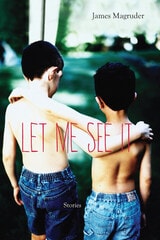
Let Me See It
StoriesJames Magruder
Northwestern University Press, 2014
James Magruder’s collection of linked stories follows two gay cousins, Tom and Elliott, from adolescence in the 1970s to adulthood in the early ’90s. With a rueful blend of comedy and tenderness, Magruder depicts their attempts to navigate the closet and the office and the lessons they learn about libidinous coworkers, résumé boosting, Italian suffixes, and frozen condoms. As Tom and Elliot search for trusting relationships while the AIDS crisis deepens, their paths diverge, leading Tom to a new sense of what matters most. Magruder is especially adept at rendering the moments that reveal unwritten codes of behavior to his characters, who have no way of learning them except through painful experience.
Loss is sudden, the fallout portrayed with a powerful economy. In Tom and Elliott, readers come to recognize themselves, driven by the same absurd desires and unconscious impulses, subjected to the same fates.
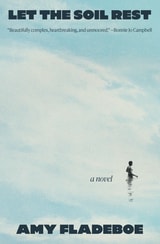
Let the Soil Rest
A NovelAmy Fladeboe
Northwestern University Press, 2027
Reaching across miles and memory to deconstruct the American Dream in the Midwest Rust Belt
Arjan, a teen refugee from postcommunist Albania, and Jess, a Midwestern high schooler, strike up an unlikely friendship working a seasonal job on a farm in Michigan. Now in their thirties, the two have taken different paths—he chasing the American Dream with a running rotation of day-labor gigs, and she living on the road and off the grid, trying to escape the very same ideal. When Jess lands in Hamtramck, just a few miles from her suburban Detroit upbringing after years wandering, they find themselves trudging the same unplowed sidewalks, spinning loads at the same laundromat, and picking the same jukebox songs at the local dive. Both are haunted by the ghosts of childhood traumas, a chorus of the collective unconscious that takes us from the Albanian coast to the Rust Belt heartland. So near one another and yet so far apart, they must reach across miles and memories to discover that the most important voice in our heads is our own.

Let's Do
Rebecca Meacham
University of North Texas Press, 2004