Results by title
67 books match the query 'Fish, Stanley' and 4 start with l
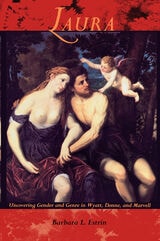
Laura
Uncovering Gender and Genre in Wyatt, Donne and MarvellBarbara L. Estrin
Duke University Press, 1994
Through close readings of the Rime sparse and the works of Wyatt, Donne, and Marvell, Estrin uncovers three Lauras: Laura-Daphne, who denies sexuality; Laura-Eve, who returns the poet’s love; and Laura-Mercury, who reinvents her own life. Estrin claims that in these three guises Laura subverts both genre and gender, thereby introducing multiple desires into the many layers of the poems. Drawing upon genre and gender theories advanced by Jean-François Lyotard and Judith Butler to situate female desire in the poem’s framework, Estrin shows how genre and gender in the Petrarchan tradition work together to undermine the stability of these very concepts.
Estrin’s Laura constitutes a fundamental reconceptualization of the Petrarchan tradition and contributes greatly to the postmodern reassessment of the Renaissance period. In its descriptions of how early modern poets formulate questions about sexuality, society and poetry, Laura will appeal to scholars of the English and Italian Renaissance, of gender studies, and of literary criticism and theory generally.
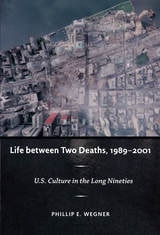
Life between Two Deaths, 1989-2001
U.S. Culture in the Long NinetiesPhillip E. Wegner
Duke University Press, 2009
Wegner shows how phenomena including the debate on globalization, neoliberal notions of the end of history, the explosive growth of the Internet, the efflorescence of new architectural and urban planning projects, developments in literary and cultural production, new turns in theory and philosophy, and the rapid growth of the antiglobalization movement came to characterize the long nineties. He offers readings of some of the most interesting cultural texts of the era: Don DeLillo’s White Noise; Joe Haldeman’s Forever trilogy; Octavia Butler’s Parable novels; the Terminator films; the movies Fight Club, Independence Day, Cape Fear, and Ghost Dog; and the television series Buffy the Vampire Slayer. In so doing, he illuminates fundamental issues concerning narrative, such as how beginnings and endings are recognized and how relationships between events are constructed.
Lines of Flight
Discursive Time and Countercultural Desire in the Work of Thomas PynchonStefan Mattessich
Duke University Press, 2002
Mattessich theorizes a new kind of time—subjective displacement—dramatized in the parody, satire, and farce deployed through Pynchon’s oeuvre. In particular, he is interested in showing how this sense of time relates to the counterculture of the 1960s and 1970s. Examining this movement as an instance of flight or escape and exposing the beliefs behind it, Mattessich argues that the counterculture’s rejection of the dominant culture ultimately became an act of self-cancellation, a rebellion in which the counterculture found itself defined by the very order it sought to escape. He points to parallels in Pynchon’s attempts to dramatize and enact a similar experience of time in the doubling-back, crisscrossing, and erasure of his writing. Mattessich lays out a theory of cultural production centered on the ethical necessity of grasping one’s own susceptibility to discursive forms of determination.
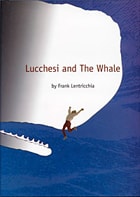
Lucchesi and The Whale
Frank Lentricchia
Duke University Press, 2001
Having become “a mad Ahab of reading,” who is driven to dissect the “artificial body of Melville’s behemothian book” to grasp its truth, Lucchesi allows his thoughts to wander and loop from theory to dream to reality to questionable memory. But his black humor-tinged musings are often as profoundly moving as they are intellectual, such as the section in which he ponders the life and philosophy of Ludwig Wittgenstein in relation to the significance of a name—and then attempts to share these thoughts with a sexy, middle-aged flight attendant—or another in which he describes a chance meeting with a similarly-named mafia don.
Despite apparent spiritual emptiness, Lucchesi in the end does find “a secret meaning” to Moby-Dick. And Lentricchia’s creations—both Lucchesi and The Whale and its main character—reveal this meaning through a series of ingeniously self-reflective metaphors, in much the way that Melville himself did in and through Moby-Dick. Vivid, humorous, and of unparalleled originality, this new work from Frank Lentricchia will inspire and console all who love and ponder both great literature and those who would write it.